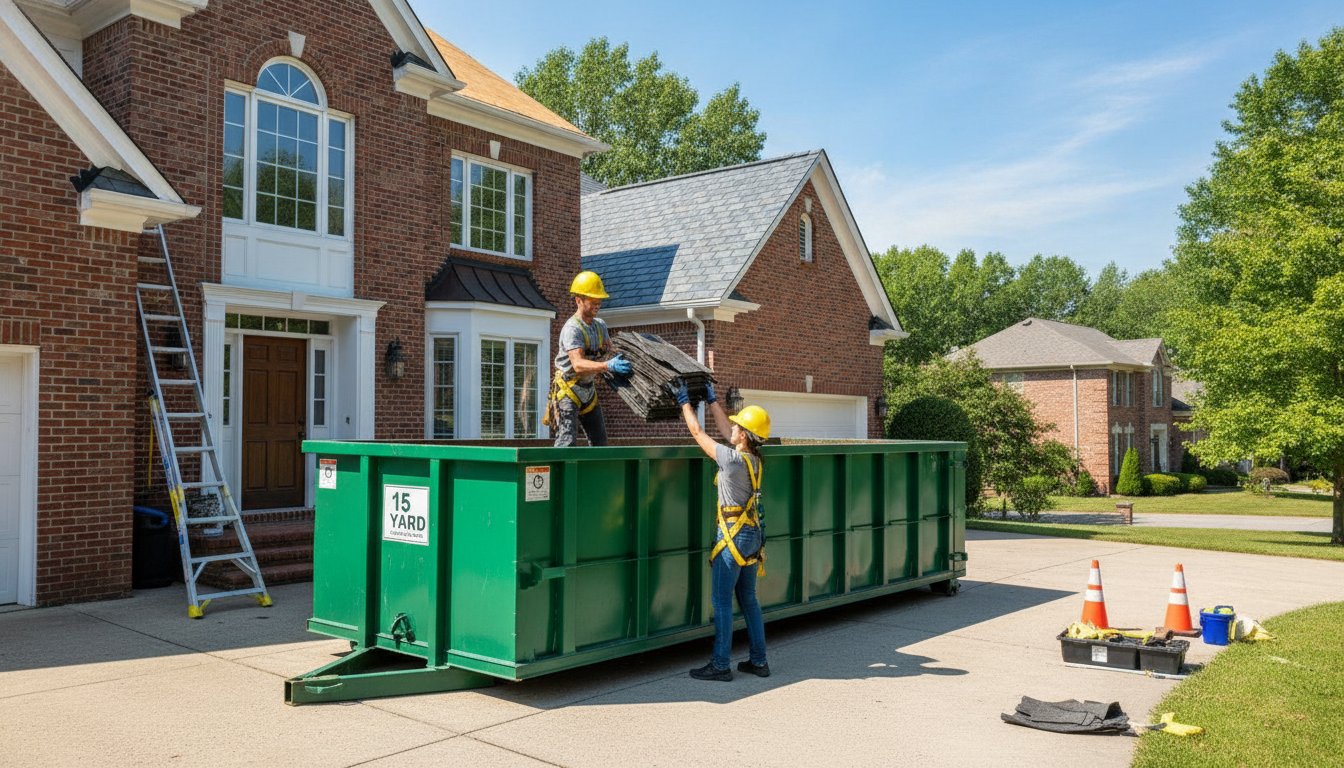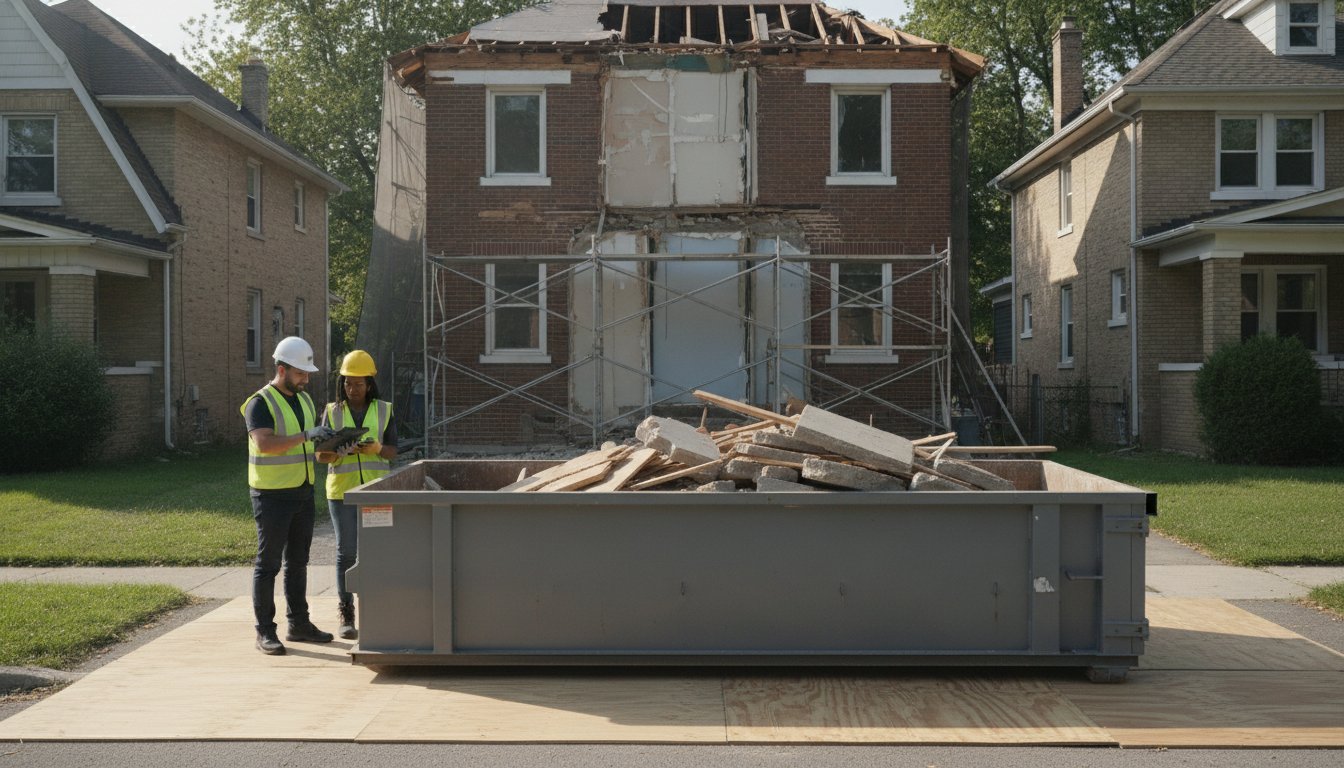

Your driveway isn't just a parking spot; it's a landing pad for a heavy-duty logistical tool that requires specific clearance to operate safely. Choosing the wrong dumpster dimensions can lead to property damage or a wasted budget, leaving you with a bin that's either half-empty or overflowing before the project even starts. It's common to feel anxious about whether a truck can navigate your street or if a 20-yard container will actually hold your old deck boards and renovation debris.
We'll help you master the sizing process so you can book with confidence and keep your project on schedule. This guide provides the exact exterior measurements for 10, 20, 30, and 40-yard rentals, along with capacity comparisons you can actually visualize using common household items. You'll also learn about critical 2026 updates, including the EPA phase-out of paper manifests and new regulations for disposing of solar panels and lithium-ion batteries. Use this data to prepare your site, avoid overage fees, and ensure your next residential or commercial cleanup is handled with professional precision.
Key Takeaways
- Learn how to calculate cubic yardage and compare specific dumpster dimensions for 10, 20, 30, and 40-yard containers to avoid paying for unused space.
- Match your specific project, like a bathroom remodel or a full kitchen gut, to the correct bin size to ensure all debris fits in one trip.
- Identify critical placement requirements, including the 60-foot straight-line clearance and 23-foot vertical space needed for a safe delivery.
- Understand the differences between temporary roll-off rentals and permanent front-load commercial waste pickup for your business or boutique.
- Use visual benchmarks to translate abstract volume measurements into tangible household items for faster decision-making.
Standard Dumpster Dimensions: Understanding Cubic Yardage
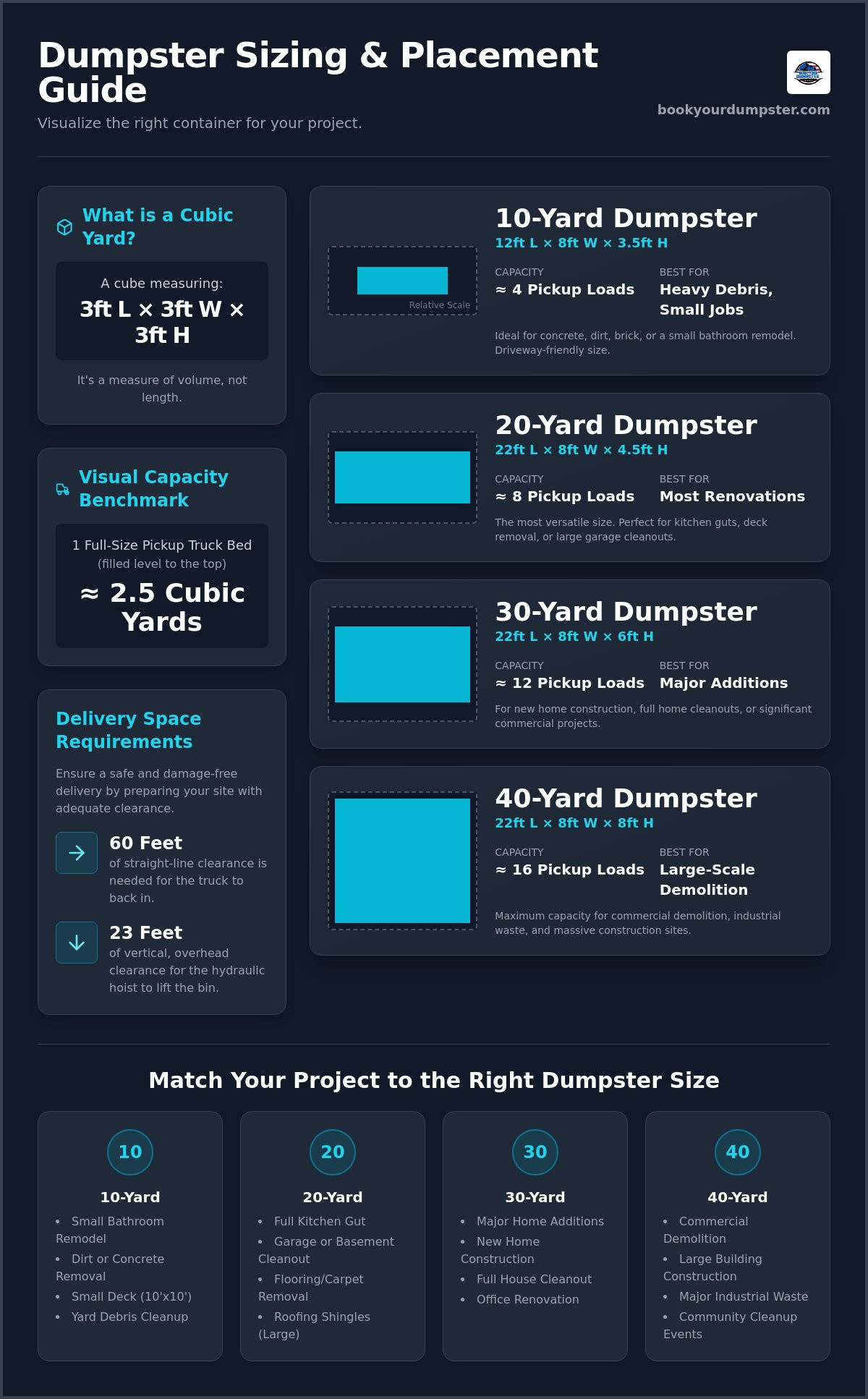
Waste management is a game of volume. To choose the right container, you must first understand the cubic yard. Think of a cubic yard as a solid block measuring three feet long, three feet wide, and three feet high. When you see a bin labeled as "10 yards" or "20 yards," that number refers to the total internal volume, not the exterior length of the steel box. Understanding these dumpster dimensions is the first step toward a stress-free cleanup.
Visualizing volume is easier with a familiar reference. A standard full-size pickup truck bed, filled level to the top, holds approximately 2.5 cubic yards of material. Using this math, a 10-yard dumpster provides the same capacity as four full pickup truck loads. This comparison helps you gauge whether your pile of debris requires a compact residential bin or a high-capacity construction container. Remember that weight limits are independent of physical size. A bin full of concrete weighs significantly more than a bin full of drywall, even if the volume is identical.
Why "Yards" Matter More Than Length
Don't assume that a longer dumpster always holds more waste. Manufacturers often adjust wall heights to change volume while keeping the footprint consistent. For example, a 10-yard "low-boy" container is specifically built for heavy debris like dirt or brick. It has low walls to make loading heavy material easier. In contrast, a standard 10-yard residential bin might be shorter in length but have higher walls to accommodate furniture or bulky items. Different Roll-off dumpster sizes exist to solve specific logistical problems. Choose a container height based on your physical ability to lift items over the side. Taller bins save driveway space but require more effort to load.
The Math Behind the Metal
You can verify the capacity of any container with a simple formula: (Length x Width x Height) / 27 = Cubic Yards. Always keep in mind that the exterior dimensions provided by rental companies are slightly larger than the internal capacity. The thickness of the steel walls and the heavy-duty base rails add several inches to the outside measurements. Most roll-off bins also feature a tapered design where the bottom is narrower than the top. This allows containers to nest during transport but means you must stack your waste strategically to maximize every inch. To ensure you get the right fit for your project, visit Book Your Dumpster to see specific availability for your area. Accurate planning prevents the logistical headache of a bin that's too small for the job.
Roll-Off Dumpster Sizes for Home and Construction
Roll-off containers are the workhorses of the waste industry. Unlike permanent bins, these are delivered and removed by heavy-duty trucks using a hydraulic hoist. While the volume varies, many standard dumpster dimensions share a similar footprint of 22 feet in length and 8 feet in width. The primary difference lies in the wall height, which dictates how much debris you can safely haul away. Review these common sizes to determine the right fit for your site:
- 10-Yard Dumpster: 12ft L x 8ft W x 3.5ft H. Engineered for heavy debris like concrete, dirt, or brick.
- 20-Yard Dumpster: 22ft L x 8ft W x 4.5ft H. This is the industry standard for most residential and light commercial projects.
- 30-Yard Dumpster: 22ft L x 8ft W x 6ft H. Ideal for major home additions or large-scale cleanouts.
- 40-Yard Dumpster: 22ft L x 8ft W x 8ft H. Reserved for commercial demolition and massive industrial waste.
Residential Cleanout Sizes (10 & 20 Yard)
A 10-yard dumpster is the go-to choice for heavy materials. Its compact 12-foot length makes it highly driveway-friendly, leaving room for your personal vehicles. If you're dealing with a tight urban space, ask about "short-box" configurations. These specialized units prioritize height over length to fit into narrow alleys or short driveways where a standard 22-foot bin won't fit. For most DIY renovations, the 20-yard dumpster is the most versatile option. It offers double the capacity of the 10-yard while maintaining a manageable height for tossing debris over the side. Check out our 10 yard dumpster rental guide for a deeper breakdown of specific residential use cases.
Professional Construction Sizes (30 & 40 Yard)
Large-scale projects require the massive capacity of 30 or 40-yard bins. A 40-yard container stands 8 feet tall, which makes loading over the side nearly impossible for manual labor. These professional-grade bins feature a swinging walk-in door at the rear. This allows crew members to carry heavy items directly into the unit rather than lifting them over the wall. When managing these high-volume sites, you must adhere to Sustainable materials management practices to ensure debris is sorted correctly for recycling or disposal.
Construction dumpsters often have strict weight limits despite their large dumpster dimensions. While a 40-yard bin can hold a massive volume of wood or drywall, it can't be filled to the brim with concrete or soil without exceeding the truck's hauling capacity. See our construction debris removal guide to learn how to balance volume and weight on-site. If you're ready to secure a bin for your next project, you can view local availability online and book your rental in seconds.
Commercial Front-Load Dumpster Dimensions
Front-load containers serve as permanent waste management solutions for businesses, schools, and apartment complexes. Unlike the temporary roll-off bins used for construction, these units remain on-site and are emptied on a recurring schedule by a truck with front-mounted forks. Selecting the correct dumpster dimensions for your commercial property prevents unsightly overflows and ensures the collection truck has enough room to maneuver without damaging your enclosure or overhead structures.
- 2-Yard Commercial: 6ft L x 3ft W x 3ft H. This compact unit fits into small parking areas and handles waste for boutiques or small offices.
- 4-Yard Commercial: 6ft L x 4.5ft W x 4ft H. The standard choice for mid-sized restaurants or medical clinics.
- 6-Yard Commercial: 6ft L x 5ft W x 5ft H. A high-capacity option for retail stores and small manufacturing facilities.
- 8-Yard Commercial: 6ft L x 6ft W x 7ft H. The largest front-load option, designed for high-density apartment complexes and large retail centers.
Compact Solutions for Small Businesses
Space is a premium in urban environments. If your business operates out of a tight alleyway, the 2-yard bin is the most pragmatic choice. These smaller units often come equipped with heavy-duty casters (wheels), allowing your staff to roll the container out to the curb for pickup and back into a secure area afterward. When planning your placement, don't just measure the footprint. You must account for lid clearance. A 2-yard bin requires at least three additional feet of vertical space above its height so the lid can swing fully open during daily use. Measure your intended spot twice to avoid a bin that's impossible to fill.
Selecting for Multi-Family and Retail
High-volume locations like apartment buildings require 8-yard bins to manage daily household trash. You'll need to choose between a flat-top design and a "Cathedral Top" (sloped) design. Cathedral tops are approximately 88 inches high at their peak, which helps prevent rainwater accumulation and discourages illegal dumping. However, this extra height can interfere with low-hanging signage or parking garage ceilings. Before finalizing your contract, review dumpster rental prices to see how different sizes and pickup frequencies impact your monthly overhead. Match the bin capacity to your peak waste days to ensure your property stays clean between scheduled pickups. If you need a permanent solution, Book Your Dumpster provides front-load commercial waste pickup tailored to your specific volume needs.
Space Requirements: Planning for Delivery and Placement
The physical footprint of your chosen bin is only one part of the logistical equation. Even if you've selected the perfect dumpster dimensions for your debris, the delivery truck needs significantly more room to operate than the bin itself occupies. To deliver a 20-yard or 40-yard container, the truck requires approximately 60 feet of straight-line clearance. This space allows the driver to back into position, tilt the hoist, and slide the unit onto the ground without hitting obstacles or requiring complex multi-point turns.
Vertical clearance is a factor many property owners overlook. While the bin might only be 4 to 8 feet tall, the delivery truck must tilt its hydraulic hoist to a steep angle to unload the container. This maneuver requires at least 23 feet of overhead clearance. Before the truck arrives, scan the area for low-hanging tree branches, power lines, or building overhangs. If the hoist strikes an overhead obstruction, the driver will be forced to abort the delivery, often resulting in a dry-run fee. Clear the path entirely to ensure a smooth drop-off.
Don't forget the "swing zone" at the rear of the bin. Most roll-off containers feature a large door that swings outward to allow for walk-in loading. If you place the container's rear too close to a garage door, fence, or wall, you won't be able to open the latch. Leave at least 8 to 10 feet of open space behind the container to account for the door's full radius. This is especially important for 30 and 40-yard bins where manual lifting over the high side walls is nearly impossible.
Urban Placement: Queens, NYC, and Boston Challenges
In high-density metros like Queens, NYC, or Boston, navigating narrow streets and parallel parking constraints is a daily reality. You must secure enough space for the truck to align itself with the drop-off point. If your driveway is too narrow or steep, you'll likely need to place the bin on the street. This typically requires a street permit or a temporary obstruction permit from your local city hall. Check your local regulations for specific requirements, such as the common rule to maintain 15 feet of clearance from any fire hydrant. For reliable service in these challenging urban environments, you can find local availability through Book Your Dumpster USA.
Protecting Your Property
A fully loaded dumpster is incredibly heavy and can damage sensitive surfaces. While concrete and asphalt are preferred, even these can crack under the weight of several tons of debris. Place large pieces of plywood or specialized "street pads" on your driveway before the truck arrives to distribute the weight more evenly. Avoid placement on soft soil or grass, as the bin's rollers will sink, making it difficult for the truck to pull the container back onto the hoist during pickup. Always check for underground utilities, septic tanks, or sprinkler lines that could be crushed by the truck's tires. Schedule your delivery online today and provide specific placement instructions to protect your property from the start.
How to Choose Your Dumpster Size Based on Project
Project scope dictates volume. While understanding the physical dumpster dimensions is essential for placement, you must match those measurements to the specific debris your job generates. Residential renovations and commercial cleanouts produce different waste densities. A bin that works for a basement cleanout might fail on a roofing site due to weight constraints. Use these project benchmarks to select the right container for your needs.
- Bathroom Remodel: A standard 10-yard container is the most efficient choice for a full bathroom gut. It easily accommodates old tile, a vanity, a toilet, and a bathtub without taking up too much driveway space.
- Kitchen Renovation: These projects involve bulky cabinets, countertops, and appliances. A 20-yard bin is typically required to handle the volume, especially if you're tearing down walls or removing heavy flooring.
- Roofing Projects: Calculate your needs based on "squares" (a 10ft x 10ft area). A 10-yard dumpster safely holds 20 to 30 squares of asphalt shingles. Shingles are deceptively heavy; never use a bin larger than 20 yards for roofing, as the weight could exceed the truck's legal hauling capacity.
- Decluttering: For a standard garage or basement cleanout, a 10-yard bin is the baseline. If you're disposing of bulky furniture or multiple appliances, scaling up to a 20-yard unit provides the necessary buffer.
The Contractor’s Choice: 30 vs. 40 Yard
Large-scale siding replacements or window installations generate high-volume, low-weight debris. Contractors should scale up to 30 or 40-yard bins for these tasks to minimize the number of hauls. Commercial fit-outs also require the 40-yard capacity to manage metal studs, drywall, and massive amounts of flooring material. For a deeper look at managing complex job sites, consult our roll off dumpster guide. If your project produces a steady stream of waste, consider managing multiple bins simultaneously to keep the site clear and safe for your crew.
Common Sizing Mistakes to Avoid
Avoid the overfilling trap. Waste must be level with the rim of the container. If debris sticks out above the top, the driver cannot secure the tarp, making the load illegal and dangerous to transport. You'll be forced to remove the excess before the truck leaves the site. Another common error is underestimating heavy materials. Dirt, brick, and concrete fill a bin's weight capacity long before they reach its physical dumpster dimensions. If you're removing these materials, use a dedicated 10-yard bin to prevent overweight fees. When you're unsure of the total volume, go one size larger. The cost of a slightly larger bin is always lower than the price of a second haul. Ready to start? Book your dumpster online and secure the right size for your project today.
Secure the Right Container for Your Site
Accurate planning eliminates the stress of a cluttered job site. You now understand how to calculate cubic yardage and why physical dumpster dimensions must be balanced with property clearance requirements. Whether you're gutting a kitchen or managing a commercial demolition, selecting the right volume ensures you only pay for the space you need. Always account for the swing-out door and vertical hoist clearance to avoid delivery delays or dry-run fees.
Stop guessing and start your project with confidence. We provide professional-grade rentals with a streamlined booking process and no-hidden-fee pricing. Our residential and commercial experts offer fast delivery across major metros in NY, NJ, IL, and MA. Book Your Perfect Dumpster Size Online Now to secure your container and keep your timeline on track. You've done the math; now let us handle the heavy lifting. Your clean, organized workspace is just a few clicks away.
Frequently Asked Questions
How wide is a standard 10-yard dumpster?
A standard 10-yard dumpster is exactly 8 feet wide. This width is consistent across most roll-off containers to ensure they fit within a single traffic lane during transport. While the length is a compact 12 feet, the 8-foot width provides enough space for bulky items while still fitting comfortably in a residential driveway or a parking stall.
Will a 20-yard dumpster fit in a standard residential driveway?
Yes, a 20-yard dumpster typically fits in a residential driveway. These units are 22 feet long and 8 feet wide, which is roughly the size of a large SUV or a pickup truck. Ensure your driveway is at least 30 feet long to allow for the bin and the necessary buffer space at the rear for loading.
How much vertical clearance does a dumpster truck need for delivery?
A delivery truck requires a minimum of 23 feet of vertical clearance. This height is necessary because the truck must tilt its hydraulic hoist to a steep angle to slide the container off the rails. Before scheduling, check for low-hanging power lines, tree limbs, or building eaves that could obstruct the hoist during the drop-off process.
Can I put a 40-yard dumpster on a city street in New York or Chicago?
You can place a 40-yard dumpster on a city street, but you must obtain a permit first. In high-density areas like New York or Chicago, municipal regulations require a temporary obstruction permit for any bin placed on a public right-of-way. These permits often come with specific rules regarding reflective markers and distance from fire hydrants.
What are the dimensions of a commercial 2-yard trash bin?
A standard 2-yard front-load commercial bin measures 6 feet long, 3 feet wide, and 3 feet high. This compact size is designed for small businesses like boutiques or offices with limited waste volume. These bins are often equipped with casters, making it easy for staff to move them within a parking lot or enclosure.
How do I know if I have enough space for the dumpster door to open?
Measure for at least 8 feet of clear space directly behind the container's placement spot. The rear swinging door on a roll-off bin requires this radius to open fully for walk-in loading. If you place the bin's rear too close to a garage or fence, you'll be forced to toss all debris over the side walls instead.
Does the dumpster size include the wheels and the hook?
Standard dumpster dimensions usually refer to the internal volume and the main steel box, but the total footprint includes the wheels and the front hook. These components can add an extra 6 to 12 inches to the overall exterior length. Always provide a few feet of extra space beyond the base measurements when planning your delivery site.
What happens if the dumpster I ordered is too small for my debris?
If your bin is too small, you must schedule a switch-out or order a second container. Never overfill a dumpster above the rim, as drivers can't legally transport a load that isn't level and tarped. Ordering a slightly larger size initially is more cost-effective than paying for two separate hauls and disposal fees.