

A full dumpster is a project bottleneck that drains your profit margin every hour it sits idle. When your crew stops working because the debris has nowhere to go, you're losing billable time. Successfully coordinating dumpster swaps on a busy job site requires more than just a last-minute phone call; it demands a tactical approach to staging and timing that keeps the workflow moving. Relying on luck to manage your waste stream is a recipe for site congestion and missed deadlines.
You already know that a cluttered site is a dangerous and inefficient one. Poorly placed bins or overflowing containers stall subcontractors and often lead to expensive overweight fees that eat into your bottom line. We'll show you how to eliminate this downtime and optimize your site logistics with professional dumpster swap coordination strategies. This guide explains how to achieve zero-gap waste removal, lower your total disposal costs through better staging, and maintain clear site access for every trade on the clock. Stop reacting to full bins and start managing your site like the high-functioning tool it should be.
Key Takeaways
- Master the "dump-and-return" model to keep an empty container available even on sites with limited space.
- Optimize site flow by designating specific loading zones and ensuring 50-60 feet of straight-line clearance for roll-off truck access.
- Streamline coordinating dumpster swaps on a busy job site by scheduling pickups during lunch breaks or early morning windows to avoid crew disruption.
- Reduce total disposal costs by separating clean fill from mixed debris and matching bin sizes to specific waste streams.
- Leverage digital booking tools for fast, transparent logistics that keep your project on schedule and under budget.
The Mechanics of a Seamless Dumpster Swap
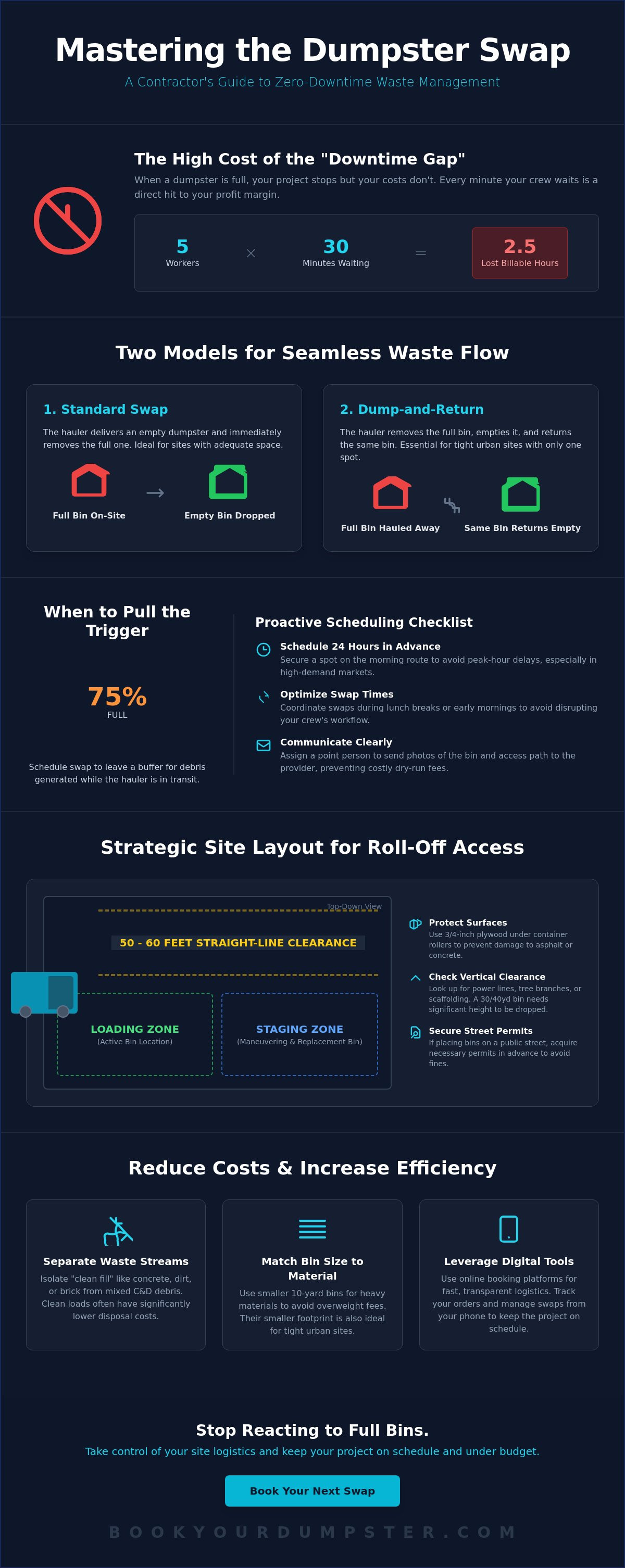
A standard pickup is a single logistical event, but a swap is a synchronized exchange. In the professional world of Roll-off dumpsters, a swap involves the hauler pulling away a full bin and immediately dropping an empty one in its place. This 1-for-1 trade keeps your site operational without any interruption in waste disposal. If your site has a limited footprint with only one available spot, use the "Dump-and-Return" model. In this scenario, the hauler removes the full container, empties it at a local facility, and returns it to the same location. This is a critical strategy for urban projects where space is at a premium.
Mastering the timing of coordinating dumpster swaps on a busy job site is the only way to avoid the "Downtime Gap." This gap occurs when the bin is at capacity and the crew has nowhere to stage debris. Labor costs continue to mount even when production stops. If a five-man crew is sidelined for just 30 minutes while waiting for an empty bin, you've effectively lost 2.5 billable hours. High-volume commercial projects demand this level of precision. While a residential cleanup can handle a day of delay, a professional job site requires a seamless transition to maintain the schedule.
When to Pull the Trigger on a Swap
Don't wait for the bin to overflow before making the call. Signal for a swap when the container is approximately 75% full. This buffer accounts for the debris generated by your crew while the hauler is in transit. Heavy materials like concrete, brick, or dirt will reach weight limits long before the bin looks full. In high-demand markets like New Jersey or Illinois, hauler lead times can vary significantly based on the season. Schedule your swap at least 24 hours in advance to secure your spot in the morning route and avoid peak-hour delays.
The Role of the Site Supervisor in Waste Flow
Efficiency starts with clear communication. Assign a specific site supervisor or foreman to be the point person for all waste logistics. This individual should document bin levels at the start and end of every shift to track the rate of waste generation. Use a smartphone to take clear photos of the bin's interior and the access path. Send these photos to your provider to verify that the bin is ready for pickup and that the area is clear of obstructions. This proactive step prevents expensive dry run fees and ensures the truck can complete the swap without delay. For streamlined logistics and transparent booking, manage your project through Book Your Dumpster USA.
Strategic Site Layout: Staging and Access for Roll-Offs
Effective site management starts with a layout that prioritizes waste flow. When you're coordinating dumpster swaps on a busy job site, you must designate a Loading Zone versus a Staging Zone to keep the project fluid. The Loading Zone is the primary location where the active bin sits for immediate debris disposal. The Staging Zone is a secondary, cleared area where a replacement bin can be dropped or where the hauler can maneuver without blocking the main entrance. Maintaining this distinction prevents your waste management from becoming a site bottleneck.
Precision is vital for successful deliveries. You must ensure a 50 to 60 foot straight-line clearance for the roll-off truck approach. If the driver cannot align the truck's rails with the drop point, they can't complete the swap. This leads to dry run fees and keeps your full bin on-site longer than planned. Look up before the truck arrives. In dense urban environments like Queens or Boston, low-hanging power lines, tree branches, and scaffolding are common hazards. A 30 or 40-yard bin requires significant vertical clearance when the truck bed is tilted for the drop. Always protect your site surfaces. Use 3/4-inch plywood under the rollers to prevent heavy containers from cracking asphalt or damaging fresh concrete. If you're placing bins on a public street, secure the necessary street permits beforehand to avoid municipal fines.
Optimizing Tight Urban Job Sites
In cities like San Francisco or New York, street space is a luxury that requires aggressive management. When your site footprint only allows for one truck width, use the In-and-Out maneuver. This involves timing the hauler's arrival to coincide with a temporary halt in other subcontractor deliveries. For the tightest confined areas, consider using 10-yard dumpsters for heavy debris like concrete or dirt. Their smaller footprint allows for placement in alleys or narrow driveways where larger bins simply won't fit. Coordinating dumpster swaps on a busy job site in these environments requires a proactive approach to local permit requirements and neighborhood traffic patterns.
Traffic Control and Safety During the Swap
Safety is a non-negotiable priority during any equipment exchange. Follow OSHA waste disposal regulations to ensure your site remains compliant and hazard-free. Clear all worker vehicles and heavy equipment from the access path at least 15 minutes before the hauler's scheduled arrival. Use a designated spotter to guide the driver, especially in high-pedestrian areas or narrow alleys. Install clear signage on your bins to prevent mystery dumping from third parties, which can lead to unexpected overweight fees and contaminated loads. If you need a reliable partner to manage these complex logistics, schedule your next roll-off delivery with a team that respects your site's constraints.
How to Coordinate Swaps Without Disrupting the Crew
A dumpster swap shouldn't force your crew to put down their tools. Effectively coordinating dumpster swaps on a busy job site means integrating the hauler's arrival into your existing project timeline. Aim for low-activity windows to minimize interference. Schedule your swaps for the early morning before the full crew arrives or during the midday lunch break. This timing ensures the heavy machinery required for the swap doesn't compete for space with subcontractors or delivery trucks. When the bin is replaced while the crew is off the clock, work resumes immediately without a second of wasted labor.
Communication is the backbone of a smooth exchange. Don't make the driver hunt for a foreman or wait at a locked entrance. Provide the hauler with a specific gate code or the direct cell phone number of the site contact person. This direct line of communication allows the driver to navigate the site independently and resolve minor access issues without pulling a supervisor away from a critical task. Additionally, always confirm that the incoming bin size matches the next phase of your project. If you're finishing heavy demolition and moving into light interior work, swapping a 10-yard bin for a 30-yard container ensures you have the volume needed for the next wave of debris.
Verify site readiness before the truck is dispatched. Haulers cannot transport containers with protruding debris or "mountain-topped" loads that exceed the height of the bin walls. If a container is overfilled, the driver will be forced to leave it behind, resulting in a dry run fee and continued site congestion. Walk the site 15 minutes before the scheduled swap to ensure the bin is level-loaded and ready for the road.
The 24-Hour Notification Rule
Last-minute calls are the primary cause of site bottlenecks. Most haulers in high-demand regions require at least 24 hours of lead time to guarantee a morning slot. For predictable demolition phases, establish a recurring swap schedule. This proactive approach locks in your waste removal and prevents the container from reaching capacity before a replacement is booked. If weather delays or failed inspections halt production, notify your provider immediately to push the swap back. Managing these shifts early keeps your logistics flexible and prevents unnecessary charges.
Pre-Arrival Checklist for Site Managers
Site managers must perform a final sweep to ensure the hauler has a clear path of at least 12 feet in width. Subcontractor parking is the most frequent obstacle for roll-off trucks. Use the following checklist to prepare the area:
- Confirm worker vehicles are not blocking the 50-60 foot approach path.
- Ensure the bin is loaded level with no items hanging over the sides.
- Check that the staging area for the new bin is clear of equipment or materials.
- Verify that any temporary fencing or gates are open and secured.
Taking five minutes to clear these hurdles ensures that coordinating dumpster swaps on a busy job site remains a background task rather than a project-stopping event.
Managing Multiple Waste Streams for Cost Efficiency
Mixing all your debris into a single container is a costly mistake. Separating clean fill like concrete, brick, and asphalt from mixed construction and demolition (C&D) waste significantly lowers your tipping fees. When you're coordinating dumpster swaps on a busy job site, you have the opportunity to refine your disposal strategy with every exchange. Use a 10-yard dumpster for heavy, dense materials to avoid exceeding weight limits and incurring overage charges. Reserve 40-yard dumpsters for light, bulky items like insulation, wood scraps, and drywall. This specialized approach ensures you aren't paying premium rates for heavy loads in oversized bins.
Contamination is the biggest threat to your waste budget. A single bag of household trash or a piece of treated lumber in a "clean wood" bin can double your disposal costs instantly. Implement a clear labeling or color-coding system for multiple bins on one site. Use high-visibility spray paint or durable placards to mark each container. Monitor these bins daily to catch sorting errors before the hauler arrives. If you catch a mistake early, you can correct it on-site rather than paying a mixed-load penalty at the facility.
The Logistics of Multi-Bin Staging
Position your bins based on the sequence of your demolition. If you're starting with masonry removal, place the heavy fill bin at the primary access point. As the project shifts to framing or interior finishing, swap in larger containers for bulkier waste. Always ensure the heaviest bin is positioned closest to the site exit. This reduces the time the hauler spends maneuvering on-site and minimizes the risk of a heavy truck getting stuck in soft ground or tight corners. For a deeper dive into material-specific strategies, consult the Ultimate Guide to Construction Debris Removal.
Reducing Fees Through Proactive Sorting
Coordinated swaps allow you to sort materials on-the-fly as project phases evolve. Mixed load penalties in high-cost regions like New Jersey are severe, often resulting in significant surcharges for a single container. Train your crew on a strict "What Goes Where" site policy from day one. When workers understand that clean concrete costs less to dump than mixed trash, they become stakeholders in your site's efficiency. Book multiple bin sizes today to keep your waste streams separate and your project under budget.
Reliable Swap Logistics with Book Your Dumpster USA
Logistical stress shouldn't be a permanent fixture of your project management. Managing waste on a high-stakes project requires a partner who understands that time is your most valuable asset. Coordinating dumpster swaps on a busy job site is a discipline we have perfected through digital innovation and local operational expertise. We don't just drop bins; we integrate with your specific project timeline to ensure your crew never hits a bottleneck. Our versatile fleet includes 10, 20, 30, and 40-yard dumpsters, providing the right tool for everything from heavy masonry removal to bulk interior finishing. With deep coverage across New York, New Jersey, Illinois, and Massachusetts, we provide the regional reliability necessary for large-scale commercial contractors and local builders alike.
Experience a modern approach to waste management that favors direct communication and no-nonsense coordination. We respect your project schedule and understand that a delayed swap is a direct hit to your profit margin. Our team prioritizes punctuality and site safety, ensuring every drop and pickup happens exactly when and where you need it. By removing the guesswork from waste disposal, we allow you to focus on the build while we handle the debris.
Streamlined Online Booking for Contractors
Efficiency starts before the truck even arrives. Schedule your next swap in under 60 seconds using our streamlined online platform. We've removed the friction from traditional waste management by providing transparent pricing with zero hidden fees. You get the exact rate for your project upfront, which allows for accurate bidding and tighter budget control on complex, multi-swap jobs. Access your account at any time to review your Roll Off Dumpster Rental history, track active containers, and manage logistics for multiple job sites from a single, high-velocity dashboard. This digital-first approach reduces your administrative load and keeps your records organized for every project phase.
Your Partner in Professional Waste Management
Local knowledge is the difference between a successful swap and a site-blocking delay. We understand the specific municipal regulations and unique traffic patterns that define dumpster rental in New York and Illinois. Whether you're navigating tight urban streets or sprawling suburban developments, our drivers have the expertise to place your bin exactly where it needs to be. Our commitment to site safety means we follow strict protocols to protect your property and your crew during every exchange. Don't let waste management slow your momentum or clutter your site. Book Your Next Dumpster Swap Online and experience the reliability of a partner who treats your timeline with the same urgency you do.
Take Control of Your Site Logistics
Site efficiency is the result of precise planning and reliable partnerships. By designating clear staging zones and timing your pickups for low-activity windows, you keep your crew productive and your site safe. Effectively coordinating dumpster swaps on a busy job site is a background process that supports your project timeline rather than interrupting it. Always remember to separate your waste streams to avoid mixed-load penalties and select the specific container size that matches your current project phase.
Ready to streamline your waste removal? Book Your Dumpster USA provides a full range of 10, 20, 30, and 40-yard containers across major metros including New York, New Jersey, Illinois, Massachusetts, and San Francisco. Our streamlined online booking system allows you to manage your logistics in under a minute. Schedule Your Next Dumpster Swap with Book Your Dumpster USA today. Maintain your momentum and keep your job site clear of bottlenecks.
Frequently Asked Questions
How much notice is required for a dumpster swap?
Provide at least 24 hours of notice to guarantee a slot in the hauler's daily route. For high-volume projects that require specific morning arrival times, scheduling 48 hours in advance is a safer strategy. This lead time ensures that a driver is dispatched exactly when your crew reaches capacity, preventing any stop in production.
Can I swap a 20-yard dumpster for a 40-yard dumpster mid-project?
You can change container sizes during any swap to match your current project phase. If you've finished heavy masonry work and are moving into bulky interior demolition, request a 40-yard dumpster to replace your 20-yard unit. This flexibility is a core part of coordinating dumpster swaps on a busy job site as waste volume fluctuates.
What happens if the dumpster is blocked when the driver arrives for a swap?
If the hauler cannot access the bin due to parked vehicles or equipment, they will move to the next stop on their route. This results in a dry run fee and keeps the full container on your site. Clear the 50-60 foot approach path 15 minutes before the scheduled exchange to avoid these avoidable delays and costs.
Are there extra fees for daily dumpster swaps?
There are no specific surcharges for the frequency of your swaps. You pay the standard haul rate and disposal fees for each exchange performed. Frequent swaps are often the most cost-effective way to manage a site because they eliminate the expensive labor downtime caused by overflowing containers and restricted site access.
How do I coordinate swaps for different types of waste, like concrete and wood?
Order dedicated bins for each material stream to take advantage of lower tipping fees for clean fill. Use a 10-yard dumpster for heavy materials like concrete and a 30 or 40-yard dumpster for lighter C&D debris like wood and drywall. Label each container clearly to prevent your crew from cross-contaminating the loads.
What is the maximum weight limit for a 40-yard dumpster swap?
The maximum weight limit for a 40-yard container is typically 10 tons, or 20,000 pounds. Exceeding this limit creates safety risks during transport and results in significant overweight fees from the landfill. Never fill large-volume bins with heavy inert materials like dirt or brick, as they will exceed the weight limit long before the bin is physically full.
Do I need to be present on-site during the swap?
You don't need to be physically present if the access path is clear and you've provided all necessary instructions. Share gate codes and the direct cell number of a site contact during the booking process. Coordinating dumpster swaps on a busy job site is most efficient when the hauler can complete the exchange without pulling a supervisor away from the build.
How do I handle dumpster permits for street swaps in cities like San Francisco?
Secure a street occupancy permit from the local Department of Public Works before the bin arrives. In cities like San Francisco, you must display these permits on the container and often set up temporary "No Parking" signs 72 hours in advance. This ensures the hauler has the necessary legal clearance and physical space to perform the swap on a public right-of-way.


