
The most convenient-looking debris removal service might actually be the biggest drain on your project's budget. You want the waste gone without the headache of soaring labor costs or confusing local permits. Whether you're in the middle of a Chicago renovation or a New York City clean-out, managing piles of trash is a logistical nightmare. It's frustrating to watch your budget disappear into hauling fees while you struggle to estimate your total waste volume.
This guide compares the most efficient methods for your local project and shows why a roll-off dumpster is usually the smartest choice for both your wallet and your schedule. We'll provide a clear cost-benefit analysis of removal methods across New York, Illinois, and Massachusetts. You'll learn how to navigate local disposal rules, such as the November 1, 2022 mattress ban in Massachusetts or the July 6, 2024 permit modification deadline in Illinois. Finally, we'll show you how to select the right container size to ensure your project stays on track and under budget. Book your dumpster today and take control of your job site.
Key Takeaways
- Compare the flexibility of roll-off dumpsters against the high labor costs of traditional junk removal crews.
- Evaluate your project needs with a decision framework that identifies the most cost-effective debris removal service for your specific volume.
- Stay compliant with local disposal rules in New York, Illinois, and Massachusetts to prevent project delays or legal penalties.
- Select the perfect container size for your waste by using our project-to-size matching guide for 10 to 40 cubic yard units.
- Streamline your cleanup process with a professional booking system that offers transparent pricing and reliable on-time delivery.
Comparing Debris Removal Options in New York, Illinois, and Massachusetts
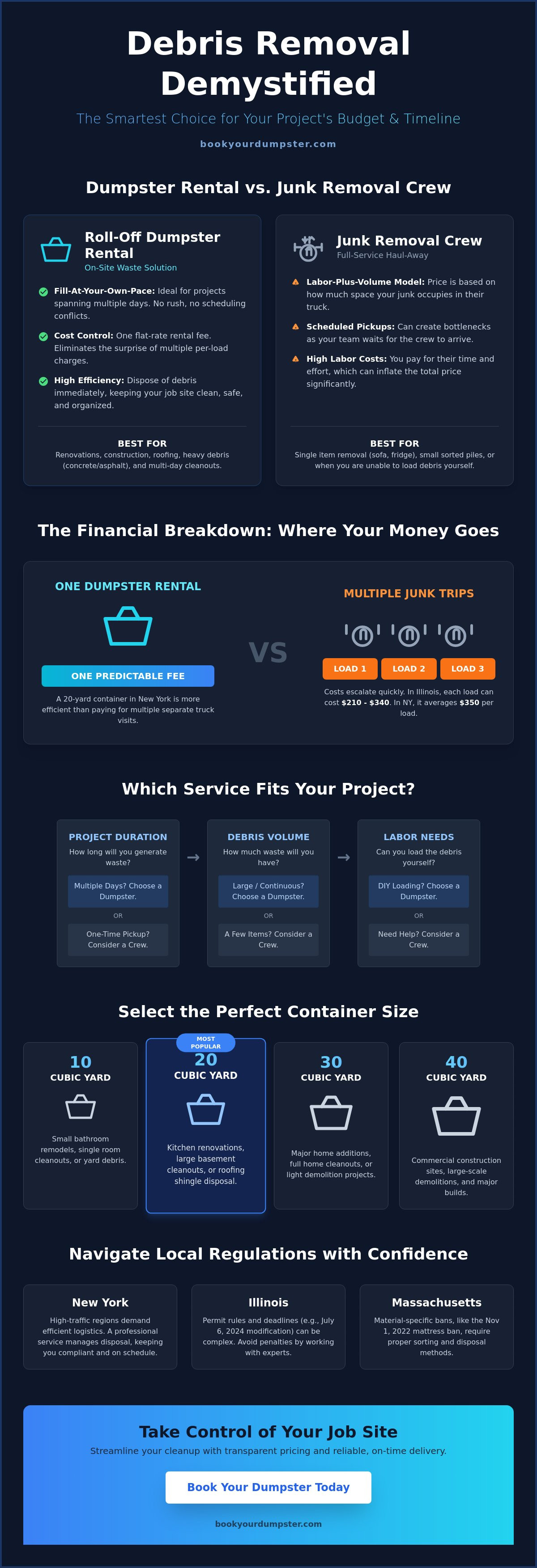
A professional debris removal service is the systematic disposal of construction, yard, or household waste. It's a logistical process that relies on core waste management principles to sort and transport materials safely. In high-traffic regions like New York, Illinois, and Massachusetts, your choice of disposal method impacts your bottom line and your project timeline. You generally face two choices: hiring a labor-intensive junk removal crew or renting a roll-off dumpster. Matching the service type to your project's volume and duration is the only way to avoid overpaying for waste disposal.
The Full-Service Haul-Away Model
Junk removal crews operate on a labor-plus-volume model. They charge based on the space your items occupy in their truck. This model is useful for quick, one-off pickups. If you need to discard a single refrigerator or a small pile of branches, a scheduled pickup is fast. However, it's rarely the best fit for ongoing construction. In Illinois, where junk removal costs typically range from $210 to $340 per load, the price adds up quickly if you have multiple piles. Scheduled pickups create bottlenecks because your team has to wait for the crew to arrive before the site is clear again.
The Roll-Off Dumpster Rental Model
Renting a roll-off dumpster provides a constant, reliable waste solution on your property. This model gives contractors and DIY homeowners the "fill-at-your-own-pace" advantage. You don't have to coordinate with a crew's schedule or pay for their hourly labor. In New York, where average disposal costs hit $350, having a single 20-yard container on-site is more efficient than paying for three separate truck visits. Massachusetts residents, who face average removal costs between $270 and $420, benefit from the predictable pricing of a rental. Book Your Dumpster USA focuses on this utility model to keep your project moving. It's the most cost-effective way to handle heavy debris like masonry, asphalt, or roofing materials. Choose your size, schedule your delivery, and keep your site clean without the hidden fees of labor-based services.
- Utility: Roll-off dumpsters stay on-site for the duration of the project.
- Efficiency: No waiting for external crews to arrive and load waste.
- Cost Control: Flat-rate pricing eliminates the uncertainty of "truckload" estimates.
The right debris removal service depends on your specific goals. If you're tackling a multi-day renovation or a large-scale commercial demolition, the utility of a dumpster is unmatched. It removes the logistical stress of managing piles of waste while you work. Instead of watching trash accumulate, you can dispose of it immediately and keep your job site safe and organized.
Dumpster Rental vs. Junk Removal: Which Is Best for Your Project?
Choosing the right debris removal service requires a logical look at your project's scope. You must evaluate three specific factors: volume, timeline, and debris type. While junk removal offers immediate disposal, it often lacks the flexibility needed for active job sites. If you generate waste over several days, a dumpster provides a centralized location for disposal. This eliminates the need to coordinate with a crew every time a pile grows too large. It also saves you from the labor costs that drive up the price of hauling services in high-cost areas like Chicago or NYC.
Cost structures differ significantly between these two methods. Junk removal companies typically charge by the truckload. With a national average junk removal cost of $241, this might seem affordable for a single item. However, for a full renovation in New York where the average cost hits $350 per load, multiple trips quickly become expensive. A flat-rate dumpster rental removes this uncertainty. You pay for the container size, not the hours spent loading it. This approach aligns with Sustainable C&D materials management practices by allowing you to sort materials on-site for better recycling outcomes.
When to Choose a Debris Removal Crew
Select a haul-away crew for small, sorted piles located in easily accessible areas like a driveway or curb. This is the ideal solution for homeowners who are physically unable to load heavy debris themselves. If you have a "one-and-done" cleanout, such as removing an old sofa or a single pile of yard waste, a quick pickup makes sense. It's a specialized service for items that don't require an ongoing container presence on your property. However, for anything larger than a single room clean-out, the labor costs usually outweigh the convenience.
When to Rent a Roll-Off Dumpster
Rent a roll-off dumpster for projects that generate continuous waste, such as kitchen guts, roof replacements, or large-scale renovations. Dumpsters are superior for heavy materials like concrete, brick, and dirt. These materials often exceed the weight limits of standard junk removal trucks, leading to extra fees or refused pickups. Check out debris removal near me to find local options in your city. Having a container on-site for weeks allows you to maintain a safe, clean workspace without the pressure of a scheduled arrival time. Choose your dumpster size today to keep your project moving efficiently and avoid the logistical stress of multiple pickups.
Navigating Local Debris Disposal Regulations in NY, IL, and MA
Managing a professional debris removal service requires more than just a truck and a shovel. You must navigate a complex web of state and local regulations to avoid heavy fines. In New York, Illinois, and Massachusetts, environmental agencies enforce strict standards for what can enter a landfill. For example, Massachusetts has implemented aggressive waste bans under 310 CMR 19.000. Since November 1, 2022, mattresses and textiles are strictly prohibited from disposal sites. If you mix these banned materials into a standard container, you risk rejected loads and additional fees. Working with a local provider ensures your project stays compliant with these evolving state laws.
Landfills in these regions prioritize "clean" debris like concrete and rock for recycling. New York’s 6 NYCRR Part 360 regulations set high bars for solid waste management facilities. If you're a contractor, you need to know that transporting regulated waste often requires a Part 364 permit. Don't guess which items are allowed. Prohibited items often include hazardous materials, electronics, and liquid waste. Identifying these before you fill your container prevents logistical delays at the transfer station and keeps your costs predictable.
Permitting and Street Placement Rules
Placing a dumpster on public property in high-density cities like Chicago or NYC is not a simple task. You often need a "Street Permit" or "Right-of-Way" permit before the delivery truck arrives. In Chicago, failing to secure authorization can lead to immediate citations. In New York City, the Department of Transportation regulates sidewalk and street placement strictly. You hold the liability for any container placed without a permit. Before booking your debris removal service, use this checklist for site preparation:
- Measure the clearance for the delivery truck to ensure a safe drop-off.
- Verify if your local municipality requires a permit for driveway placement.
- Ensure the area is clear of low-hanging branches or power lines.
- Check for local parking restrictions that might block the delivery vehicle.
State-Specific Waste Disposal Agencies
The Illinois EPA and MassDEP actively monitor construction debris sites. In Illinois, facilities must comply with 35 Ill. Adm. Code 820. Permitted facilities had a deadline of July 6, 2024, to apply for modifications to meet these standards. This level of oversight means your waste must be handled by professionals who understand the paperwork. New York maintains some of the nation's strictest rules for C&D (Construction and Demolition) recycling to divert waste from landfills. For a deep dive into specific regional requirements, consult our 2026 Resource Guide. Stay informed to keep your project moving without legal interference.
Sizing Your Solution: Which Dumpster Size Fits Your Debris?
Selecting the wrong container size is a fast way to blow your project budget. If you choose a bin that's too small, you'll pay for a second haul. If it's too large, you're paying for unused space. A professional debris removal service requires precision to remain cost-effective. You must also avoid the "overfilling" trap. Loading debris above the rim creates a safety hazard for the driver and often results in extra weight fees or a refused pickup. Always fill your container to the "water level" mark to ensure a hassle-free haul-away.
Debris density matters just as much as volume. A 20-yard bin filled with household junk weighs much less than the same bin filled with asphalt shingles. In Massachusetts, where disposal bans on metal and wood are strictly enforced, using the right size helps you separate materials effectively. This prevents the logistical stress of sorting through a mixed pile at the last minute. Use the following guide to match your project to the right container:
- 10 Yard: 1-car garage cleanout or 250 square feet of deck removal.
- 20 Yard: 2,500 square feet of roofing shingles or a large kitchen gut.
- 30 Yard: Window replacement for an entire home or estate cleanouts.
- 40 Yard: Commercial roof replacements or new home construction sites.
Small to Mid-Sized Projects (10-20 Yards)
A 10-yard dumpster is the go-to for small residential cleanouts. It's the perfect size for a bathroom remodel or cleaning out a cluttered attic. This size also handles heavy yard waste like soil or sod without exceeding weight limits. For more details on this compact option, read our 10 yard dumpster rental guide. If you're tackling a larger task like a basement renovation or a standard roof replacement, the 20-yard dumpster is the industry standard. It holds approximately 110 to 130 contractor-grade trash bags, making it versatile for most DIY homeowner projects.
Large Construction and Commercial Debris (30-40 Yards)
Major home additions and commercial office cleanouts require the capacity of a 30-yard dumpster. This size accommodates bulky items like furniture, large sections of drywall, and long pieces of lumber. When your project involves full building demolition or massive landscaping overhauls, the 40-yard dumpster is the only logical choice. These containers are designed for high-volume waste, but you must monitor the weight. Heavy materials like concrete or wet soil can quickly exceed the 4 to 6-ton weight limits common for these units. Exceeding these limits makes the container impossible to lift safely and triggers significant overage penalties at the landfill.
Don't let waste management slow down your progress. Matching your container to your specific task keeps your job site organized and your costs transparent. Choose your size and book your delivery now to secure the right equipment for your next project.
Reliable Debris Removal with Book Your Dumpster USA
Choosing a professional debris removal service shouldn't be a gamble. In regions with strict oversight like Massachusetts or Illinois, you need a partner that understands the rules. We provide the utility you need without the logistical stress of managing multiple haul-away crews. Our online system is built for speed. You get instant access to the equipment required for your project. We maintain a strict "no hidden fees" policy. This distinguishes us from the opaque pricing often found elsewhere in the hauling industry. Whether you're managing a $350 project in New York or a standard cleanout in Illinois, your costs remain predictable from start to finish.
Professional waste management is about more than just a metal bin. It's about reliability and respect for your property. We handle the heavy lifting of logistics so you can focus on your construction or renovation goals. Our team stays current on all state regulations. This includes the November 1, 2022 mattress ban in Massachusetts and the July 6, 2024 permit modification deadlines in Illinois. We ensure your waste reaches the right facility every time. Trust a partner that modernizes a traditional industry through digital convenience and straightforward honesty.
Professional Placement and On-Time Delivery
Job sites in busy metro areas like Boston or NYC have zero room for error. Our drivers understand the tight corners of historic neighborhoods and the high-traffic demands of urban centers. We offer various sizes to fit narrow streets where larger trucks might struggle. We also prioritize property protection. We use professional placement techniques to protect your driveway and landscaping from damage. Our on-time delivery promise means your container arrives when you need it. No waiting around. No stalled projects. Book your dumpster and keep your site moving.
Modern Waste Management Logistics
Our digital-first booking platform removes the stress of traditional waste hauling. You don't need to spend hours on the phone negotiating rates. Instead, choose your size and schedule your delivery in minutes. This modern approach reduces friction and moves you quickly from a state of clutter to a state of resolution. For specific scheduling tips and regional advice, check our guide on debris pickup. We provide the tools you need to manage waste like a pro. Book your dumpster today and clear your debris hassle-free. Take control of your project with a service that values your time and your budget.
Take Control of Your Project Site
Managing waste doesn't have to be the most stressful part of your renovation or construction job. You've seen how a roll-off container provides more utility and better cost control than labor-intensive hauling crews for multi-day projects. By selecting a professional debris removal service, you eliminate the uncertainty of volume estimates and keep your site safe. Always verify local regulations, such as the November 1, 2022 mattress ban in Massachusetts or the July 6, 2024 permit deadlines in Illinois, to ensure your project stays on the right side of state laws.
Stop letting debris piles slow down your progress. Our streamlined online booking system allows you to schedule a delivery in minutes without the hassle of traditional phone tag. We provide on-time delivery throughout New York, Illinois, and Massachusetts with a no hidden fees guarantee. Choose the right size for your specific volume and experience a transparent disposal process from start to finish. Book Your Dumpster Now and clear your site today. You have the plan; now get the right tools to finish the job with confidence.
Frequently Asked Questions
What is considered construction debris in New York?
In New York, construction and demolition (C&D) debris consists of materials produced by the repair, construction, or demolition of structures. This includes concrete, asphalt, brick, wood, and plumbing fixtures. Under 6 NYCRR Part 360, these materials must be managed at authorized facilities. Proper sorting is essential because New York focuses heavily on recycling these specific streams to divert them from solid waste landfills and promote sustainable building practices.
Can I put yard waste and construction debris in the same dumpster?
You generally cannot mix yard waste and construction debris in the same container. Most landfills and transfer stations require these waste streams to be separated for different processing methods. Yard waste often goes to composting facilities, while construction debris is sent to C&D recycling centers. Mixing them can lead to rejected loads or contamination fees at the disposal site. Always check with your provider before combining organic and structural waste.
How much space do I need for a roll-off dumpster delivery in Chicago?
A roll-off dumpster delivery in Chicago requires approximately 60 feet of straight line clearance for the truck to drop the container. The area should be at least 10 feet wide and have 23 feet of vertical clearance to accommodate the raised hoist. In tight urban alleys or narrow residential streets, ensure no cars block the path. Providing clear access prevents failed delivery attempts and additional trip fees on your project.
Do debris removal services in Massachusetts require a permit for driveway placement?
Driveway placement in Massachusetts typically does not require a state level permit. However, local bylaws in towns like Brookline or Cambridge may have specific rules regarding the duration of the rental or property line setbacks. If the container spills onto a public sidewalk or street, you must secure a permit from the local Department of Public Works. Always verify your specific town's requirements before scheduling your debris removal service to avoid local citations.
What items are prohibited in a debris removal dumpster?
Prohibited items include hazardous waste, liquids, lead-acid batteries, and electronics. You cannot dispose of asbestos, paints, motor oil, or propane tanks in a standard roll-off container. In Massachusetts, mattresses and textiles were added to the list of banned landfill items on November 1, 2022. Placing these items in your dumpster will result in extra charges or the driver leaving the materials behind at your job site during pickup.
Is a 10-yard dumpster enough for a standard kitchen remodel?
A 10-yard dumpster is typically too small for a full kitchen remodel. While it works for a small bathroom, a standard kitchen gut generates between 15 and 20 cubic yards of waste once cabinets and appliances are removed. Opting for a 20-yard container ensures you have enough space for bulky items like countertops and flooring. This prevents the need for a second haul, which saves you money on your overall debris removal service costs.
How does weather affect debris removal services in Illinois?
Extreme weather in Illinois, such as heavy snow, can delay delivery and pickup schedules due to road safety concerns. Ice also makes it difficult for trucks to navigate steep driveways or narrow alleys safely. Additionally, rain adds significant weight to porous materials like wood or drywall. Since you pay for the weight of the debris, using a tarp during wet weather prevents your disposal costs from increasing unexpectedly due to water absorption.
What happens to the debris after it is hauled away?
Your debris is transported to a local transfer station or a dedicated recycling facility. Materials like concrete and metal are sorted out for reuse in new construction projects. In states like New York and Massachusetts, strict recycling mandates ensure that a high percentage of C&D waste is diverted from landfills. The remaining non-recyclable items are processed and sent to a regional landfill for final disposal according to state environmental laws.


