
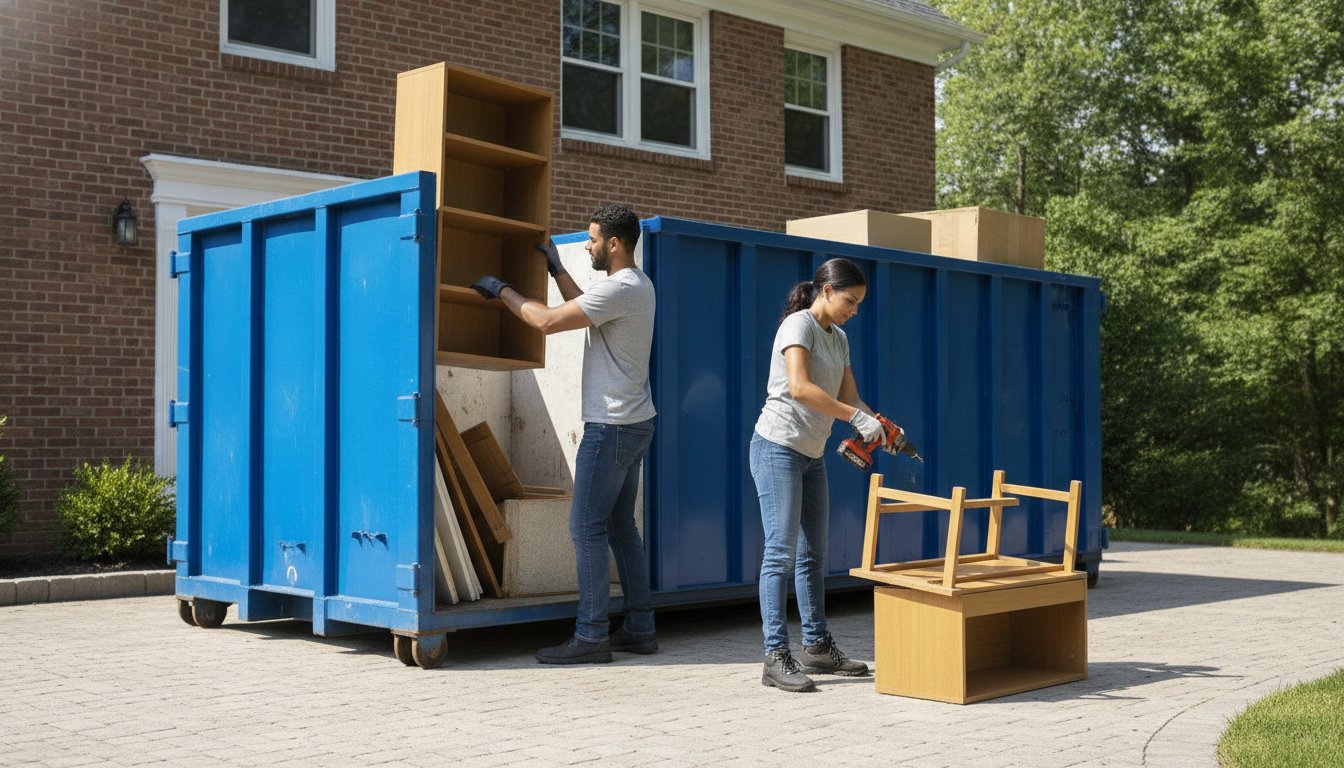
A poorly loaded dumpster is a direct drain on your project budget. Tossing an intact sofa into a bin is the fastest way to pay for air you aren't actually using. Most people underestimate how quickly bulky items consume volume, leading to wasted money and the potential need for a second container. When you are disposing of furniture in a rental dumpster, every square inch matters. You need a strategy that prioritizes volume management and strict regulatory compliance to avoid the 40 to 200 dollar per ton overweight fees that landfills often charge for exceeding limits.
It's natural to feel uncertain about local regulations or fear hidden costs when clearing out a home or job site. You want a clear path from a cluttered room to a clean slate without the logistical stress of a rejected load. This guide provides the exact steps to maximize your 10, 20, 30, or 40 yard dumpster effectively. We'll break down which items are prohibited, show you how to disassemble heavy pieces to save space, and provide a reliable strategy for a friction-free cleanup project.
Key Takeaways
- Understand the legal requirements for roll-off containers to avoid fines associated with improper disposal or illegal dumping.
- Identify restricted items like mattresses and specific upholstered pieces that landfills may prohibit or charge extra to process.
- Select the right container capacity by matching your furniture volume to available 10, 20, 30, or 40-yard dumpster options.
- Apply the "Disassembly First" rule for disposing of furniture in a rental dumpster to break down bulky frames and maximize your available space.
- Follow a professional loading sequence that prioritizes heavy, flat materials on the bottom to ensure a stable and efficient load.
Can You Put Furniture in a Rental Dumpster? Rules and Legality
Disposing of furniture in a rental dumpster is generally permitted, but it isn't a free-for-all. Most standard household items like wooden tables, metal bed frames, and empty cabinets are acceptable in roll-off containers. However, you must differentiate between authorized rental use and illegal dumping. Authorized use means you have a formal agreement for a specific container size, like a 10, 20, 30, or 40 yard dumpster. Illegal dumping occurs when you use a bin without permission or leave items in public spaces. Fines for illegal dumping can be severe, sometimes reaching thousands of dollars depending on your municipality. Avoid these risks by securing a legitimate rental through Book Your Dumpster USA to handle your project legally.
Local landfill regulations dictate exactly what a hauling service can accept. States like New York and Massachusetts have strict environmental protocols that influence disposal options. Landfills in these regions often categorize furniture as "bulky waste," which may carry specific surcharges. Always check your rental agreement for these fees before you start loading. These rules are grounded in broader waste management principles that prioritize the safe handling of materials and the reduction of landfill strain. Clear communication with your provider prevents the logistical friction of a rejected load at the scale house. Understanding these guidelines ensures your project stays on budget and remains compliant with state law.
Understanding Local Disposal Regulations
Municipal rules vary significantly between urban centers and rural areas. In high-density locations like Queens or San Francisco, strict recycling mandates may apply to upholstered furniture or items containing treated wood. Some regions require source separation, meaning you cannot mix metal furniture with general debris. These mandates are designed to divert recyclable materials away from landfills. Always verify if your specific city requires furniture to be broken down or separated before it hits the bin.
The 'Private Property' Rule
Never use a neighbor's or a local business's dumpster for your old furniture. This is a criminal offense in many jurisdictions and leads to immediate legal repercussions. Additionally, do not leave furniture next to your dumpster. Items must be inside the container to be hauled away. To ensure a legal setup, place your rental dumpster on your private driveway. If you must use a public street or alley, check with your local building department. You will likely need a right-of-way permit to avoid citations from city inspectors.
Approved vs. Prohibited Furniture Items
Successful disposal starts with knowing what can legally enter the bin. Most residential furniture is acceptable, but you must look for hidden prohibited materials. Standard wooden tables, chairs, and desks are rarely an issue. Empty wooden or metal cabinets also pass inspection easily. However, modern furniture often incorporates electronics, such as USB ports in headboards or motorized recliners. These components classify the item as e-waste in many jurisdictions, making them prohibited in a standard roll-off container. If you aren't sure about a specific piece, it's best to check with your provider before you start loading.
Upholstered items like couches and padded office chairs are generally allowed. The main concern here is volume rather than material. If you are disposing of furniture in a rental dumpster, you must account for the space these bulky items occupy. For items with hazardous components like mercury switches in vintage reclining mechanisms, you'll need to remove the hardware before tossing the frame. This attention to detail prevents your entire load from being rejected at the landfill.
The Mattress and Box Spring Challenge
Landfills struggle with mattresses because they don't compress well. Internal springs can damage landfill equipment, leading many facilities to ban them or charge significant surcharges. In the Northeast, specifically New Jersey and Massachusetts, state regulations often require mattresses to be recycled separately. Before you load your bin, check the NYC large item disposal rules for a clear example of how major cities manage these bulky items. If your rental agreement prohibits mattresses, look for a local recycling center that accepts them for a flat fee.
Weight Limits and Heavy Furniture
Don't let the size of a dumpster fool you; weight capacity is just as important as volume. Solid oak dining tables or heavy mahogany wardrobes weigh significantly more than modern particle board alternatives. Sleeper sofas are particularly deceptive. The internal metal folding frame adds hundreds of pounds to the total weight. If your load exceeds the dumpster's limit, you could face overweight fees ranging from $40 to $200 per extra ton. Estimate your total tonnage by researching the average weight of your heaviest pieces before you start. If you have a house full of solid wood antiques, you might need a 30 or 40 yard dumpster to accommodate the weight without hitting a limit.
Choosing the Right Dumpster Size for Furniture Disposal
Matching your furniture volume to the correct container size is the most effective way to control your project costs. Many homeowners make the mistake of renting the smallest available bin to save money, only to realize that bulky items like sofas and armoires create massive air pockets. When you are disposing of furniture in a rental dumpster, you must visualize your items in terms of cubic yards rather than just room count. A standard 10 yard dumpster holds approximately three to four pickup truck loads of debris. If you are clearing out a multi-bedroom home, you will likely need a 20 or 30 yard dumpster to avoid the logistical headache of a second rental or the safety hazard of an overfilled bin.
Renting a bin that is too small often leads to "overtopping," where debris extends above the side walls. Haulers cannot legally transport these loads due to safety regulations. When disposing of furniture in a rental dumpster, you must keep all items level with or below the top rim. This prevents "dry run" fees where you pay for the truck to arrive, but the driver cannot take the container until you remove the excess. Adhering to federal property disposition regulations and local safety standards is crucial for a smooth removal process. It's always more cost-effective to order one size larger than you think you need than to pay for multiple hauls or overage penalties.
The 10-Yard Dumpster for Small Furniture Loads
A 10 yard dumpster is the go-to choice for single-room cleanouts or small apartment moves. It easily accommodates a queen-sized bed, a dresser, a nightstand, and several kitchen chairs. This size is particularly popular for residential projects in dense urban areas like San Francisco where driveway space is limited. For more details on dimensions and capacity, see our 10 Yard Dumpster Rental: The Perfect Size for Your Project guide.
Large Scale Projects: 30 and 40-Yard Containers
Commercial office clearouts or whole-house renovations require the heavy-duty capacity of 30 and 40 yard containers. These bins are designed for massive volume, such as dozens of desks, filing cabinets, or sectional sofas. Managing these large roll-off placements in cities like New York or Chicago requires careful planning to ensure the truck has enough clearance for delivery. If you are handling a high-volume project, consult our Roll Off Dumpster Rental Guide to streamline your logistics and maximize efficiency.

How to Pack Your Dumpster Like a Pro: A Step-by-Step Guide
Loading a roll-off container efficiently requires more than physical strength. It demands a strategic approach to volume management. When you are disposing of furniture in a rental dumpster, the "Disassembly First" rule is your most valuable asset. Never toss a dining table or a bed frame into the bin while it is still fully assembled. An intact table creates a massive void underneath its surface that you cannot fill effectively. By taking five minutes to remove the legs, you transform a bulky three-dimensional object into a flat profile that slides easily along the bottom of the container.
Follow a strict loading order to maintain stability and maximize space. Heavy, flat items like tabletops, dismantled wardrobes, and cabinet doors should always go on the bottom. This creates a solid foundation for the rest of your debris. Once the floor is covered, use the "Tetris" method to fill the gaps between furniture frames with smaller items like chairs or cushions. If you have a large cleanup project, schedule your dumpster rental now to start clearing out your space with professional-grade equipment.
Breaking Down Furniture to Save Space
Keep a basic toolkit nearby during your cleanout. You will need a screwdriver, a hammer, and a standard Allen wrench set to handle most modern furniture. Focus on removing the legs from tables and couches first. For bed frames and large cabinets, dismantle the side rails and shelving to lay the pieces flush against the dumpster floor. This process reduces the "dead space" that typically causes bins to fill up prematurely. It also makes the items easier to carry, reducing the risk of injury during the loading process.
Maximizing the 'Fill Line'
Every roll-off container has a designated fill line marked on the interior or exterior wall. The fill line is the maximum height debris can reach for safe transport. If your furniture extends above this rim, the hauler will refuse the pickup to avoid safety hazards on the road. Distribute the weight of your furniture evenly across the length of the container. Putting all the heavy solid-oak pieces at one end can make the bin tilt dangerously when the roll-off truck attempts to lift it. Maintain a level load to ensure a fast, hassle-free pickup on your scheduled date.
Safety is non-negotiable when handling heavy furniture. Wear thick work gloves to protect against splinters, rusted staples, or sharp metal edges. Use proper lifting techniques by bending at the knees and keeping the weight close to your body. If a piece is too heavy for one person, wait for help. Professional waste management is about efficiency, but it should never come at the cost of personal safety.
Book Your Dumpster USA: Reliable Furniture Disposal Solutions
Book Your Dumpster USA provides a high-functioning tool for your next renovation or clean-up project. We operate across New York, New Jersey, Illinois, Massachusetts, and San Francisco, bringing local expertise to every delivery. When you are disposing of furniture in a rental dumpster, you need a partner who understands the specific weight and volume challenges of bulky items. We eliminate the logistical stress by offering 10, 20, 30, and 40 yard dumpsters designed to handle residential and commercial waste. Our pricing is transparent. You won't find hidden furniture surprises or opaque surcharges on your final bill. We prioritize pricing integrity because we value a straightforward, honest partnership with our customers.
Punctuality is our recurring rhythmic promise. We deliver and remove your container on your timeline, ensuring your project doesn't stall due to poor waste management. Our streamlined online system allows you to schedule a rental in minutes. This digital-first approach modernizes a traditional industry, providing you with a reliable handshake through every step of the process. We understand that furniture disposal is labor-intensive. Our goal is to move you quickly through the decision-making process so you can focus on the physical work. For commercial clients, our front load commercial waste pickup ensures your business remains clutter-free and professional.
Why Homeowners Trust Our Direct Approach
Reliability is the foundation of our service. We handle the logistical mess so you don't have to. We know the permit requirements for street placement in dense urban centers like Queens, Chicago, or San Francisco. This local knowledge saves you from potential city fines and ensures your container is placed legally. We act as your dependable expert on the ground. For a deep dive into local regulations, check our Dumpster Rental in New York, Illinois, and Massachusetts guide for specific regional insights and 2026 compliance standards.
Get Started with Your Furniture Cleanout Today
Navigate to our website and select the right size for your project in under three minutes. On delivery day, ensure your driveway or curb is clear of cars and low-hanging branches. Our roll-off trucks require significant vertical and horizontal clearance to place the bin safely. Clear a space that allows for a straight-line approach. Once the bin arrives, you can begin disposing of furniture in a rental dumpster using the professional packing methods we've discussed. Book your furniture dumpster now at BookYourDumpster.com to secure your equipment and start your cleanup with a partner you can trust.
Clear Your Space with Confidence
Successful projects depend on efficient execution. You now have the strategy needed for disposing of furniture in a rental dumpster without overpaying for wasted space. Remember to prioritize disassembly. Breaking down heavy frames and removing table legs ensures you fit more into a smaller container while staying below the mandatory fill line. Stay compliant by verifying local mattress and electronic waste rules before you load the first item. These simple steps protect your budget from overweight fees and dry run penalties.
Book Your Dumpster USA provides the reliable tools you need for a stress-free cleanout. We offer transparent, all-in pricing with no hidden surprises. Our streamlined online booking system takes less than three minutes to complete. Whether you are in New York, New Jersey, Illinois, Massachusetts, or San Francisco, we deliver the professional-grade container you need exactly when you need it. We handle the logistics so you can focus on the work.
Schedule your furniture dumpster rental today at BookYourDumpster.com. Take control of your renovation or estate clearing. Move from a state of clutter to a state of resolution today with a partner who respects your time and budget.
Frequently Asked Questions
Can I put a couch in a 10-yard dumpster?
Yes, a standard three-seat couch fits inside a 10-yard dumpster. However, it consumes significant volume, often taking up nearly a third of the container's capacity. To maximize space, place the couch on its side or back. Don't leave the void under the frame empty. Pack smaller items like cushions or bagged debris into these gaps to ensure you use every cubic yard you've paid for.
Are there extra fees for disposing of mattresses in a rental dumpster?
Many landfills and hauling services apply surcharges for mattresses and box springs. These items don't compress well and can damage landfill equipment. Fees vary by region, particularly in the Northeast and West Coast. Always disclose mattresses when booking your rental. Failure to do so can result in unexpected fees upon pickup. Check your specific service agreement for the most accurate per-unit pricing before loading.
What happens if my furniture makes the dumpster too heavy?
Exceeding the weight limit results in overweight fees. These typically range from 40 to 200 dollars per extra ton depending on your local landfill's rates. Heavy items like solid oak tables or sleeper sofas add weight quickly. If the load is dangerously heavy, the driver may refuse to haul the container. Monitor your tonnage and distribute weight evenly to avoid these penalties and ensure a safe, successful pickup.
Do I need to break down my furniture before putting it in the dumpster?
While not strictly required, breaking down furniture is the best way to save money. Items like bed frames, dining tables, and bookshelves create massive air pockets if left intact. Use a hammer or screwdriver to remove legs and shelving. This creates a flat profile, allowing you to stack pieces flush against the floor. Efficient packing is the key to avoiding the cost of a second container.
Can I throw away furniture with glass inserts or mirrors?
Yes, you can include furniture with glass inserts, but safety is paramount. Use heavy-duty tape to create an "X" across the glass surface. This prevents shattering into small shards during the loading process. If possible, remove the glass and wrap it in cardboard before placing it in the bin. Always wear thick work gloves and eye protection when handling these items to prevent injuries during disposal.
Is it better to rent a dumpster or hire a junk removal service for furniture?
Renting a dumpster is the superior choice for whole-room cleanouts or multi-day renovation projects. It gives you complete control over your timeline and is generally more cost-effective for large volumes of debris. Junk removal services often charge by the item, which gets expensive quickly. A 10 or 20 yard dumpster provides a stationary, high-capacity tool that stays on-site until your project is finished.
Can I put outdoor patio furniture in a rental dumpster?
Yes, outdoor patio furniture is acceptable. This includes metal bistro sets, wooden Adirondack chairs, and plastic loungers. If the furniture has cushions, ensure they are dry to avoid adding unnecessary water weight to your load. For large glass-topped patio tables, follow the same safety taping procedures used for indoor mirrors. Disassemble umbrellas and metal frames to ensure they lay flat and don't protrude above the fill line.
What should I do with furniture that is still in good condition?
If your furniture is still functional, consider donating it to a local charity or listing it on a resale marketplace. This reduces landfill waste and can provide a tax deduction. However, if the item is damaged, stained, or broken, disposing of furniture in a rental dumpster is the most efficient resolution. Focus on clearing your space quickly by identifying which items are truly waste and which can find a second life elsewhere.


