
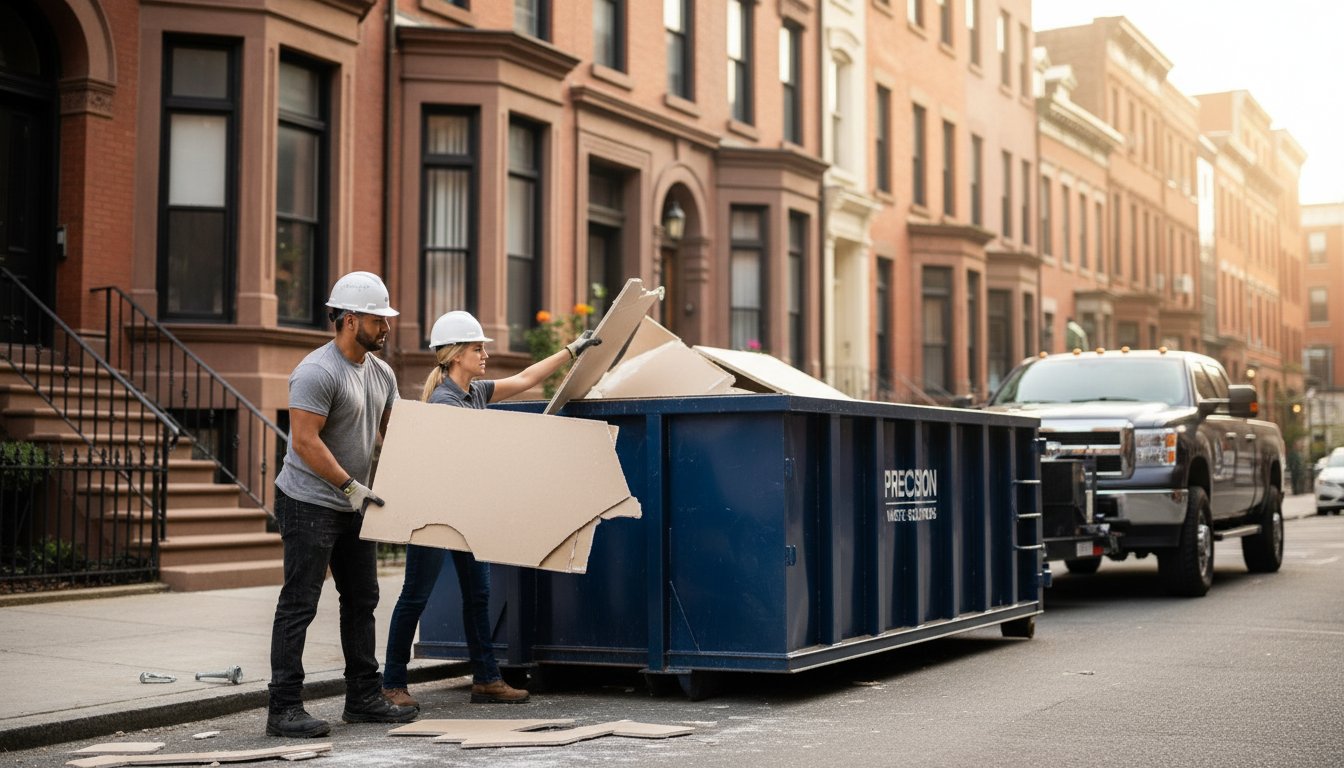
A single 4'x8' sheet of 5/8-inch fire-resistant drywall weighs approximately 70 pounds. If you treat your demolition like standard household trash, you will likely face heavy overage fees before the project is half finished. You need a drywall disposal dumpster strategy that prioritizes weight management over simple volume. Most renovation delays happen when contractors or homeowners underestimate how quickly these materials exceed container limits.
We understand that hidden costs and confusing disposal regulations create unnecessary stress during a tight renovation timeline. You want a reliable partner who delivers the right equipment on time without the pricing games. This guide will help you master the logistics of drywall removal, from calculating precise debris weight to selecting the most efficient roll-off container for your 2026 project. We will break down volume-to-weight ratios, explain current asbestos testing requirements, and provide a clear path to a clean job site with no-nonsense pricing.
Key Takeaways
- Avoid heavy overage fees by understanding gypsum density before starting your demolition.
- Calculate debris weight accurately using square footage ratios to stay within container limits.
- Choose the optimal drywall disposal dumpster size for your specific project scale.
- Maximize container space by breaking down large sheets and layering heavy debris at the bottom.
- Secure transparent pricing and on-time delivery by booking with a dependable waste management partner.
Why Drywall Disposal Requires a Dedicated Dumpster Strategy
Drywall demolition isn't like clearing out a garage. If you treat it like household junk, you'll run into trouble quickly. To understand the disposal process, you first need to know What is Drywall? and its chemical makeup. It is essentially a core of gypsum pressed between heavy paper. Gypsum is a dense mineral. This density means a drywall disposal dumpster reaches its weight limit much faster than one filled with old furniture or cardboard. Renovation debris also contains nails, tape, and joint compound. These materials complicate recycling options, as many local facilities won't accept mixed drywall debris.
Cities like Queens and Boston have strict limits on what you can put on the curb. Most municipal trash services won't touch bulk drywall. They view it as construction and demolition (C&D) waste, which requires specialized handling. Leaving piles on the sidewalk creates safety hazards and invites fines. Use a roll-off container to keep your site organized and your timeline intact. A central container helps you avoid:
- Tripping hazards from scattered debris.
- Respiratory issues from gypsum dust.
- Tire punctures from stray drywall nails.
- Compliance fines from local building inspectors.
The Weight Factor: Gypsum vs. General Trash
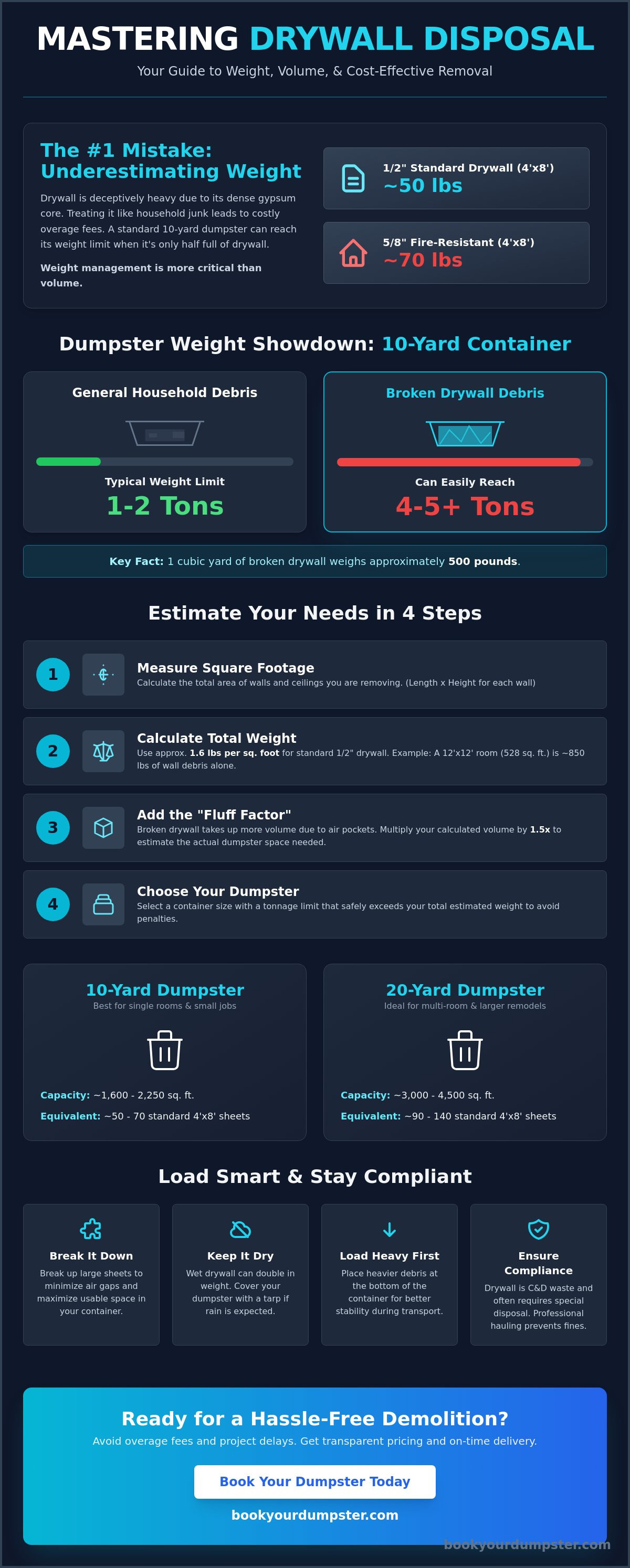
A 10-yard dumpster filled with drywall is significantly heavier than the same volume of general debris. Standard 1/2-inch wallboard weighs approximately 1.6 pounds per square foot. A cubic yard of broken drywall debris weighs roughly 500 pounds. When you demolish a room, those pounds add up to tons. Don't leave your debris exposed to the elements. Drywall acts like a giant sponge. If it rains, the gypsum absorbs water, doubling or tripling the weight of your load. This leads to unexpected overage fees at the landfill. Secure your container or load it quickly to avoid paying for "water weight." Managing this density is the most critical part of your disposal strategy.
Regulatory Compliance for Construction Debris
Disposal isn't just about hauling; it's about following the law. In states like New Jersey and Illinois, landfills have specific intake rules for C&D waste. They often classify drywall separately because of how it breaks down. When gypsum sits in a landfill, it can release hydrogen sulfide gas. This environmental risk is why many regions mandate professional hauling to certified facilities. Using a dedicated drywall disposal dumpster ensures your project stays compliant with local environmental standards. It also protects you from the liability of improper disposal. Professional hauling provides the paper trail you need for commercial projects or permitted residential renovations. If you're ready to start your project, you can book your container at BookYourDumpster.com to ensure immediate compliance.
Estimating Your Drywall Waste: Sheets to Cubic Yards
Calculate your total square footage of wall and ceiling removal before you order your drywall disposal dumpster. Precision matters because drywall is heavy. A standard 4'x8' sheet of 1/2-inch drywall weighs approximately 50 pounds. If you are stripping a 12'x12' room with 8-foot ceilings, you are looking at roughly 528 square feet of material, which equals about 17 sheets. At 50 pounds per sheet, that is 850 pounds of debris just for the walls. Don't forget the ceiling, which adds another 144 square feet and 225 pounds. Small rooms add up to half a ton quickly.
Factor in the "fluff factor" when choosing your container. Broken drywall takes up significantly more space than neatly stacked sheets. Use a 1.5x multiplier for volume when estimating demolished, loose debris. If your math shows 10 cubic yards of flat material, you actually need 15 cubic yards of dumpster space to accommodate the air pockets and irregular shapes created during demolition. Properly gauging your waste stream supports the Sustainable Management of Construction and Demolition Materials by ensuring your debris is handled by the right facilities without overloading equipment.
Calculating Volume for 4x8 and 4x12 Sheets
Verify your drywall thickness before finalizing your estimate. While 1/2-inch is standard for walls, many ceilings use 5/8-inch fire-rated board, which weighs closer to 70 pounds per sheet. A 10-yard dumpster typically holds 1,600 to 2,250 square feet of drywall, or roughly 50 to 70 standard sheets. A 20-yard dumpster can hold between 1,950 and 2,650 square feet. If you are tossing debris loosely rather than stacking it, expect these capacities to drop by 30 percent. Always choose a slightly larger bin if you plan to throw debris in haphazardly to avoid overflowing the side walls.
Weight Limit Awareness
Tonnage limits are the most important part of your rental agreement. Most containers come with a specific weight allowance; exceeding this results in landfill overage fees ranging from $40 to $200 per ton. A 30-yard dumpster might look tempting for a large house, but filling it with heavy gypsum can easily exceed the truck's lifting capacity or legal road limits. For most residential gut jobs, a 20-yard bin is the "sweet spot." It offers enough volume for a full room demolition while keeping the total weight manageable for standard residential haulers. You can check availability for a 20-yard dumpster to keep your project moving without the risk of heavy overage penalties.
Choosing the Right Dumpster Size for Drywall
Pick your drywall disposal dumpster based on the specific scope of your demolition. Don't guess. A wrong estimate leads to wasted money or a stalled job site. Selecting the correct container size prevents logistical headaches. If you choose too small, you pay for a second haul. If you choose too large, you pay for empty air. Align your choice with the total square footage you calculated in the previous section to maintain project momentum.
The 10-Yard Dumpster: The DIY Favorite
This size is the gold standard for residential patches and small bathroom renovations. Its compact footprint makes it the perfect choice for tight driveways in Boston or Jersey City where space is at a premium. Before you book, review our 10 yard dumpster guide to understand the specific dimensions and placement requirements. Most 10-yard bins carry a weight capacity of 2 to 3 tons. This is usually plenty for a single-room gut, but remember that gypsum weight stacks up fast. When planning your project, consider the environmental impact. Many facilities now prioritize Gypsum Drywall Recycling to keep these materials out of standard landfills.
When to Scale Up to 20 or 30 Yards
Step up to a 20-yard container if your project spans multiple rooms or includes ceiling removal. This is the industry standard for full-room guts or small basements. Using a 20-yard drywall disposal dumpster provides the volume needed for long wall runs without the risk of overflowing the side walls. If you are tackling a whole-house renovation or a commercial office build-out, the 30-yard dumpster is your best bet. It offers the capacity for massive amounts of debris while staying within the lifting limits of standard haulers.
Renting one large bin is almost always more cost-efficient than paying for two separate hauls of smaller containers. For projects involving a mix of materials like studs, flooring, and wallboard, consult our guide on construction debris removal to ensure you stay within weight limits. Reserve the 40-yard dumpster only for major commercial demolition. These massive containers are designed for high-volume projects where speed is critical. They are rarely used for residential work due to their physical size and the significant weight of a full load of gypsum.
Loading Your Dumpster and Local Service Tips
Loading a drywall disposal dumpster requires more than just tossing scraps over the side. To maximize your investment, break down large sheets before loading them into the container. While some competitors suggest bagging debris, this is inefficient for large-scale demolition. Instead, load the material flat. Place heavy, dense drywall at the bottom of the container. This maintains a low center of gravity for the haul, which is essential for safety during transport. Keep your debris level with the top of the dumpster walls. Never "mountain top" the load. Drivers cannot legally transport a container with debris spilling over the edges. If you're working in urban centers like San Francisco or Chicago, ensure the roll-off truck has at least 50 feet of clear, straight-line access. Move parked cars and clear overhead obstructions like low-hanging branches or power lines before delivery day.
Efficiency Hacks for Drywall Loading
Flat-stacking helps you fit more material, but it makes weight management difficult. It's easy to exceed tonnage limits when material is packed tight. Demolition is a messy, dusty process. Always wear an N95 mask and eye protection. Gypsum dust is fine and pervasive. If you're handling associated waste like fiberglass insulation or metal studs, layer them on top of the drywall. This prevents lighter materials from blowing away during the loading process. Using a single drywall disposal dumpster for mixed construction waste is often the most efficient choice, provided you monitor the total weight of the gypsum core.
Navigating Local Rules in NY, NJ, and MA
Local regulations vary significantly by state and municipality. If you're placing a container on a public street in New York City or Boston, you must secure a permit. In 2026, street permit fees typically range from $10 to $150 depending on your specific location and the duration of the project. Some counties in New Jersey and Massachusetts enforce "clean load" requirements. This means the drywall must be free of contaminants like mold, asbestos, or excessive wood debris to qualify for recycling at specialized facilities. Check our local dumpster rental guides for a state-by-state breakdown of these specific mandates.
Following these loading protocols keeps your site safe and your costs predictable. If you're ready to clear your site and need a reliable partner, schedule your roll-off delivery today to ensure your project stays on track.
Book Your Drywall Dumpster with Confidence
You have the weight ratios and the loading strategy. Now you need a partner to deliver the equipment. Finding a reliable drywall disposal dumpster shouldn't be the hardest part of your renovation. We remove the logistical friction of waste management by focusing on two core promises: punctuality and pricing integrity. When your crew is standing by to strip walls, a late delivery is a direct hit to your bottom line. We ensure your container arrives on time, every time, so your project stays on its 2026 timeline. Our commitment to transparency acts as a verbal handshake, distinguishing us from providers with opaque fee structures.
The Book Your Dumpster USA Advantage
We prioritize reliability and direct communication. You get immediate access to roll-off dumpster rentals through a simplified online system. We understand the technical differences between hauling household junk and heavy gypsum. Our expertise covers local regulations from Queens to San Francisco, helping you navigate permit requirements and disposal mandates without the stress. We don't just drop off a box; we act as a high-functioning tool in your construction arsenal. Our drivers know the urban landscape and the specific challenges of tight job sites, ensuring safe and precise placement every time.
For professional contractors and project managers, we offer pragmatic support for high-frequency swaps. If you are running a major commercial gut job, you can't afford to wait for a pickup. We coordinate hauls and replacements to keep your site clear and your workers productive. This high-velocity service model is designed for the modern construction industry where efficiency is the only metric that matters. Our digital platform allows you to manage multiple sites from a single dashboard, providing the control you need to handle complex waste streams effectively.
Ready to Start Your Project?
Measure your square footage twice and rent your container once. Choosing the right size from the start is the best way to maintain your budget. If you are still finalizing your numbers, check our latest guide on dumpster rental prices to see current regional averages and avoid surprises. Once you are ready to move, visit our homepage to secure your delivery. Schedule your drywall disposal dumpster now and experience a waste management service that respects your time, your budget, and your project goals.
Streamline Your 2026 Demolition Project
Efficient drywall removal depends on two critical factors: accurate weight estimation and the right equipment. You now understand that gypsum's density makes weight management more important than sheer volume. By selecting the correct container size and loading it flat, you avoid the heavy overage fees that often derail local renovation budgets. Whether you're clearing a single bathroom in Queens or managing a commercial gut job in Chicago, following a structured disposal plan keeps your site safe and your project timeline intact.
Don't let logistical stress or hidden fees slow down your 2026 project. We provide reliable service across NY, NJ, IL, MA, and SF with a focus on no-nonsense pricing integrity. Use our streamlined 24/7 online booking system to secure your drywall disposal dumpster delivery in seconds. Rent Your Drywall Dumpster Now to maintain full control over your job site waste. Proper planning turns a messy demolition into a manageable step toward your new space. Take the first step toward a clean, professional finish and get your demolition started today.
Frequently Asked Questions
Can I put drywall in a regular dumpster?
You can put drywall in a dumpster designated for construction and demolition (C&D) waste, but standard residential trash bins often prohibit it. Local regulations sometimes require separate disposal for gypsum to prevent the release of hydrogen sulfide gas in landfills. Always confirm that your container is rated for building materials before you begin loading demolition debris.
How much drywall fits in a 10-yard dumpster?
A 10-yard container typically holds between 50 and 70 standard 4'x8' sheets of drywall. This capacity assumes a mix of 1/2-inch and 5/8-inch thickness. If you break the sheets into small pieces to maximize space, you'll fit more volume but must monitor the total weight to stay within your tonnage limit.
Is drywall considered hazardous waste for disposal?
Modern drywall is not hazardous, but materials in older buildings may contain asbestos. Federal law requires an inspection for asbestos before any demolition or renovation starts, regardless of the building's age. If the material contains more than 1% asbestos, it requires specialized hazardous waste handling and cannot go into a standard roll-off container.
Do I need to remove nails and tape before throwing drywall in a dumpster?
You don't need to remove nails, screws, or joint tape for general disposal in a C&D landfill. Most facilities accept mixed drywall debris with these fasteners attached. However, if you're using a specialized facility that requires clean gypsum for recycling, they may have stricter rules regarding paint, metal contaminants, or adhesive tape.
How much does a drywall disposal dumpster cost?
Rental costs depend on the container size and your specific project location. Most agreements include a base rate for a standard weekly rental and a set weight allowance. Confirm your tonnage limit before booking to ensure the pricing matches your estimated debris weight. Choosing the right size initially is the best way to keep your costs predictable.
What happens if my drywall dumpster is over the weight limit?
Exceeding the weight limit results in additional landfill tipping fees for every ton over the agreed limit. If the load is too heavy for the truck to lift safely or exceeds legal road limits, you'll have to remove debris before the driver completes the haul. This creates unnecessary labor and can delay your project timeline significantly.
Can I mix other construction debris with drywall?
You can generally mix wood studs, flooring, and metal with gypsum in a drywall disposal dumpster. This is the standard practice for full-room renovations and gut jobs. Verify your local guidelines first, as some recycling mandates in specific counties require gypsum to be hauled separately to avoid cross-contamination with other organic waste streams.
Does wet drywall weigh more in a dumpster?
Wet drywall weighs significantly more because the gypsum core is highly absorbent and acts like a sponge. A single sheet can double in weight after a heavy rainstorm. Keep your drywall disposal dumpster covered with a tarp if the forecast calls for rain. This simple step prevents the load from exceeding your tonnage allowance and incurring extra fees.