
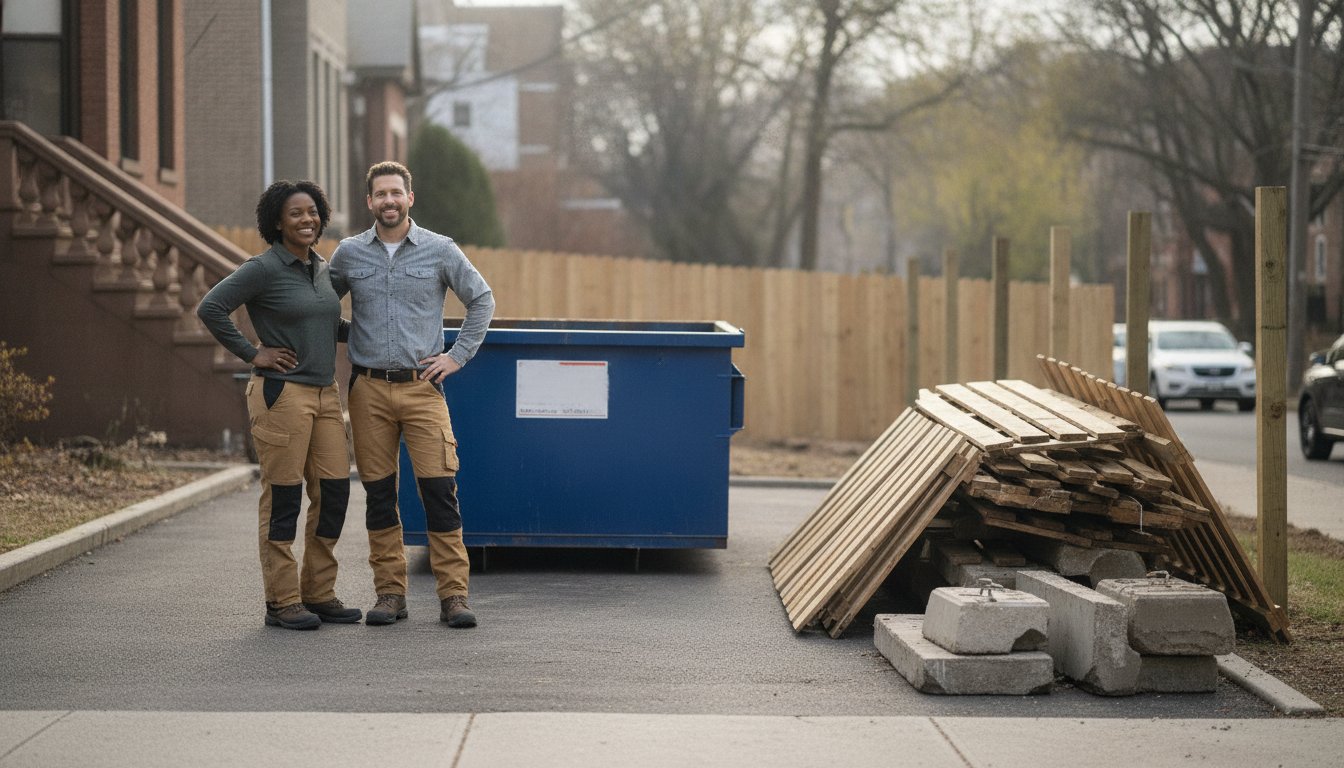
The heaviest part of your fence isn't the cedar or vinyl you see above ground; it's the hidden concrete footings anchoring every post. Many homeowners start a dumpster rental for fence replacement project thinking a small bin will suffice, only to realize those heavy blocks quickly push them over weight limits. If you're working in a space-constrained area like Boston or Queens, you can't afford to have a half-full, overweight dumpster blocking your driveway while costs climb. It's a logistical headache that can stall your progress before the first new post is even set.
You need the old debris gone so you can focus on the new install without worrying about hidden fees or permit delays. We understand that managing waste is about more than just a bin; it's about keeping your site clear and your budget predictable. This guide shows you how to accurately estimate the weight of your specific fencing materials and select the perfect dumpster size to stay on schedule. We will break down weight limits, driveway protection, and how to avoid the overage charges that often catch DIYers and contractors off guard. Get the facts now so you can book with confidence and get back to work.
Key Takeaways
- Identify why municipal trash limits make a dedicated bin essential for managing bulk fence panels and loose nails.
- Learn to calculate the weight of pressure-treated lumber and cedar to optimize your dumpster rental for fence replacement project.
- Evaluate the capacity differences between 10-yard and 20-yard containers to match your specific perimeter length.
- Navigate local permit requirements and HOA regulations in states like New Jersey and Illinois before the delivery truck arrives.
- Use a streamlined online booking system to secure the right container size and keep your project under budget.
Why You Need a Dumpster Rental for Fence Replacement
Tearing down an old fence creates an immediate logistical problem. You're left with hundreds of linear feet of weathered wood or rusted chain link and heavy concrete anchors. A dumpster rental for fence replacement project solves this by providing a high-capacity staging area for debris. Instead of piling wood on your lawn and killing the grass, you move waste directly from the post hole to the bin. This keeps your perimeter clear. It allows you or your contractor to begin layout and digging for the new installation immediately without tripping over old panels.
Efficiency is the key to finishing any renovation on time. When you consolidate multiple waste types like wood, metal, and concrete into a single container, you eliminate the need for multiple trips to a local landfill. This saves hours of labor and reduces fuel costs. Clearing the workspace isn't just about aesthetics; it's about maintaining a professional pace that keeps your project moving forward.
Dumpster vs. Municipal Bulk Pickup
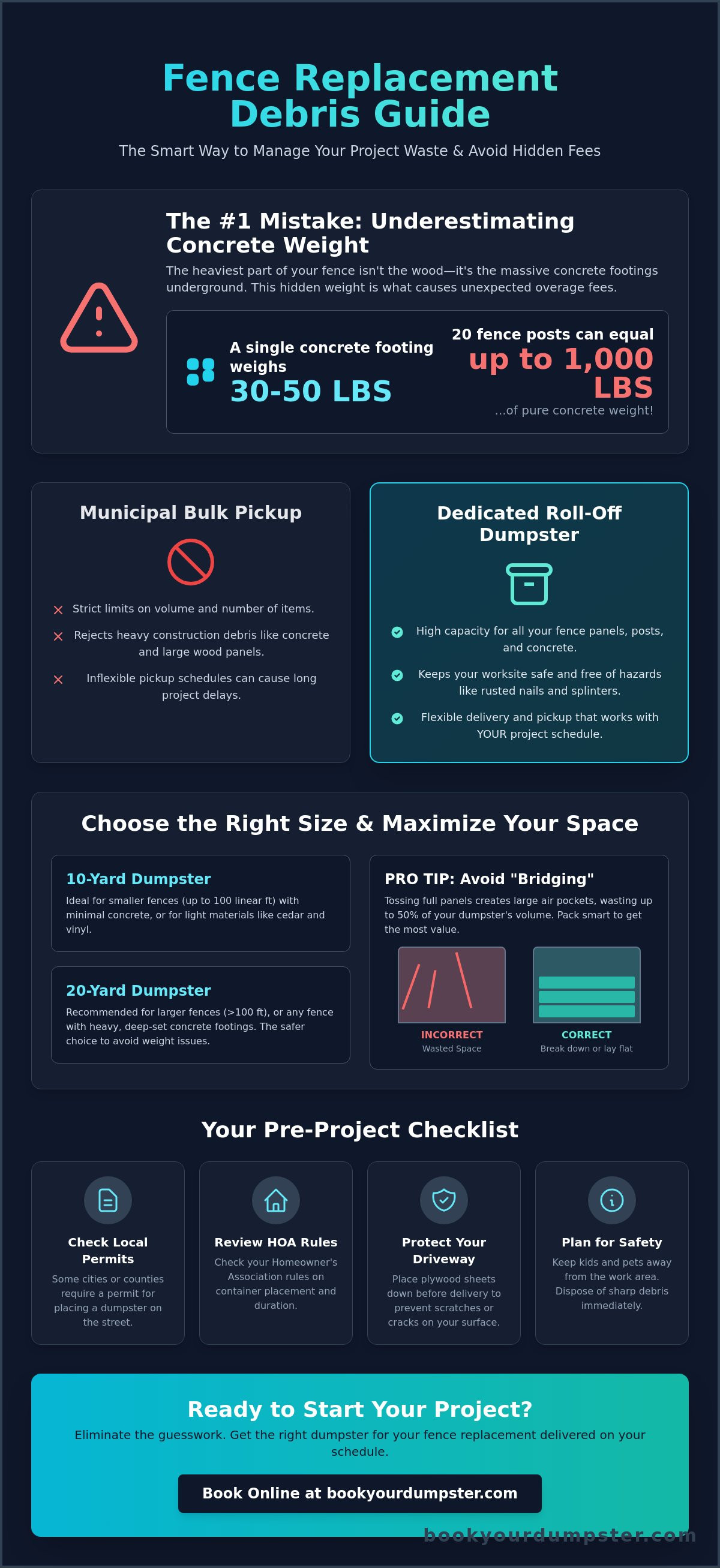
Most municipal waste services are designed for household trash, not construction debris. City guidelines often limit bulk pickup to a few items per month or require you to schedule weeks in advance. A standard 100-foot fence generates dozens of panels and posts. This volume far exceeds what a local crew will take in a single stop. Standard trash trucks also lack the lifting capacity for heavy concrete footings. These anchors can weigh 50 to 100 pounds each, and city workers will often leave them on the curb. A dedicated roll-off (dumpster) handles these heavy materials without issue. You avoid the frustration of waiting for a pickup date only to have the city reject half your debris.
Safety and Site Management
Safety is the primary reason to consolidate waste quickly. Old fences are notorious for rusted nails, jagged staples, and large splinters. Leaving these materials scattered across a yard creates a significant liability and a danger to pets and children. By using a central disposal point, you reduce the risk of injury and keep the workspace organized. This also protects your reputation with neighbors. In dense urban areas, keeping debris off the sidewalk isn't just polite; it's often a legal requirement to avoid fines. You can manage your site effectively by choosing the right container at Book Your Dumpster to ensure your debris is contained and out of sight.
Estimating Debris Weight: Wood, Metal, and Concrete
Estimating the load for a dumpster rental for fence replacement project requires looking beyond the surface area of the panels. Different materials have vastly different densities. Pressure-treated lumber is significantly heavier than cedar or pine because the wood is saturated with chemical preservatives. If your fence has been standing for years, it may also have absorbed moisture, which adds even more weight. Metal fencing like chain link or wrought iron is deceptive; it doesn't take up much room, but the weight adds up quickly due to the material's density. Following EPA guidelines on C&D debris ensures these mixed materials are disposed of at the correct facilities.
Hardware also plays a role in your total tonnage. Hinges, latches, and mounting brackets are small but heavy when collected in bulk. When you combine these with hundreds of linear feet of fencing, the total weight can surprise you. Accuracy at this stage prevents overage fees at the landfill. It's better to overestimate your weight slightly than to pay for a second haul because the first container was overloaded.
The Hidden Weight of Concrete Footings
Concrete is the primary reason many projects exceed their weight limit. A single concrete post anchor typically weighs between 30 and 50 pounds depending on the depth of the hole. If you're replacing a standard residential fence with 20 posts, you're adding up to 1,000 pounds of concrete alone. This weight sits at the bottom of your bin, leaving plenty of physical space but quickly eating into your tonnage allowance. Always count your posts before booking to avoid reaching your weight cap while the container still looks half empty.
Volume Challenges with Fence Panels
Space management is just as critical as weight calculation. If you toss intact 6x8 fence panels into a bin, they will create "bridging." This happens when panels lean against each other, leaving large pockets of empty air underneath. This "dead space" prevents you from using the full capacity of your 10-yard or 20-yard container. To maximize efficiency, break the panels down into individual slats or flat-load them. Laying materials flat allows you to pack the debris tightly, ensuring you get the most value out of your rental. If you aren't sure which size fits your debris volume, compare our dumpster dimensions to see how your materials will fit.
Choosing the Right Size: 10-Yard vs. 20-Yard Dumpsters
Selecting the correct container prevents the logistical nightmare of a "double haul." If you choose a bin that is too small, you'll pay twice for delivery and pickup. If you choose one that's too large, you waste money on unused capacity. For a dumpster rental for fence replacement project, the decision usually comes down to the total linear footage of the fence and the number of concrete footings involved. Measure your perimeter before you book to ensure you have a clear understanding of the debris volume.
Efficiency starts with matching your material volume to the right bin dimensions. Don't guess. Use your measurements to determine if your waste will fit within the weight and volume limits of our standard sizes. This proactive approach keeps your site clean and your budget predictable.
The 10-Yard Dumpster: Best for Small Projects
The 10-yard dumpster is the most efficient choice for minor repairs or short fence runs. It typically accommodates 50 to 70 linear feet of standard wood fencing. This size is particularly valuable in urban environments like Queens or Boston, where driveway space is limited and street parking is scarce. Its compact footprint fits into tight spaces without blocking sidewalk access or requiring complex permits. If you're only replacing one side of a residential yard or tackling a small gate repair, this is your most cost-effective option. Read our 10-yard dumpster rental guide for more details on dimensions and weight limits.
The 20-Yard Dumpster: The Standard Choice
A 20-yard dumpster is the industry standard for full perimeter replacements. If your project involves 100 linear feet or more, a 10-yard bin will overflow before you finish. This larger container is also better suited for the concrete footers discussed earlier. Because 20-yard bins often have lower side-walls than their taller counterparts, they're easier to load. You can lift heavy posts and concrete chunks over the side without excessive physical strain. This size provides the necessary weight capacity for heavy pressure-treated lumber while offering enough volume for bulky panels. Consult our roll-off dumpster rental guide to see how this capacity matches your specific project scale.
For commercial properties or farm fencing, consider a 30-yard dumpster. These projects often involve thousands of linear feet and massive amounts of metal or timber that quickly exceed residential capacities. Regardless of the size you choose, match the dumpster footprint to your available space. Keep these guidelines in mind:
- 10-Yard: Best for 50-70 linear feet and tight urban driveways.
- 20-Yard: Ideal for 100+ linear feet and heavy concrete footings.
- 30-Yard: Necessary for commercial perimeters or high-volume wood waste.
Ensure the delivery area is clear of overhead wires and low-hanging branches before the truck arrives. Making the right choice now keeps your dumpster rental for fence replacement project on track and prevents unexpected costs.
Logistics and Local Permit Requirements
Planning a dumpster rental for fence replacement project requires more than just picking a size. You must handle the legal and physical logistics before the truck arrives. Start by checking your local municipal code. In states like New Jersey and Illinois, street placement often requires a specific permit from the Department of Public Works. If you live in a community with a Homeowners Association (HOA), secure their written approval first. Failing to do so can result in immediate fines or the driver being unable to drop the container. Schedule your delivery for at least one day before you plan to start the teardown. This buffer ensures that your crew isn't standing around waiting for a bin while the old fence sits on the lawn.
Urban Placement: Queens and Boston Specifics
In dense urban centers like Queens and Boston, space is a premium commodity. If you don't have a private driveway, you'll likely need a street permit to place the dumpster on public property. Most cities require you to post "No Parking" signs 24 to 48 hours in advance to clear the necessary space for the delivery truck. Check the dumpster rental in New York and Massachusetts guide for specific 2026 regulations regarding permit fees and duration limits. Remember that city inspectors often patrol residential areas; an unpermitted bin can be removed at your expense.
Protecting Your Property
A loaded roll-off container is extremely heavy. The metal rollers and the weight of the debris can crack asphalt or leave ruts in soft pavers. Protect your driveway by laying down two large sheets of plywood where the dumpster's rails will rest. This simple step distributes the weight and prevents surface scarring. You also need to look up. Verify that there is at least 22 feet of vertical clearance for the truck to lift and slide the container off the bed. Low-hanging power lines or tree branches will prevent a safe delivery. Don't ignore these vertical obstacles, as they are the most common cause of failed drop-offs.
Ensure the approach path is clear for the roll-off mechanism. A standard truck needs about 60 feet of straight-line space to maneuver into position. Move personal vehicles and clear away any equipment or materials that might obstruct the driver's path. If the site isn't ready, you may face fees for a failed delivery attempt. Take five minutes to walk the site today to avoid these avoidable costs. Book your dumpster rental online to lock in your delivery date and keep your project moving forward.
Book Your Dumpster for Your Fence Project
Finalizing your dumpster rental for fence replacement project shouldn't be the hardest part of the job. You've calculated the weight of those concrete footings and measured your linear footage; now you need a partner who delivers on time and without hidden fees. Our streamlined online booking system provides instant quotes, allowing you to move from planning to execution in minutes. We provide the tools you need to keep your site clear and your project on schedule.
Reliability is our standard. We offer a full range of sizes, including 10, 20, 30, and 40-yard dumpsters, to accommodate everything from a small backyard repair to a massive commercial perimeter. You get transparent pricing from the start. We don't hide overage fees or surprise you with fuel surcharges. You book the bin, we deliver it, and you fill it. It’s a straightforward solution for a messy task that respects your time and your budget.
The Book Your Dumpster USA Advantage
We take a pragmatic, no-nonsense approach to waste management. Whether you're a homeowner tackling a DIY weekend or a professional contractor managing multiple sites, we provide the same level of competence and control. Our team specializes in construction debris removal, ensuring that your old wood, metal, and concrete are handled according to local regulations. We focus on the logistics so you can focus on the installation. Our service is built on pricing integrity and punctuality, acting as a high-functioning tool in your renovation arsenal.
How to Get Started Today
Follow these steps to clear your workspace and secure your delivery:
- Step 1: Use our online tool to select your container size based on your debris volume and weight estimates.
- Step 2: Provide your specific location in New Jersey, New York, Illinois, or Massachusetts for localized service.
- Step 3: Schedule your delivery date and ensure the drop-off path is clear of vehicles or low-hanging branches.
Don't let old fence panels clutter your lawn or risk safety hazards for your family and pets. Take action now to maintain a professional workspace and keep your neighbors happy. Rent your dumpster now at bookyourdumpster.com and experience a modern, digital-first approach to waste disposal. We handle the haul so you can build the new fence without delay.
Streamline Your Fence Replacement Site
Managing a dumpster rental for fence replacement project doesn't have to be a source of logistical stress. You now know that calculating the weight of hidden concrete footings is more critical than just measuring wood panels. Choosing between a compact 10-yard bin for small repairs and a 20-yard container for full perimeter jobs ensures you stay under budget. By handling your permits early and protecting your driveway, you remove the friction that stalls most residential renovations.
We provide the reliable tools you need to finish the job. Choose from our 10, 20, 30, or 40-yard options to match your specific debris volume. We serve homeowners and contractors across NY, NJ, IL, and MA with punctual delivery and transparent pricing. Don't let old materials clutter your workspace or delay your new installation. Book Your Fence Project Dumpster Online Now and clear the way for a clean, safe site. You're ready to get to work.
Frequently Asked Questions
Can I put concrete fence post footings in a standard dumpster?
Yes, you can place concrete footings in a standard roll-off container. These blocks are extremely dense and will increase the total tonnage of your load much faster than wood panels. A single concrete anchor often weighs between 30 and 50 pounds. Monitor your load height to ensure you don't exceed the weight limit before the bin is physically full.
How much weight can a 10-yard dumpster hold for a fence project?
A 10-yard dumpster typically holds between 2 and 3 tons of debris. This is roughly equivalent to the volume of three standard pickup truck loads. For a dumpster rental for fence replacement project, this weight capacity is usually enough for wood slats but can be reached quickly if you're disposing of heavy pressure-treated posts and concrete bases.
Do I need a permit to put a dumpster on the street for my fence work?
You generally need a permit if the container sits on a public street, sidewalk, or any public right-of-way. Placement on your private driveway usually doesn't require municipal approval. Check with your local public works department in cities like Boston or Queens to verify 2026 permit fees, which typically range from $10 to $150 depending on the location.
Can I put pressure-treated wood from an old fence in the dumpster?
Yes, pressure-treated wood is accepted as standard construction and demolition debris. This material is heavier than untreated cedar or vinyl because it's saturated with chemical preservatives. Cut the wood into manageable lengths to pack the bin tightly. This prevents "bridging," which creates empty air pockets and wastes valuable space in your rental.
How much linear footage of fencing fits in a 20-yard dumpster?
A 20-yard dumpster typically accommodates 100 to 150 linear feet of standard wood fencing. This estimate includes the panels, posts, and the associated concrete footings. If you take the time to break the panels down into individual boards, you can often fit more material by packing the debris flat and eliminating dead space.
What happens if my fence debris exceeds the weight limit?
Landfills charge additional tipping fees if your load exceeds the specified weight limit of your rental. These overage charges usually range from $40 to $200 per extra ton. Always estimate your weight conservatively during your dumpster rental for fence replacement project to avoid these surprise costs when the container is weighed at the facility.
Will the dumpster delivery truck damage my driveway?
The heavy weight of the truck and the metal rollers can potentially scratch or crack asphalt and pavers. Protect your property by laying down two large sheets of plywood where the dumpster's rails will rest. This precaution distributes the weight more evenly and prevents the container from leaving permanent indentations or ruts in your driveway surface.
Can I mix fence debris with other household junk in the same rental?
You can mix old fencing with other household items like furniture, clothes, or general clutter. However, you must keep prohibited items like tires, batteries, and hazardous chemicals out of the bin. Mixing materials is an efficient way to clear your garage while finishing your yard work, provided you stay within the tonnage allowed for your size.


