
The biggest mistake in a kitchen renovation isn't the tile choice; it's assuming your old cabinets will neatly fit into a few contractor bags. Most homeowners underestimate the sheer volume of a gut-job, forgetting that bulky cabinetry and countertops take up far more space than heavy flooring. Securing the wrong dumpster rental for kitchen remodel projects leads to the expensive headache of a second haul or a driveway blocked by overflow. You need a reliable plan that handles the bulk without the guesswork.
It's understandable to feel overwhelmed by the logistics of waste management. You likely worry about heavy containers cracking your driveway or navigating the strict permit requirements in cities like San Francisco or Queens. This guide removes that stress by showing you exactly how to select the perfect dumpster size and avoid hidden fees. We will analyze the capacities of 10, 20, and 30 yard units, explain how to protect your property, and provide a clear path to a streamlined booking. Get the facts on debris volume now so you can focus on your new kitchen.
Key Takeaways
- Understand why the "air-gap" problem makes kitchen debris bulkier than it looks and how to account for non-stackable cabinets.
- Identify the project scale that requires a 10, 20, or 30-yard dumpster rental for kitchen remodel success to avoid the cost of a second haul.
- Compare the cost-per-cubic-yard of roll-off containers against retail bags to find the most economical disposal method for your renovation.
- Navigate regional permit requirements in major cities and learn professional techniques to protect your driveway from heavy equipment.
- Streamline your 2026 project with a transparent booking process that eliminates hidden fees and ensures punctual delivery.
Why Kitchen Remodels Generate More Debris Than You Expect
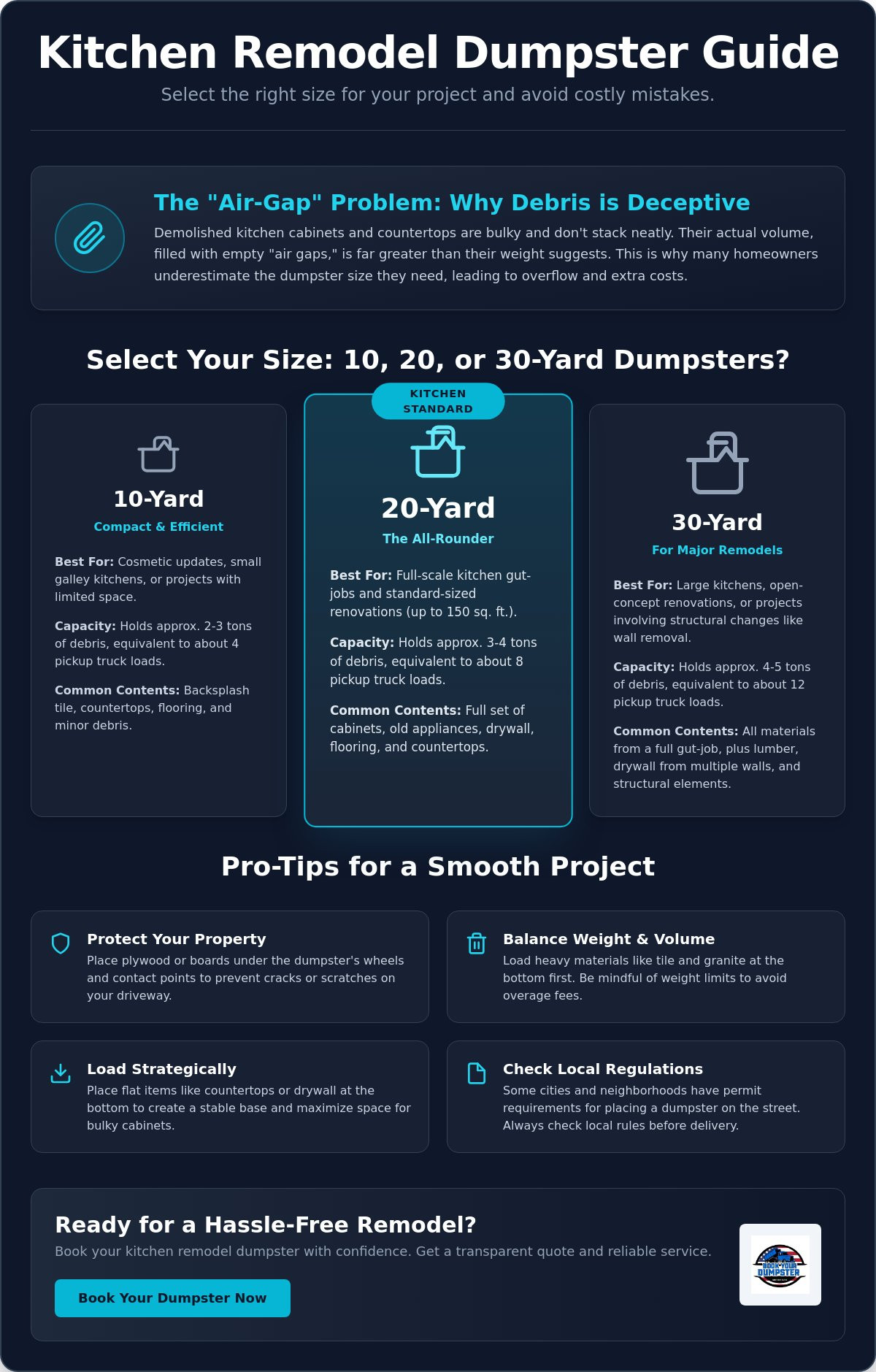
Kitchen gut-jobs are deceptive. You look at a row of cabinets and see a wall, but once they come down, they become hollow boxes that refuse to stack. This creates the "air-gap" problem. Unlike flat materials such as shingles or flooring, kitchen waste is defined by its volume rather than just its weight. Planning a dumpster rental for kitchen remodel projects requires a shift in how you view trash. Most homeowners assume they can fit an entire kitchen into a small bin, only to find the container overflowing before the drywall even comes down. Select a roll off dumpster rental as your primary waste solution. These containers are designed to handle the awkward dimensions of residential demolition.
Account for the materials you can't see yet. A full remodel often involves stripping back layers of subflooring, pulling out old insulation, and removing sheets of drywall. These items add bulk quickly. While a single cabinet might not weigh much, a stack of them combined with plaster and lath will fill your space faster than you anticipate. Research Roll-off dumpster sizes before you start the demolition. You need enough vertical clearance to keep the load level with the top of the bin. Safety regulations prohibit hauling containers with debris sticking out the top.
The Cabinet Expansion Factor
A standard 10x10 kitchen's worth of cabinets can easily fill a 10-yard dumpster on its own. Even if you take a sledgehammer to them, the rigid frames and drawers create irregular gaps that waste valuable container space. Smashing cabinets often creates more mess than it saves in volume. Instead of chaotic piling, place flat items like old countertops or plywood at the very bottom. This creates a solid foundation and allows you to utilize every inch of the floor before the bulky cabinet boxes go in. Use this strategy to maximize your dumpster rental for kitchen remodel and keep the site organized.
Weight Limits for Countertops and Tiles
Balance the bulk of cabinets against the sheer mass of masonry and stone. While cabinets are mostly air, materials like granite, quartz, and ceramic tile are incredibly dense. If you are tearing out a heavy tile floor or thick stone counters, watch your weight limits closely. A 10-yard container reaches its capacity quickly if filled with heavy debris. Exceeding these limits will impact dumpster rental prices and lead to additional charges. Prioritize placing the heaviest materials at the bottom to ensure a safe and efficient haul.
Selecting Your Size: 10, 20, or 30-Yard Dumpsters?
Choosing the right size prevents logistical bottlenecks. If you underestimate your waste, you'll pay for a second haul. Overestimating means you're paying for empty air. Use the square footage of your project as a baseline. A small galley kitchen and a sprawling open-concept space have vastly different waste profiles. Your dumpster rental for kitchen remodel should align with the specific volume of materials you plan to remove. Follow this rule of thumb for 2026 projects: a cosmetic refresh usually fits in a 10-yard bin, a full gut-job requires a 20-yard bin, and structural changes demand a 30-yard container.
When the 10-Yard Dumpster is Sufficient
A 10-yard bin is the right tool for a cosmetic update. Use this size if you're only replacing the backsplash, countertops, and flooring without removing the existing cabinets. It holds approximately 2 to 3 tons of debris. This smaller unit is also a tactical choice for urban environments. If you have a narrow driveway in Queens or a tight alleyway in Boston, the 10-yard footprint fits where larger bins cannot. Read our 10 yard dumpster rental guide to see if this compact option meets your needs.
Why the 20-Yard is the Kitchen Remodel Standard
Most full-scale renovations require a 20-yard container. It is the industry standard for a reason. This size accommodates roughly 8 pickup truck loads of waste. It easily handles a full set of cabinets, old appliances, and the drywall from a standard 150-square-foot room. One key advantage is the walk-in swing door. Instead of lifting heavy stoves or refrigerators over the side, you walk them directly into the bin. This saves your back and allows for tighter packing. If you aren't sure which bin fits your driveway, check available sizes in your area to confirm dimensions.
The 30-Yard Option for Structural Changes
Reserve the 30-yard dumpster for major construction. If your project involves knocking down walls to create an open floor plan, a 20-yard bin will likely overflow. Structural changes generate massive amounts of heavy framing lumber, plaster, and studs. This size is necessary for kitchens exceeding 250 square feet or projects that include the demolition of an adjacent dining room or pantry. It provides the extra volume needed for high-capacity debris management. Don't risk a messy worksite by squeezing a large-scale demolition into a medium-sized bin.
Dumpster Rental vs. The Bagster: Which Wins for Kitchens?
Many homeowners see the foldable green bags at hardware stores and assume they are the cheapest disposal solution. While a bag works for a single bathroom vanity, it fails the demands of a full kitchen tear-out. The math rarely favors the bag when you calculate the cost-per-cubic-yard. A 10-yard dumpster typically costs between $25 and $45 per cubic yard. In contrast, a Bagster can cost between $50 and $127 per cubic yard once you include the retail price and the mandatory pickup fee. If your project generates more than six cubic yards of waste, you will spend significantly more on multiple bags than you would on a single dumpster rental for kitchen remodel projects.
Efficiency is the primary driver of a successful renovation. Choosing a roll-off container provides a "one and done" solution. You schedule one delivery and one pickup. Relying on bags often leads to a cluttered driveway as you wait for third-party services to coordinate multiple small hauls. In high-cost areas like New York City, where a single bag pickup can cost $307, the financial benefit of a steel container becomes even more obvious. Secure a professional container to keep your worksite clean and your budget intact.
Capacity and Durability Comparisons
Contrast the 3-cubic-yard capacity of a fabric bag with the 10 or 20-yard volume of a steel roll-off. Kitchen debris is notoriously sharp. Broken ceramic tiles, jagged countertop shards, and splintered cabinet frames easily puncture fabric walls. A steel container handles these materials without risk. Steel bins also support multi-day loading. You can take two weeks to carefully dismantle your kitchen, whereas bags often have strict weight limits of 3,300 pounds. A 10-yard dumpster holds 2 to 3 tons, giving you the weight allowance needed for heavy plaster and subflooring.
The Logistics of Urban Pickup
Roll-off trucks are built for precision. Professional drivers can navigate narrow streets in New Jersey or Massachusetts more effectively than the crane trucks required for bag pickups. Bags must be placed within a specific distance from the street, often limiting your placement options. Roll-off containers sit exactly where you need them. Use Book Your Dumpster USA to manage your logistics through a streamlined online platform. This ensures your container arrives on time and is removed promptly once the job is finished. Avoid the hassle of fabric bags and choose a solution built for construction-grade waste.
Local Logistics: Preparing for Delivery in New York, Illinois, and Massachusetts
The logistics of a dumpster rental for kitchen remodel projects extend beyond just picking a size. You must ensure the physical site is ready for a heavy delivery truck. Most roll-off trucks require at least 22 feet of vertical clearance to raise the hoist and drop the container. Check for low-hanging power lines, tree branches, or building overhangs before the driver arrives. If you live in a high-density area like San Francisco or New York, "Right-of-Way" issues are your biggest hurdle. Narrow streets and tight corners mean the truck needs ample room to maneuver. Clear the street of parked cars and ensure the drop-off zone is completely unobstructed to avoid a "dry run" fee.
Driveway Protection and Placement
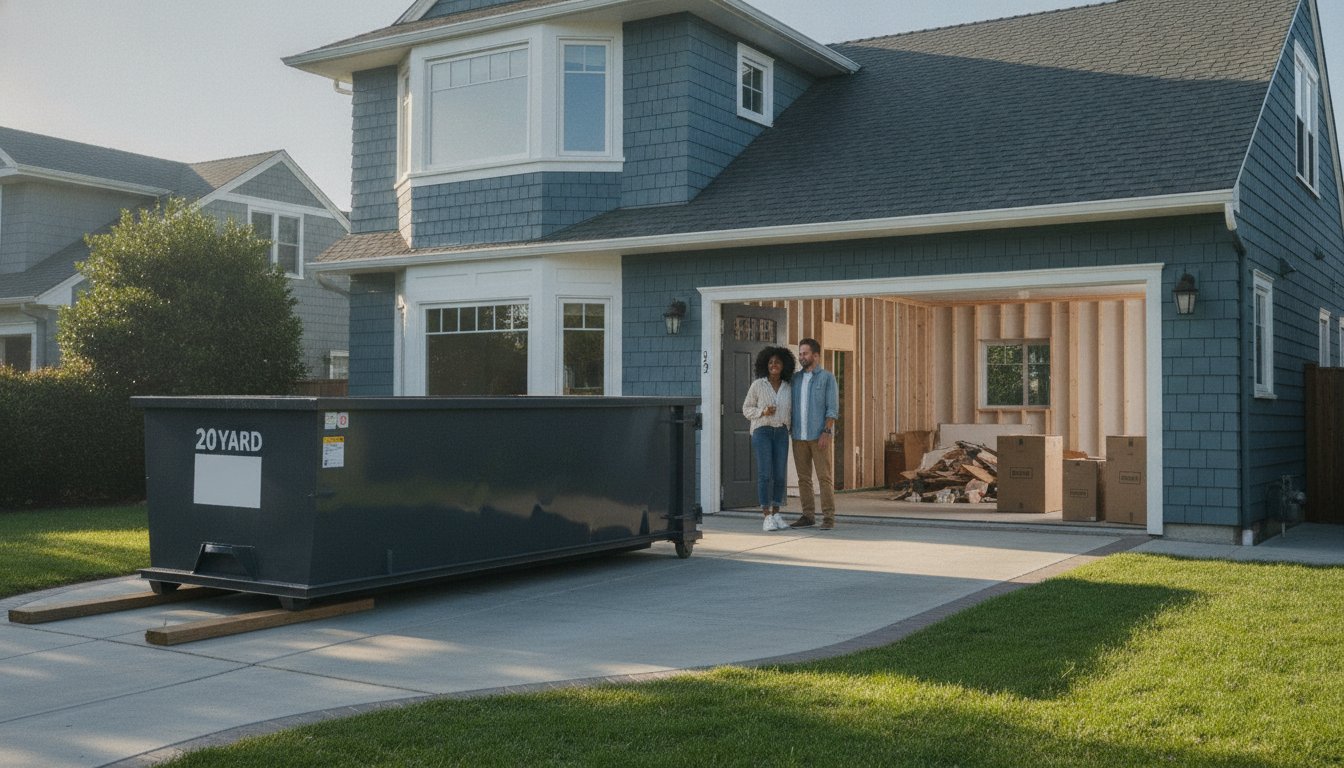
Protect your property from the weight of a loaded 20-yard bin. A fully loaded container can weigh several tons, which is enough to crack aged asphalt or thin concrete. Place large plywood boards or "street pads" exactly where the dumpster's rollers will land. This distributes the weight and prevents the steel wheels from sinking into your driveway. Identify a "sweet spot" for placement that is close to your kitchen exit but does not block sidewalk access or your neighbor's line of sight. Professional placement keeps your worksite efficient and your neighbors happy.
City-Specific Permit Checklists
Legal requirements vary significantly by municipality. If you cannot fit the bin on your private property, you must secure a street permit. In New York City, permit fees for placing a dumpster on public property range from $135 to $385. Chicago and other Illinois cities have similar "Right-of-Way" requirements that must be handled before delivery. Queens residents should be especially careful with narrow-street logistics; a smaller truck or specific placement window might be necessary. Review the dumpster rental in New York and Illinois guide for a breakdown of local 2026 regulations. Don't let a legal oversight halt your demolition. Select your city and schedule your delivery today to ensure your project stays on track.
Booking Your Kitchen Remodel Dumpster with Confidence
Finalize your logistical plan before the first sledgehammer swings. A successful dumpster rental for kitchen remodel relies on precise timing. Schedule your delivery 24-48 hours before the demolition begins. This buffer ensures the bin is on-site when the first cabinet is pulled from the wall. Don't risk a work stoppage by waiting until the driveway is already full of trash. Partnering with a specialist in construction debris removal guarantees that your waste is handled legally and efficiently. This proactive approach keeps your contractors on schedule and your property organized.
Trust the transparency of Book Your Dumpster USA. We eliminate the industry's common "hidden fee" trap. You receive a clear, upfront quote that covers delivery, pickup, and disposal within your weight limit. This reliability is vital for maintaining your 2026 renovation budget. You focus on the new floor plan; we handle the mess. Our pricing integrity acts as a verbal handshake, ensuring you never face unexpected surcharges at the end of your project.
The Online Booking Advantage
Modernize your project management with digital scheduling. Our platform allows you to browse sizes and secure a rental in minutes. Select your container, enter your address, and provide specific delivery instructions directly in the booking form. Tell the driver where to place the boards or identify specific overhead hazards like low wires. This direct communication ensures a perfect drop-off every time. Contractors and DIY homeowners alike benefit from this high-velocity process. It removes the friction of traditional phone-based booking and moves you quickly to the resolution phase.
Finalizing Your Renovation Timeline
Align your rental duration with your project scope. A minor refresh may only need a 7-day rental, but a full gut-job often requires 14 days or more. Plan for potential delays in your timeline. If the demolition reveals unexpected structural issues, your debris volume might double. Don't panic if the bin fills up faster than expected. Call for a swap-out to keep the site clean. We remove the full container and drop an empty one immediately to prevent downtime. Book Your Dumpster now to lock in your 2026 dates and start your dumpster rental for kitchen remodel with total confidence.
Start Your 2026 Kitchen Transformation Today
Your kitchen renovation is a major investment that shouldn't be stalled by logistical failures. You now understand that cabinet volume dictates your container needs and that a steel roll-off offers far better value than fabric bags. By preparing your driveway with protective boards and securing necessary city permits, you've removed the friction that often delays high-density urban projects. It's time to move from the planning phase to active demolition.
Finalize your logistics with a dumpster rental for kitchen remodel that matches your specific debris volume. We provide professional roll-off sizes from 10 to 40 yards to handle everything from a simple backsplash update to a full structural demolition. Our streamlined online booking system serves New York, New Jersey, Illinois, Massachusetts, and San Francisco with total transparency. You won't face hidden surprises or opaque pricing structures; just reliable service that respects your timeline.
Rent a Dumpster for Your Kitchen Project Today and clear the way for your new home. Your dream kitchen is just one clean worksite away.
Frequently Asked Questions
How much does a dumpster rental for a kitchen remodel cost in 2026?
Market rates for a dumpster rental for kitchen remodel fluctuate based on your city's disposal fees and the container size you select. While national averages provide a general baseline, costs in high-density areas like New York or Chicago are typically higher due to landfill taxes and logistics. Always confirm the weight allowance included in your flat-rate quote to avoid tonnage overage charges at the end of your project.
What size dumpster is best for a small kitchen renovation?
A 10-yard dumpster is usually sufficient for a small kitchen refresh that only involves replacing countertops and flooring. However, if you plan to remove all the cabinets and drywall, a 20-yard container is the safer choice. The 20-yard size is the industry standard for most full-scale kitchen gut-jobs because it accommodates the bulky "air-gap" waste created by non-stackable cabinetry.
Can I put old kitchen appliances in the dumpster?
You can dispose of most standard kitchen appliances like stoves, dishwashers, and microwaves in a roll-off container. Use the rear swing-door to walk these heavy items directly into the bin for tighter packing. Be aware that refrigerators and freezers often require the certified removal of refrigerants like Freon before a landfill will accept them. Check your local regulations regarding appliance disposal before loading them.
Do I need a permit to put a dumpster on the street in New York or Chicago?
Yes, both New York City and Chicago require official permits if the container sits on a public street, sidewalk, or right-of-way. In New York, these municipal permit fees typically range from $135 to $385 depending on the location and duration of the project. Secure these documents through the local Department of Transportation at least one week before your scheduled delivery to avoid fines.
Will a 10-yard dumpster fit all my old kitchen cabinets?
A 10-yard dumpster often struggles to hold a full set of cabinets from a standard 10x10 kitchen. Cabinets are rigid boxes that create massive amounts of wasted space, meaning they fill the volume of the bin long before they reach the weight limit. If you have a large number of wall and base units, upgrade to a 20-yard container to ensure you don't need a second haul.
How do I prevent the dumpster from damaging my driveway?
Protect your driveway by placing thick plywood boards or specialized street pads exactly where the dumpster's steel rollers will land. This simple step distributes the heavy weight of the loaded bin and prevents the rollers from cracking aged concrete or sinking into soft asphalt. Always clear the area of debris and loose gravel before the delivery truck arrives to ensure a level and stable drop-off.
Can I mix kitchen debris with general household junk in the same container?
You can generally mix construction waste with standard household junk in a dumpster rental for kitchen remodel project. This allows you to clear out old pantry items or closet clutter alongside your renovation debris. However, you must never include hazardous materials such as wet paint, chemicals, cleaning solvents, or tires. These prohibited items require specialized disposal and will result in significant environmental fees if found in the bin.
What happens if I overfill the dumpster during my remodel?
Overfilling a dumpster creates a significant safety hazard and prevents the driver from legally hauling the load. Debris must be level with the top of the container walls to ensure the tarp can be secured for transport. If your bin is overfilled, you will be required to remove the excess material yourself, and you may face "dry run" fees or additional overage charges for the extra weight.


