

In 2024, the U.S. experienced 27 separate billion-dollar weather disasters, leaving thousands of property owners buried under a staggering volume of water-logged waste. If you're currently standing in a saturated basement or a gutted living room, you know that the weight of wet debris is only matched by the pressure to remove it before mold takes hold. Securing a reliable flood damage cleanup container is the first step toward regaining control of your environment. You need a solution that moves as fast as the recovery process requires, without the logistical headaches of delayed deliveries or confusing disposal rules.
We understand that the sight of ruined furniture and sodden drywall is overwhelming. It's natural to worry about insurance coverage and the proper way to handle hazardous materials during a crisis. This guide provides a pragmatic checklist to help you sort your debris, choose the right container size for your project, and execute a safe cleanup. You'll learn how to follow FEMA-mandated separation rules and how to coordinate a fast delivery so you can start clearing space immediately. Let's turn that mountain of debris into a manageable, step-by-step project.
Key Takeaways
- Prioritize safety by shutting off all electrical and gas lines and wearing N95 masks and rubber boots before beginning any debris removal.
- Accelerate the recovery process by separating porous materials like drywall and carpeting for immediate disposal from non-porous items that you can salvage.
- Choose the correct flood damage cleanup container by accounting for the extreme weight of water-logged materials, which are much heavier than standard dry debris.
- Protect your property by placing your roll-off dumpster on a hard, level surface to prevent it from sinking into saturated or softened ground.
- Utilize streamlined online booking to secure 10, 20, 30, or 40-yard containers for fast delivery across major metro areas in NY, NJ, IL, and MA.
Immediate Assessment: The Flood Cleanup Safety Checklist
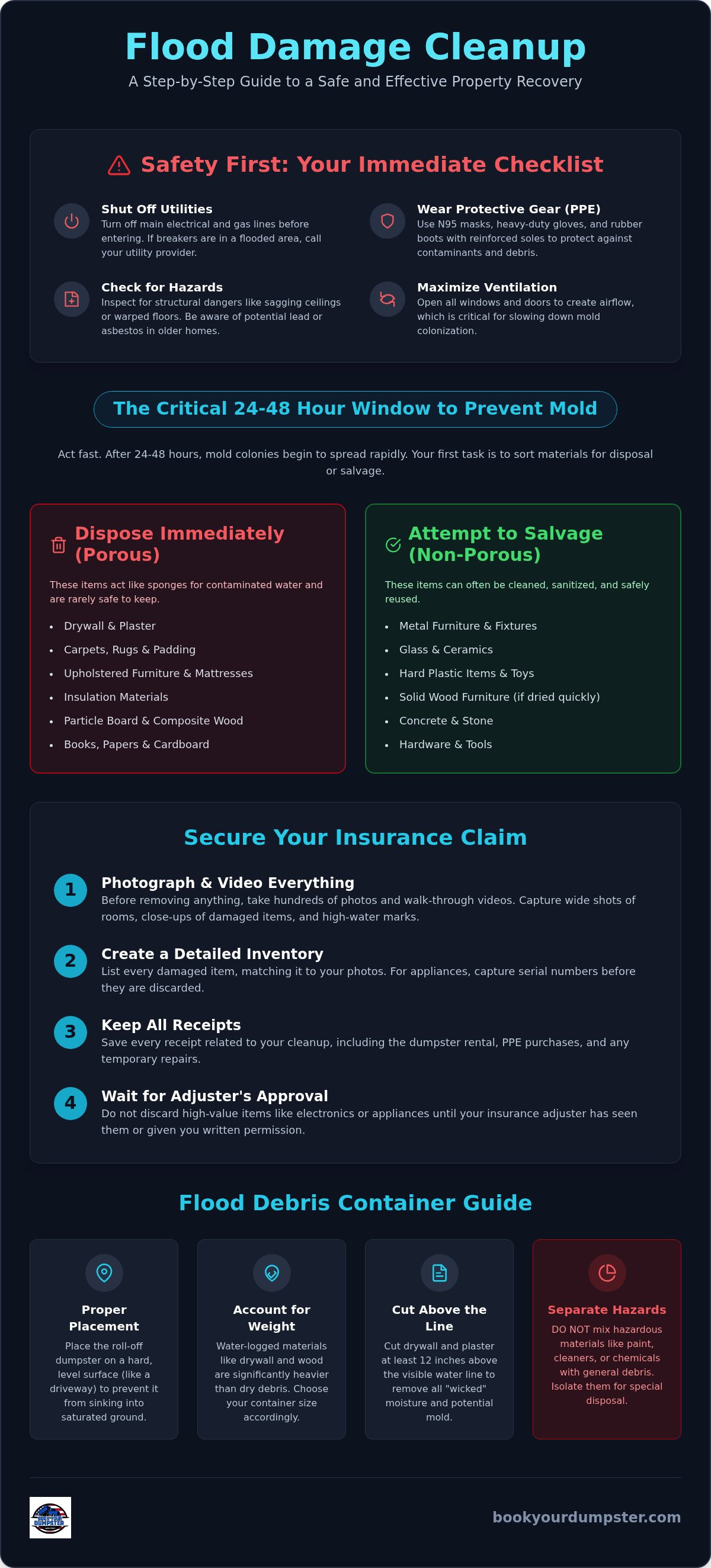
Don't enter your property until you've confirmed it's structurally and electrically sound. Floodwaters are often contaminated and can hide significant dangers beneath the surface. Shut off all electrical power and gas lines at the main breaker and valve before you begin any work. If the main switches are in a flooded area, don't attempt to reach them yourself; contact your utility provider to handle the disconnect immediately. This safety-first approach is the foundation of the disaster restoration process and prevents avoidable accidents during a high-stress recovery.
Equip yourself with the right gear before handling any water-logged materials. You need professional-grade PPE, including N95 masks to protect your lungs from mold spores and airborne bacteria. Wear heavy-duty work gloves to prevent cuts from hidden glass or metal; use rubber boots with reinforced soles to navigate slippery, debris-strewn floors. Once you have secured the site, open every window and door to maximize ventilation. High-volume airflow is the most effective way to slow down mold colonization while you wait for your flood damage cleanup container to be delivered to your Queens property.
Structural and Electrical Hazards
Perform a thorough walk-through to identify immediate physical threats. Look for sagging ceilings that might collapse or warped floorboards that could give way under your weight. In many older Queens neighborhoods, homes built before 1978 may contain lead-based paint or asbestos. If these materials are disturbed by flood damage, they require professional remediation. Never step into standing water if electrical outlets or submerged appliances are present. The risk of electrocution is high in damp environments, so treat every wire as if it's live until a professional electrician confirms otherwise.
Insurance Documentation Protocol
Your insurance claim depends on the quality of your evidence. Before you start throwing ruined drywall or furniture into your flood damage cleanup container, take hundreds of photos and several walk-through videos. Capture the high-water marks on the walls and the condition of individual items. Create a comprehensive inventory list that matches your photos. Use the following steps to ensure your documentation is thorough:
- Take wide-angle shots of every room to show the full extent of the flooding.
- Capture close-ups of serial numbers on high-end appliances before they're hauled away.
- Save a digital copy of your dumpster rental agreement for your claims adjuster.
- Record a video of the water receding to show the duration of the saturation.
Keep every receipt related to the cleanup, including the cost of your roll-off dumpster and any PPE you purchased. Avoid discarding high-value electronics or appliances until your insurance adjuster has seen them or given you explicit written permission to dispose of them. This documentation ensures you're properly reimbursed for the heavy costs of recovery and helps the adjuster process your claim without unnecessary delays.
Sorting the Mess: Disposal vs. Salvage Guidelines
Speed is your greatest ally when preventing mold growth. You have a window of approximately 24 to 48 hours to remove saturated materials before fungal colonies begin to spread. Following the guidelines for re-entering a flooded home, your first task is a brutal triage of your belongings. Categorize every item as either porous or non-porous. Porous materials act like a sponge for contaminated floodwater and rarely remain safe for use. Non-porous items made of metal, glass, or hard plastic can often be sanitized and salvaged. Don't waste time trying to dry out items that are inherently unsanitary; focus your energy on clearing the path for your flood damage cleanup container.
Isolate hazardous materials immediately. Paints, industrial cleaners, and garden chemicals often leak during a flood, creating a toxic "soup" that requires specialized handling. These items cannot be mixed with standard construction debris. Keep them in a separate, secure area away from the main cleanup zone. If you're unsure about the volume of debris you're facing, you can view available dumpster sizes to help plan your sorting strategy and ensure you have enough capacity for the gut-out.
What Goes in the Flood Cleanup Container?
Load the container with materials that cannot be effectively disinfected. This includes all water-logged drywall and plaster sections. Cut these materials at least 12 inches above the visible water line to ensure you remove any "wicked" moisture hidden behind the surface. Strip away saturated carpeting, padding, and laminate or hardwood flooring. These layers trap water against the subfloor and will rot if not removed. Upholstered furniture, mattresses, and pillows that have absorbed floodwater are also destined for the container. They hold pathogens deep within their fibers that professional cleaning often cannot reach.
What Must Be Handled Separately?
Most municipal regulations prohibit certain items from entering a standard roll-off. White goods, such as refrigerators, washers, and dryers, often require specialized appliance recycling due to refrigerants or heavy metal components. Electronics and "e-waste" are strictly regulated in states like Illinois and Massachusetts. You must keep computers, televisions, and monitors out of your flood damage cleanup container to avoid fines and environmental contamination. Finally, collect any fuel containers or pressurized tanks that were swept into your home or garage. Contact your local fire department or waste management office for specific drop-off locations for these high-risk materials.
Standard Sizes for Flood Recovery
The scale of your water damage dictates your capacity needs. Use these general guidelines to match your project to the right unit:
- 10-Yard Dumpster: This is the most efficient choice for small basement floods, single-room bathroom cleanouts, or removing saturated drywall from a finished attic. You can learn more about 10 yard dumpster rental for smaller recovery projects.
- 20-Yard Dumpster: We position the 20-yard unit as the standard for residential flood gut-outs. It provides the necessary volume for multiple rooms of flooring and furniture without occupying too much footprint on your property.
- 30 to 40-Yard Dumpsters: These large-scale containers are reserved for major storm damage, structural demolition, or commercial property restoration where the volume of debris is massive.
Weight Capacity and Wet Debris
Volume is only half of the equation; weight is the critical factor in flood recovery. Water-logged carpet can weigh 10 times more than dry carpet. This saturation quickly adds up against your ton limit. A 20-yard dumpster typically holds 2 to 3 tons of debris, but heavy saturation can push you over that limit faster than you expect. Exceeding these limits leads to overweight fees at the landfill, so it's often safer to size up if you're disposing of heavy materials like wet lumber, masonry, or thick padding. You can use the Book Your Dumpster USA online booking system to compare specifications and ensure your selected flood damage cleanup container can handle the tonnage of your specific debris profile.
The Loading Checklist: Efficiency and Compliance
Saturated ground is a common byproduct of heavy rain and flooding. Placing your flood damage cleanup container on soft soil is a significant risk. The extreme weight of water-logged debris can cause the unit to sink into mud or soft turf. This makes the final haul-away nearly impossible and can damage your landscaping. Choose a hard, level surface for delivery. This ensures the truck can safely drop and retrieve the unit without getting stuck or creating deep ruts in your property. If you aren't sure where to place the unit, identify the flattest part of your driveway or a designated paved area.
Placement and Property Protection
Protect your driveway from the pressure of a heavy roll-off. Lay down large plywood boards where the dumpster wheels will rest. This simple step distributes the weight and prevents asphalt or concrete from cracking under the concentrated load. In metro areas like Queens or Chicago, you might need to place the unit on a public street. Verify local parking permit requirements before scheduling your delivery. Many cities require a specific permit for street placement to avoid blocking emergency access. Consult our guide on roll off dumpster rental for more placement tips and local compliance advice.
Maximizing Container Space
Efficiency saves money. Load the heaviest items first. Wet lumber and saturated flooring sections should form a solid base at the bottom of the container. This creates a low center of gravity for safe transport. Break down large furniture items like wardrobes or bed frames before tossing them in. Flat materials stack more tightly and eliminate "air pockets" that waste valuable cubic yardage. Fill the small gaps around larger items with loose debris like insulation scraps or drywall pieces. Distribute the weight evenly from front to back to prevent the container from tipping or shifting during the haul-away process.
Safety is a legal requirement. Never fill your flood damage cleanup container past the designated "fill line" marked on the side. Protruding debris is a hazard for other drivers on the road. If the load is too high, the driver may refuse the pickup for safety reasons. You'll then have to remove items manually, which adds unnecessary labor and delay to your recovery project. Keep the load level and secure to ensure a smooth transition from cleanup to final disposal. Ready to clear your site? Book your dumpster online now for immediate scheduling.
Finalizing Your Cleanup with Book Your Dumpster USA
Recovery from a flood is a race against biology. Once the water recedes, the clock starts on mold growth and structural rot. You need a partner that operates with the same urgency you feel. Book Your Dumpster USA provides a streamlined online booking system available 24/7. This allows you to secure a flood damage cleanup container at the exact moment you need it, rather than waiting for business hours during a disaster. We focus on removing logistical stress through transparent pricing. You won't find hidden surcharges or vague delivery windows here. We offer a reliable service that lets you focus on your property while we handle the waste logistics with professional precision.
Schedule your pickup the moment the container reaches the fill line. Stagnant, wet debris sitting in a driveway is a breeding ground for pests and unpleasant odors. Fast removal is essential to maintaining a safe work environment for your restoration crew and your family. Our system is built for speed, ensuring that once your project is ready for haul-away, we move quickly to clear your site. This punctuality is our recurring promise to every customer navigating the aftermath of a storm.
Why Local Expertise Matters After a Disaster
We understand the specific disposal regulations in major metro areas like Queens, Chicago, and San Francisco. Local knowledge is critical when streets are narrow and permit requirements are strict. Our network ensures reliable delivery even when regional demand spikes after a major storm event. We maintain a fleet ready to serve New York, New Jersey, Illinois, and Massachusetts with the equipment you need. For more localized information on regulations and site prep, check our 2026 guide to debris removal. This resource helps you navigate the specific challenges of urban recovery and community-specific waste mandates.
Ready to Start Your Recovery?
Take the first step toward a dry, safe home today. Evaluate your debris volume based on the sorting and sizing tips discussed in the previous sections. Whether you need a compact 10-yard unit for a basement or a 40-yard container for a full property gut-out, we have the inventory to support your project. Choose your size and book your flood damage cleanup container today to lock in your delivery time. Contact our support team if you need help calculating the weight of your wet materials or choosing between our 20-yard and 30-yard options. Join thousands of homeowners and contractors who rely on us for professional, no-nonsense waste management. Let's get your project moving toward completion immediately.
Take Control of Your Property Recovery
Efficient flood recovery requires a combination of safety, organization, and speed. You now have the checklist needed to triage your belongings and protect your property from structural hazards. By selecting a right-sized flood damage cleanup container and accounting for the massive weight of wet debris, you avoid the common pitfalls of overlooked disposal rules and overweight fees. Proper loading and placement are the final steps in ensuring your site remains safe and your recovery stays on schedule.
We provide the logistical support you need to move from disaster to restoration. With local expertise in NY, NJ, IL, MA, and San Francisco, we offer transparent, direct pricing and a streamlined online booking system designed for urgent needs. Don't let water-logged materials sit and risk further mold growth. Secure your equipment today and start clearing the path toward a dry, safe home.
Rent Your Flood Cleanup Container Now
You've done the hard work of assessment and planning. Now it's time to execute your cleanup and get your life back to normal.
Frequently Asked Questions
What size dumpster do I need for a flooded basement?
A 10-yard dumpster is usually sufficient for a small basement cleanup, while a 20-yard unit is the standard for a larger, finished basement gut-out. These sizes accommodate the volume of drywall, studs, and flooring common in residential flood recovery. Select the larger size if you have heavy furniture or thick carpeting to dispose of during your project.
Can I put moldy drywall and carpet in a standard roll-off container?
Yes, moldy drywall and carpeting are considered standard construction and demolition debris. These materials are ideal for a flood damage cleanup container because they are porous and cannot be salvaged. Bag any smaller, loose debris to prevent mold spores from becoming airborne as you load the container.
How much weight can a 20-yard dumpster hold for wet debris?
A 20-yard dumpster typically holds between 2 and 3 tons of material. Be aware that water-saturated debris like drywall and lumber weighs significantly more than dry waste. Monitor your fill level closely to avoid exceeding the weight limit; wet materials can reach maximum tonnage well before the container is physically full.
Will insurance pay for my flood damage cleanup container rental?
Coverage for a flood damage cleanup container depends on whether you have a separate flood insurance policy or a specific rider. Standard homeowner's insurance often excludes flood-related debris removal. Document every item you discard and keep your rental receipt to submit to your claims adjuster for potential reimbursement under your specific policy terms.
Are there items I am prohibited from putting in the dumpster after a flood?
Prohibited items include hazardous chemicals, electronics, large appliances containing refrigerants, and pressurized tanks. These materials require specialized disposal and cannot be mixed with general flood waste. Contact your local municipality for specific drop-off locations for paints, batteries, and "white goods" like refrigerators or air conditioners.
How soon can I get a dumpster delivered after a major storm?
We offer immediate scheduling through our online booking system, though demand increases significantly after major weather events. Secure your unit as early as possible to ensure timely delivery. Our local networks in New York and Massachusetts work to maintain inventory even during peak recovery periods to help you start your cleanup immediately.
Do I need a permit to put a dumpster on the street in New York or Chicago?
Yes, both New York City and Chicago require a permit if the dumpster sits on a public street or right-of-way. Homeowners are responsible for obtaining these permits from the Department of Transportation or local building department. We recommend placing the unit on your private driveway whenever possible to avoid these additional administrative steps and costs.
How do I protect my driveway from a heavy dumpster on saturated ground?
Place heavy plywood boards under the dumpster wheels to distribute the load and protect your driveway. Saturated ground is prone to shifting and sinking under the weight of a full roll-off. This simple barrier prevents the metal wheels from cracking your asphalt or leaving deep ruts in your concrete during the recovery process.


