
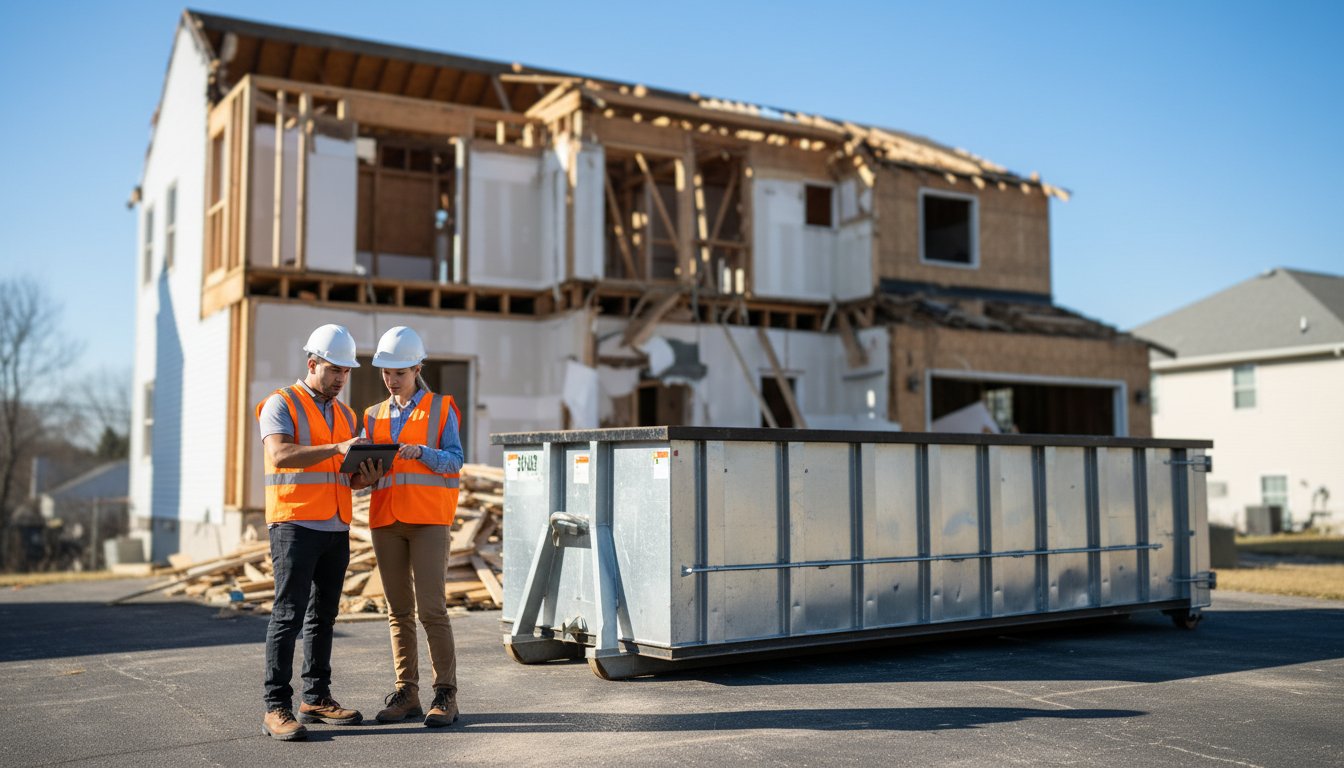
A 10-yard dumpster holds about 3 pickup truck loads of debris, but heavy materials like concrete will hit weight limits long before the container is full. Most contractors treat waste as a volume problem, but demolition is actually a weight game. Book your house demolition dumpster rental with a clear strategy to avoid the $40 to $200 per extra ton overweight fees that heavy drywall and shingles trigger. You want your site cleared on time without the headache of hidden costs or delivery delays.
We know that navigating local regulations in New York, Illinois, and Massachusetts is often the hardest part of the job. It's stressful to manage Chicago's $1,000,000 insurance requirement or Newburgh's $100 weekly permit fee while trying to keep a crew moving. This guide helps you master waste management through expert sizing and permitting strategies. Choose the right 10, 20, 30, or 40 yard dumpster for your needs and learn how to handle the November 2022 Massachusetts mattress ban so your project stays compliant and moves fast.
Key Takeaways
- Calculate debris volume using structural square footage to ensure you book the right capacity from the start.
- Match your house demolition dumpster rental to material density, using 10-yard bins for heavy debris and 30 or 40-yard bins for full teardowns.
- Identify regional permit requirements in New York, Illinois, and Massachusetts to keep your dumpster placement compliant and legal.
- Load heavy materials like brick and concrete first to maintain a low center of gravity and ensure a safe, balanced pickup.
- Eliminate logistical stress by utilizing transparent, all-in pricing and instant online scheduling for your next project.
Planning Your House Demolition Waste Strategy
Start your project by defining the scope of the job. A total structural teardown creates a different waste profile than an interior gut renovation. While an interior project focuses on drywall, flooring, and fixtures, a full teardown involves the foundation, roofing, and framing. Identify your waste type early to avoid logistical bottlenecks. General Construction and demolition (C&D) waste includes wood, metal, and plastic, while heavy debris consists of concrete, brick, and asphalt. Mixing these materials often leads to weight overages, so plan to separate heavy loads whenever possible.
Assess the distance to the nearest landfill or transfer station. In high-traffic areas like Chicago or Queens, travel time affects your project timeline and potential fuel surcharges. Choose a local partner to minimize these delays. For large-scale projects, you need a partner that understands the intensity of a house demolition dumpster rental and can provide rapid turnarounds. Book your dumpster early to ensure the container is on-site before the first wall comes down.
Interior vs. Exterior Demolition Needs
Interior gut jobs often require 10 or 20 yard dumpsters due to tight residential driveways or city street parking limits. These projects generate debris in stages, meaning you might need multiple swaps rather than one massive container. Manage hazardous materials with caution. Regulations in Massachusetts and New York require specific handling and separate disposal for asbestos and lead-based paint. Don't let a full bin stall your crew. Our Empty-and-Return service provides a continuous waste management solution by replacing your full container with a fresh one immediately.
Calculating Debris Weight and Volume
Use the 1/3 rule for accurate estimation. Demolition debris is not neatly stacked; it's jagged and bulky, meaning it takes up 30% more space than the original standing structure. To convert square footage into cubic yards, multiply the total square feet by 0.33 and divide by 27. For example, a 1,500-square-foot home produces roughly 18 or 20 cubic yards of debris, though this varies by construction material. Factor in the "fluff" factor for materials like fiberglass insulation and loose drywall. These items consume massive volume but contribute very little to the total weight. Conversely, a single layer of asphalt shingles can weigh 2 to 3 tons per 100 square feet. Balance your loads to stay within the legal weight limits of the roll-off truck.
Dumpster Sizes for Demolition: From 10 to 40 Yards
Choosing the right size for a house demolition dumpster rental ensures you don't pay for empty space or face the logistical nightmare of an overflowing bin. While some providers compare dumpster capacity to pickup truck loads, those comparisons often fail when you're dealing with heavy demolition debris like brick and concrete. A pickup truck might hold the volume, but the suspension will fail long before it reaches the weight capacity of a professional roll-off. We offer four primary sizes to handle everything from a bathroom gut to a full structural teardown.
- 10-Yard Dumpsters: These are compact and designed for weight. They are the only choice for high-density materials like concrete, asphalt, and dirt.
- 20-Yard Dumpsters: This is the standard choice for small residential teardowns, garage demolitions, or full-room gut renovations.
- 30-Yard Dumpsters: Use these for large-scale residential renovations and commercial gut jobs that involve long pieces of wood framing.
- 40-Yard Dumpsters: Reserved for major structural demolition. These massive containers handle the high-volume debris generated when knocking down entire buildings.
Planning is the difference between a clean site and a stalled project. Before you start, choose your size based on your densest material to ensure a smooth pickup.
Matching the Bin to the Material
Material density dictates your container choice. For "clean fill" projects involving only concrete or brick, you must use a 10-yard bin. Filling a larger container with these heavy materials makes the load too heavy for a standard truck to lift safely. If you're managing a smaller project or heavy-duty debris, read our 10 Yard Dumpster Rental: The Complete Buying Guide for 2026. When your project involves bulky but lighter items like wood framing or roofing, a 30-yard bin provides the necessary volume. Adopting the sustainable management of resources allows you to separate recyclable metals or wood, potentially reducing your total waste volume.
The Logistics of Large Bin Placement
Large bins require significant space and clear access. A 40-yard container is typically 22 feet long and 8 feet wide. You need at least 60 feet of straight-line clearance for the delivery truck to drop the bin and pull away. Always check for overhead obstructions like power lines or low-hanging tree branches. The truck arm needs approximately 23 feet of vertical clearance to tilt the bin into place. To protect your driveway from the weight of a loaded demo bin, place plywood or 2x4 boards under the rollers. This simple step prevents the steel wheels from cracking your pavement under the pressure of 4 to 5 tons of debris.
Compliance and Logistics: Permits in NY, NJ, and Beyond
Placement determines your legal obligations. If you place your house demolition dumpster rental on private property, you generally don't need a city permit. However, street placement triggers strict local ordinances. In New York City, the Department of Transportation (DOT) requires a Construction Debris Container Permit for any bin on a public street. These permits typically cost between $50 and $150 and remain valid for up to 90 days. In Queens and other high-density boroughs, failure to display a permit leads to immediate fines and project shutdowns. Always verify your specific block's regulations before the truck arrives.
Chicago regulations are equally rigorous. You must obtain a permit for the public way and provide proof of insurance totaling at least $1,000,000. In Massachusetts, permitting usually falls under the jurisdiction of local Boards of Health. For instance, Lawrence requires a $50 permit from the Fire Prevention Bureau for any bin larger than 6 cubic yards. Always coordinate with local utility companies for line marking before delivery. Dropping a loaded roll-off on a shallow gas or water line creates a catastrophic safety hazard. Follow OSHA demolition safety standards to ensure your site remains compliant and your crew stays safe.
Residential vs. Commercial Permit Requirements
Contractors typically handle permit filings for commercial projects, but homeowners often manage this for DIY renovations. Check your local statutes to confirm who carries the liability for street placement. Permit durations vary; some cities offer 5-day cleanout permits while others allow 30-day windows. For a detailed breakdown of regional costs, see our Dumpster Rental Prices in New York, Illinois, and Massachusetts: 2026 Guide. This helps you budget for both the rental and the administrative fees.
Local Signal: Serving Major Metros
Urban logistics require precision. In San Francisco, steep hills and narrow streets demand smaller trucks and specific bin placement to prevent tipping. Winter weather in Illinois and Massachusetts complicates delivery. Snow piles often block designated drop zones, and frozen ground can make retrieval difficult if the bin sinks into soft mud during a thaw. In New Jersey, schedule your deliveries outside of peak traffic patterns to avoid delays. On-time delivery is our priority, but local gridlock can turn a 20-minute trip into a two-hour ordeal. Book your delivery for early morning to beat the rush and keep your demolition schedule on track.

Safety and Loading Protocols for Heavy Debris
Loading a house demolition dumpster rental requires more than just tossing debris over the side. Start with your heaviest materials first. Place brick, concrete, and large structural timbers at the bottom of the bin. This creates a low center of gravity and ensures the roll-off truck remains stable during the winching process. If you pile heavy debris at the front or back, the dumpster might tip or slide unevenly when the driver attempts to lift it. Distribute the weight across the entire floor to prevent the container from becoming lopsided.
Keep hazardous waste out of your bin to avoid project delays. Demolition sites often contain hidden contaminants that landfill operators won't accept. Prohibited items include tires, liquid chemicals, lead-acid batteries, and electronics. These materials require specialized disposal and can lead to immediate rejection at the transfer station or significant environmental fines. If you're unsure about a specific material, ask before you load it. Clear communication prevents the stress of unloading a contaminated bin later.
Managing Weight Limits to Avoid Overages
Concrete and brick require specific weight considerations because their density quickly exceeds the lifting capacity of standard roll-off trucks. One cubic yard of solid concrete weighs approximately 4,000 lbs. In contrast, older lath and plaster debris is bulkier but lighter, weighing roughly 800 lbs per cubic yard. This 5-to-1 weight ratio means you can fill a bin with plaster, but you must stop at the halfway mark with concrete. If your project involves 10 tons of masonry, use two 10-yard bins instead of a single 30-yard container. This prevents the "overweight" status that stops a pickup in its tracks and costs you extra in fees. Book your dumpster based on these material densities to keep your project on budget.
On-Site Safety and Debris Containment
Secure your dumpster area at the end of every shift. Residential sites often attract unauthorized dumping, which adds weight you didn't account for and fills your bin with someone else's trash. Use a heavy-duty tarp or temporary fencing to deter neighbors from using your container. Always wear proper PPE, including puncture-resistant gloves, steel-toed boots, and eye protection, when loading jagged demolition waste. For more detailed safety standards, check out The Ultimate Guide to Construction Debris Removal in 2026. Avoid the "mountain top" effect by keeping all debris level with the top rail. Drivers cannot legally transport containers with debris hanging over the sides or piled above the rim. If it's over the top, you'll have to level it out before we can haul it away.
Secure Your Rental with Book Your Dumpster
Successful demolition projects rely on a waste management partner that moves as fast as your crew. Managing a house demolition dumpster rental shouldn't involve guesswork or hidden fees. We provide transparent, all-in pricing that eliminates the stress of weight overage surprises. Whether you're gutting a commercial space in Chicago or tearing down a residential structure in Boston, our local expertise ensures your project stays on schedule and compliant with regional laws. We handle the logistics so you can focus on the job site.
High-volume demolition often requires more than just a single container. For projects that generate hundreds of cubic yards of debris, our "Empty-and-Return" service is essential. Instead of waiting for a pickup and then scheduling a new drop-off, we coordinate a seamless swap. This keeps your team working without downtime. You get a single point of contact to manage complex schedules across multiple sites in New York, New Jersey, and Illinois. This level of coordination is why professional contractors rely on us for their most demanding teardowns.
The Book Your Dumpster USA Advantage
Our on-time delivery guarantee keeps your demolition timeline on track. We understand that a delayed dumpster means a stalled crew and wasted labor costs. We offer flexible rental periods tailored to your specific project length, whether it's a three-day interior gut or a month-long structural removal. If you encounter logistical hurdles or unexpected debris types, you have direct access to our professional support team. We don't hide behind automated phone menus. You get real experts who understand the nuances of waste management in your city.
How to Start Your Demo Project Today
Don't let waste management be the bottleneck of your renovation. Follow these three steps to secure your container and start your teardown:
- Step 1: Choose your size based on our demolition volume guide. Match your material density to a 10, 20, 30, or 40 yard bin.
- Step 2: Schedule your delivery through our hassle-free online portal. Get instant confirmation and transparent pricing.
- Step 3: Focus on the demo. We'll handle the disposal, the weight tracking, and the final haul-away.
Book Your Dumpster USA now and experience a service designed for the intensity of the construction industry. We provide the tools you need to clear the way for what's next.
Start Your Demolition With Confidence
Mastering a house demolition dumpster rental requires balancing material weight with regional compliance. You now understand why 10-yard bins are mandatory for heavy masonry and how to navigate the 90-day DOT permit window in New York City. By applying the 1/3 volume rule and maintaining a low center of gravity during loading, you protect your budget from the $40 to $200 per ton overweight fees. Don't let logistical stress stall your crew or inflate your project costs. It's about having the right tool for a messy job.
Book Your Dumpster offers a streamlined online booking system and an on-time delivery guarantee across major US metros. We provide transparent, all-in pricing with no hidden weight fees. Our local expertise in Illinois, Massachusetts, and New York means we handle the permit headaches while you focus on the structural work. Book your demolition dumpster online today to secure your container and keep your project moving forward. You've got the plan; we've got the containers to make it happen.
Frequently Asked Questions
How much does a house demolition dumpster rental cost?
Weekly costs typically range from $350 to $550 on average across the U.S. For a 10-yard bin, you might pay between $220 and $580, while a 20-yard bin scales from $280 to $699. These rates fluctuate based on your specific city and the total weight of the debris. Pricing in Boston or Chicago often sits at the higher end of the spectrum due to local disposal fees and high demand.
What size dumpster do I need for a 2,000 sq ft house demolition?
A 2,000 square foot home demolition usually requires approximately 24 to 27 cubic yards of container space. However, you must account for the 30% "fluff factor" caused by air pockets and jagged debris. Plan for at least one 40-yard dumpster or two 20-yard bins to handle the total volume. If the structure has heavy masonry foundations, separate that weight into a 10-yard bin to stay within legal hauling limits.
Can I put concrete, brick, and asphalt in the same dumpster?
You can combine concrete, brick, and asphalt in a single container, but this is classified as a heavy load. We recommend using a 10-yard dumpster for these materials to prevent the truck from exceeding its lifting capacity. Mixing these with general household debris like wood or drywall often complicates recycling and can lead to higher disposal rates at the transfer station. Keep masonry separate to maximize your budget and efficiency.
Do I need a permit for a dumpster in Queens or Chicago if it is on my driveway?
No permit is required for a house demolition dumpster rental if the container sits entirely on your private driveway. Permits in Queens and Chicago are only mandatory when the bin occupies the public way, which includes streets, sidewalks, or parkways. If any part of the roll-off extends onto the sidewalk, you must secure a DOT permit in New York or a public way permit in Chicago to avoid fines.
What happens if my demolition dumpster exceeds the weight limit during pickup?
If your dumpster exceeds the weight limit, you will face additional fees ranging from $40 to $200 per extra ton. In cases where the load is too heavy for the truck to lift safely, the driver will leave the bin on-site. You must then remove enough debris to meet the legal hauling requirements. This creates project delays and labor costs, so monitor your masonry and roofing loads carefully to stay within the ton allowance.
How long can I keep a roll-off dumpster for a demolition project?
Standard rental periods usually last 7 to 10 days, but we offer flexible schedules tailored to your project timeline. If your demolition takes longer than expected, you can extend the rental for a daily rate typically between $40 and $100. Always schedule your pickup 24 to 48 hours in advance to ensure on-time removal. This prevents the bin from sitting idle on your site once the work is finished and the debris is cleared.
Are there items from a house demolition that cannot go in the dumpster?
Prohibited items include hazardous materials like asbestos, lead-based paint, tires, and appliances containing refrigerants. You also cannot dispose of electronics, liquid chemicals, or car batteries in a standard roll-off. These items require specialized handling at a dedicated waste facility. Check with your local Board of Health in Massachusetts or the IEPA in Illinois for specific guidelines on disposing of banned textiles and mattresses which cannot enter the general waste stream.
Can I schedule a same-day swap if my dumpster fills up faster than expected?
Same-day swaps are available depending on our current schedule and truck availability. To guarantee a seamless transition, we recommend calling for an Empty-and-Return swap 24 hours before your container is completely full. This prevents your crew from standing around with no place to put debris. Our streamlined online portal allows you to request swaps instantly, keeping your high-velocity demolition project moving without unnecessary interruptions or site clutter.


