
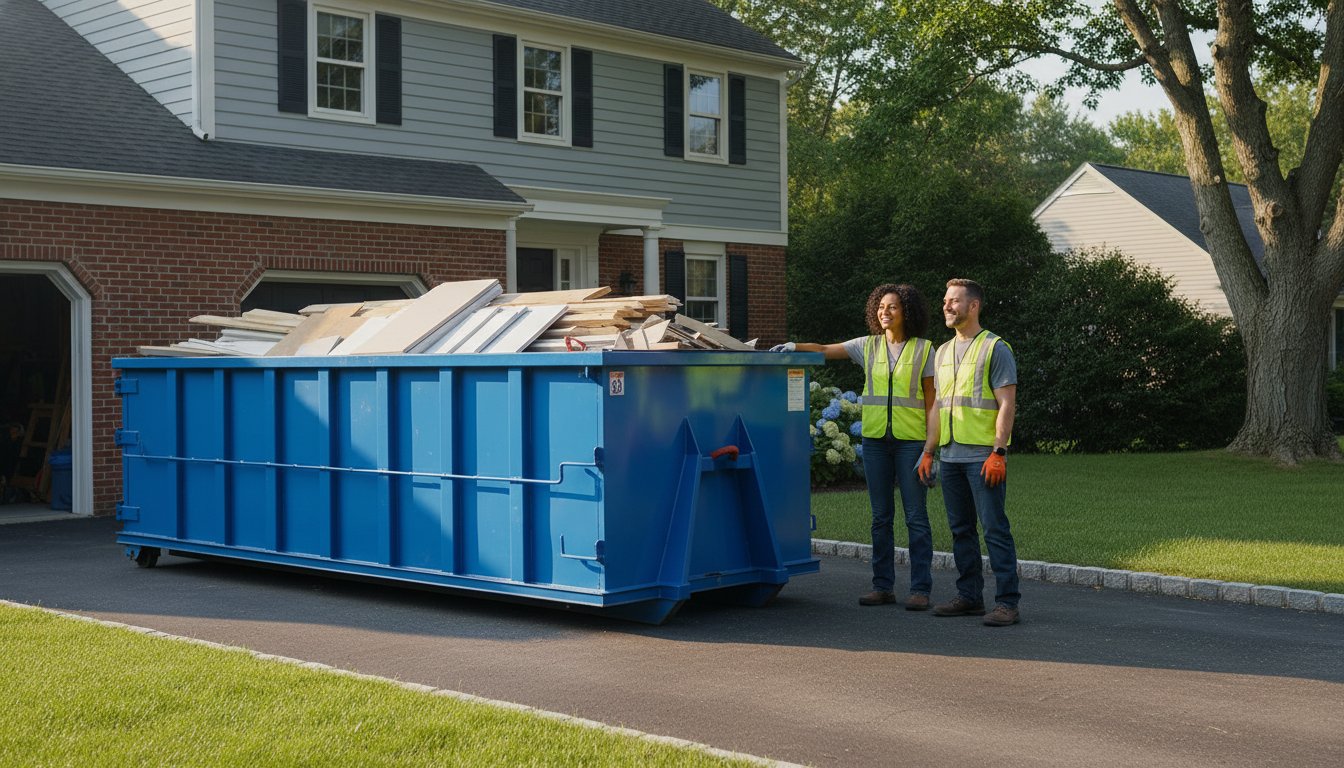
Guessing your debris volume is the fastest way to double your project budget. Most homeowners and contractors realize too late that the real question isn't just about space, but how much does a 30 yard dumpster hold before hitting weight limits that trigger overage fees. You likely feel that a 20-yarder is too small, yet you're anxious about paying for a 40-yard container you won't fill. This is a common hurdle when you're trying to clear a 2,500-square-foot home or manage a construction site in high-traffic areas like Chicago or Boston.
We'll help you master the logistics so your project stays on track. You'll learn the exact capacity of this unit, which typically handles 12 pickup truck loads or 180 heavy-duty trash bags. We also explain the specific 4-ton weight caps often found in NY, IL, and MA to help you avoid unexpected costs. From understanding 3-day street permit windows to calculating the density of roofing shingles, this guide ensures you book your dumpster with total confidence and zero guesswork.
Key Takeaways
- Visualize the physical footprint with dimensions of 22 feet long and 6 feet high to ensure the container fits your job site.
- Confirm your project scope by learning how much does a 30 yard dumpster hold for major home additions and full siding replacements.
- Avoid the "Density Trap" and expensive overage fees by understanding the 3 to 5-ton weight limits for common construction debris.
- Navigate regional logistics including street placement permits in Chicago and seasonal road weight restrictions across Massachusetts.
- Book your dumpster through a streamlined online system that promises transparent pricing and on-time delivery.
Visualizing 30 Cubic Yards: Dimensions and Equivalents
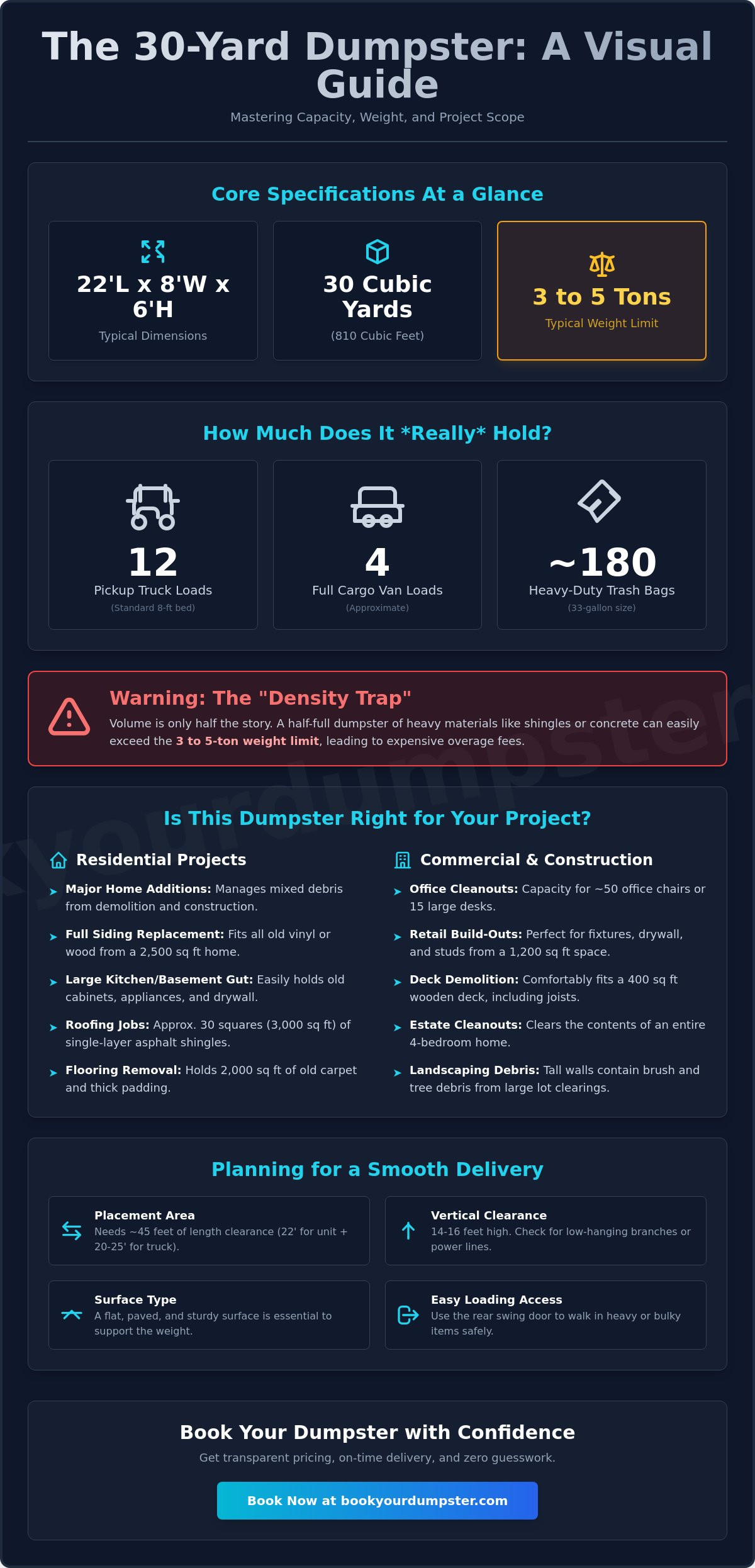
Understanding exactly how much does a 30 yard dumpster hold starts with the math. This container provides 810 cubic feet of space. Most units measure 22 feet long, 8 feet wide, and 6 feet high. While exterior dimensions might shift by a few inches depending on the manufacturer, the internal volume remains a consistent 30 cubic yards. You are essentially renting a metal box the size of a large commercial parking space but with walls tall enough to stand inside.
Industry estimates often conflict regarding pickup truck equivalents. Some sources claim 9 loads, while others suggest 14. To clear the confusion, consider a standard 8-foot pickup bed, which holds about 2.5 cubic yards when filled level to the top. Based on this data, a 30-yard dumpster replaces 12 full pickup truck trips to the local landfill. If you use a short-bed truck or don't fill it to the brim, that number quickly climbs to 15 loads. For those using 33-gallon heavy-duty trash bags, expect to fit between 170 and 190 bags before reaching the fill line.
Standard Dimensions and Footprint
The 6-foot wall height is the defining feature of this size. These tall sides keep debris contained, but they also make over-the-side loading difficult for heavy items. Use the integrated swing door located at the rear of the unit. This feature allows you to walk heavy furniture, appliances, or bulky construction materials directly into the container. Most roll-off dumpsters of this capacity require a flat, paved surface that can support the weight of the steel and your discarded materials. Measure your placement area carefully; you need at least 22 feet for the unit and another 20 feet of clearance for the truck to safely drop and retrieve the container.
Capacity in Everyday Objects
Visualize the interior volume as a small bedroom measuring 10 feet by 10 feet with the debris piled 8 feet high. If you use cargo vans for your hauling, one 30-yard unit replaces roughly 4 full van loads. This size is a standard choice for 1,200-square-foot basement cleanouts or 500-square-foot deck removals. Because it occupies a significant portion of a standard residential driveway, ensure you have 10 feet of width available to allow for the dumpster and a small walking path. Before you book, confirm your driveway is clear of low-hanging branches or power lines, as the delivery truck needs 14 to 16 feet of vertical clearance to tilt the hoist during delivery.
What Fits? 30-Yard Dumpster Project Capabilities
Moving from dimensions to actual debris helps you decide if this size fits your workflow. For large residential projects, this container serves as the industry workhorse. It handles multi-room renovations where you're stripping away drywall, lath and plaster, and old flooring simultaneously. If you're tackling a complete siding replacement on a 2,500 square foot home, this unit typically manages the entire volume of old vinyl or wood planks without requiring a second haul. Understanding how much does a 30 yard dumpster hold in terms of real-world objects prevents the logistical headache of a mid-project overflow.
Residential Renovation Capacity
Roofing contractors specifically rely on the 30-yarder for substantial residential jobs. It fits approximately 30 squares, which equals 3,000 square feet, of single-layer asphalt shingles. When you're gutting a large kitchen, this unit easily swallows 25 linear feet of cabinetry, a central island, and multiple bulky appliances like double ovens and refrigerators. For whole-house flooring updates, you can pack in roughly 2,000 square feet of old carpeting and thick padding. Just ensure you roll the material tightly and stack it toward the front of the container to maximize every inch of the 810 cubic feet available.
Commercial and Construction Use
Commercial projects demand higher volume for bulky, awkward items. During a standard office cleanout, this unit holds about 50 office chairs or 15 large executive desks and their accompanying filing cabinets. Retailers undergoing a 1,200 square foot build-out find it perfect for metal studs, drywall scraps, and old store fixtures. Following EPA waste management guidelines for commercial buildings helps you sort these materials efficiently to ensure your project stays compliant with local disposal rules. This size also excels during estate cleanouts, fitting the contents of a 4-bedroom home including mattresses, sofas, and dining sets.
Landscaping and exterior demolition projects benefit from the tall 6-foot walls. A 400 square foot wooden deck, including the railings and joists, fits comfortably within this footprint once the wood is cut into manageable lengths. You can also dispose of significant amounts of brush and tree debris from a half-acre lot clearing. However, don't mix heavy soil or large stumps into a general debris load, as these quickly exceed weight limits. For professional-grade results on your next big cleanup, select your dumpster size based on these specific project benchmarks to keep your site clear and safe.
The Weight Limit Factor: Volume vs. Density
Space is only half the story. Most 30-yard roll-offs come with a weight allowance between 3 and 5 tons, which equals 6,000 to 10,000 pounds. When calculating how much does a 30 yard dumpster hold, you must prioritize material density over physical volume. You can fill the entire 810 cubic feet with household junk or furniture and stay well under the limit. However, the "Density Trap" occurs when you load heavy materials like masonry or soil. Filling a 30-yard container to the brim with concrete would result in a load weighing nearly 60 tons, far exceeding the legal limit for any roll-off truck.
Exceeding your agreed weight limit leads to over-tonnage fees. These surcharges are applied for every ton over your initial limit, which can quickly inflate your project costs. Lightweight debris like drywall and wood allows you to use the full height of the container. In contrast, heavy materials like shingles or brick require you to stop loading long before the container looks full. Always discuss your specific debris type before you book your dumpster to ensure your weight allowance matches your needs.
Material Weight Comparison
Different materials consume your weight limit at vastly different rates. Use the data below to estimate how quickly your container will reach its capacity:
- Drywall: Approximately 500 pounds per cubic yard. You can usually fill the container completely.
- Asphalt Shingles: Between 750 and 1,000 pounds per cubic yard. A 30-yarder handles about 30 squares of single-layer shingles.
- Concrete or Brick: Approximately 4,000 pounds per cubic yard. Never fill a 30-yard dumpster with these materials; they are reserved for smaller, specialized 10-yard "low-boy" containers.
Watch out for water weight. Debris like old carpeting, wood, and insulation acts like a sponge during rainstorms. A single heavy downpour can add over 1,000 pounds of water weight to your load. If you're working in a rainy climate or during a snowy Illinois winter, keep the container covered with a heavy-duty tarp when it's not in use. This simple step prevents your debris from absorbing moisture and pushing you over your tonnage limit.
How to Avoid Overage Fees
Follow the "level fill" rule for every load. Debris should never extend above the top rim of the dumpster. Overfilled containers create a safety hazard for the driver and other motorists during transport. If your load is uneven or too high, the driver may refuse pickup, resulting in a dry-run fee. Distribute heavy items evenly across the floor of the unit rather than piling them all at one end. This balance ensures the roll-off truck can safely hoist the container onto the bed without mechanical strain. A tonnage limit is the maximum weight allowed in your flat-rate price before per-ton surcharges apply.
Regional Logistics: NY, IL, and MA Requirements
Local regulations dictate the success of your cleanup as much as the container's capacity. When calculating how much does a 30 yard dumpster hold, you must also account for the physical space it occupies on public streets. In high-density cities like New York, Chicago, and Boston, you can't simply drop a 22-foot container without official clearance. These cities enforce strict "Right of Way" and occupancy rules that require advance planning. Failure to secure these documents results in heavy fines or the immediate removal of the unit by city authorities.
Permits and Street Placement
Secure your permits before the truck arrives. In Chicago, you must apply for a "Right of Way" permit if the dumpster sits on any public property, including alleys or parkways. This process typically requires 3 to 5 business days for approval. New York City is even more stringent; you must obtain a DOT permit for any roll-off container placed on a public street. If you're working in Boston, secure an "Occupancy Permit" through the city's digital portal. These permits often come with a 2-day or 3-day time limit, so time your delivery precisely to avoid paying for days you aren't using.
Local Prohibited Items and Recycling
State-level waste bans significantly impact what you can throw away. Massachusetts Department of Environmental Protection (MassDEP) enforces strict bans on easy-to-recycle materials. You can't mix large amounts of cardboard, glass, or mattresses into your general debris load. In Illinois, the Electronic Products Recycling and Reuse Act prohibits disposing of computers, monitors, and televisions in landfills. New York enforces similar e-waste laws, especially for commercial cleanouts. Review the 2026 local resource guide to see the full list of restricted materials in your specific county.
Protect your property from the varied climates of the Northeast and Midwest. During the spring thaw in Massachusetts, residential roads often have seasonal weight restrictions to prevent pavement damage. Use 3/4-inch plywood boards under the dumpster's wheels to distribute weight and protect your driveway from cracking during freeze-thaw cycles. This is vital in Illinois and New York where temperature swings can exceed 40 degrees in a single 24-hour period. Once you've checked your local zoning and confirmed your debris type, schedule your dumpster delivery to ensure you get the right size for your specific regional requirements.
Booking Your 30-Yard Dumpster with Confidence
Securing the right waste solution shouldn't be the hardest part of your renovation. Once you understand how much does a 30 yard dumpster hold, the next step is ensuring the container arrives exactly when and where you need it. At bookyourdumpster.com, we've replaced the traditional, opaque rental process with a streamlined digital platform. You can select your size, verify your service area, and schedule your delivery in under five minutes. This efficiency is critical for projects in New York, Illinois, and Massachusetts, where project timelines are often dictated by tight permit windows and unpredictable weather patterns.
Our "No Hidden Fees" promise serves as a verbal handshake with every customer. Many traditional haulers hide fuel surcharges, environmental fees, or administrative costs in the fine print, which can inflate your final bill by 15% to 25%. We provide transparent pricing upfront so you can manage your budget with precision. For current regional rates and a breakdown of what to expect in your specific county, consult our dumpster rental prices guide. This resource helps you compare costs across the Northeast and Midwest markets before you commit.
Why Choose Book Your Dumpster USA?
We specialize in the logistical complexities of the New York, Illinois, and Massachusetts markets. Whether you're navigating the narrow streets of Boston or a commercial build-out in downtown Chicago, our local expertise ensures a smooth delivery. We maintain a robust inventory of 30-yard roll-offs to guarantee availability even during peak construction seasons. Reliability is our core product; we understand that an empty dumpster is a prerequisite for a productive job site. On-time delivery keeps your contractors on schedule and prevents the costly bottleneck of accumulated debris. You can manage your entire rental, from initial booking to the final pickup request, through our intuitive digital dashboard.
Next Steps for Your Project
Preparation is the final key to a hassle-free cleanup. Before the truck arrives, perform a final check of your site. Verify that your driveway or designated drop zone can accommodate the 22-foot length of the container plus the necessary clearance for the delivery vehicle. Reconfirm your debris type to ensure it aligns with the weight limits and material guidelines we've discussed. If you're disposing of heavy materials like roofing shingles or large furniture, plan your loading strategy to keep the weight distributed evenly across the floor of the unit.
Don't let waste management slow your momentum. Book your 30-yard dumpster today and experience a professional, direct service that respects your time and your budget. We'll handle the logistics so you can focus on finishing your project.
Take Control of Your Project Waste Today
You now have the technical data needed to manage your large-scale debris removal with precision. From visualizing the 12-pickup-truck capacity to navigating the specific permit requirements of Chicago and Boston, you can avoid the common pitfalls that stall major projects. Remember that while volume is generous, the 3 to 5-ton weight limit dictates your loading strategy. Knowing exactly how much does a 30 yard dumpster hold allows you to distribute materials like roofing shingles and drywall effectively, preventing overage fees and safety delays. This knowledge turns a messy logistical challenge into a managed part of your daily workflow.
Our local experts in New York, Illinois, and Massachusetts are ready to help you execute your cleanup without the usual industry stress. We provide transparent pricing with no hidden fees and an easy 24/7 online booking system to match your project's urgency. Don't let a growing pile of debris compromise your site's safety or your timeline. Rent Your 30-Yard Dumpster Now and clear your space with total confidence. You've done the research; now it's time to get the job done right.
Frequently Asked Questions
How many pickup truck loads fit in a 30-yard dumpster?
A 30-yard dumpster replaces 12 to 15 standard pickup truck loads. This estimate is based on a full 8-foot truck bed filled level to the top. When calculating how much does a 30 yard dumpster hold, remember that the 22-foot length allows for larger items that wouldn't fit in a truck. It's the most efficient choice for major home cleanouts or commercial renovations.
Can I put concrete or dirt in a 30-yard dumpster?
No, you cannot put heavy debris like concrete, dirt, or brick in a 30-yard dumpster. These materials are too dense and will exceed the weight capacity of the roll-off truck's hoist. For heavy loads, book a specialized 10-yard container. This prevents safety hazards and helps you avoid expensive over-tonnage fees at the landfill.
Do I need a permit for a 30-yard dumpster in Chicago or NYC?
You need a permit if you place the container on a public street or sidewalk in Chicago or New York City. Chicago requires a "Right of Way" permit, while NYC DOT mandates specific permits for public property placement. If the unit sits entirely on your private driveway, you typically don't need these city-level permits. Check your local municipal website 5 days before delivery.
What is the weight limit for a 30-yard dumpster rental?
The standard weight limit for a 30-yard unit is between 3 and 5 tons. This equals 6,000 to 10,000 pounds of debris. When determining how much does a 30 yard dumpster hold, you must account for this tonnage cap. If your project involves dense materials like roofing shingles, you'll hit this limit before the container is physically full. Always disclose your debris type when you book your dumpster.
Will a 30-yard dumpster fit in a standard residential driveway?
A 30-yard dumpster fits in most residential driveways that are at least 25 feet long. The unit itself is 22 feet long and 8 feet wide. Ensure you have 14 to 16 feet of vertical clearance for the truck to operate. Clear all vehicles and low-hanging branches from the path before the driver arrives to ensure a hassle-free drop-off.
What happens if I overfill my 30-yard dumpster?
Overfilling your dumpster leads to dry-run fees and safety violations. Drivers cannot legally transport a container if debris extends above the top rim. If the load is unsafe, the driver will leave the unit on-site until you remove the excess material. This delay disrupts your schedule and results in additional service charges for the return trip.
How long can I keep a 30-yard dumpster on my property?
Standard rental periods typically range from 7 to 14 days depending on your specific agreement. You can request an earlier pickup through our online platform once your project is complete. If you need more time, contact us 24 hours before your scheduled pickup to arrange an extension. This flexibility ensures your project stays on track without unnecessary pressure.
Are there items I cannot put in a 30-yard container in Massachusetts?
Massachusetts has strict waste bans on materials like mattresses, cardboard, and yard waste. The MassDEP prohibits these items from entering landfills to encourage recycling. You also cannot dispose of hazardous chemicals, batteries, or paints. Review our regional guide for the full 2026 list of restricted materials to ensure your load complies with state environmental laws.


