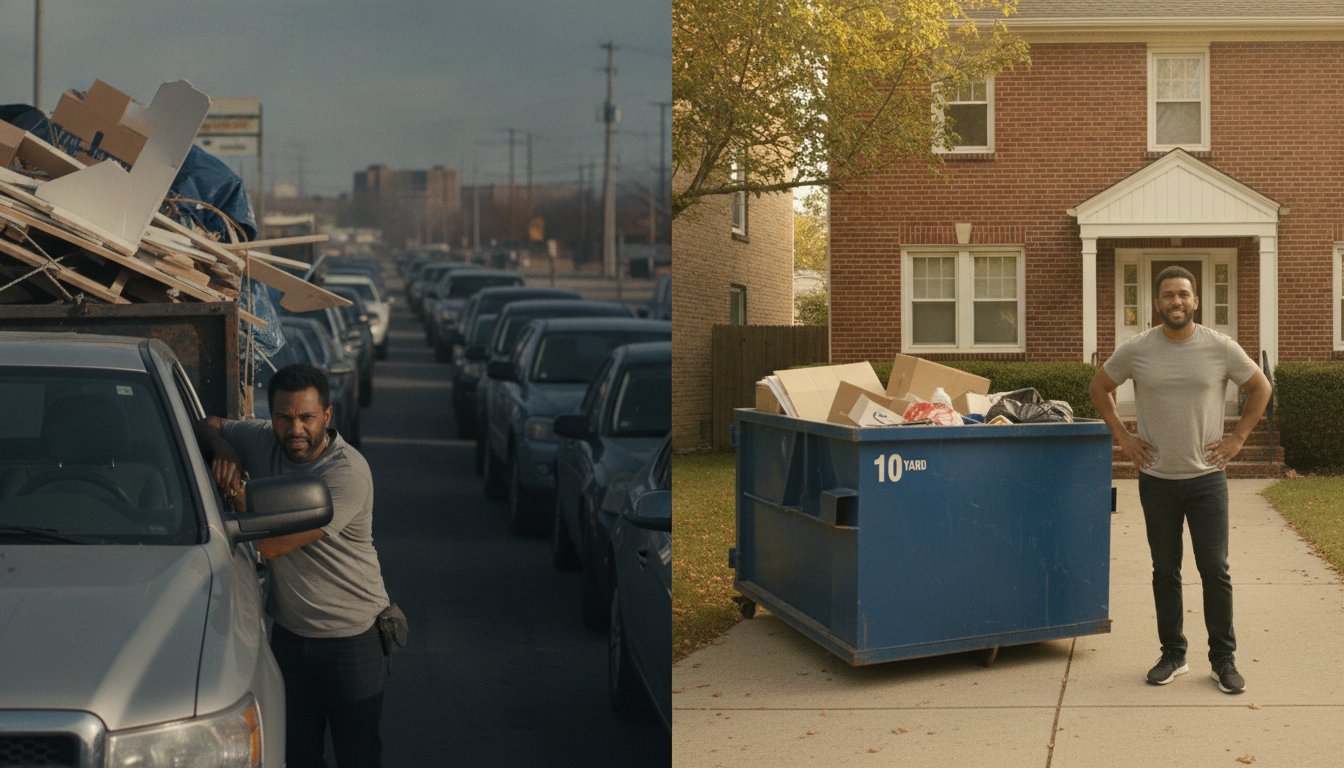

Landscaping debris is a game of weight, not just volume, and assuming a standard container can handle your backyard overhaul is the fastest way to double your project costs. Finding the right dumpster for landscaping project debris requires more than just eyeballing a pile of branches. It involves calculating the density of materials like sod, soil, and rock that quickly exceed standard weight limits.
You likely know that clearing a property is back-breaking work, and you shouldn't have to worry about hidden fees or placement logistics on top of the physical labor. This guide will help you master the logistics of yard waste removal by showing you exactly how to select, load, and book the right container for any project. We will cover which dumpster sizes fit your specific debris, how to avoid overage fees, and the best practices for fast, reliable delivery and pickup.
Key Takeaways
- Match your container size to material weight, specifically using a 10-yard dumpster for heavy debris like soil and gravel to prevent overage fees.
- Master the logistics of selecting a dumpster for landscaping project debris by understanding the critical difference between volume and material density.
- Optimize loading efficiency by placing heavy rocks at the bottom and using the "burrito method" to roll sod tightly for better space management.
- Avoid project delays by identifying prohibited items like treated lumber and ensuring your yard waste meets strict "clean load" standards.
- Streamline your cleanup with a direct online booking process that offers transparent pricing and reliable pickup schedules.
What is a Landscaping Dumpster and Why Do You Need One?
A landscaping dumpster is a heavy-duty, open-top container designed specifically to handle the extreme weight and volume of outdoor renovation projects. These units are not standard trash bins. They are engineered to hold organic waste, dense soil, and heavy masonry materials. Roll-off dumpsters serve as the industry standard because they provide a stable, centralized location for debris that would otherwise clutter your yard. Using a dedicated container ensures your project stays organized and your property remains protected from the mess of a major overhaul.
Don't rely on your local curbside pickup for a backyard renovation. Most municipalities enforce strict regulations on yard waste, including limits on bag counts and specific branch lengths. If you leave a massive pile of sod or large stumps at the curb, your local service will likely leave them behind. Renting a dumpster for landscaping project debris solves this problem immediately. It removes the logistical stress of municipal rules and ensures all your waste is hauled away in a single trip. This prevents the "debris creep" that often happens when piles of branches or dirt sit on a lawn for weeks, killing the grass and compacting the soil underneath.
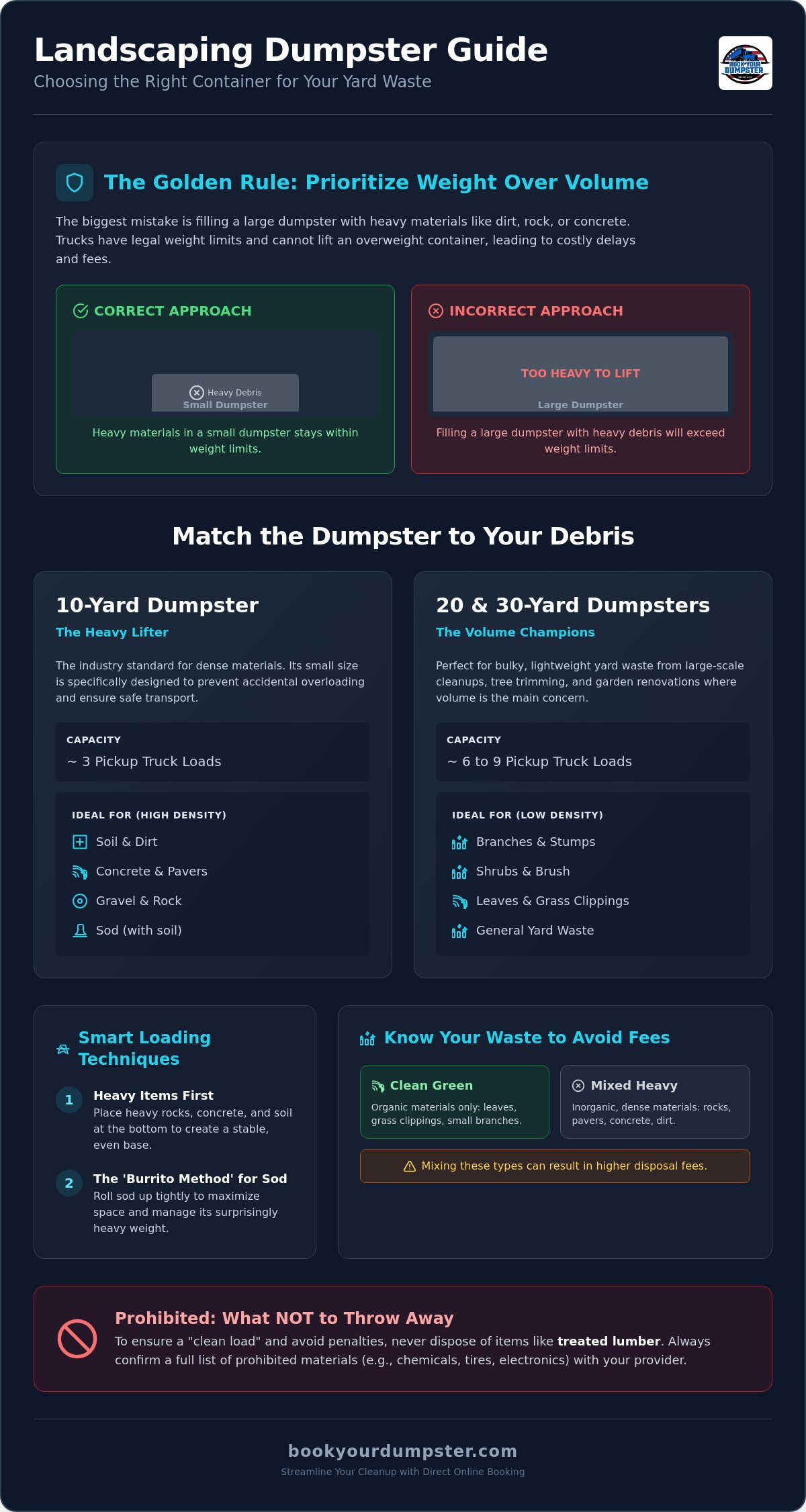
You must understand the difference between "Clean Green" waste and "Mixed Debris" before booking. Clean Green refers to organic materials like leaves, grass clippings, and small branches that can be composted. Mixed Debris includes inorganic materials like rocks, pavers, concrete, and dirt. Mixing these categories can lead to higher disposal costs because facilities process them differently. Keeping your load "clean" or choosing the right container for mixed heavy materials is the most effective way to control your budget. Centralizing everything in a steel container keeps your job site professional and safe for everyone involved.
Common Landscaping Projects Requiring a Dumpster
Large-scale outdoor projects generate more waste than people realize. Complete sod removal and lawn re-grading produce thousands of pounds of dense organic matter that quickly exceeds the capacity of a pickup truck. Tree removals or clearing overgrown brush create bulky, awkward piles that are difficult to transport without a large container. If you are installing hardscapes like pavers, retaining walls, or gravel, you need a dumpster that can handle the sheer density of stone and concrete without risking damage to your own vehicle.
The Logistical Advantage of Roll-Off Containers
Efficiency is the primary benefit of a roll-off container. It eliminates the need for dozens of exhausting trips to a local landfill or composting center. This saves significant time for DIY homeowners and allows professional contractors to focus on the actual installation rather than waste management. A well-placed dumpster keeps the work area clear of tripping hazards and keeps the project moving on schedule. Visit Book Your Dumpster USA to select a size that fits your specific project needs and secure a reliable delivery date.
Choosing the Right Size for Landscaping Project Debris
Selecting the right dumpster for landscaping project debris requires a shift in mindset from volume to density. The Golden Rule of waste management is simple. Heavy materials like dirt, rock, and concrete must go in smaller dumpsters. This avoids exceeding legal weight limits and mechanical lifting capacities. If you fill a 30-yard container with wet soil, the truck won't be able to lift it. You'll face costly delays while you shovel out the excess. Always prioritize weight limits over container height when dealing with masonry or earth. Density is the primary factor in dumpster selection.
The 10-Yard Dumpster: Small but Mighty
A 10 yard dumpster rental is the preferred choice for dirt and pavers. It's small but mighty. This container holds roughly three pickup truck loads of heavy debris. It's the industry standard for soil, sod, and gravel. Most haulers only allow these dense items in a 10-yard unit. Larger bins filled with rock are simply too dangerous to transport on public roads. Filling a 10-yard dumpster with sod is a precise task. Sod is deceptively heavy because of the soil attached to the roots. If the sod is wet, the weight can double quickly. Stick to the smaller bin for anything that comes out of the ground. When managing these loads, check Massachusetts Department of Environmental Protection (Mass DEP) regulations to ensure your clean fill meets local disposal standards.
Upsizing for Volume: 20 and 30 Yard Options
For major garden renovations, you'll need a 20 yard dumpster. These larger units are best for high-volume, low-weight debris. Think branches, shrubs, and old fencing. They are ideal for bulky items like old decks, pergolas, and large root balls that don't pack down easily. Estimating volume for 'fluffy' waste like hedge clippings and leaves can be tricky. These materials take up a lot of space but weigh very little. A 20-yard bin gives you the vertical room to stack branches without them spilling over the sides. If your project involves clearing an acre of brush, a 30-yard unit provides even more depth. For massive commercial land clearing, a 40-yard dumpster is the only logical choice. It handles extensive brush volume and large-scale site preparation. You can book your dumpster online to ensure you have the right capacity for your upcoming project.
How to Load Your Dumpster for Maximum Efficiency
Loading a dumpster for landscaping project debris is a tactical process. Don't just toss items in randomly. You must maximize every cubic yard of space to avoid the cost of a second container. Start by placing heavy materials like rocks, concrete, or dirt at the bottom. This creates a stable base for the container and prevents it from shifting during the hauling process. A low center of gravity is essential for the truck's hydraulic system to function correctly when it arrives for pickup.
Managing Heavy Materials
Spread dirt and gravel evenly across the floor of the dumpster rather than piling it in one spot. Avoid concentrated weight in a single corner. Uneven loads can cause the truck to tilt or the container to slide dangerously during pickup. Clean fill consisting only of dirt may have different pricing than mixed debris loads. Keeping these materials level ensures the weight is distributed across the container's structural frame.
Handle sod with the "burrito method" to manage density. Roll the sod tightly with the dirt side facing inward. This technique manages weight distribution and saves significant vertical space compared to throwing loose, irregular chunks into the bin. It also keeps the soil from spilling out and creating a mess at the bottom of the unit. Packed sod rolls are much easier to stack and organize than loose piles of grass and earth.
Manage branches and brush by cutting them into 4-foot sections. Long, uncut branches create "spider-webbing," which leaves large, empty air pockets throughout the load. These pockets waste valuable volume and can force you to book another dumpster prematurely. By processing your wood waste into uniform lengths, you can pack the container much tighter. This step is critical for projects involving heavy hedge trimming or tree removal.
Dealing with Bulky Organic Waste
Break down shrubs and large root systems with a chainsaw or loppers before loading. Large root balls take up massive amounts of room and are difficult to stack around. Compress loose leaves and grass clippings to the bottom of the unit to fill small gaps between larger items. Ensure no branches are sticking out of the sides or top of the container. This keeps the job site clean and prevents damage to the dumpster's tarping system.
Keep the final load level with the top rim. Debris must not exceed the height of the container walls for safe transport. Drivers are legally prohibited from hauling "top-heavy" or overflowing loads because of the risk of falling debris on public roads. If your pile is too high, you'll have to remove items before the truck can depart. Follow these loading steps to ensure a smooth, one-trip removal process.
Rules, Permits, and Prohibited Landscaping Materials
Compliance is non-negotiable when using a dumpster for landscaping project debris. You must distinguish between organic matter and restricted waste to avoid substantial fines. Standard yard waste containers cannot accept hazardous chemicals, liquid pesticides, or treated lumber. Specifically, wood treated with Chromated Copper Arsenate (CCA) is prohibited because it leaches toxins during the recycling process. Check your material list before you start loading. Ensuring everything in your pile is permitted keeps your project on schedule and avoids environmental penalties.
Local Regulations and Permits
Street placement is a common necessity in dense urban areas, but it usually requires paperwork. Check if you need a permit for a dumpster rental in New York, New Jersey, or Illinois before the truck arrives. In Queens, street permits are mandatory and often have strict expiration dates. San Francisco has similar requirements to ensure the container doesn't block emergency access or public transit routes. Always clear a path for the delivery truck. If the driver can't safely drop the unit due to parked cars or low-hanging wires, you'll still be responsible for the "dry run" fee.
Respect the 'Clean Load' requirement. Most processing facilities reject yard waste if it contains plastic, metal, or household trash. If you're clearing a lawn, don't throw in the plastic bags you used for initial collection. Empty the bags and dispose of the plastic separately. Mixing materials transforms a low-cost organic load into a high-cost mixed debris load. This simple error can double your disposal price instantly. Keep your waste streams separate to maintain the integrity of the recycling process.
Prohibited vs. Restricted Items
Certain landscaping materials require specialized handling. Railroad ties and pressure-treated wood contain preservatives like creosote that are hazardous to the environment. These items must never enter a standard yard waste bin. Large tree stumps are often restricted because they exceed weight limits or require heavy machinery to grind. Keep your construction debris removal tasks, such as discarding old deck boards or concrete pavers, separate from your organic waste to maintain pricing integrity.
Monitor your fill line to avoid overage fees. Every container has a "Max Fill" mark. If your debris rises above this line, the load is unsafe for transport. Drivers will refuse to pick up an overflowing dumpster, leading to additional daily rental costs. Stay within the weight capacity discussed during booking to ensure a flat-rate experience. To secure a container that meets your local regulations, book your dumpster today through our streamlined online system.
Booking Your Landscaping Dumpster with Book Your Dumpster USA
Secure your dumpster for landscaping project debris through our high-velocity online platform. We've removed the logistical friction from waste management. Our system allows you to select your size, specify your drop-off date, and confirm your location in under five minutes. This digital-first approach ensures you spend less time on logistics and more time on your project. We provide a professional, no-nonsense service that respects your schedule and your budget. You can rely on our competence to handle the heavy lifting while you focus on the transformation of your property.
Pricing integrity is the foundation of our business. You won't encounter hidden fees for delivery, pickup, or standard weight limits. We provide transparent quotes that act as a verbal handshake. Our team understands that landscaping projects are inherently messy and labor-intensive. We act as a dependable partner to remove the stress of debris removal. Whether you're a homeowner tackling a garden overhaul or a contractor managing a commercial site, we provide the control you need. Expert support is available for every client. If you're unsure about local permit requirements in Chicago or specific weight limits in New Jersey, our team provides immediate clarity.
The Online Booking Process
Start by entering your zip code on our digital platform. We offer comprehensive service across NY, NJ, IL, MA, and San Francisco. Select the roll-off container that matches your material density. As established in earlier sections, our 10-yard dumpster is the industry standard for heavy soil and stone. Provide clear delivery instructions during the checkout process. This allows for a seamless, contactless drop-off that keeps your job site secure and organized without requiring you to be present for the delivery. Our streamlined interface ensures that booking your rental is the easiest part of your project.
Why Professional Landscapers Choose Us
Dependability is our signature. Professional crews choose us because our roll-off service keeps their projects moving. We understand that outdoor work is weather-dependent and often unpredictable. Our flexible rental periods allow you to adjust for project delays without administrative headaches. You get direct communication and a service that functions like a high-precision tool. We modernize the traditional industrial sector by prioritizing punctuality and straightforward honesty. We bridge the gap between complex regional regulations and your project's immediate requirements. Visit Book Your Dumpster USA to schedule your next haul and experience a more efficient way to manage project waste.
Streamline Your Property Transformation
Managing a major property renovation is difficult enough without the added stress of waste logistics. You now have the knowledge to match container size to material density and use efficient loading techniques like the burrito method for sod. These steps protect your lawn from damage and ensure you stay within strict weight limits. Always verify local permit requirements and keep prohibited items like treated lumber out of your bin to maintain pricing integrity. Selecting the right dumpster for landscaping project debris turns a chaotic cleanup into a controlled, professional operation.
We offer transparent pricing with no hidden fees for residential and commercial projects across NY, NJ, IL, MA, and San Francisco. Our streamlined digital platform allows you to secure a 10, 20, 30, or 40-yard container in under five minutes. It's the most efficient way to handle the messy reality of site preparation. Book Your Landscaping Dumpster Online Today to keep your project moving on schedule. You've done the hard work of planning your renovation; now use a high-functioning tool to clear the path for your new landscape.
Frequently Asked Questions
Can I put dirt and rocks in a 20-yard dumpster?
No. Most haulers restrict heavy debris like dirt, rock, and concrete to 10-yard containers. Filling a 20-yard unit with these materials exceeds the truck's lifting capacity and violates road safety regulations. Stick to the 10-yard option for masonry and soil to ensure a successful pickup without mechanical failure or legal weight violations.
What is considered 'yard waste' for a dumpster rental?
Yard waste includes organic materials like leaves, grass clippings, shrubs, and tree branches. It doesn't include inorganic items like plastic bags, landscape fabric, or treated wood. Maintaining a clean load of only organic matter often results in lower disposal fees at composting facilities. Always verify the specific acceptance list for your service area before you start loading.
Do I need a permit to put a dumpster on my driveway in New Jersey?
Generally, you don't need a permit for a dumpster placed on a private driveway in New Jersey. Permits are typically required only for street placements that obstruct public right-of-ways. Check with your local municipality or Homeowners Association (HOA) for specific neighborhood restrictions. Ensure there is at least 20 feet of vertical clearance for the delivery truck to operate.
How much weight can a 10-yard dumpster hold for landscaping debris?
A 10-yard container typically holds between 2 and 3 tons of landscaping debris. This is roughly equivalent to three standard pickup truck loads. When selecting a dumpster for landscaping project debris, monitor the density of your materials carefully. Wet soil or large rocks hit this weight limit much faster than dry brush or leaves, so load with caution.
Can I mix branches with old fence wood in the same dumpster?
You should not mix these materials. Branches are organic yard waste, while old fence wood is often pressure-treated or painted. Treated wood contains chemicals like CCA that require specialized disposal processes. Mixing them results in your entire load being rejected or reclassified as more expensive mixed debris. Keep organic waste separate from construction materials to maintain pricing integrity.
What happens if I overfill my landscaping dumpster?
Overfilling creates a safety hazard and results in a refused pickup. Drivers can't legally transport containers where debris exceeds the top rim because of the risk of falling objects on public roads. You'll be required to remove the excess material yourself before the hauler returns. You may also face dry run fees and additional daily rental charges during the delay.
Is sod considered 'clean' yard waste or heavy debris?
Sod is classified as heavy debris because of the significant amount of soil attached to the roots. It is much denser than standard grass clippings or loose leaves. For this reason, sod should always be placed in a 10-yard dumpster to avoid exceeding weight limits. Use the "burrito method" to stack it efficiently and manage the weight distribution across the floor.
How soon can I get a dumpster delivered for my project?
Delivery times depend on current inventory and your specific location. Use our online booking system to view real-time availability in your service area. We recommend scheduling your rental at least 24 to 48 hours in advance to ensure your preferred size is ready for drop-off. Punctuality is our priority to keep your project moving without unnecessary logistical delays.