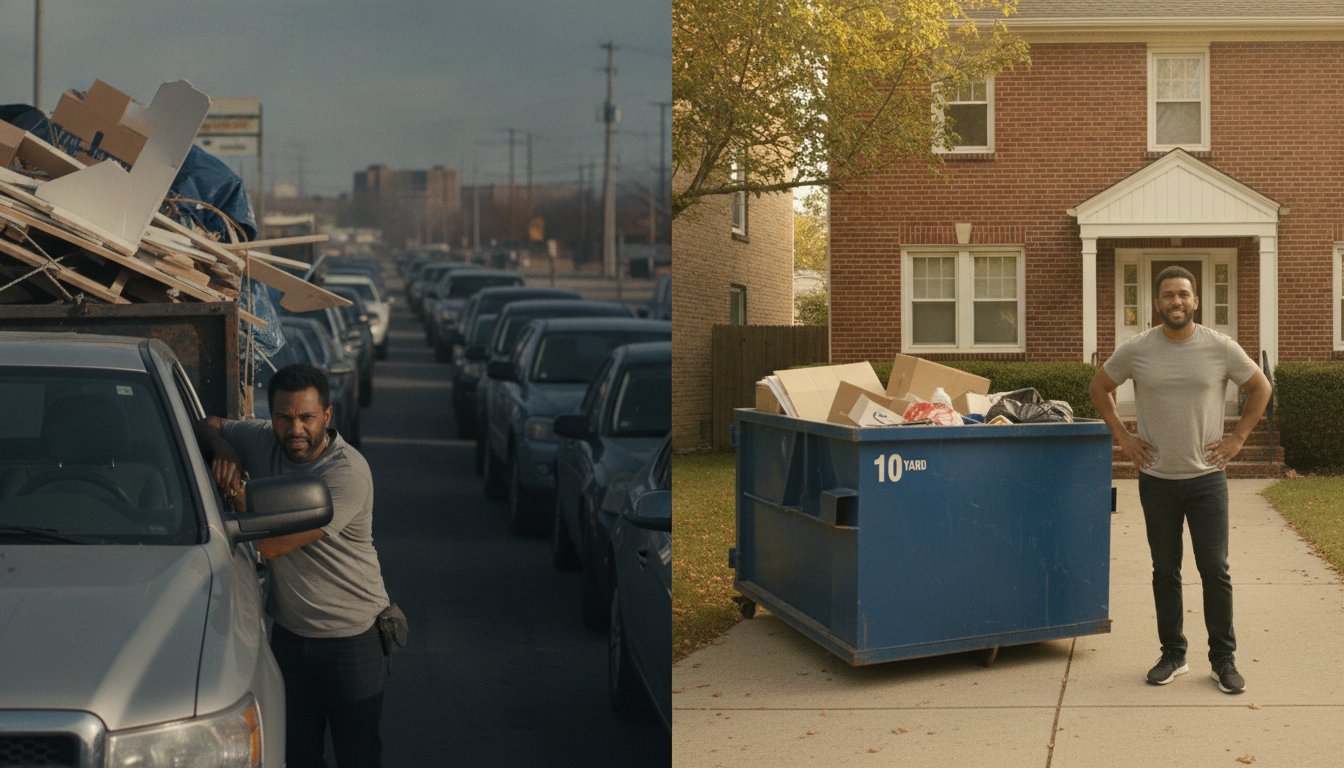

In 2026, EPA hazardous waste penalties can reach $87,249 per day for a single violation. For most store managers, retail waste management feels like a secondary concern until a surprise fee appears on a contract or a seasonal inventory surge overflows your backroom. You shouldn't have to struggle with limited dumpster space in dense urban areas like Queens or San Francisco just to keep your floor clear and your doors open.
We understand that waste is a logistics challenge, not just a utility bill. This guide provides a pragmatic roadmap to reduce your overhead and ensure total compliance with updated 2026 regulations, including Ohio’s RCRA Subpart CC standards and California’s organic waste mandates. You'll learn how to match container scale to your specific project velocity, whether you need a 10 yard dumpster for a small store cleanout or a 40 yard unit for a major renovation.
Stop overpaying for space you don't use and start streamlining your store operations. This overview covers predictable cost modeling, municipal compliance strategies, and the logistical support necessary for seamless, stress-free cleanouts.
Key Takeaways
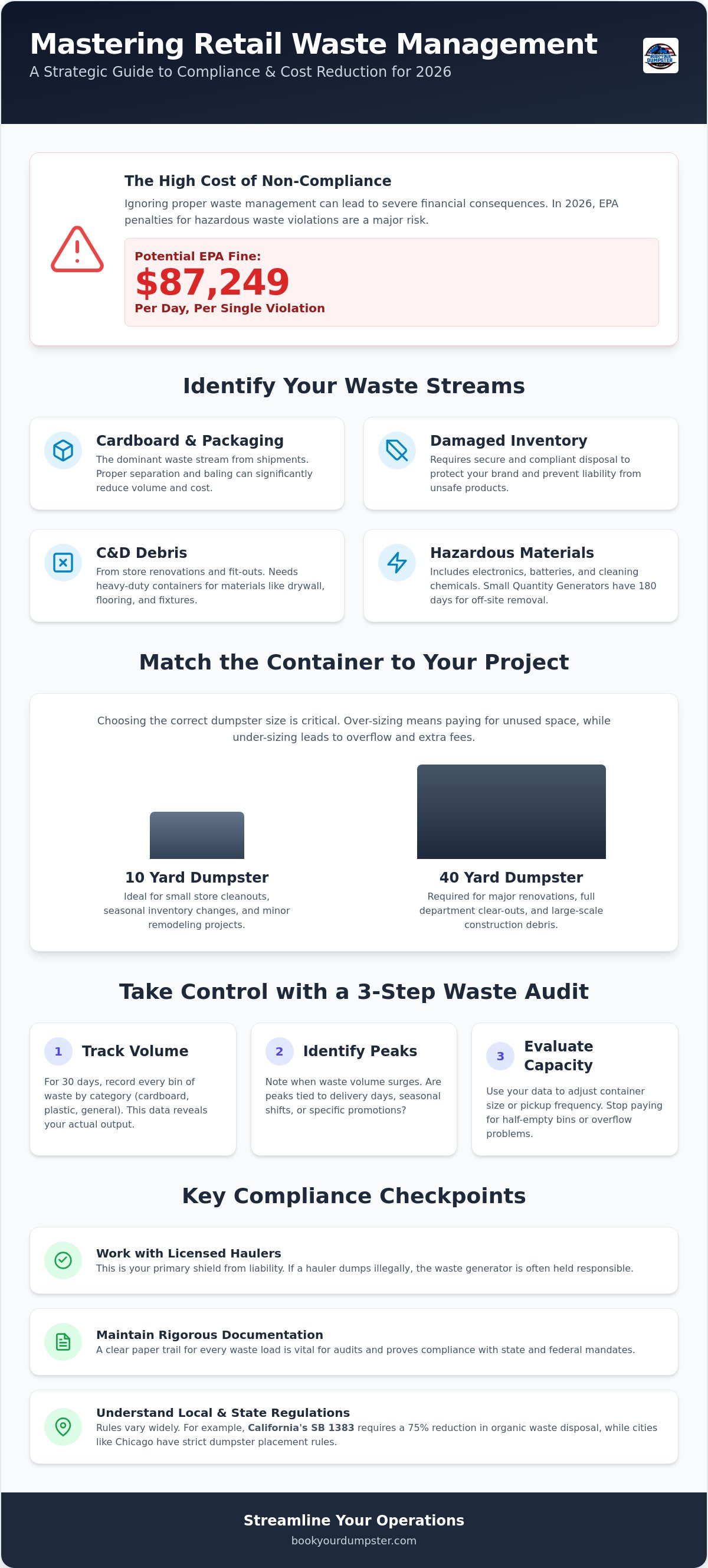
- Learn how to optimize retail waste management to avoid EPA penalties that reach $87,249 per day; protect your bottom line with systematic disposal.
- Select the right equipment for your store's needs, whether it's a 10-yard dumpster for small cleanouts or a 40-yard unit for full department renovations.
- Navigate complex municipal regulations and permit requirements in urban centers like New York City and San Francisco to ensure total compliance.
- Manage seasonal inventory surges effectively by matching your waste container scale to the velocity of your project.
- Use streamlined online booking tools to remove logistical stress and focus on your store's daily operations.
What is Retail Waste Management and Why Does It Matter?
Retail waste management is the systematic process of collecting, sorting, and disposing of materials generated during daily store operations and special projects. It isn't just about hauling away trash; it's a critical logistics function that impacts your overhead and legal standing. Effective systems rely on core waste management principles like reduction and diversion to keep backrooms clear and budgets predictable.
In 2026, the U.S. waste management market is estimated to reach $123.43 billion. For a retailer, efficiency in this sector directly affects the bottom line. You must distinguish between recurring daily waste and project-based debris. Daily operations typically involve cardboard and packaging, while renovations generate bulkier materials like drywall and flooring. Treating a one-time cleanout like a daily pickup leads to service gaps and logistical bottlenecks. High diversion rates also help meet corporate sustainability goals, which are increasingly scrutinized by investors and customers who demand transparent, auditable data.
The Economic Impact of Poor Waste Planning
Poor planning creates hidden costs that erode margins. If a dumpster is blocked or overfilled, haulers charge "dry run" fees because they can't complete the service. Choosing the wrong container size is equally wasteful. Renting a 40 yard dumpster when a 10 yard dumpster would suffice means you're paying for empty space. Beyond direct costs, waste management affects labor. A cluttered loading dock slows down inventory processing. Clear the path for your team by scheduling timely pickups through Book Your Dumpster USA to ensure staff focus on sales, not moving debris.
Regulatory Compliance for Retailers
Compliance is a moving target in 2026. Major hubs like Chicago and Boston have strict ordinances regarding dumpster placement and material separation. Failing to follow these local rules results in heavy fines. Always work with licensed haulers to shield your business from liability. If a hauler dumps illegally, the generator of the waste is often held responsible. Maintain rigorous documentation for every load. This paper trail is vital for tax audits and environmental reporting, proving your store meets state-level mandates like California’s SB 1383, which requires a 75% reduction in organic waste disposal compared to 2014 levels. Proper retail waste management ensures you stay on the right side of these evolving laws.
Common Types of Retail Waste & Compliance Standards
Cardboard and packaging dominate your waste stream. Every shipment brings more bulk that consumes valuable floor space. Damaged or unsold inventory presents a different challenge. You must dispose of these items safely to protect your brand and comply with safety standards. Construction and demolition (C&D) debris from store fit-outs requires heavy-duty containers that can handle weight without failure. Finally, hazardous materials like electronics, batteries, and cleaning chemicals are subject to strict storage limits. Small Quantity Generators (SQGs) generally have 180 days to move hazardous waste off-site. Failure to track these timelines leads to severe penalties. Effective retail waste management requires a clear understanding of these categories before you select a service level.
Conducting a Pragmatic Retail Waste Audit
Execute a 30-day audit to gain control over your output. First, track volume by category. Record every bin of cardboard, plastic, and general trash your team fills. Second, identify waste peaks. Seasonal shifts and delivery days create surges that your standard schedule might not handle. Third, evaluate your current container capacity. In California, businesses generating four or more cubic yards of solid waste per week are legally required to have a recycling program under AB 341. If you're paying for half-empty pickups or dealing with overflows, your container sizing is wrong. Use your audit data to adjust your service frequency or container size immediately.
Managing Packaging Waste at Scale
Optimize your dock by separating cardboard from plastic film. High-volume locations benefit from baling, but smaller stores should use a dedicated bin for loose disposal. Don't let pallet wraps and plastic films mix with general trash; they take up too much volume. For massive inventory resets or seasonal cleanouts, a roll off dumpster rental is the best tool for bulky packaging. Recent retail food waste data highlights that better tracking helps reduce overall volume across the sector. If your current service can't keep up with your audit findings, book a larger dumpster online to regain efficiency and clear your workspace.
Optimizing Retail Waste Logistics: Dumpster Sizes and Scheduling
Effective retail waste management requires matching the container to the job. Front-load commercial pickup handles your daily trash and cardboard. However, store renovations or seasonal purges generate volume that a standard bin cannot handle. This is where temporary roll-off containers become essential tools. Use a "Right-Sizing" framework to match container volume to your specific needs:
- Boutiques (under 2,000 sq ft): Use a 10-yard dumpster for seasonal inventory purges.
- Mid-Sized Stores (2,000-10,000 sq ft): Select a 20-yard unit for flooring or fixture updates.
- Large Format/Department Stores: Rely on 30 or 40-yard containers for major renovations.
Don't pay for air in a massive dumpster when a smaller unit fits the footprint. Balance pickup frequency carefully. Daily pickups keep a site pristine but increase costs. Conversely, waiting for a bin to overflow creates safety hazards and labor inefficiencies. Find the "sweet spot" where your waste volume meets a predictable removal schedule to keep your loading dock clear and your operations moving.
Roll-Off Dumpsters for Retail Projects
Choose the right scale for your project. 10 yard dumpster rentals are the "retailer's choice" for small boutique cleanouts or seasonal inventory purges. They fit in tight urban alleys and handle the weight of heavy packaging or damaged goods. For store-wide flooring or fixture updates, upgrade to 20 or 30-yard containers. These sizes provide the necessary depth for long shelving units or bulky display racks. If you're managing a department store renovation, a 40-yard unit is the only pragmatic choice. It streamlines construction debris removal during high-velocity overnight fit-outs. This ensures the site is clear and safe before the morning shift arrives, preventing any disruption to the customer experience.
Strategic Dumpster Placement for Retail Sites
Placement is a balance of accessibility and safety. Loading docks are ideal for staff efficiency but must remain clear for incoming deliveries. Parking lot placement is often easier for haulers but consumes valuable customer spaces. Always prioritize safety in customer-facing areas. Use barricades or cones to mark the perimeter and prevent unauthorized dumping. Protect your asphalt or concrete from heavy container damage by placing plywood boards under the dumpster's rollers. This simple step prevents costly surface repairs once the project ends. Remember that placement must also align with EPA retail hazardous waste regulations regarding the storage and separation of specific materials. Proper scheduling and placement remove logistical friction and keep your store running efficiently.
Managing Retail Renovations and Seasonal Cleanouts in Major Cities
High-density urban environments demand precision. In NY, NJ, and IL, retail waste management isn't just about disposal; it's about timing. During the holiday rush or a major inventory reset, your waste output spikes while street access narrows. You can't afford a missed pickup when your loading dock is already at capacity. Work with local debris removal experts who know which streets are off-limits during peak hours. They ensure your store remains operational and compliant, even during the highest-traffic weeks of the year. Reliability in these markets prevents the logistical bottlenecks that stall sales and frustrate staff.
Urban Retail Waste Challenges
Space is your biggest enemy in metropolitan districts. Narrow alleys in San Francisco or the congested blocks of Queens leave zero room for error. Solve the 'tight space' problem by using smaller 10-yard units that fit into standard parking stalls or tight loading bays. Schedule your pickups for early morning or late night to avoid peak traffic and potential noise complaints from neighboring residential units. If you operate in a shopping mall or multi-tenant building, coordinate with your neighbors. Managing shared waste areas requires clear communication to prevent overflows that result in collective fines. Keep your designated area organized to ensure the hauler can access the container without delay.
The Permitting Process for City Retailers
In 2026, street permits are non-negotiable for urban retailers. If your store in Queens or San Francisco lacks a private loading bay, you must obtain a permit from the Department of Transportation or Public Works to place a container on a public right-of-way. Chicago and Boston typically require a 3 to 5-day lead time for permit processing. Don't wait until the dumpster arrives to check the rules. Street placement also requires specific insurance riders to cover potential accidents in high-pedestrian areas. Always verify that your provider handles these logistics or provides the necessary documentation to satisfy municipal inspectors. This prevents your project from being shut down by a surprise site visit or a city-issued stop-work order. Proper documentation is your best defense against liability and unexpected project delays.
Don't let logistical red tape stall your renovation or seasonal cleanout. Book a city-compliant dumpster rental online today to secure your equipment and keep your project on schedule.
Streamlining Your Operations with Book Your Dumpster USA
Book Your Dumpster USA offers a direct, no-nonsense approach to retail waste management. We don't hide behind opaque contracts or surprise surcharges. Instead, we provide a high-functioning tool designed for the speed of modern retail. Our online booking system allows you to secure a container in minutes, saving you hours of phone calls and coordination. You maintain full control over your project timeline with flexible rental periods that adapt to your specific renovation or cleanout schedule. Our service removes the logistical stress so you can focus on your customers.
Transparent dumpster rental prices are the foundation of our service. You'll know exactly what you're paying before the container arrives. This honesty distinguishes us from competitors who often bundle hidden fees into rigid, multi-year agreements. We focus on utility and reliability, ensuring your loading dock stays clear and your store remains compliant with 2026 standards. We act as a reliable partner who understands that in retail, every square foot of space has a dollar value.
Tailored Solutions for Homeowners and Contractors
Retail contractors need a partner who understands high-volume debris removal. We support large-scale fit-outs with 30 and 40-yard dumpsters delivered exactly when you need them. For small business owners managing DIY store updates, our 10 and 20-yard options provide the perfect balance of capacity and footprint. Punctuality is our recurring rhythmic promise. On-time delivery and removal prevent project delays and keep your labor costs in check. We remove the mess so you can focus on the build. Whether you're refreshing a single boutique or overhauling a regional department store, our fleet is ready to support your project velocity.
Ready to Clean Up Your Retail Space?
Take control of your store's environment today. Our 3-step process is designed for maximum efficiency and minimal cognitive load. Select your size based on your recent waste audit data. Book your container using our secure, digital-first platform. Finally, schedule your delivery for the date that best fits your operational needs. Don't let clutter compromise your operations or your compliance. Use our streamlined system to rent a dumpster and clear your workspace now. Book Your Dumpster Now to experience a smarter, more pragmatic way to handle your retail waste.
Secure Your Retail Logistics for 2026 and Beyond
Efficiency in 2026 requires more than just a standard garbage bin. You must match your container size to your project velocity and navigate the specific permitting hurdles of urban hubs like San Francisco or New York City. By applying a pragmatic approach to retail waste management, you'll eliminate the clutter that slows down inventory processing and threatens your compliance standing. Use the data from your waste audit to make informed decisions about scheduling and container placement.
Book Your Dumpster USA provides the reliable support you need to handle surges in waste without administrative stress. We serve NY, NJ, IL, MA, and SF with transparent pricing and no hidden surcharges. Our fleet of 10 to 40-yard containers is available for immediate delivery to keep your store renovation or seasonal cleanout on track. Our digital-first system removes the guesswork from your logistics, allowing you to focus on sales and customer satisfaction.
Streamline your retail waste today—Book Your Dumpster online now!
Take control of your backroom and protect your bottom line. A cleaner, more organized retail space is only a few clicks away. Trust a partner who understands the urgency of your business.
Frequently Asked Questions
What is the best dumpster size for a retail store cleanout?
A 10-yard dumpster is the most pragmatic choice for small store cleanouts. It fits easily into tight urban spaces and handles standard inventory purges effectively. If you're renovating a larger department space or managing a full store fit-out, a 30 or 40-yard unit is necessary to handle high-volume debris without requiring constant swaps.
How do retail stores manage large amounts of cardboard waste?
Retailers manage high-volume cardboard through dedicated recycling bins or on-site baling systems. You should break down every box to maximize container space and reduce the frequency of your pickups. For massive shipments or seasonal inventory shifts, a temporary roll-off container ensures your loading dock remains clear and safe for staff operations.
Do I need a permit to put a dumpster in front of my store in New York?
Yes, you must obtain a permit from the New York City Department of Transportation to place a dumpster on a public street. This is a non-negotiable requirement for 2026 to avoid heavy municipal fines. If you have a private loading bay or a dedicated parking lot, you typically don't need a permit for placement.
How much does retail waste management cost for a small business?
Costs depend on your specific volume, location, and pickup frequency. Factors like container size and the duration of the rental period influence the final bill. Avoid hidden surcharges by choosing providers that offer transparent, upfront pricing. Conduct a 30-day waste audit to ensure you aren't paying for empty space in an oversized bin.
Can I throw damaged inventory in a standard roll-off dumpster?
Most damaged inventory can go into a standard roll-off dumpster, but you must exclude hazardous materials. Electronics, batteries, and certain chemicals require specialized disposal to meet EPA standards. Verify the contents of your load before scheduling a pickup to ensure your retail waste management stays compliant with local landfill regulations and avoids contamination fees.
What happens if my retail waste exceeds the dumpster's weight limit?
Exceeding the weight limit results in overage fees, which are typically charged per ton. Overfilled dumpsters also pose safety risks during transport and may be rejected by the hauler until the load is reduced. Monitor your load levels and distribute heavy materials evenly to keep your retail waste management costs predictable and your site safe.
How often should a retail store schedule waste pickups?
Schedule your pickups based on the results of a 30-day waste audit. High-volume stores often require daily or tri-weekly service to prevent backroom clutter and fire hazards. For seasonal projects or renovations, use a temporary roll-off container on an on-call basis to match the specific velocity of your debris generation without paying for unnecessary trips.
Is recycling mandatory for retail businesses in Massachusetts?
Yes, Massachusetts has strict waste bans that make recycling mandatory for specific materials like cardboard, glass, and plastic. Retailers must separate these items from general trash to avoid rejection at disposal sites and state-issued penalties. Ensure your waste plan includes dedicated streams for banned materials to maintain full legal compliance and avoid operational disruptions.