Did you know that construction and demolition activities generate approximately 40% of the entire world's solid waste? When you are figuring out how to manage waste on a large construction site, you aren't just dealing with debris. You are solving a high-stakes logistics puzzle where every delay eats into your margin. You've likely felt the frustration of a full 40 yard dumpster stalling your crew or the stress of navigating 65% diversion mandates in cities like San Francisco. Hidden fees and unreliable pickup schedules don't just clutter your site; they derail your entire timeline.
We understand that a clean job site is a profitable one. This 2026 guide shows you how to master large-scale debris management to reduce costs, ensure compliance, and keep your operations running at peak efficiency. You'll learn how to eliminate logistical bottlenecks and secure predictable pricing for your project. We will cover the best practices for site-zoning, material recovery, and selecting a dependable partner who respects your urgency. It's time to take control of your site logistics and focus on the build.
Key Takeaways
- Develop a formal Construction Waste Management Plan (CWMP) to serve as your roadmap for identifying and diverting debris before the first load arrives.
- Discover how to manage waste on a large construction site by establishing designated waste zones and a five-step source-separation system to maximize recycling.
- Optimize site logistics by mapping truck access routes and selecting the right container sizes, from 10 to 40 yards, for each specific project phase.
- Stay compliant with local regulations and Right to Know laws regarding hazardous materials to avoid costly fines and site safety hazards.
- Partner with a reliable waste management provider to secure pricing integrity and a single point of contact for complex, multi-city logistics.
Developing a Professional Construction Waste Management Plan (CWMP)
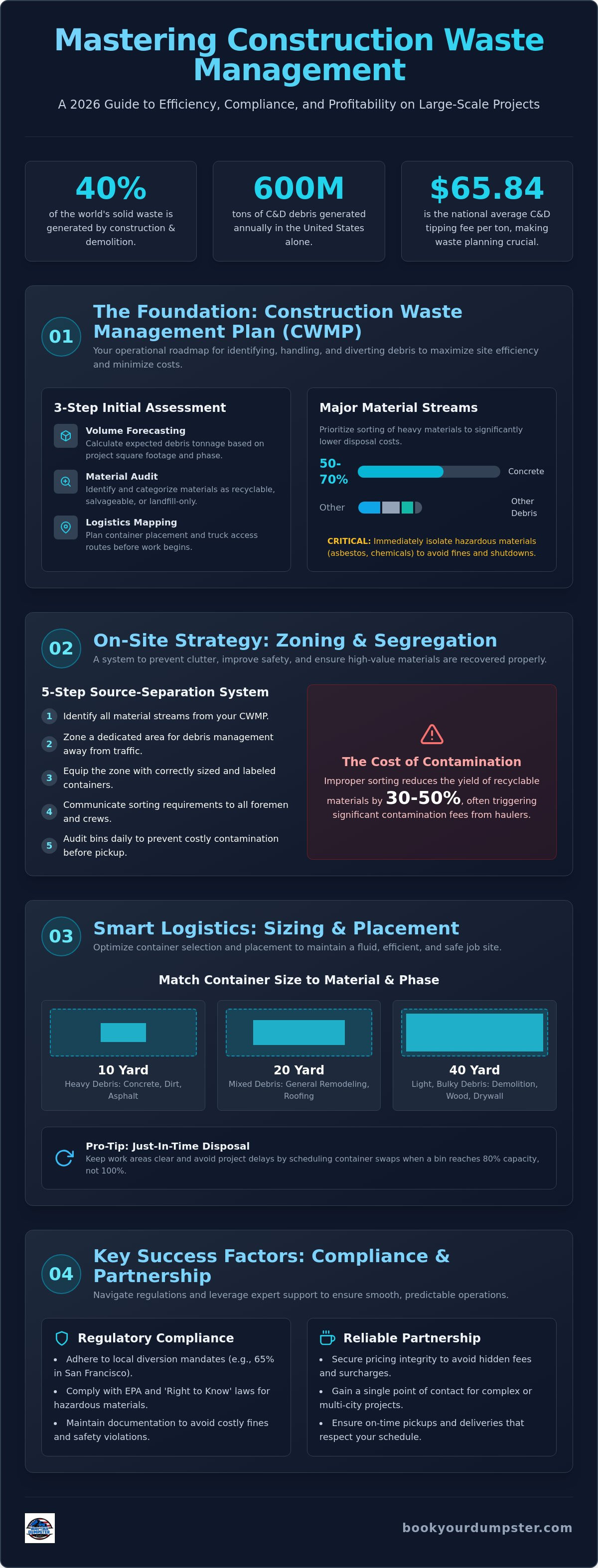
A Construction Waste Management Plan (CWMP) is your operational roadmap. It identifies what materials your project will generate, how you'll handle them, and where they'll eventually go. For any project manager looking at how to manage waste on a large construction site, this document is the foundation of site efficiency. In 2026, a formal plan isn't optional. With national average C&D tipping fees rising to $65.84 per ton, failing to plan is planning to overspend. Start with a comprehensive site assessment. Estimate your total tonnage based on the project's square footage and structural type. This data allows you to set realistic diversion goals that satisfy local municipal standards or LEED certification requirements.
Effective planning requires a three-step initial assessment:
- Volume Forecasting: Calculate expected debris based on project phase.
- Material Audit: Identify which materials are recyclable, salvageable, or landfill-only.
- Logistics Mapping: Determine where containers will sit and how trucks will move.
Identifying Major Material Streams
Categorize your waste before the first shovel hits the ground. Most Demolition waste consists of concrete, wood, metal, and gypsum. Since concrete often accounts for 50% to 70% of the total weight on a site, it requires a dedicated strategy. Separate hazardous materials immediately. New 2026 EPA regulations for asbestos and legacy chemicals mean you must isolate these streams to avoid massive fines and safety shutdowns. Use your volume estimates to determine your equipment needs. A 40 yard dumpster is standard for heavy demolition phases. You can scale down to a 20 yard container for finishing stages. Accurate forecasting ensures you never pay for empty space or suffer from overfilled bins.
Setting Diversion and Sustainability Targets
Establish clear targets for recycling versus landfilling. Recycling isn't just about optics; it's a financial strategy. Diverting heavy materials like steel and concrete can significantly lower your total disposal costs. Align your site's specific targets with The Ultimate Guide to Construction Debris Removal in 2026 to stay ahead of industry shifts. Once you've set your goals, document the exact procedures your subcontractors must follow. Clear signage and mandatory site orientations ensure everyone knows which bin to use. This site-wide compliance is the only way to hit high diversion rates, such as the 65% mandate currently enforced in regions like San Francisco and Santa Clara. Consistency across the job site prevents contamination and keeps your logistics moving.
Strategic Site Zoning and Material Segregation
Clutter is the primary enemy of site safety and project timelines. When you're determining how to manage waste on a large construction site, you must treat debris as a logistical flow rather than an afterthought. The United States generates approximately 600 million tons of C&D debris annually, and without a zoned approach, much of that material ends up as a costly, mixed mess. Designating specific waste zones prevents site-wide clutter and ensures that your heavy machinery always has a clear path. Implementing a just-in-time disposal strategy keeps work areas clear by scheduling container swaps exactly when a bin reaches 80% capacity.
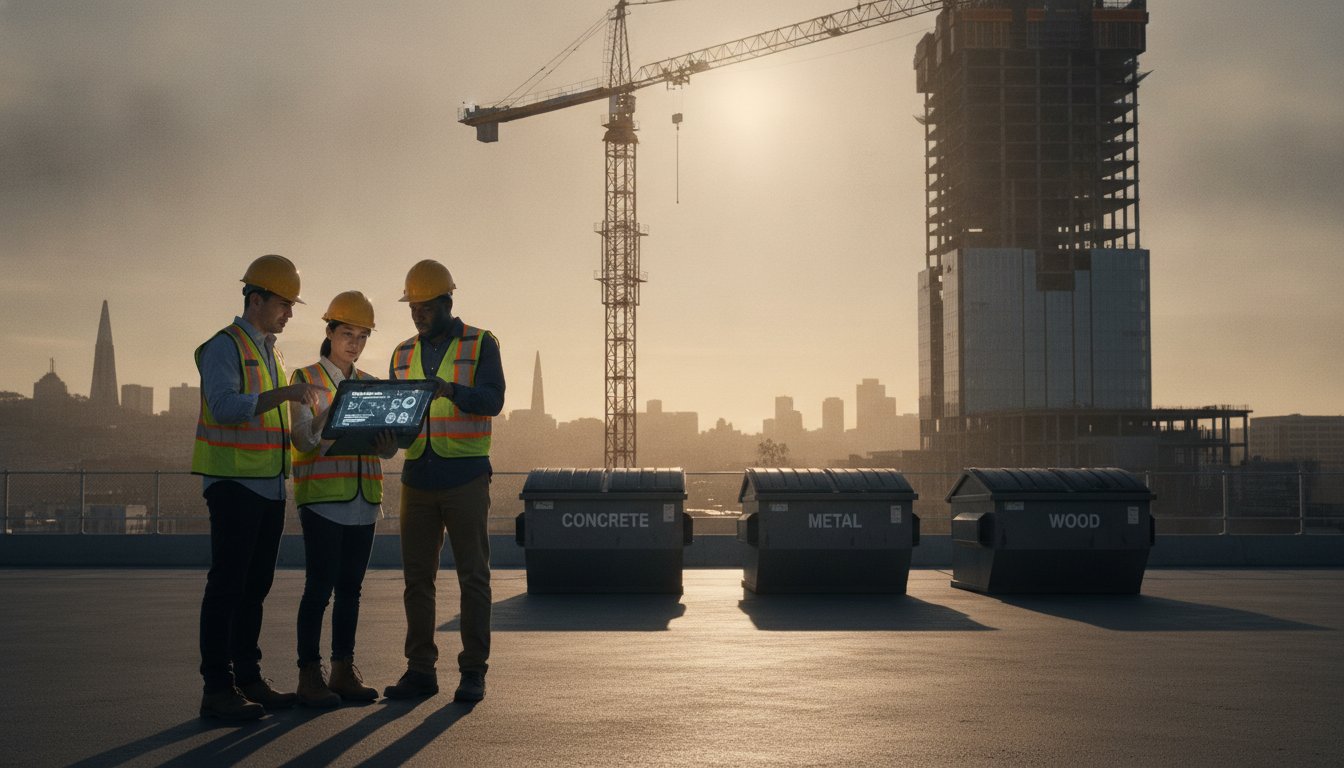
Establish a source-separation system using this five-step process:
- Identify: Use your CWMP to list every material stream expected for the current phase.
- Zone: Carve out a dedicated area for debris management away from high-traffic loading docks.
- Equip: Place the correct containers for each stream, such as a 40 yard dumpster for light wood and a 10 yard dumpster for heavy concrete.
- Communicate: Walk the site with your foremen to explain the sorting requirements.
- Audit: Inspect bins daily to catch contamination before the truck arrives.
Training your crews on segregation is vital because contamination reduces the yield of recyclable materials by 30% to 50%. This failure often triggers significant contamination fees from hauling partners. By following the Sustainable Management of C&D Materials guidelines, you can maintain high diversion rates and keep your tipping fees predictable. If you're ready to organize your next phase, you can rent a roll-off container online to match your specific material needs.
Implementing On-Site Sorting Stations
Create dedicated lanes for metal, wood, and masonry recycling to streamline the sorting process. In tight urban sites like those in San Francisco or NYC, space is a luxury. Use smaller 10 yard bins for heavy masonry or scrap metal to save on the site footprint while maintaining high weight capacity. Centralize these sorting areas to minimize internal transport time; your crew shouldn't spend twenty minutes walking across the site just to dump a load of gypsum.
Standardizing Labeling and Signage
Use color-coded bins and bilingual signage to remove any guesswork for your subcontractors. Position these signs at eye level on all 30 and 40 yard roll-off containers so they are visible even when the site is crowded with equipment. Clear, unmistakable labeling reduces disposal costs by 15% by virtually eliminating the risk of mixed-load penalties. This simple visual cue ensures that your high-value recyclables, like structural steel, don't end up buried under a pile of wet drywall.
Optimizing Site Logistics and Dumpster Placement
A large project isn't just about the build; it's about the movement. When you analyze how to manage waste on a large construction site, placement determines your daily efficiency. A poorly placed dumpster forces your crew to walk extra miles every week, wasting labor hours that could be spent on production. Conversely, a dumpster that's too close to the work area might block essential machinery or delivery trucks. You must balance proximity with accessibility. In high-density areas like Queens or San Francisco, this often means securing street permits for containers when site space is at a premium. Secure these permits at least two weeks before the container arrives to avoid delivery delays.
Follow EPA guidelines on construction waste to ensure your placement strategy supports high-level recovery and safety standards. Clear placement strategies minimize double-handling of materials and keep your site compliant with local safety codes.
Selecting Container Sizes for Large Sites
Match your container size to the current project phase. Use 40-yard dumpsters during the initial demolition phase for high-volume, lightweight debris like drywall, wood scraps, and insulation. As you transition into the build phase, 20-yard containers become your workhorse. They handle heavier, mixed construction waste without exceeding weight limits as easily as larger bins. For specific dimensions and weight capacities, refer to Roll Off Dumpster Rental: The Complete Guide. Scaling your equipment as the project evolves prevents you from paying for underutilized space or facing overweight penalties.
Maximizing Site Flow and Accessibility
Map out your truck access routes before the first delivery. Roll-off trucks require a 50-foot straight-line approach to drop or swap a container safely. If your site is congested, schedule 'switch-outs' during low-traffic hours to avoid site bottlenecks. Understanding how to manage waste on a large construction site requires a focus on truck maneuverability as much as crew convenience. If a truck can't reach the bin, the bin is useless.
Maintain clear overhead space. Avoid placing containers under low-hanging power lines or tree branches. Additionally, ensure the ground is level and stable. A fully loaded 30-yard dumpster can weigh several tons; placing it on soft ground or unreinforced asphalt can lead to site damage or a stuck truck. Use wooden planks under the rollers to protect the surface and facilitate a smoother pickup. This small step prevents expensive site repairs and keeps the project moving without interruption.
Compliance, Safety, and Local Regulations
Compliance isn't just about avoiding paperwork; it's about protecting your project from costly shutdowns and legal liabilities. When you are determining how to manage waste on a large construction site, you must navigate "Right to Know" laws. These regulations require you to identify and communicate the presence of hazardous materials to every worker on the site. Beyond hazardous waste, simple site security matters. Ensure all dumpsters are covered at night. This prevents illegal dumping from the public, which can skew your diversion data and lead to overweight penalties. Always maintain clear access for emergency vehicles. Your waste zones should never impede fire lanes, hydrants, or site exits.
Understanding the local cost of doing business is equally vital for your bottom line. Consult the Dumpster Rental Prices in New York, Illinois, and Massachusetts guide to budget accurately and avoid local fines associated with improper disposal or permit lapses.
Meeting Local City Mandates
Every major hub has unique rules that can stall a project if ignored. New York City requires commercial haulers to submit detailed reports on waste tonnage and final destinations. If you're working in San Francisco, you must follow mandatory recycling and composting laws to hit the city's aggressive zero-waste targets. For long-term projects in Chicago, track your permit expiration dates closely. Managing permit renewals is a critical part of how to manage waste on a large construction site to avoid daily fines that eat your profit margins.
Safety Protocols for Large Containers
Overloaded trucks are a massive liability for your company. Implement strict load-limit checks before calling for a pickup. When using 40-yard bins, ensure your crew distributes the weight evenly across the floor of the container. A front-heavy or side-heavy container can cause a truck to tip or lose traction during the loading process. Safety standards for roll-off containers require that debris never extends above the top rail of the bin. This "fill line" standard is non-negotiable; drivers will legally refuse to haul any container that presents a risk of falling debris during transport. If you need to swap out a full container to stay compliant, schedule your next dumpster delivery online to keep your site safe and productive.
Scaling with a Reliable Waste Management Partner
Managing a massive project requires more than just bins. It requires a partner who understands that waste is a logistics flow. When you're scaling operations, the question of how to manage waste on a large construction site shifts from simple disposal to vendor management. A single point of contact is essential for projects spanning multiple cities or states. It eliminates the need to vet dozens of local haulers and ensures that your reporting standards remain consistent from a site in Queens to a high-rise in San Francisco. This centralized control allows you to maintain high-velocity operations without getting bogged down in administrative clutter.
Vetting your partner for pricing integrity is the only way to protect your project budget. Hidden fees for fuel surcharges, environmental taxes, or administrative costs can inflate your disposal costs by 20% or more without warning. Look for a partner with a transparent, digital-first approach. Book Your Dumpster USA simplifies large-scale site logistics by providing upfront pricing and a streamlined online booking system. This digital ease allows you to schedule swaps and track deliveries in real time, removing the friction typical of traditional waste services. You need a partner who acts as a tool, not a burden.
Streamlining Multi-Site Logistics
Large construction firms often struggle with fragmented billing. Consolidating your billing and reporting across different geographic regions reduces administrative load and provides a clear picture of your total diversion rates. Whether you need a 10 yard dumpster for heavy masonry or a 40 yard dumpster for demolition debris, your partner should offer the full range of equipment. This consistency ensures that your site foremen follow the same protocols regardless of the project location. By centralizing your waste management, you ensure that local mandates, such as the 65% diversion rules in California, are met with the same level of rigor on every site.
The Value of Punctuality and Clear Communication
Time is your most expensive resource. Late pickups don't just create a mess; they stall production. If a full bin blocks a loading lane, your entire crew sits idle while labor costs continue to climb. Reliable waste management is about punctuality. A partner who respects your timeline acts as a high-functioning asset for your business. Transparent communication regarding delivery windows and pickup schedules allows you to plan your daily site flow with confidence. Don't let logistical stress derail your progress. Schedule your next high-volume dumpster rental with Book Your Dumpster today.
Streamline Your Site Logistics Today
Mastering how to manage waste on a large construction site requires a shift from reactive cleanups to proactive logistics. By implementing a formal Construction Waste Management Plan and establishing clear site zones, you eliminate bottlenecks before they stall your crew. Remember to scale your equipment as project phases change. Moving from a 40 yard dumpster during demolition to 20 yard containers for the build keeps your site lean and compliant. Success in 2026 depends on pricing integrity and partner reliability.
Book Your Dumpster USA provides the tools you need to stay on schedule across New York, Illinois, and Massachusetts. We offer 10, 20, 30, and 40-yard containers through a streamlined digital booking system. You don't have to worry about hidden fees or unreliable schedules. Our transparent approach ensures your project remains profitable and safe. Secure your 40-yard dumpster for your next large-scale project at Book Your Dumpster and keep your site running at peak efficiency. Build with confidence while we handle the mess.
Frequently Asked Questions
What is the best dumpster size for a large construction project?
The best dumpster size depends on your specific project phase. Use a 40 yard dumpster for high-volume, lightweight demolition debris like wood and drywall. Switch to a 20 yard dumpster for heavier construction materials such as concrete or masonry to avoid exceeding weight limits. Large sites often benefit from maintaining a mix of 10 to 40-yard containers to handle different material streams simultaneously without cluttering the work zone.
How do I calculate the amount of waste my construction site will produce?
Calculate waste by multiplying your project's total square footage by a waste generation factor based on the construction type. New residential construction typically generates about 4.39 pounds of waste per square foot, while demolition projects produce significantly more. Use these estimates to determine your total tonnage and required container capacity. This allows you to schedule the correct number of pickups and avoid stalling your crew with full bins.
Do I need a permit for a roll-off dumpster on a commercial site?
You need a permit if you place the roll-off container on public property, such as a city street or sidewalk. If the container stays entirely within the boundaries of your private job site, a permit is usually not required. Always check local city ordinances in hubs like Queens or San Francisco before delivery. Street placement rules are strictly enforced, and failing to secure a permit can lead to immediate site shutdowns and fines.
How can I improve the recycling rate on my construction site?
Improve your recycling rate by implementing a source-separation system at the point of generation. Designate specific bins for wood, metal, and concrete to prevent material contamination. Training your crew on how to manage waste on a large construction site ensures that high-value materials are diverted from landfills. This practice helps you meet LEED standards and local 65% diversion mandates, which are increasingly common in 2026.
What materials are prohibited in construction dumpsters?
Prohibited materials include hazardous waste, asbestos, wet paint, oils, tires, and lead-acid batteries. These items require specialized disposal protocols and cannot be mixed with standard construction and demolition debris. Including these materials in a roll-off container can lead to heavy fines and environmental liabilities. Always review the EPA’s Toxic Substances Control Act (TSCA) guidelines for 2026 to stay updated on regulations regarding legacy chemicals and asbestos handling.
How often should I schedule dumpster pickups for a high-volume site?
Schedule pickups based on a "just-in-time" logistics model to keep your site running smoothly. Call for a swap once your container reaches 80% capacity to prevent overflows and production delays. High-volume sites often require daily or every-other-day pickups depending on the crew size and material volume. Coordinate with a reliable partner to ensure your pickup schedule aligns with site traffic and your project’s most active labor hours.
What is a Construction Waste Management Plan (CWMP)?
A Construction Waste Management Plan (CWMP) is a formal roadmap that identifies the types and volumes of debris your project will generate. It outlines specific procedures for handling, diverting, and disposing of all site materials. This plan is often a legal requirement for large-scale projects to ensure compliance with municipal recycling codes and environmental standards. A well-written CWMP helps you track your progress toward sustainability goals and manage disposal costs effectively.
How do local regulations in New York affect construction waste disposal?
New York regulations require commercial sites to use authorized haulers and submit detailed tonnage reports for all debris. You must track the final destination of all materials to prove compliance with city-specific recycling targets and reporting mandates. Understanding how to manage waste on a large construction site in NYC also involves staying updated on regional tipping fees. In the Northeast, these fees averaged over $80 per ton in 2024, making efficient sorting a financial necessity.