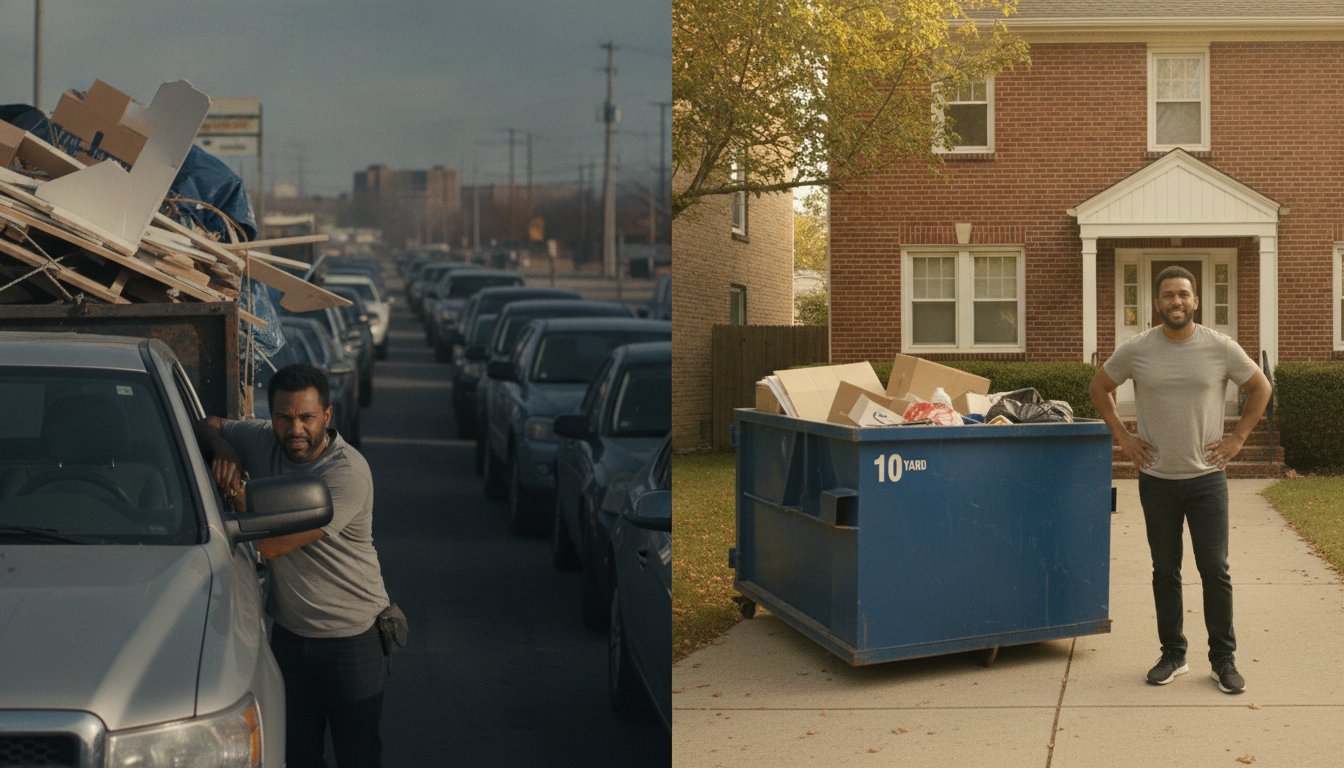

You’re midway through a renovation when you realize the debris pile is already cresting over the rim of your container. It’s a common frustration that can quickly stall your timeline and invite municipal fines for overflowing loads. Knowing what to do when your project creates more waste than expected is the difference between a productive site and a total logistical shutdown. With national landfill tipping fees rising 10% in the last year, an overflowing dumpster isn't just a mess; it's a significant financial risk to your bottom line.
It’s frustrating to see your workspace disappear under a mountain of drywall and framing, especially when you thought your initial estimate was solid. You need a fast solution that doesn't blow your budget. This article teaches you how to assess your current waste volume, weigh the costs of a swap versus a second rental, and rightsize your strategy immediately. We will walk through the specific steps to clear your site, manage local diversion requirements, and find a partner who can handle a quick turnaround to keep your project moving.
Key Takeaways
- Calculate the exact volume of your debris pile using a standard cubic yardage formula to ensure your next rental is the correct size.
- Stop loading operations immediately once a dumpster reaches capacity to prevent safety risks and expensive over-top penalties.
- Compare the cost-benefit of a full bin swap versus adding a smaller secondary unit to finish the job efficiently.
- Understand what to do when your project creates more waste than expected by establishing a safe staging area away from active work zones.
- Leverage online booking systems to quickly pivot your logistics and secure 30 or 40-yard containers for large-scale debris removal.
The "Uh-Oh" Moment: Identifying Why Your Project Exceeded Waste Estimates
Even the most seasoned contractors occasionally miscalculate debris volume. It happens. You open a wall and find three layers of lath and plaster instead of one. You tear off a roof and discover shingles over cedar shakes. These hidden variables are the primary reason you find yourself wondering what to do when your project creates more waste than expected. Underestimating isn't a failure of skill; it's often a simple failure to account for the physics of demolition.
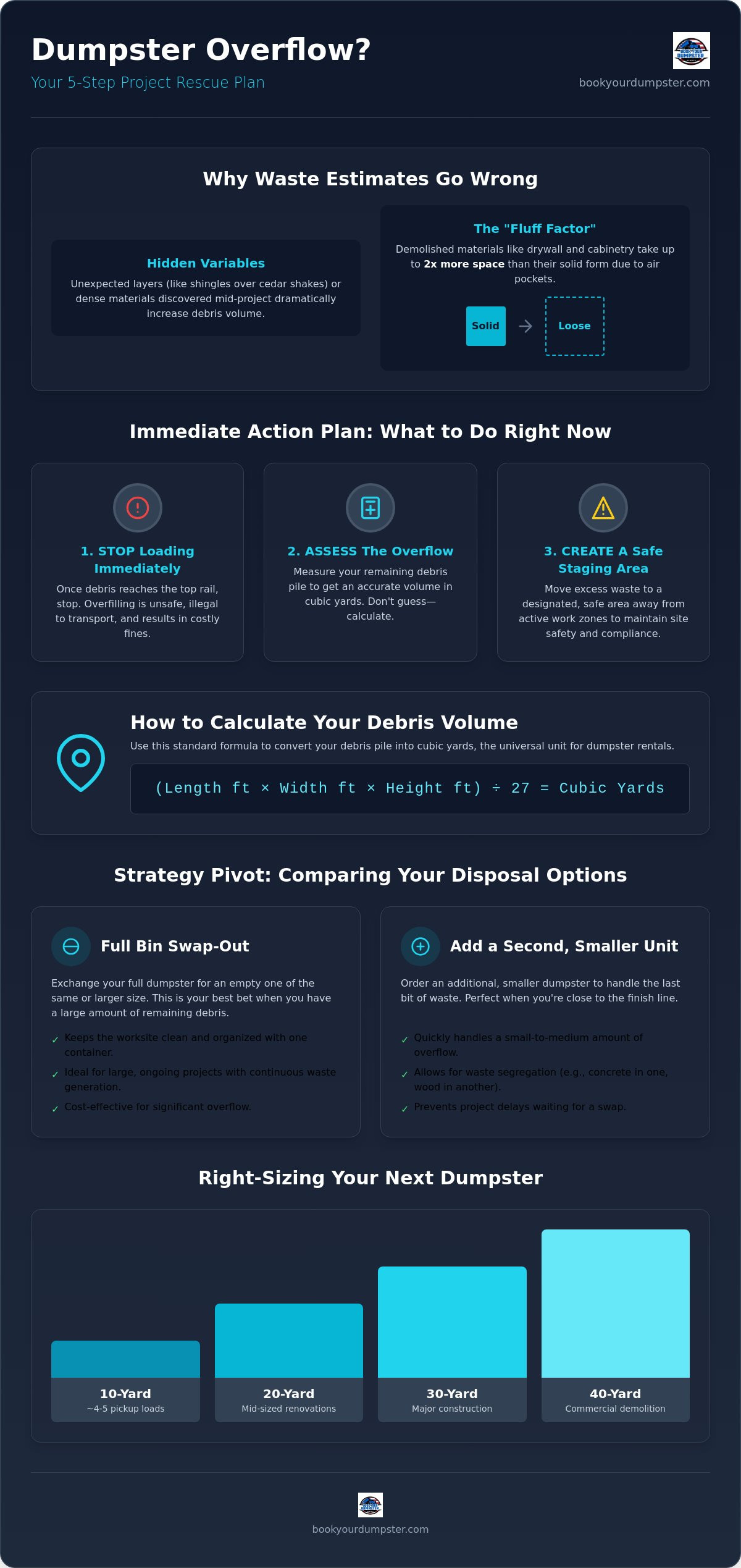
The problem isn't just the weight of the materials. It is the volume. Construction and demolition waste rarely sits flat. When you toss loose materials into a roll-off container, they create massive air pockets. These gaps can double the amount of space required compared to the material’s original, compacted state. If you don't account for this expansion, your project will stall before the day is out.
Safety is another non-negotiable factor. An overflowing dumpster is a liability. Haulers cannot legally transport a container if the debris sits above the top rail. Road debris causes accidents, and you will be the one paying the fines. Stop loading as soon as you see the debris reaching the rim. It is time to reassess your strategy and what to do when your project creates more waste than expected to keep the job site safe and compliant.
The Hidden Volume of Demolition Debris
Solid volume is the space a material occupies while installed. Loose volume is what happens after you hit it with a sledgehammer. Materials like drywall, fiberglass insulation, and old cabinetry are notorious for this expansion. They break into irregular shapes that refuse to stack neatly. The fluff factor is the ratio of loose debris volume to its original state. For many residential remodels, this factor can be as high as 2.0, meaning your debris takes up twice the space you planned for.
Signs You Need to Pivot Your Waste Strategy
Watch for the level-full rule. This is the industry standard that dictates debris must remain below the top edge of the bin for safe transit. If you are tamping down trash with a backhoe just to close the door, you've already lost the battle. Look for dead space in your container. If large items are creating massive voids at the bottom, your bin is inefficient. If the pile remaining on the ground looks larger than the remaining space in your current unit, don't keep pushing. You need a secondary unit or a swap-out immediately.
Assessing the Overflow: How to Measure Unexpected Debris Volume
Once you realize the debris is piling up faster than it's being hauled away, you must quantify the remaining mess. Guessing leads to second-guessing, which leads to stalled sites. To determine what to do when your project creates more waste than expected, start with a tape measure. Use the standard volume formula: (Length x Width x Height in feet) / 27. This calculation converts your debris pile into cubic yards, which is the universal language of roll-off rentals. Having this number ready allows you to make an informed decision about your next logistical move.
While cubic yardage dictates the size of the container, weight dictates the legality of the haul. The U.S. Environmental Protection Agency (EPA) emphasizes Sustainable Materials Management to reduce the massive environmental footprint of construction waste. For you, this means managing both the space and the mass of your output. A pile of drywall might be bulky but light, whereas a small pile of brick can easily exceed a truck’s lifting capacity. Always prioritize volume for bin selection, but keep weight limits in mind to avoid failed pick-up fees. With national landfill tipping fees seeing their largest year-over-year jump since 2022, every miscalculated ton directly impacts your project's profitability.
Comparing your pile to standard dumpster sizes helps you visualize the next step.
- 10-Yard: Roughly the size of 4 to 5 pickup truck loads.
- 20-Yard: Ideal for mid-sized renovations or heavy debris like roofing shingles.
- 30-Yard: The standard for major construction or large home cleanouts.
- 40-Yard: Best for commercial demolition or massive projects with high volume.
Converting Piles into Cubic Yards
Think of a standard washing machine; that represents roughly one cubic yard. If your pile looks like ten washing machines, you need a 10-yard dumpster. For irregular wood or metal piles, measure the footprint and average height, then subtract 20% for air pockets. Never underestimate masonry piles. Concrete is incredibly dense and can hit weight limits long before the bin looks full.
Weight Limits vs. Volume Capacity
A dumpster can be physically empty but legally "full" by weight. This is common with 10-yard units used for heavy materials. If you fill a bin with wet dirt, the truck might fail the lift, resulting in extra fees. Heavy debris requires specialized units to ensure compliance with road weight limits. Always clarify your material type when determining what to do when your project creates more waste than expected.
Strategy Pivot: Comparing Your Disposal Options for Excess Waste
Once you have measured your overflow, you need a clear plan for what to do when your project creates more waste than expected. You have three primary choices: swap your current bin for a fresh one, add a second container to the site, or call a junk removal crew. Deciding which path to take requires a quick cost-benefit analysis based on your available space and timeline. Don't let a full dumpster turn into a permanent roadblock. Act fast to keep your crew productive and your site clean.
Your choice might also depend on local regulations. Many regions have specific mandates for recycling construction and demolition materials like lumber and masonry. Separating these materials can sometimes lower your disposal fees, but it requires more bins. If your project is generating massive amounts of mixed debris, a simple haul-and-replace is often the most efficient route. Evaluate your site footprint before making the call.
When to Choose a Dumpster Swap-Out
A swap-out is the best solution for tight urban job sites. If you are working in high-density areas like Queens or San Francisco, you likely don't have the permit space for two containers. In a swap-out, the hauler arrives with an empty unit, picks up the full one, and drops the new one in the same spot. This keeps the project moving without expanding your site's footprint. Review our roll off dumpster rental guide to understand how to coordinate these transitions perfectly. Timing is critical; schedule the swap before the bin is 100% full to avoid downtime.
The Case for Adding a Second Container
If you have ample driveway or street space, adding a secondary unit is often smarter. This is a common tactic for what to do when your project creates more waste than expected during large-scale residential cleanouts. You can keep your primary 30-yard bin for general trash and add a 10 yard dumpster rental specifically for heavy materials like old flooring or tile. This prevents you from hitting weight limits on the larger bin and allows for better waste sorting. It also ensures that your demolition work never has to pause for a truck arrival.
Compare the total costs before deciding. Junk removal services are convenient because they provide the labor, but they are significantly more expensive than renting a dumpster. You pay for the crew's time and the truck's volume. If you already have a crew on-site, renting more hardware is almost always the more profitable choice. Stick to roll-off rentals to maintain control over your budget and your schedule.
Immediate Action Plan: Steps to Take When the Dumpster is Full
Stop loading immediately. It is tempting to squeeze one last door or bundle of shingles into the container, but don't do it. If the debris exceeds the top rail, the hauler cannot legally transport the load. You will face "over-top" fees or be forced to manually remove the excess before the truck leaves. Knowing what to do when your project creates more waste than expected starts with respecting the physical limits of the equipment to keep your site safe and compliant.
Once the container is full, establish a designated staging area. This prevents debris from scattering across the site and creating trip hazards. Place this area away from high-traffic zones but close enough to the dumpster for easy reloading once the new unit arrives. If you need to clear the site now, schedule a dumpster swap-out online to minimize downtime and keep your crew productive.
Managing On-Site Staging Areas
Use heavy-duty tarps to cover your overflow piles. This is a critical step because exposed debris can absorb rainwater, significantly increasing the weight of your load. Since the national average tipping fee for construction waste is $65.84 per ton, water weight is an expense you don't need. Organize the pile by material type. Stacking wood separately from mixed trash makes the eventual reloading process faster and allows for better volume management in the next bin. Ensure the staging area does not block the path of the delivery truck; the driver needs a clear line of sight and enough room to maneuver the roll-off hoist.
Navigating Local Regulations in Major Hubs
If you are working in Queens or other parts of New York, you must review your street permit status before adding a second bin. NYC permits are often site-specific and time-limited. Adding a secondary unit on the street without an updated permit can result in heavy municipal fines. In Chicago and throughout Illinois, regulations regarding public right-of-way are strictly enforced. You must ensure that any overflow or secondary containers do not obstruct sidewalks or fire hydrants. For a deeper look at regional requirements, read our guide on dumpster rental in New York and Illinois. Always verify permit extensions with your local building department before the new hardware arrives on-site.
Scaling for Success: How Book Your Dumpster USA Rightsizes Your Project
Managing a project that outgrows its footprint requires a partner who can scale with you. When you are deciding what to do when your project creates more waste than expected, the solution is rightsizing. Book Your Dumpster USA provides a full range of roll-off containers, from compact 10-yard units to massive 40-yard bins. This variety ensures you never pay for air and never run out of space. Our streamlined system is built for the reality of construction; it removes the friction of logistics so you can focus on the build.
Speed is our standard. Our 24/7 online booking system allows for immediate pivots when a job site becomes overwhelmed. You don't have to wait for business hours to fix a full bin. We understand that time is profit. Our commitment to pricing integrity means the quote you see is the price you pay. There are no hidden surcharges or surprise fees when you need to swap a unit or add a secondary container to your site. We handle the mess so you can maintain control of your project timeline and your budget.
Utilizing Larger Units for Major Overflows
Efficiency often means going bigger. If your initial 20-yard estimate fell short, jumping to a 40-yard dumpster for the remainder can save significant hauling fees. A 40-yard bin holds roughly 12 to 14 pickup truck loads, making it the most cost-effective choice for commercial demolition. For whole-home renovations, the 30-yard unit is the industry workhorse. It provides the depth needed for bulky cabinetry and furniture without taking up excessive street space. Consult our construction debris removal guide to see which size fits your specific material type best and learn what to do when your project creates more waste than expected.
Fast Turnaround and Reliable Logistics
Book Your Dumpster USA serves high-demand hubs across New Jersey, Massachusetts, and New York with a focus on punctuality. In regions like the Northeast, efficient logistics are essential to your bottom line. We treat every order as a "verbal handshake." It is a promise of transparency and reliability. Whether you are managing a residential cleanout or a large-scale commercial renovation, we deliver the hardware you need exactly when you need it. Don't let debris dictate your schedule. Book your rightsized dumpster today and clear your site with confidence.
Clear Your Site and Keep Building
Managing an unexpected debris surge doesn't have to break your project timeline. Use the measurement formulas provided to quantify your remaining waste and decide whether a swap-out or a secondary 10-yard unit is the most efficient choice for your specific site footprint. Mastering what to do when your project creates more waste than expected keeps your workspace safe, compliant, and productive. Don't let a full bin become a permanent obstacle that stalls your crew or invites municipal fines.
We provide a full range of 10, 20, 30, and 40-yard roll-off containers to help you rightsize your disposal strategy instantly. Our streamlined online booking system is built for 2026 projects, offering the speed you need in major hubs like New York, New Jersey, Illinois, Massachusetts, and San Francisco. Stop the clutter and resume your work with a partner who values pricing integrity and punctuality. Order your next dumpster in seconds at BookYourDumpster.com. You've got the plan. Now get the hardware to finish the job and move on to your next milestone with confidence.
Frequently Asked Questions
What happens if I fill my dumpster past the top rail?
The hauler will refuse to pick up the container if debris sits above the top rail. This is a legal requirement because overflowing loads pose a significant safety risk on the road. You'll likely be charged a "dry run" fee and will have to manually remove the excess waste before the driver can return for a second attempt. Always keep your materials level with the rim.
Can I rent two dumpsters at the same time for one project?
You can rent multiple units simultaneously if your site has the physical space and the necessary permits. This approach is often more efficient for large construction projects because it allows you to sort materials like metal or wood for recycling. Just ensure that the placement of the second bin doesn't block the access path for the delivery truck when it's time for a haul.
How do I know if I need a 20-yard or a 30-yard dumpster for my extra waste?
Calculate the volume of your remaining pile to decide what to do when your project creates more waste than expected. A 20-yard dumpster typically holds the equivalent of 10 pickup truck loads, while a 30-yard unit handles about 15. If your debris pile measures more than 10 cubic yards, choose the 30-yard unit to ensure you have enough room for the "fluff factor" of loose materials.
Is it cheaper to swap a dumpster or call a junk removal service?
Renting or swapping a dumpster is almost always the more cost-effective choice for renovation projects. Junk removal services charge a premium because they provide the labor to load the truck. If you already have a crew on-site, you're paying twice for labor by hiring a separate removal team. Stick to roll-off containers to maintain control over your budget and disposal timeline.
How quickly can I get a second dumpster delivered if my first one is full?
Delivery times vary by location, but using an online booking system allows you to see the next available slot immediately. In high-demand areas like New York or Illinois, it's best to request your swap or secondary unit once the first bin is 75% full. This proactive scheduling prevents your project from stalling while you wait for fresh hardware to arrive on-site.
Do I need a new permit if I swap my dumpster for a larger size?
You probably need an updated permit if the new dumpster has a larger footprint and is placed on a public street. Municipalities like San Francisco or Queens issue permits based on specific dimensions and durations. If you jump from a 20-yard to a 40-yard unit, the increased length could violate your original permit. Always verify local street-use regulations before the swap occurs.
Are there weight limits I should worry about with heavy debris like concrete?
Weight limits are a major concern when disposing of dense materials such as concrete, brick, or dirt. These heavy items can reach a truck's lifting capacity long before the dumpster is physically full. For heavy debris, use 10-yard or 20-yard units to stay within legal road weight limits and avoid expensive overweight penalties at the landfill.
What is the best way to stack debris to maximize dumpster space?
Lay flat items like drywall and plywood at the very bottom to eliminate air pockets. Break down bulky furniture, cabinetry, and large wooden beams before loading them. This organizational strategy is a key part of what to do when your project creates more waste than expected because it ensures you utilize every cubic yard of paid space. Efficient packing can often prevent the need for an extra rental.