

A single miscalculation in your debris weight can wipe out your entire profit margin before the project even hits the halfway mark. You've likely felt the sting of a surprise overweight fee on a final invoice because you estimated by eye instead of using hard data. Learning how to estimate waste tonnage for a construction bid is not about guessing; it's a precise science of volume-to-weight conversion that keeps your project's finances under control.
We understand that juggling material densities like reinforced concrete at 2,500 kg/m³ versus loose drywall is a major logistical headache. It's easy to feel overwhelmed when landfill tipping fees vary wildly by region, leaving no room for error in your budget. This guide provides the exact formulas and density factors you need to protect your margins and bid with absolute confidence. We'll break down how to account for the 25% swell rate often found in excavated earth and provide a repeatable system to ensure your disposal costs are always accurate; regardless of the material type you are hauling.
Key Takeaways
- Start with accurate measurements. Use project blueprints to calculate the in-place volume of every material slated for removal.
- Convert cubic yards to tons using specific density factors. Identify the loose weight of materials like brick, wood, and asphalt to avoid guessing.
- Factor in material expansion. Accounting for air pockets and the fluff factor ensures your tonnage estimate matches the reality of a loaded container.
- Secure your profit margins. Master how to estimate waste tonnage for a construction bid by combining material weights with local tipping fees and hauling rates.
- Streamline your site logistics. Use precise tonnage projections to select the right container size and avoid costly overweight penalties during project execution.
The Fundamentals of Waste Tonnage in Construction Bidding
Successful bidding requires you to look past the physical size of a dumpster. While you might order a 20-yard or 30-yard container based on available site space, the landfill bills you based on the mass of the contents. Understanding the nature of construction and demolition (C&D) waste is the first step toward accurate accounting. If you don't know how to estimate waste tonnage for a construction bid, you're essentially gambling with your project's bottom line. Waste management isn't just a cleanup task; it's a significant line item that requires the same level of scrutiny as your labor or raw material costs. Every pound of debris you fail to account for is a direct deduction from your final profit.
Why Volume is Not Enough for a Precise Bid
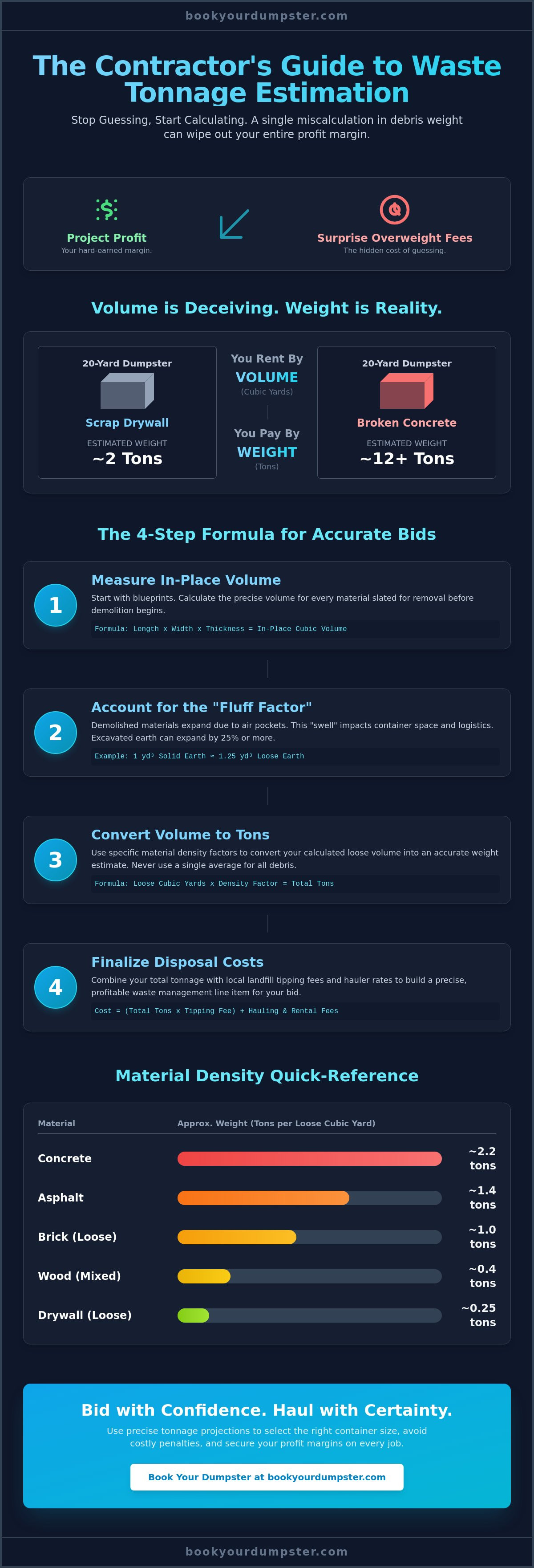
Think of volume as the container and weight as the true cost driver. You rent dumpsters by cubic yardage, but you pay for disposal by the ton. A 20-yard dumpster filled with broken concrete can weigh ten times more than the same dumpster filled with scrap drywall. In high-density markets like Queens or San Francisco, failing to account for this difference leads to immediate "dry-run" fees or heavy overweight penalties. Haulers must comply with strict legal road limits to maintain safety and avoid DOT fines. If your bin is too heavy for the truck to lift or transport safely, the hauler will leave it on-site. You then face the cost of labor to offload the excess and the fee for a failed pickup attempt. This creates a bottleneck that slows down every other trade on the job.
The Financial Impact of Underestimating Tonnage
Precision is the only way to protect your profit. Consider a scenario where you underestimate a project by just two tons. In many jurisdictions, a two-ton error can result in a $300 profit loss on a single container once you factor in overage charges. A Tipping Fee is the cost per ton charged by a disposal facility to accept waste. When you scale that error across a multi-phase project requiring ten or twenty pulls, the financial damage becomes catastrophic. Mastering how to estimate waste tonnage for a construction bid ensures your bid is a reflection of reality. This accuracy is a core component of professional construction debris removal. It turns a messy logistical hurdle into a controlled, predictable expense that won't eat your paycheck. Don't let a lack of data turn your hard work into a break-even project.
Step-by-Step Volume Calculation: From Blueprints to Cubic Yards
Begin your estimate with a detailed material take-off. You can't understand how to estimate waste tonnage for a construction bid without first mastering cubic yardage. Use your blueprints to measure the length, width, and thickness of every structure slated for removal. This "in-place" volume is your baseline. For example, if you're pulling up 500 square feet of 4-inch thick concrete, your in-place volume is roughly 6.2 cubic yards. Categorize these totals by material type immediately. Grouping masonry, wood, and metal separately allows for more precise weight conversion in the next step. This step is vital because a cubic yard of loose metal scrap has a completely different weight profile than a cubic yard of crushed brick.
Developing a solid construction waste management plan requires this level of granularity. Once you have your total cubic yardage, you can better select the appropriate dumpster rental sizes for the job site. A 30-yard dumpster might fit the volume of wood debris but could exceed weight limits if filled with concrete. By separating materials in your bid, you avoid the trap of applying a single, inaccurate density factor to the entire project.
Calculating Demolition Volume for Renovation Bids
Estimating an interior gut-out requires looking behind the surfaces. To convert 1,000 square feet of standard half-inch drywall into cubic yards, multiply the area by the thickness (0.042 feet) and divide by 27. This results in approximately 1.5 cubic yards of material in its solid state. Always account for hidden volume. Insulation, MEP components, and abandoned piping often take up more space than the blueprints suggest. MEP components like copper piping and ductwork don't stack neatly. They create significant void space in a container, which must be accounted for in your initial volume take-off. If you are unsure of the total debris load, view our available bin sizes to see which capacity fits your project scope.
New Construction Waste: The Percentage Method
New builds generate waste through off-cuts and packaging rather than demolition. The industry standard for estimating "cutoff" waste is typically between 5% and 15% of the total material ordered. Wood-frame projects lean toward the lower end of this range, while masonry-heavy projects often hit the higher end due to broken blocks and mortar scrap. Don't overlook packaging waste. Large-scale appliance or fixture installs generate significant volumes of cardboard and plastic wrap that can quickly fill a 10-yard container. Use these percentages to pad your volume totals before you move on to tonnage calculations.
Converting Volume to Tonnage: Material Density Factors
Once you have your volume totals, you must apply density factors to determine the weight of the debris. A density factor is the weight of a material per cubic yard. This calculation is where most bids fail because contractors rely on broad averages rather than specific material weights. If you want to know how to estimate waste tonnage for a construction bid accurately, you must use precise multipliers for each material type. To find your tonnage, multiply your total cubic yardage by the density factor and divide by 2,000. This simple math is the foundation of how to estimate waste tonnage for a construction bid without relying on guesswork.
Mixed C&D (Construction and Demolition) debris is the most challenging category to estimate. It consists of a random assortment of wood, metal, plastic, and masonry. While some use a catch-all density of 500 lbs per cubic yard for mixed loads, this is risky. If your "light" load contains hidden chunks of mortar or tile, you'll blow your budget on overage fees. Use these specific density factors for more reliable results:
- Loose Concrete: 2,000 lbs per cubic yard
- Loose Brick: 2,400 lbs per cubic yard
- Drywall (Loose): 500 lbs per cubic yard
- Wood (Mixed): 300 lbs per cubic yard
- Asphalt Shingles: 240 lbs per square (100 sq ft)
Heavy Debris Density: Concrete, Asphalt, and Dirt
Heavy materials like concrete and asphalt are the primary cause of overweight penalties. We recommend using a 10 yard dumpster for these specific loads. Solid concrete weighs approximately 4,000 lbs (2 tons) per cubic yard. Because of this extreme density, haulers in New Jersey and Illinois often enforce a "half-full" rule for masonry. Filling a large bin to the top with concrete exceeds legal road limits and makes the container impossible to lift. Plan to Minimize Waste in Construction by separating these materials early. Clean concrete is often cheaper to tip than mixed debris, provided you stay within weight limits.
Light Debris Density: Drywall, Wood, and Roofing
Light debris takes up more space but carries its own risks. Drywall typically weighs about 500 lbs per cubic yard, but moisture content is a major wild card. Wet drywall can double in weight overnight if left in an uncovered bin during a storm. Asphalt shingles are usually calculated by the "square." One square of standard three-tab shingles weighs roughly 240 lbs. Don't forget to account for metal scrap. While it's heavy, it's also valuable. Separating copper or aluminum can provide a credit to your bid, but you must balance that against the labor required to sort it on-site.
Accounting for the "Fluff Factor" and Site Logistics
Demolished material never takes up the same amount of space as it did when it was part of a solid structure. This expansion is known in the industry as the "Fluff Factor." When you break apart a solid wall, floor, or foundation, you introduce air pockets and void space into the debris pile. Mastering how to estimate waste tonnage for a construction bid requires you to calculate this loose volume accurately. While the physical weight of the material stays constant, the space it occupies in a dumpster increases significantly. This change dictates how many containers you need and how you load them to stay within legal hauling limits.
Your loading techniques also shift the tonnage-to-volume ratio. A tightly compacted bin holds far more weight than one filled loosely with bulky, uncrushed debris. You must also consider regional environmental factors that affect material density. In states like Massachusetts, high humidity or frequent rain can double the weight of porous materials like wood, insulation, and drywall. If your debris sits in an open bin during a heavy storm, your tonnage will spike at the scale. Always factor in a buffer for weather-related weight gain to avoid surprise overage fees that can gut your project profits. Accounting for these variables is a hallmark of a professional approach to how to estimate waste tonnage for a construction bid.
Expansion Ratios for Common Materials
Different materials expand at vastly different rates once they are disturbed. Solid concrete typically has an expansion ratio of approximately 1.5x once it becomes broken rubble. Wood debris is even more deceptive. Because studs, rafters, and joists don't stack perfectly, they create massive void spaces compared to granular materials like soil or gravel. Loose volume in a dumpster is typically 20-50% greater than "in-place" volume on a blueprint. For excavation work, remember that earth can swell by 25% or more once it is dug up. Use these ratios to ensure you don't under-order your bin capacity or underestimate the number of hauls required.
Site Logistics: Access and Weight Limits
Local infrastructure and regulations dictate your hauling strategy. In dense urban areas like New York City or San Francisco, strict street weight limits prevent haulers from carrying max-capacity loads on certain residential blocks. You must often choose between multiple 10 yard or 20 yard dumpsters instead of a single 40 yard unit to manage the site footprint and remain street-legal. These logistical constraints directly impact dumpster rental prices and your overall bid. Plan your drop-off locations to minimize labor and ensure the truck has enough clearance to swap bins quickly without blocking traffic. To ensure your project stays on schedule, rent your construction dumpster today to lock in your logistics and pricing early.
Finalizing the Bid: Pricing Disposal and Dumpster Logistics
Finalize your proposal by translating your tonnage data into a clear, professional cost structure. In competitive markets like Chicago or Queens, clients look for transparency in how you handle construction debris. A detailed waste management plan proves you've considered the environmental and logistical reality of the project. Combine your final tonnage figures with current local tipping fees and haul rates to ensure your bid remains profitable. This level of detail prevents the "margin creep" that happens when contractors treat disposal as a minor variable. By presenting a data-backed estimate, you demonstrate a level of competence that builds immediate trust with commercial developers.
Perform a final audit before submitting your proposal. Use this checklist to ensure no disposal costs were overlooked:
- Verify Disposal Rates: Confirm the current price per ton at your local transfer station or landfill, as these fees fluctuate.
- Review Site Access: Ensure the truck can maneuver into the drop-off zone without blocking traffic or requiring extra labor for hand-loading.
- Factor in Labor: Account for the man-hours required to load the bins and sort materials on-site for recycling credits.
- Check for Permits: Determine if you need a right-of-way permit for street placement in urban centers to avoid municipal fines.
Integrating Waste Estimates into Your Proposal
Presenting waste as a specific line item rather than a broad lump sum builds professional trust. For projects with high demolition volume, use a per-ton allowance to handle materials hidden behind surfaces that weren't visible during the initial walk-through. Mentioning your partnership with a reliable hauler like Book Your Dumpster USA demonstrates that you have the logistical infrastructure to keep the project on schedule. This level of detail is a hallmark of a professional who knows how to estimate waste tonnage for a construction bid. It shows you aren't just guessing; you're managing the project's bottom line with precision.
Leveraging Professional Support for Large Bids
For large-scale commercial projects, consider consulting with a waste management specialist to ensure compliance with local diversion mandates or LEED requirements. Using historical data from your previous jobs allows you to refine your tonnage formulas and catch patterns in material weight that blueprints might miss. Once the bid is won, rent a dumpster online to lock in your project logistics. Securing your equipment early prevents delays and ensures your crew can focus on production rather than managing debris. Taking these steps early ensures your site remains organized and your production schedule stays on track from day one.
Secure Your Profit Margins with Accurate Bidding
Mastering how to estimate waste tonnage for a construction bid is the difference between a profitable project and a financial loss. You now have the formulas to convert blueprint volume into actual tonnage while accounting for material expansion. Don't let unpredictable factors like moisture or void space derail your budget. Use these density factors to build a bid that reflects the real-world weight of your debris. Accuracy at the bidding stage ensures you don't face unexpected overweight penalties during the cleanup phase. It protects your paycheck.
Streamline your project execution by partnering with a hauler that values transparency as much as you do. We serve contractors across NY, NJ, IL, MA, and SF with a digital-first approach that removes logistical stress from your daily operations. Our online booking system is built for speed; providing the reliability you need on a fast-moving job site. Get a precise quote for your next project at BookYourDumpster.com and benefit from transparent pricing with no hidden fees. Take control of your disposal costs and bid with absolute confidence on your next contract.
Frequently Asked Questions
How many tons can a 20-yard dumpster typically hold?
A 20-yard dumpster typically holds between 2 and 4 tons of mixed debris depending on your specific rental agreement. While the container has the volume for 20 cubic yards, heavy materials like brick or dirt will hit weight limits long before the bin is physically full. Always check your hauler's weight allowance to avoid overage charges on the final invoice. It's the most common container for medium-sized renovations.
What is the "fluff factor" in construction waste estimation?
The fluff factor is the expansion of material once it is demolished or excavated. For example, solid concrete expands by about 50 percent once broken into rubble. You must account for this increased volume when determining how many containers your project requires; even though the actual tonnage remains the same. Understanding this expansion is a key part of how to estimate waste tonnage for a construction bid without under-ordering bins.
How do I estimate the weight of a roofing tear-off for a bid?
Estimate roofing weight by calculating the number of "squares" (100 square feet) of shingles being removed. A standard square of three-tab asphalt shingles weighs approximately 240 lbs. Multiply this by the number of layers on the roof to get an accurate total. This calculation is a critical step in learning how to estimate waste tonnage for a construction bid for any exterior renovation project.
Does wet construction debris weigh significantly more than dry debris?
Wet construction debris weighs significantly more because porous materials like drywall, wood, and insulation absorb water. A rain-soaked load can double in weight compared to dry materials. Keep your dumpsters covered during storms to prevent your tonnage from spiking at the landfill scale. This simple step prevents surprise overweight fees that can quickly gut your project's profit margins.
What happens if my dumpster exceeds the weight limit on a construction site?
If your dumpster exceeds the weight limit, the hauler may be unable to lift the container or legally transport it on public roads. You'll likely face "dry-run" fees for the failed pickup attempt. You then have to pay labor costs to offload the excess material before the truck returns for a second attempt. This creates a bottleneck that slows down your entire production schedule.
How do I calculate the tonnage of concrete demolition?
Calculate concrete tonnage by multiplying the solid volume in cubic yards by 2 tons (4,000 lbs). If the concrete is already broken into loose rubble, use a density factor of approximately 1 ton (2,000 lbs) per cubic yard. This distinction is vital for accurate bidding on foundation or driveway removals. Always use a 10-yard dumpster for heavy masonry to stay within safe lifting capacities.
Is it better to overestimate or underestimate waste tonnage for a bid?
It's always better to overestimate waste tonnage by 10 to 15 percent to protect your profit margins. Underestimating leads to surprise fees that you cannot bill back to the client once the contract is signed. Including a buffer for unexpected debris or "fluff" ensures your bid remains profitable even if the demolition reveals more material than the blueprints suggested.
Are there specific weight limits for dumpsters in New York or Chicago?
Yes, New York and Chicago enforce strict DOT road weight limits that affect how much debris a truck can legally carry. In dense urban areas, haulers often limit heavy loads like concrete to 10-yard or 20-yard containers filled only halfway. Check local permit requirements and street weight limits to ensure your site logistics comply with municipal ordinances and avoid heavy fines.