

A "dry run" fee is the most avoidable expense in your renovation budget. You have already done the hard work of clearing out the garage or gutting the kitchen; the last thing you need is a driver turning away because a car blocked the path or a low-hanging branch obstructed the lift. Learning exactly how to prepare for a dumpster delivery ensures your project stays on schedule and your property remains intact.
It's frustrating to deal with logistics when you just want the debris gone. We understand that local regulations in cities like Queens or San Francisco can be confusing, and the fear of a cracked driveway is a valid concern. This professional guide eliminates that stress by showing you how to prep your site for a roll-off dumpster without the typical headaches of extra fees or property damage.
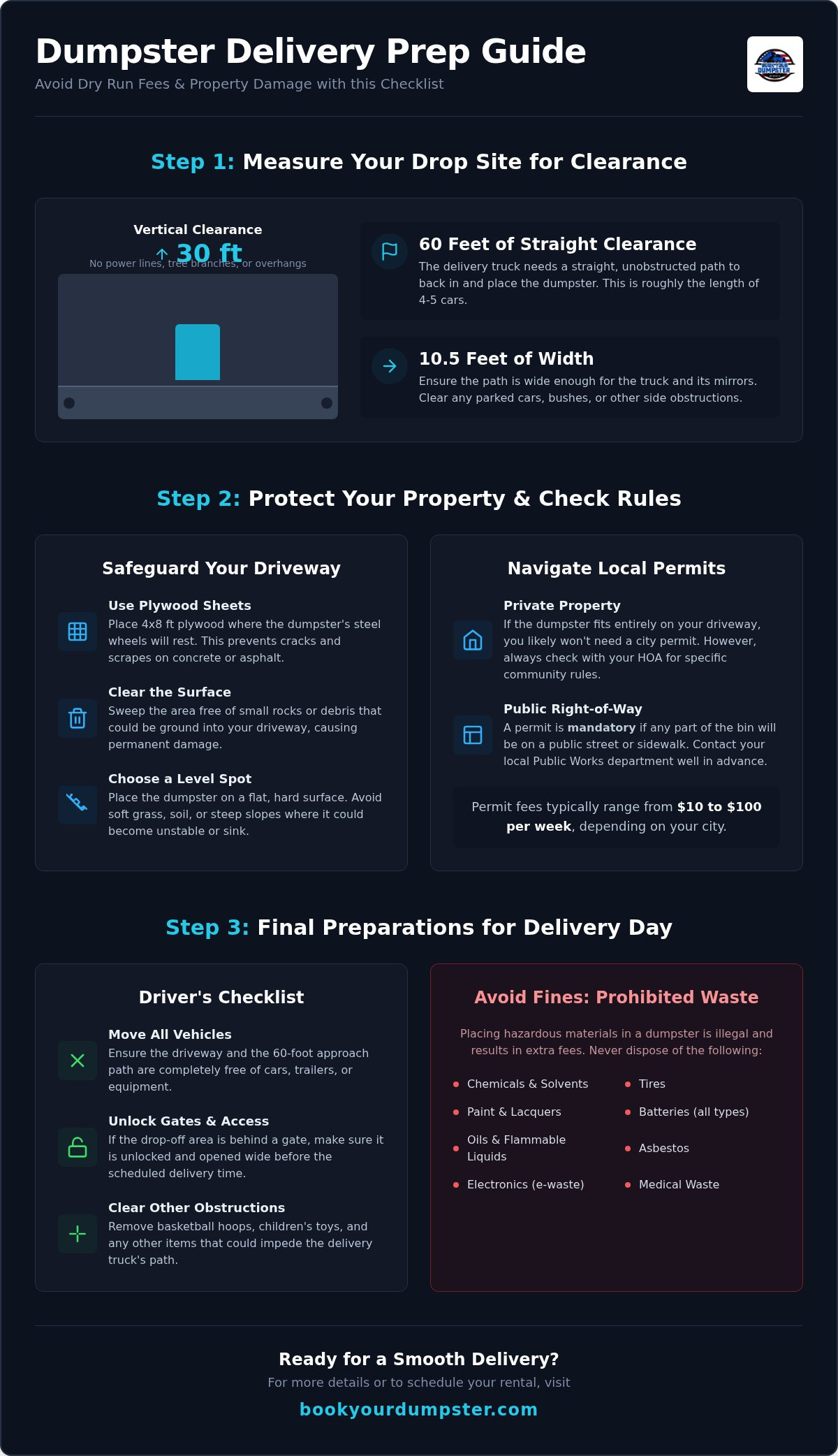
You'll learn how to measure for the necessary 60 feet of straight clearance and 30 feet of vertical space required for a successful drop-off. We also cover the essential steps for securing street permits and using plywood to safeguard your pavement. Follow this 2026 checklist to guarantee a smooth delivery on the first attempt.
Key Takeaways
- Measure your drop site to ensure 60 feet of straight clearance and 30 feet of vertical space for the delivery truck.
- Discover how to prepare for a dumpster delivery by securing necessary street permits and using plywood to prevent driveway cracking.
- Clear all obstructions, move vehicles, and unlock gates before the driver arrives to avoid "dry run" fees.
- Identify prohibited hazardous materials and weight limits to prevent unexpected landfill surcharges on your final bill.
- Use our online booking system to verify that your site is ready for the specific 10, 20, 30, or 40-yard container you ordered.
Measuring Your Drop Site and Clearance Requirements
Avoiding "dry run" fees begins with a tape measure. If a driver arrives and finds insufficient space, you'll be charged for the wasted trip and the delivery will be rescheduled. This is the most critical step in learning how to prepare for a dumpster delivery. Whether you're renting a 10, 20, 30, or 40-yard container, the physical footprint of the bin is only one part of the equation. Roll-off dumpsters require significant room to maneuver and drop. Use the online booking system at Book Your Dumpster USA to confirm the exact dimensions of your selected unit, then clear a path that exceeds those measurements.
You must provide a minimum of 60 feet of straight-line distance for the truck to back into the drop site. This length allows the driver to align the rails and slide the bin off the hoist without hitting obstacles. Additionally, ensure the path is at least 10.5 feet wide. This width accommodates the container and the truck's extended side mirrors. If you have a narrow driveway or a tight alley, choose a smaller 10-yard dumpster to minimize logistical friction.
Vertical Clearance and Overhead Obstructions
Look up before the truck arrives. A standard delivery requires 23 feet of vertical clearance to allow the hoist to lift and drop the bin safely. Check for low-hanging power lines, telephone cables, or internet wires that could snag on the equipment. Trim any overhanging tree branches that obstruct the height of the truck. If you plan to place the bin near a garage or house, verify that roof overhangs and gutters won't interfere with the vertical movement of the lift.
Ground Conditions and Slope Factors
Stability is non-negotiable for a heavy steel bin. Always choose a level, paved surface like concrete or asphalt. Placing a dumpster on a steep slope can cause the container to shift or roll, creating a significant safety hazard. Avoid soft soil, sand, or thick grass. A loaded 40-yard dumpster can weigh several tons and will sink into uncompacted ground. Finally, identify the location of underground utilities, irrigation lines, or septic tanks. These structures often can't support the weight of a delivery truck and may collapse under the pressure.
Protecting Your Property and Navigating Local Permits
Property damage is a common concern for homeowners and contractors alike. A steel container can weigh several tons even before you start loading it with debris. Learning how to prepare for a dumpster delivery involves more than just clearing space; it requires active measures to safeguard your driveway or the public street. If you fail to protect the surface or secure the right paperwork, you risk expensive repairs or municipal fines.
Driveway Protection Strategies
Steel rollers and heavy weight can easily crack aged asphalt or scrape decorative concrete. Follow these steps to keep your property intact:
- Use Plywood: Lay down two 4x8 sheets of plywood exactly where the dumpster wheels will land. This distributes the weight across a larger surface area and prevents the metal from making direct contact with your pavement.
- Clear the Surface: Sweep the drop zone thoroughly. Small pebbles or gravel trapped under the bin can be ground into your driveway, leaving permanent indentations or scars.
- Choose the Right Size: Smaller projects often fit better in compact bins that exert less pressure. Consult our 10 yard dumpster rental guide for tips on managing tight residential spaces.
City-Specific Permit Requirements
Placement location determines your legal obligations. If the bin sits entirely on your private driveway, you typically don't need a city permit. However, always contact your HOA first to confirm their specific rules. If any part of the dumpster occupies a public right-of-way, such as a street or sidewalk, a permit is mandatory. In 2026, street permit fees typically range from $10 to $100 per week depending on the municipality.
Requirements vary significantly by region. In Queens and the rest of NYC, you must secure a permit for any street-side placement to avoid heavy tickets. San Francisco operates under a "Space Occupancy" permit system specifically for construction containers. In Illinois and Massachusetts, you should contact your local public works department at least 48 hours in advance to ensure compliance with local right-of-way laws. While coordinating these logistics, remember that you cannot load prohibited hazardous materials into the container. Items like chemicals, tires, and car batteries require specialized disposal and will trigger surcharges. Once you have your permit and protection plan ready, you can schedule your rental through our streamlined booking system to ensure a punctual drop-off.
Clearing the Path: A Driver’s Checklist for Seamless Delivery
A clear path is the difference between a productive start to your project and a $274 dry run fee. Drivers operate heavy machinery with limited visibility. If they can't reach the drop site safely on the first attempt, they'll move to the next customer. Precision is mandatory. Understanding how to prepare for a dumpster delivery means looking beyond your own driveway to the street itself. If you are working in a dense urban area, ensure you have already secured your dumpster permit to avoid legal delays that could stop a driver in their tracks.
Follow these immediate steps before the delivery window begins:
- Relocate Vehicles: Move all cars from the driveway and the street directly in front of your property. Trucks need ample room to swing the trailer.
- Grant Access: Unlock gates and provide any necessary security codes to the dispatch team at least 24 hours in advance.
- Mark the Spot: Use traffic cones, chalk, or weighted markers to indicate exactly where the bin should land. Don't leave the driver guessing.
- Secure the Site: Keep pets and children indoors. The delivery process involves moving heavy steel and high-tension cables.
Removing Physical Obstacles
Urban environments like Queens or San Francisco present unique logistical hurdles. Narrow streets often have cars parked on both sides, which significantly restricts a truck's movement. Move portable basketball hoops, lawn ornaments, and loose debris away from the path. Check for low-hanging wires that you may have missed during your initial measurement. Clear a 20-foot turning radius for the truck to ensure the driver can navigate the approach without hitting curbs or neighboring property. If the street is too narrow for a 40-yard unit, consider if a 10 or 20-yard container is more realistic for the space available.
Communicating with the Driver
Reliability depends on clear communication. Provide a secondary contact number for someone who will be physically on-site during the delivery window. This person must be authorized to make placement decisions if an unforeseen obstacle arises. Specify "driver instructions" during your roll off dumpster rental booking to note specific quirks of your property, such as a hidden stump or a shared driveway. Confirm your delivery date and time window 24 hours in advance to ensure your preparation aligns with the hauling schedule. Taking these steps eliminates logistical friction and keeps your project on budget.
Waste Restrictions: What to Keep Out of Your Roll-Off
Loading your bin incorrectly is the fastest way to incur surcharges or a refused pickup. Part of knowing how to prepare for a dumpster delivery is understanding exactly what can and cannot go inside. Landfills have strict environmental regulations, and our drivers cannot transport hazardous or overweight loads. Review your inventory before the truck arrives to avoid logistical delays and keep your project on budget.
Commonly Prohibited Items
Hazardous materials pose a significant risk to the environment and the safety of our team. You must keep flammable liquids, car batteries, and any appliances containing Freon out of the container. For specific projects involving industrial waste, refer to our construction debris removal guide. Prohibited items found during pickup will lead to immediate "dry run" fees or expensive landfill penalties. Use the table below as a quick reference for your site.
| Allowed Materials | Forbidden Materials |
|---|---|
| Drywall, Wood, and Metal | Wet Paint, Oil, and Solvents |
| Furniture and Household Junk | Tires and Car Batteries |
| Cardboard and Plastic | Propane Tanks and Fuel |
| Roofing Shingles (Weight limits apply) | Asbestos and Pesticides |
Weight Management for Safe Pickup
Weight limits are not suggestions; they are legal requirements for road safety. If you are disposing of heavy debris like concrete, dirt, or brick, separate these materials into our 10-yard dumpsters. These smaller containers are designed specifically for high-density waste. Exceeding the weight limit of your rental typically results in overage fees between $50 and $100 per ton in 2026. Be mindful of the weather as well. Rain-soaked debris can significantly increase the total weight of your load, potentially pushing you over your limit.
Never "mountain-top" your dumpster. You must keep all waste below the "top-off" line to ensure the driver can safely secure the tarp for transport. If debris is spilling over the sides or piled too high, the driver will not pick it up. Distribute the weight evenly throughout the bin to prevent the truck from tipping during the loading process. To ensure you have the right container for your specific waste type, rent a dumpster online and select the size that best fits your debris volume.
Ready for Delivery? Final Steps with Book Your Dumpster USA
Your preparation is nearly complete. Reviewing your online booking confirmation is the final safeguard against delivery delays. Verify that the date, time, and specific container size (10, 20, 30, or 40 yards) match your site's capacity. If you have followed the previous steps for how to prepare for a dumpster delivery, the arrival will be seamless. Double-check that your drop site is still clear of new obstacles, such as recently delivered construction materials or neighbor vehicles, before the driver arrives.
Preparation doesn't end with the drop-off. You must also plan for the eventual pickup. Ensure the path remains clear on the final day of your rental period. If a driver cannot access the bin for removal due to a blocked driveway or locked gate, you will face additional fees. Keep the area around the container accessible throughout the duration of your project. For your next cleanup or renovation phase, use our streamlined online system to schedule a swap or a new rental in seconds.
What to Expect on Delivery Day
Our drivers prioritize efficiency to keep your project on schedule. They typically don't call before arrival unless you specifically requested a notification during the booking process. The actual drop-off usually takes between 15 and 30 minutes if the site is prepped. You don't need to be physically present if the spot is clearly marked with cones or chalk and the path is accessible. This hands-off approach allows you to continue working while we manage the logistics of the heavy equipment.
Next Steps for Your Project
Once the bin is on the ground, utilize the rear swing door. Walk your heaviest items into the container first, starting from the back and moving toward the front. This method prevents "mountain-topping" and ensures you use the full volume of the bin. If the driver places the bin incorrectly or in a way that blocks essential access, contact our support team immediately. Do not begin loading the dumpster if it needs to be moved. For localized advice on managing waste in specific regions, consult our dumpster rental guide for New York, Illinois, and Massachusetts. This resource helps you stay compliant with regional disposal laws as your project evolves.
Streamline Your Project with Professional Preparation
Logistical delays and dry run fees are avoidable setbacks. By measuring for 60 feet of straight clearance and securing permits in cities like Queens or San Francisco, you protect your project's timeline. You now have a professional roadmap for how to prepare for a dumpster delivery while safeguarding your driveway and adhering to waste limits. Success depends on these small, proactive steps taken before the truck arrives.
Book Your Dumpster USA supports both residential and commercial projects with 10, 20, 30, and 40-yard containers. We offer no-nonsense pricing and reliable service across NY, NJ, IL, MA, and SF. Our streamlined system removes the stress of waste management so you can focus on the work that matters. Experience the difference of a partner that respects your time and budget.
Book Your Dumpster Online in Seconds. We're ready to help you clear the way for your next big achievement.
Frequently Asked Questions
Do I need to be home for the dumpster delivery?
You don't need to be present for the delivery if the drop-off location is clearly marked and free of obstructions. Use traffic cones or chalk to indicate the exact placement of the bin. Ensure all gates are unlocked and vehicles are moved before the driver arrives. If the site is ready, the process is contactless and efficient.
Will the dumpster damage my asphalt or concrete driveway?
Steel dumpsters can scrape asphalt or crack concrete under heavy loads. Protect your property by placing two 4x8 sheets of plywood where the rollers will land. This distributes the weight and prevents direct metal-to-pavement contact. Sweeping the area to remove small rocks also prevents them from being ground into the surface during the drop.
How much space does the truck need to drop off the dumpster?
A standard delivery truck requires 60 feet of straight-line clearance to back into the drop site. The path must be at least 10.5 feet wide to accommodate the truck's mirrors. Additionally, verify there is 23 feet of vertical clearance to allow the hoist to lift and lower the bin without hitting power lines or tree branches.
Can I put a dumpster on the street in Queens or San Francisco?
You can place a dumpster on the street in Queens or San Francisco, but you must obtain a municipal permit first. In Queens, contact the NYC Department of Transportation; in San Francisco, secure a "Space Occupancy" permit from Public Works. Learning how to prepare for a dumpster delivery on public property involves coordinating these permits at least 48 hours in advance.
What happens if the driver cannot drop the dumpster due to a blocked path?
If a driver cannot access the drop site due to blocked paths or low clearance, you will be charged a "dry run" fee. This fee covers the fuel and time lost for the wasted trip. To avoid this, double-check that all vehicles are moved and overhead obstacles are cleared before your scheduled delivery window begins.
Can I move the dumpster once it has been dropped off?
Do not attempt to move the dumpster once it has been placed. These steel bins weigh several tons and are designed to be moved only by professional roll-off trucks. Attempting to shift the bin with personal equipment can cause severe property damage or personal injury. If the initial placement is incorrect, contact support immediately before loading any debris.
Are there items I am strictly prohibited from putting in the dumpster?
Strictly avoid placing hazardous materials like wet paint, oils, chemicals, or car batteries in the bin. Appliances containing Freon, tires, and propane tanks are also prohibited. These items require specialized disposal methods and will trigger significant landfill surcharges if found in your container. Reviewing how to prepare for a dumpster delivery includes auditing your waste for these restricted materials.
How long can I keep the dumpster on my property?
Most standard rentals last between 7 and 10 days. You can often extend this period for a daily fee, but you must notify dispatch at least 24 hours before your scheduled pickup. If you finish early, call to request an early removal. Always ensure the path is clear for the truck on the final day of your rental period.


