
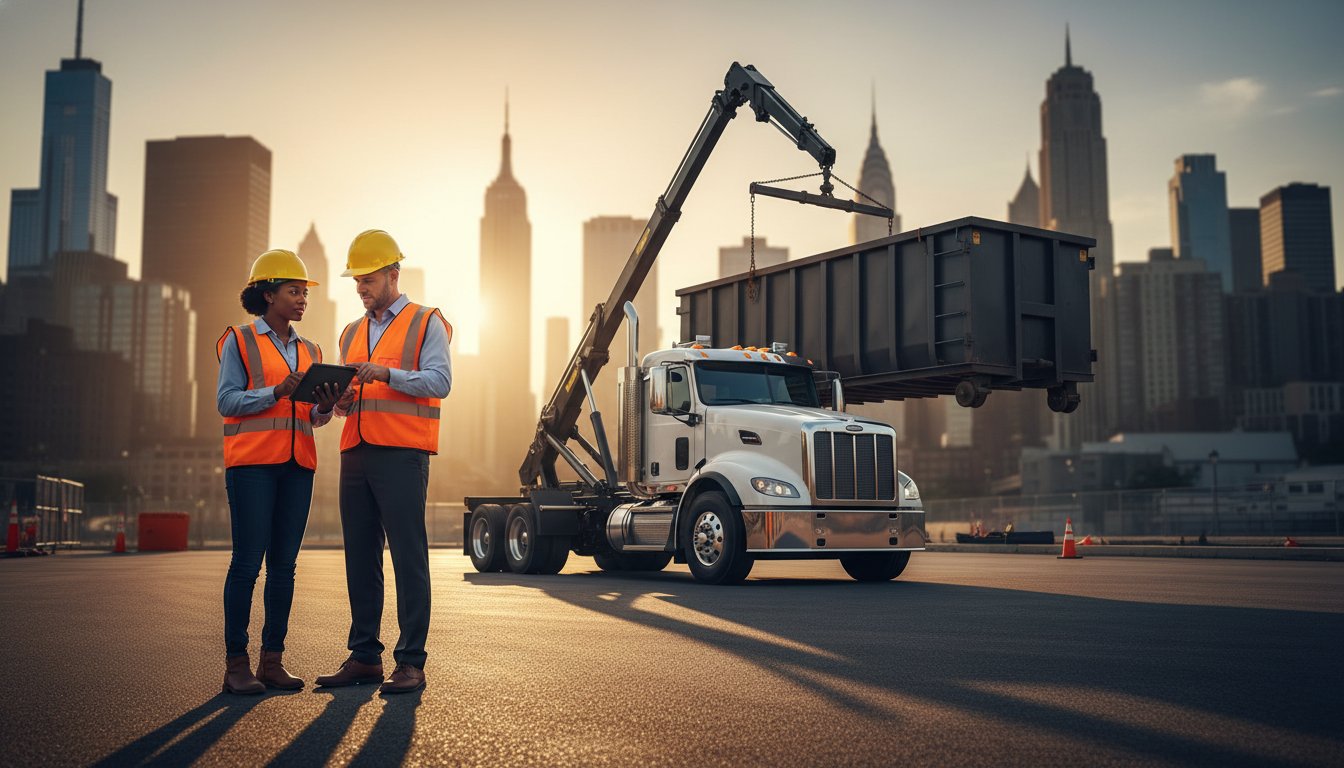
Your project's profitability is dictated by what leaves the site just as much as what arrives. If your current industrial waste service relies on guesswork and "best effort" schedules, you're losing money to operational friction. You know the frustration of a 40 yard dumpster sitting full while your crew waits, or the sting of a hidden fee buried in a complex hauling contract. Whether you're navigating the new one-ton organic waste threshold in New York or managing stricter PFAS monitoring in Illinois, the logistical load is heavy.
It's time to take control of your site logistics. We've built this guide to help you master the complexities of industrial waste management through better containment, strict compliance, and streamlined logistics. You'll learn how to select the right front-load or roll-off equipment, navigate permit requirements in tight urban zones, and maintain a schedule that actually sticks. Stop letting waste management stall your progress and start using it as a tool for efficiency.
Key Takeaways
- Understand the critical differences between standard municipal collection and a professional industrial waste service tailored for high-volume debris.
- Determine if your project requires the flexibility of a temporary roll-off container or the consistency of a permanent front-load commercial bin.
- Select the right dumpster size, ranging from 10 to 40 yards, to match your specific material weight and site footprint.
- Navigate local compliance standards and street permit requirements for major urban zones in New York, Illinois, and Massachusetts.
- Streamline your project management by using a digital booking platform to coordinate hauls and remove logistical bottlenecks.
What is Industrial Waste Service and Why Does It Matter?
Industrial waste isn't just "bigger trash." It's a logistical challenge that demands specialized equipment and precise timing. While municipal services handle household bags, a professional industrial waste service manages the high-volume, non-hazardous debris that halts operations when left uncontained. Standard commercial bins often fail at this scale because they lack the capacity for dense materials like concrete or manufacturing scrap. They overflow quickly, leading to messy sites and safety violations. When your site is active, you need a system that facilitates logistical flow. This ensures that waste removal keeps pace with production or construction. Think of it as an exhaust system for your project. If the exhaust is blocked, the engine stalls.
The Scope of Modern Industrial Waste
Industrial waste encompasses a wide range of materials generated by industrial activity. Common materials include:
- Metal manufacturing scrap and slag.
- Construction and demolition debris like brick, wood, and drywall.
- Large-scale cleanout materials from warehouse closures.
Homeowners often find themselves in need of industrial-scale solutions during major structural renovations. When you're tearing down walls or replacing a roof, standard curbside pickup won't cut it. You need a container that can handle the sheer weight of these materials without buckling. Industrial waste service is a specialized logistical framework for high-volume debris.
Why Efficiency is the Primary ROI Metric
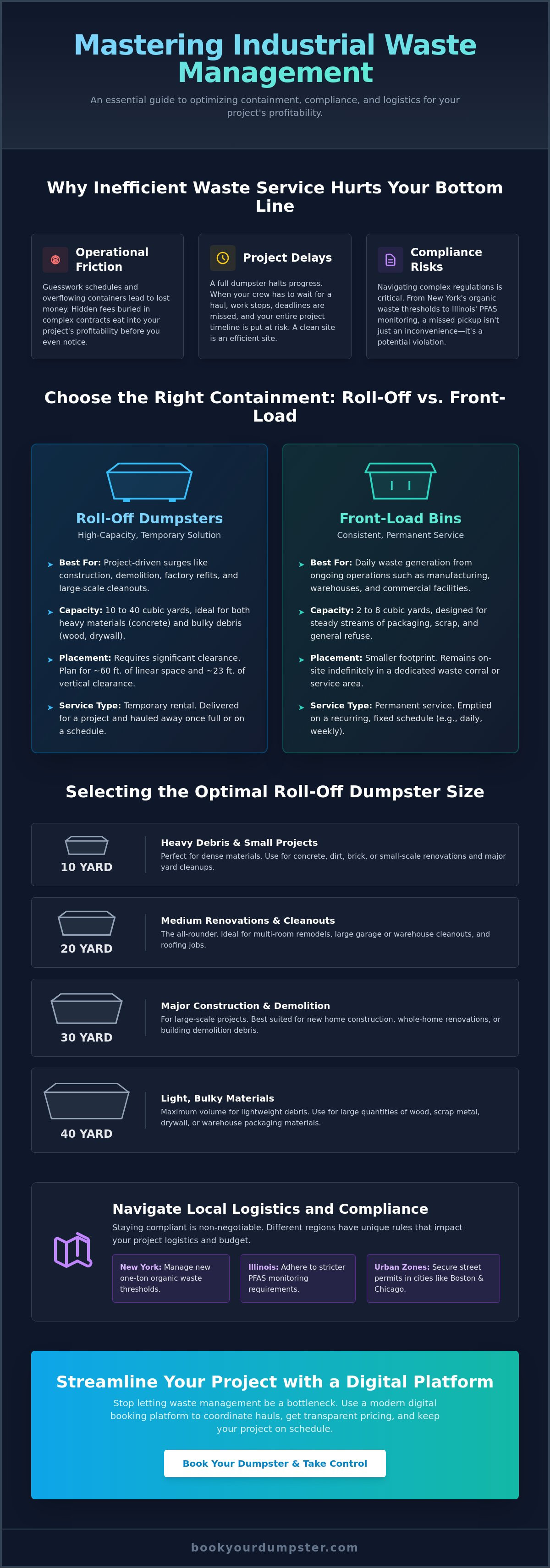
Poor waste management creates immediate bottlenecks. If a dumpster is full, your crew stops working. This leads to safety hazards and project delays that eat into your bottom line. In 2026, staying on schedule is more critical than ever. New regulations in New York and Illinois require tighter control over material diversion and monitoring. Missing a pickup isn't just an inconvenience; it's a compliance risk. Professional containment reduces your liability by keeping sites clean and compliant with state-specific mandates.
Use a service that understands the urgency of your timeline. For reliable scheduling and transparent pricing, visit Book Your Dumpster USA to secure the right equipment for your project. Managing your waste efficiently means your team spends less time moving debris and more time finishing the job. Don't let waste accumulation dictate your project's pace. Control the flow, maintain a clean site, and focus on your core operations.
Roll-Off vs. Front-Load: Choosing the Right Industrial Containment
Choosing the right container is the first step in optimizing your industrial waste service. You must decide between the high-capacity, temporary utility of a roll-off dumpster and the consistent, scheduled relief of a front-load commercial bin. Roll-off containers are designed for surges. They arrive on a heavy-duty truck, slide into place on steel rails, and depart once full. You need significant clearance for these, typically 60 feet of linear space and 23 feet of vertical room to avoid overhead wires or eaves. Front-load bins are smaller, usually 2 to 8 cubic yards, and remain on-site indefinitely. They are the backbone of daily facility maintenance. For small facilities with limited space or lower volume, private curbside trash pickup offers a middle ground that maintains professional standards without requiring massive storage areas.
When to Utilize Roll-Off Dumpster Rentals
Deploy roll-off dumpsters for project-driven needs. If you are executing a factory refit, managing a construction site, or clearing out a decommissioned warehouse, these containers are essential. The 10 to 40-yard range allows you to match the bin to the material weight. Use a 10-yard bin for heavy materials like concrete and a 40-yard bin for light, bulky debris. For a deeper dive into these logistics, read our roll off dumpster rental guide. Proper placement is vital. Ensure the surface is level and capable of supporting the weight of a loaded steel box to prevent asphalt damage. Contractors in Chicago or Boston often prefer roll-offs for their ability to hold massive amounts of demolition debris in a single haul, reducing the number of truck trips required.
Permanent Solutions: Front-Load Commercial Pickup
If your manufacturing process generates consistent daily waste, permanent front-load service is the answer. These bins are ideal for ongoing warehouse operations where packaging waste and general refuse accumulate steadily. When setting up your Guide for Industrial Waste Management compliance strategy, consider the frequency of service. Scheduling pickups too often wastes money, but waiting too long leads to overflow and hygiene issues. Integrate these bins into a broader industrial waste service plan by placing them near loading docks or high-traffic production areas. This minimizes the time your staff spends transporting trash across the floor. Most front-load bins feature slanted tops and easy-to-open lids, making them accessible for staff while keeping pests out.
Evaluate your site's physical constraints and waste volume before committing. If you need a temporary solution for a cleanup or a permanent bin for daily manufacturing, select your service type online to get started. Matching the equipment to the job is the only way to eliminate logistical stress and maintain a clean, productive workspace.
Selecting the Optimal Dumpster Size for Industrial Debris
Size selection is a financial decision. The National Waste & Recycling Association emphasizes that efficient waste management relies on standardized equipment and proper sizing. If you under-size a container for your industrial waste service, you'll face costly interruptions and multiple haul fees. If you over-size, you're essentially paying to transport air. You must match the container to your material density to protect your project margins. We offer four primary sizes: 10, 20, 30, and 40-yard dumpsters. Each serves a specific debris profile, and choosing the wrong one often leads to overweight penalties or site bottlenecks.
The 10 and 20 Yard Advantage for Heavy Debris
Use these smaller containers for dense, high-weight materials. Concrete, brick, and heavy metal scrap require containers that keep the total weight within legal hauling limits. A 10 yard dumpster rental is the gold standard for dense industrial waste. It provides a compact footprint, which is essential for tight industrial zones in New York or Queens where street space is limited. The 20-yard option is better suited for mixed debris projects, such as small factory cleanouts or roofing jobs. Always place these on reinforced surfaces. The concentrated weight of a 10-yard bin filled with steel scrap can easily damage standard asphalt if it isn't supported correctly.
Maximizing Volume with 30 and 40 Yard Containers
Large-scale warehouse cleanouts and massive construction projects demand maximum volume. These high-walled containers are designed for light but bulky materials like wood, plastic, and cardboard. A 40-yard dumpster can hold approximately 12 to 15 pickup truck loads of debris. Safety is paramount when loading these units. Never pile materials above the top edge of the container. Wind can catch loose items during transport, creating a hazard for other drivers. Distribute the weight evenly from front to back. If all the heavy items are at the rear, the truck may struggle to lift the bin safely, delaying your removal and potentially increasing your costs.
Logistical precision is the key to site efficiency. Visit Book Your Dumpster USA to compare dimensions and find the exact fit for your debris profile. Don't guess on your capacity needs. Use the material types and volumes you've identified to select the container that keeps your project moving without unnecessary expenses.
Navigating Local Logistics and Compliance in 2026
Operating an industrial waste service in dense urban corridors requires more than just a fleet of trucks. It demands a sophisticated understanding of local traffic patterns and municipal codes. In cities like Chicago, San Francisco, and Boston, narrow streets and heavy pedestrian traffic make dumpster placement a precision task. You cannot simply drop a 30 yard dumpster on a sidewalk without a plan. Choosing a provider with local geographic expertise is the only way to avoid the logistical gridlock that stalls projects and triggers city fines. Every minute your crew spends waiting for a blocked truck to maneuver is a minute of lost profit. Local weight limits also vary by bridge and road classifications, so ensure your hauler knows the exact route to the disposal facility.
Permits and Regulations in Major Industrial Hubs
Check your local permit requirements before the truck arrives. In Illinois, placing a dumpster on a public street typically requires a permit from the Department of Transportation; daily fees in Chicago range from $25 to $60 as of May 2026. New York City is even stricter, with permit fees for city property placement reaching up to $385. If your site blocks a sidewalk or a high-traffic lane, you may need additional safety signage or traffic control measures. For a state-by-state breakdown of these rules, consult our guide on dumpster rental in New York, Illinois, and Massachusetts. Secure your permits early to ensure your project starts on schedule.
Sustainable Disposal and Industrial Compliance
Compliance is a moving target. New York businesses generating one ton or more of organic waste per week must now divert that waste if they are within 25 miles of a recycler. In Illinois, new laws like HB4418 now define plastic pellets as pollutants, requiring stricter handling during disposal. You must maintain accurate waste tracking and documentation to satisfy EPA guidelines and state-level inspections. This paperwork acts as your shield against liability during industrial cleanouts or manufacturing shifts. Always verify local waste ordinances before booking your container to ensure you aren't violating specific material bans. To manage these regulations without the stress, schedule your industrial service online and let our team handle the hauling logistics.
Streamline Your Project with Book Your Dumpster USA
Traditional waste hauling is often a black box of vague quotes and missed delivery windows. You call for a price, wait for a callback, and hope the driver arrives before your crew starts their shift. Book Your Dumpster USA replaces this outdated model with a digital-first approach to industrial waste service. We treat your site logistics like the mission-critical operation it is. By prioritizing pricing integrity and punctuality, we remove the stress of waste management from your daily checklist. You don't have time to chase down haulers. You need a system that works as hard as your team does. Our platform provides that reliability through a transparent, high-velocity booking process that puts you in total control of your project's flow.
Digital Efficiency for Modern Contractors
Our platform eliminates the opaque communication that plagues traditional waste companies. Instead of playing phone tag, you can manage your entire industrial waste service through a streamlined online interface. This is especially vital for project managers overseeing multiple sites across New York, Illinois, or Massachusetts. You can coordinate deliveries, schedule swaps, and track your inventory from a single dashboard. Real-time scheduling ensures that when you need a 30 yard dumpster removed, it happens according to your timeline, not ours. This digital oversight reduces the cognitive load of project management. It allows you to focus on site safety and production targets rather than worrying about overflowing bins or blocked access points.
The Reliable Partner for Industrial Waste
We don't position ourselves as just another hauler. We are a high-functioning tool designed for your business's success. Our comprehensive inventory of 10, 20, 30, and 40-yard dumpsters ensures you have the exact capacity required for any industrial application. Whether you're managing a factory refit or a large-scale demolition, our equipment is maintained to professional standards and delivered with precision. We understand the high stakes of industrial environments where a single logistical delay can cost thousands in lost labor. We've modernized the sector to provide straightforward honesty and technological convenience. Stop struggling with unreliable pickup schedules and hidden fees. Use a partner that understands the urgency of your work and provides the tools to finish it. Book your industrial dumpster today and experience a more efficient way to manage your site debris.
Optimize Your Operations for 2026
Effective debris management is a core component of project profitability. You've seen how matching material density to the correct 10, 20, 30, or 40-yard container prevents overweight penalties and site bottlenecks. Navigating the evolving compliance landscape in New York, Illinois, and Massachusetts requires a partner who understands local ordinances and street permit logistics. By choosing a digital-first industrial waste service, you eliminate the friction of traditional hauling and gain total visibility over your site's waste flow. Stop letting debris accumulation dictate your project's pace.
Leverage our local expertise in industrial hubs like New Jersey, San Francisco, and Boston to keep your project moving. Our streamlined online booking system provides immediate access to the equipment you need without the opaque pricing of the past. Secure your industrial waste service with Book Your Dumpster USA and focus on finishing your job on time. Take the guesswork out of your waste logistics and maintain a clean, high-functioning job site today. Your project's success depends on reliable, professional execution.
Frequently Asked Questions
What is included in a standard industrial waste service?
A standard industrial waste service includes the delivery of a heavy-duty steel container, a designated rental period, and the hauling of non-hazardous debris. We provide 10 to 40-yard roll-off containers for project-based work and front-load bins for permanent facility needs. This service ensures that high-volume materials are contained safely and removed according to your site's specific schedule.
How do I determine the right dumpster size for industrial manufacturing scrap?
Base your selection on the density and total volume of the scrap material. Heavy manufacturing byproducts like metal slag or punchings require 10 or 20-yard dumpsters to remain within legal hauling weight limits. Lighter, bulky scrap such as plastic or wood is better suited for 30 or 40-yard containers. Choosing the right size prevents overweight penalties and reduces the number of truck trips required.
Do I need a permit for an industrial dumpster in San Francisco or New York?
You need a permit if the container occupies a public street, sidewalk, or right-of-way. In New York City, permit fees for placing a dumpster on city property range from $135 to $385 as of May 2026. Chicago requires permits for street placement with daily fees ranging from $25 to $60. Check with your local department of public works or transportation before scheduling delivery to avoid municipal fines.
Can I rent an industrial dumpster for a residential construction project?
You can utilize these professional-grade containers for major residential renovations or structural cleanouts. Homeowners often need the capacity of a 10 or 20-yard roll-off when removing roofing, concrete, or heavy structural debris. This is a more efficient industrial waste service for residential sites than standard curbside pickup. Ensure the placement surface is reinforced to support the weight of a loaded steel bin.
How much does industrial waste removal cost in 2026?
Total costs depend on your geographic location, the container size, and the weight of the materials. Regional tipping fees at disposal facilities influence these costs, such as the $50 per ton industrial rate at the DANC facility in New York for 2026. You should also account for local permit fees in major urban corridors. Use our digital booking platform to check equipment availability and coordinate your service requirements.
What materials are prohibited in an industrial roll-off dumpster?
Hazardous materials, liquids, and restricted electronics are strictly prohibited from standard industrial containers. This includes lead-acid batteries, wet paint, asbestos, and tires. New regulations in Illinois also require stricter monitoring for PFAS chemicals and plastic pellets. Always verify state-specific waste ordinances and review our list of restricted items before loading your bin to maintain site compliance and avoid environmental penalties.
How quickly can an industrial dumpster be delivered to my site?
Delivery timelines are dictated by local inventory and current hauling schedules in your region. You should check the real-time availability for your specific zip code through our online booking interface. Scheduling your container a few days in advance is the most reliable way to ensure the equipment is on-site before your crew begins work. This proactive approach eliminates site bottlenecks and keeps your project timeline intact.


