
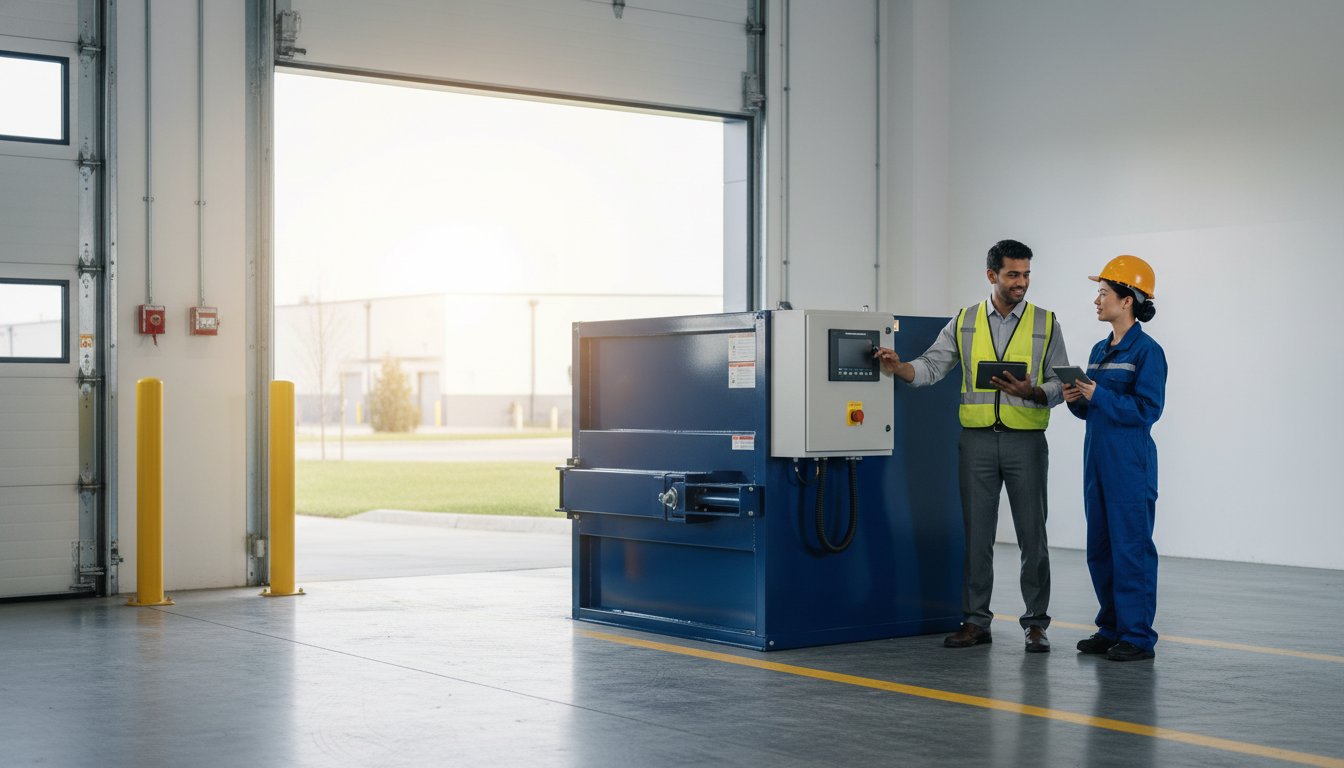
A broken trash compactor is more than a mechanical failure; it's a logistical bottleneck that drains your facility's bottom line every hour it sits idle. In a region where Northeast tipping fees averaged $80.67 per ton in 2024, you can't afford the inefficiency of loose waste or unplanned downtime. Securing a reliable compactor service in New Jersey is the difference between a streamlined operation and a mounting pile of expensive disposal problems.
It's frustrating to deal with inconsistent hauling schedules and the looming threat of emergency repair costs that blow your budget. You need control over your waste flow, not more excuses from a vendor who doesn't respect your timeline. This article promises to help you master your facility's waste efficiency with an expert breakdown of repairs, hauling logistics, and high volume strategies. We'll preview the essential steps to achieve zero downtime while staying ahead of NJ environmental standards and rising disposal costs. This guide ensures your facility remains a high-functioning tool rather than a source of logistical stress.
Key Takeaways
- Master the three-pillar system of maintenance, repair, and hauling to ensure your compactor service new jersey strategy remains efficient and reliable.
- Identify early signs of hydraulic leaks and electrical sensor corrosion to prevent costly equipment downtime and potential NJDEP environmental fines.
- Evaluate your specific volume threshold to decide when transitioning from a 40-yard roll-off to a permanent compactor yields the highest ROI.
- Optimize hauling logistics and compression ratios to mitigate the financial impact of rising Northeast tipping fees and tonnage-based disposal costs.
- Select a local service partner with brand-specific expertise to ensure rapid response times and strict compliance with New Jersey municipal waste ordinances.
Understanding Compactor Service Needs in New Jersey
Effective waste management in the Garden State requires more than just a bin and a truck. For high-volume facilities, a professional compactor service New Jersey strategy operates as a three-pillar system: proactive maintenance, rapid repair, and strategic hauling. This isn't a luxury for Newark warehouses or Jersey City retail hubs. It's an operational necessity. Waste compaction allows these businesses to process massive amounts of debris while minimizing the physical footprint of their trash collection area.
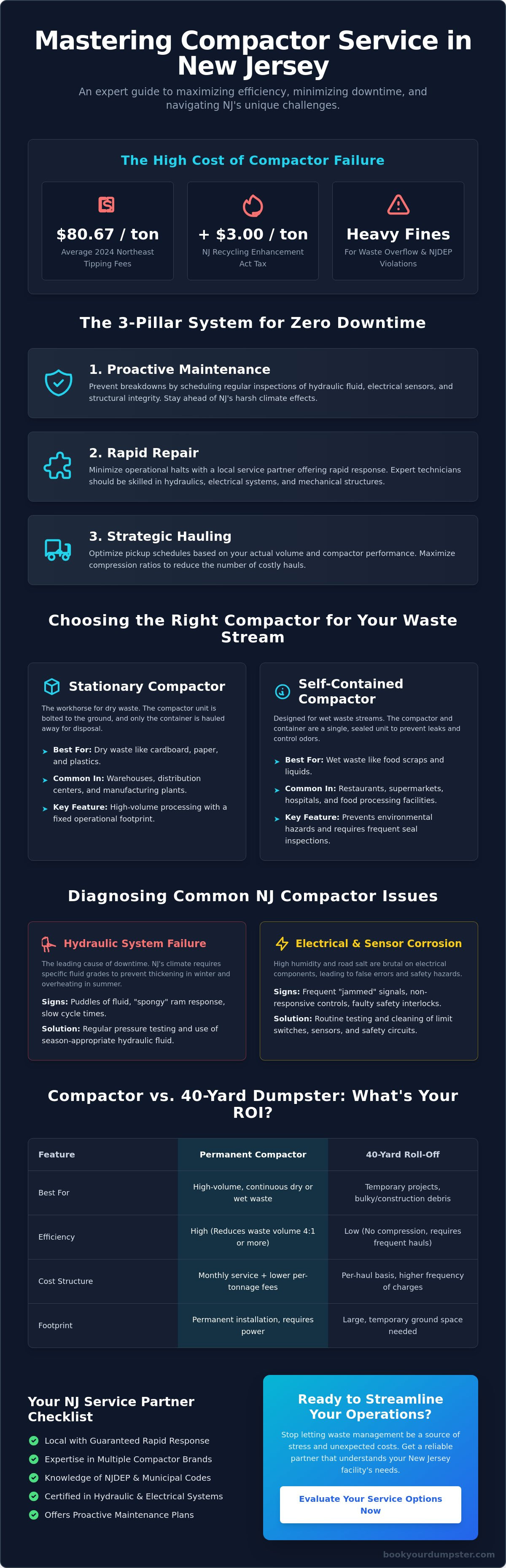
New Jersey's climate adds a layer of complexity to equipment care. Seasonal temperature swings cause hydraulic fluid to thicken in the winter and overheat in the summer. High humidity along the coast and exposure to road salt can quickly corrode electrical sensors and relays. Beyond the hardware, you must navigate strict NJDEP regulations. The state applies a $3 per ton Recycling Enhancement Act tax to all solid waste. New 2026 mandates also require districts to implement aggressive food waste reduction strategies. Professional service ensures your equipment stays compliant and your costs remain predictable.
Stationary vs. Self-Contained Compactors
Choose your equipment based on your waste stream. Stationary compactors are the workhorses for dry waste like cardboard and plastic in industrial settings. They remain bolted to the ground while the container is hauled away. Self-contained units are the standard for NJ restaurants and supermarkets dealing with liquid waste. These units are integrated with the container to prevent leaks. Because they handle wet waste, self-contained units require more frequent seal inspections and specialized maintenance to prevent environmental hazards and odors.
Why NJ Businesses Prioritize Professional Service
Reliable service prevents expensive legal headaches. Local municipalities like Paterson and Elizabeth strictly enforce codes regarding waste overflow. If your compactor fails, the resulting pile-up can lead to heavy fines and health department citations. Professional oversight also reduces the frequency of hauls in high-traffic urban areas. Fewer trips mean lower fuel surcharges and less logistical friction in crowded loading zones. Simply put, compactor service is the integration of mechanical maintenance and scheduled debris removal. It keeps your facility clean and your overhead low. If you are ready to streamline your operations, visit bookyourdumpster.com to evaluate your service options.
Common Compactor Repairs and Maintenance in NJ
Hydraulic failures are the leading cause of equipment downtime for New Jersey facilities. When a ram stops mid-cycle, your entire waste management flow grinds to a halt. In the dense industrial corridors of the Garden State, you don't have time for a slow recovery. Effective compactor service new jersey relies on identifying these mechanical stressors before they trigger a total system collapse. A proactive approach can extend the life of your equipment well beyond the typical ten-year mark, saving your business thousands in premature replacement costs.
Your service partner must be more than a mechanic. Look for technicians who possess combined expertise in mechanical structures, hydraulic pressure systems, and complex electrical circuits. A compactor is a hybrid machine; fixing one part often requires an understanding of the other two. If you're experiencing frequent "jammed" signals or slow cycle times, it's time to schedule a professional inspection to avoid a major breakdown.
The Hydraulic System: The Heart of the Compactor
The hydraulic system is under immense pressure every time the ram cycles. Puddles near the machine or a "spongy" response from the controls are clear signs of a leak. These leaks aren't just maintenance issues; they're environmental hazards that can lead to NJDEP fines if fluid enters the soil or storm drains. Regular pressure testing is essential to ensure the ram reaches its full compression force. Without this force, you aren't getting the volume reduction you're paying for. Additionally, New Jersey's climate dictates specific fluid grades. You need lower viscosity oil in the freezing winters of Sussex County and heavier oil to handle the heat of a Jersey City summer.
Electrical and Safety Interlocks
NJ's high humidity and heavy road salt exposure are brutal on electrical components. Corrosion often causes limit switches and sensors to fail or report false errors. Many "jammed" signals aren't mechanical at all; they're simply sensor calibration errors caused by grime or rust. Testing these safety interlocks is non-negotiable. A faulty sensor can allow the machine to operate with a door open or fail to stop in an emergency, creating a massive liability. Every service call must follow OSHA-compliant lock-out/tag-out procedures. This ensures the machine is completely de-energized before any technician begins work, protecting both your staff and the service crew.
Compactor Hauling and Logistics Strategy
Hauling a compactor requires specialized equipment that standard dumpster services don't always provide. You need heavy-duty roll-off trucks capable of winching a 40-yard receiver box that might weigh ten tons or more when fully packed. This is why a dedicated compactor service new jersey partner is vital. They manage the "pull and return" process for stationary units, where a truck removes the full container and immediately replaces it with an empty one. This keeps your loading dock open and your facility moving without interruption.
Tonnage is the metric that dictates your total disposal costs. In New Jersey, landfills charge strictly by weight. For instance, Morris County tipping fees are set at $113.00 per ton for 2026. Burlington County charges $127.55 per ton for construction and demolition waste. High-density compaction reduces the volume of your trash, which cuts the number of hauls you pay for each month. You must monitor the weight carefully to stay within legal road limits. Smart monitoring systems solve this by notifying your hauler only when the unit reaches 90% capacity. This prevents the "empty container" fees associated with premature or unnecessary pickups.
Optimizing Your NJ Pickup Schedule
Balance your hauling frequency to match your facility's specific output. A fixed schedule provides predictability, but "on-call" hauling based on real-time sensor data is often more cost-effective for fluctuating volumes. Urban centers like Newark present unique challenges. Schedule your hauls during off-peak hours to avoid the gridlock that leads to fuel surcharges and missed service windows. Data from your compactor will prove the ROI quickly. High-density compaction frequently results in a 4:1 volume reduction compared to loose-trash hauling, significantly lowering your carbon footprint and your bill.
Coordination Between Repair and Hauling
Your hauler and repair technician must work in tandem to avoid logistical failures. If a hauler arrives but the compactor is stuck in the "ram forward" position, the truck leaves empty, and you still receive a service charge. Sync these teams to ensure the machine is functional and disconnected before the truck arrives. If a major overhaul is required, use a roll off dumpster rental as a temporary contingency. This prevents waste from piling up on your warehouse floor while your primary system is offline. Visit bookyourdumpster.com to coordinate your logistics and repair needs under one professional roof.
Compactors vs. 40-Yard Dumpsters: Which is Right for You?
Deciding between a permanent compactor and a standard roll-off comes down to your monthly waste volume and site infrastructure. If your facility generates enough debris to require three or more 40-yard pickups per month, you've reached the threshold where a compactor becomes the more efficient choice. Hauling loose trash means you're paying to transport air. A professional compactor service new jersey strategy eliminates this waste by crushing materials into a dense mass before it ever hits the road. This transition usually pays for itself through drastically reduced hauling fees.
Infrastructure is the second major factor to consider. A compactor requires a reinforced concrete pad and a dedicated 3-phase electrical connection to power the hydraulic ram. Standard dumpsters are more flexible but require a much larger physical footprint to accommodate the truck's turning radius and the bin's physical length. Labor costs also differ significantly. Loading a compactor is a quick, one-step process. In contrast, workers often spend valuable time manually breaking down boxes or distributing waste inside a roll-off to prevent "bridging" and maximize space.
Security is a frequently overlooked benefit for NJ businesses. Open-top dumpsters are magnets for illegal dumping and pests, especially in urban environments like Elizabeth or Camden. A compactor is a sealed, lockable system. It prevents unauthorized use and keeps odors contained; this is essential for maintaining good relations with neighboring properties. If you're ready to upgrade your facility's efficiency, choose your container size today to get started.
When to Choose a 40-Yard Roll-Off
Standard roll-off containers are the best fit for construction sites, demolition projects, and temporary cleanups. They handle bulky, non-compressible items like timber, concrete, and roofing shingles that would damage a standard compactor ram. The flexibility of a 40 yard dumpster is unmatched for sites without permanent power or where waste volumes vary from week to week. It's the right choice for short-term projects where the capital investment of a permanent installation doesn't make financial sense.
When a Compactor is the Clear Winner
Compactors are the standard for high-volume retail, grocery stores, and manufacturing plants where waste streams are consistent and compressible. If your primary waste is cardboard, plastic, or general office refuse, compaction can reduce your hauling frequency by up to 75%. This is a game-changer for space-constrained NJ sites where multiple dumpsters simply won't fit. You'll see long-term cost savings through reduced fuel surcharges and fewer tipping fees, making the initial setup costs a wise investment for any permanent commercial operation.
Choosing a Compactor Service Partner in New Jersey
Selecting a waste management partner is a high-stakes decision for your facility. You need a provider with local presence to guarantee rapid response times when equipment fails. A delay in compactor service new jersey doesn't just stall your waste removal; it creates a safety hazard and an operational bottleneck. Verify that your chosen technician has the specific training to handle your equipment's brand and model. Not all hydraulic systems are identical. Using a generalist often leads to recurring issues or voided warranties.
Compliance and transparency are non-negotiable. Ensure your partner holds valid NJDEP licensing for waste transport and carries comprehensive insurance to protect your property during service calls. The 2026 legislative environment signals a trend toward even stricter oversight for solid waste brokers and transporters. Demand pricing integrity from the start. Avoid vendors who bury 'environmental surcharges' or 'fuel recovery fees' in the fine print. You deserve a straightforward cost structure that allows for accurate budgeting without monthly surprises.
The Importance of Local NJ Expertise
Local knowledge is vital for navigating the regulatory maze of New Jersey's urban centers. Cities like Jersey City and Elizabeth have specific ordinances regarding waste collection noise and timing. A local partner understands these constraints and schedules hauls to avoid municipal fines. They also maintain proximity to regional parts warehouses. This access ensures that critical components, such as hydraulic seals or electrical relays, are replaced in hours rather than days. Local response time is the difference between a minor fix and a facility shutdown.
Streamlining Your Waste Management with Book Your Dumpster USA
Your facility needs a comprehensive solution that scales with your production. Our dumpster rental and commercial pickup services provide the necessary support for high-volume NJ sites. Book Your Dumpster USA integrates advanced logistics with a user-friendly digital platform to remove the stress of waste management. Use our online booking system to manage supplemental hauling needs or schedule routine maintenance with a few clicks. We prioritize punctuality and pricing integrity as our verbal handshake with every client. Ready to optimize your NJ waste flow? Book your service or rental today to secure a partner that values your time and your bottom line.
Master Your Facility's Waste Efficiency
Effective waste management isn't just about moving trash; it's about protecting your bottom line through mechanical reliability and strategic hauling. You've learned that the right compactor service new jersey strategy integrates preventative maintenance with data-driven logistics to minimize expensive downtime. By balancing equipment uptime with smart hauling schedules, you eliminate the clutter and stress that stall your operations. Reliability is the only metric that matters when your loading dock is full.
Book Your Dumpster USA serves NJ, NY, and MA with waste logistics that prioritize your specific timeline. Take control of your site's debris with transparent pricing and direct online booking for our full range of 10 to 40 yard containers. Don't let equipment failures or confusing regulations slow your progress. You now have the framework to choose the right equipment and the right partner to keep your facility running at peak capacity.
Streamline your NJ waste management with Book Your Dumpster USA and experience a higher standard of industrial service. Your facility is ready for a smarter, cleaner resolution today.
Frequently Asked Questions
How often should a commercial compactor be serviced in New Jersey?
Schedule professional maintenance at least quarterly to ensure peak performance. This frequency allows technicians to inspect hydraulic seals and electrical relays before the corrosive effects of northern NJ winter salts cause a system failure. Consistent checkups transform your compactor service new jersey from a reactive expense into a proactive strategy for avoiding facility downtime.
What is the difference between a stationary and a self-contained compactor?
Stationary compactors are bolted to a concrete pad and are ideal for dry, recyclable materials like cardboard. Self-contained units are integrated with the waste container to provide a liquid-tight seal, making them the standard for NJ supermarkets and hospitals. Choose a self-contained unit if your waste stream includes organic matter that could lead to leaks or odor issues.
Can I rent a compactor in NJ or do I have to buy one?
You can choose between leasing or purchasing based on your facility's long-term capital goals. Many businesses prefer leasing because it often bundles maintenance and repair costs into one predictable monthly payment. Purchasing is a viable option for established industrial sites that prefer to own their infrastructure and manage maintenance through internal specialized teams.
What happens if my compactor jams and I have a scheduled pickup?
Contact your hauler immediately to cancel the pull and avoid a "dry-run" fee. If a truck arrives and cannot safely winch the container due to a mechanical jam, you'll still be charged for the trip. Always verify that the ram is fully retracted and the unit is functional before your scheduled waste removal window begins.
Are there specific NJ regulations for compactor placement and runoff?
NJDEP standards require compactors Sit on reinforced concrete pads to prevent hydraulic fluid or leachate from contaminating the soil. You must also follow municipal setbacks in cities like Trenton or Paterson to ensure fire department access and noise compliance. Consult with a local expert to verify your site plan meets all current NJ environmental and zoning requirements.
How much can a compactor reduce my monthly waste hauling costs?
High-density compaction typically reduces loose waste volume by a 4:1 ratio. This efficiency allows you to replace four standard dumpster hauls with a single compactor pull. By drastically cutting the number of trips to the landfill, you significantly lower your exposure to rising fuel surcharges and Northeast tipping fees.
Does Book Your Dumpster USA provide temporary containers during compactor repairs?
Yes, we provide 10 to 40 yard roll-off containers as a contingency plan while your primary equipment is offline. If a major overhaul takes your compactor out of service, waste will quickly accumulate and create a safety hazard. Placing a temporary bin on-site ensures your facility remains clean and compliant until your repairs are complete.
What is the average lifespan of a commercial waste compactor in an industrial setting?
A high-quality compactor typically lasts between 10 and 15 years when supported by a consistent service plan. The lifespan is heavily influenced by the acidity of the waste stream and the frequency of hydraulic fluid changes. Investing in regular compactor service new jersey is the most effective way to protect this asset and ensure it reaches its maximum operational life.


