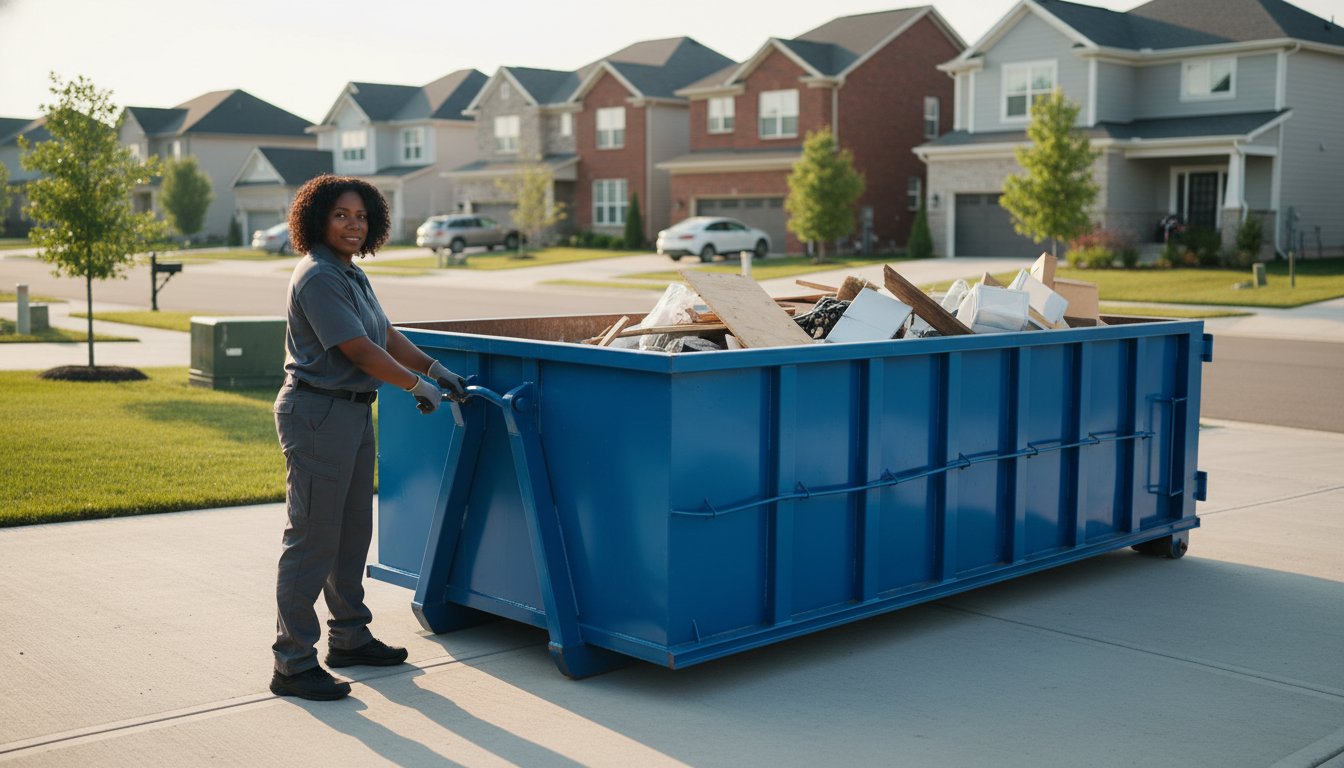
A rental dumpster should be a tool for progress, not a buffet for the local wildlife. You rented a container to clear out clutter, not to create a new neighborhood attraction for rodents and stray cats. Dealing with scattered debris or foul odors is a logistical headache that wastes time and risks fines from your HOA. Mastering the art of preventing pests and animals in a rental dumpster is about more than just luck; it's about establishing a disciplined waste workflow from day one.
You already know that an unsecured bin is an invitation for trouble. It's frustrating to start your morning by cleaning up trash that was supposed to be gone. This guide delivers the most effective, no-nonsense strategies to keep raccoons, rodents, and insects away from your site. We'll walk through exactly how to secure your 10 yard or 40 yard unit using physical barriers, scent deterrents, and smart placement. Follow these steps to maintain a professional job site and ensure your waste removal stays efficient and animal free.
Key Takeaways
- Position your bin in a well-lit, high-visibility area to discourage nocturnal animals from approaching your project site.
- Implement a strict "no food waste" policy and use puncture-resistant contractor bags to eliminate the scents that attract rodents and insects.
- Understand that preventing pests and animals in a rental dumpster requires a strategic mix of odor-neutralizing deodorizers and chemical deterrents.
- Choose the right container size to prevent overflow, as exposed debris is an immediate invitation for local wildlife to scavenge.
Why Pests Target Your Rental Dumpster
A rental dumpster is more than a waste container; it's a high-visibility beacon for local wildlife. Animals don't see a renovation project; they see an easy meal and a secure place to hide. If you aren't proactive about preventing pests and animals in a rental dumpster, you risk turning your job site into a neighborhood nuisance. Understanding why these creatures target your bin is the first step toward maintaining control and avoiding unnecessary cleanup costs.
Most infestations start with scent. Decaying food waste or even the smell of old soda cans can attract scavengers from blocks away. Raccoons are the primary culprits in most areas, using their dexterous paws to tear through standard trash bags. Rats and mice follow closely, attracted by both food and the nesting potential of discarded cardboard or insulation. Flies and other insects round out the list, drawn to moisture and organic decay to lay their eggs. Once an animal identifies your dumpster as a reliable resource, they'll return nightly until the bin is removed.
Common Wildlife Nuisances by Region
Pest behavior varies significantly depending on your location. In high-density urban environments like Queens and NYC, rats are the dominant threat. These populations are incredibly resilient and will colonize a dumpster overnight if they find a consistent food source. Conversely, suburban projects in Massachusetts and New Jersey often deal with raccoons or even bears. These larger animals can tip over smaller bins or create massive messes that require hours of manual labor to fix. Seasonal shifts also play a role. Animals forage more aggressively in the fall to prepare for winter, making your dumpster an even more attractive target during the colder months.
The Risks of an Unsecured Dumpster
Leaving your dumpster vulnerable leads to more than just a bad smell. The most immediate impact is the logistical stress of cleanup. If an animal scatters debris across your driveway, you're the one who has to pick it up. This wastes valuable labor time and slows down your project. You also face social and financial risks. Neighbors and HOAs rarely tolerate foul odors or trash-strewn streets. Complaints can lead to formal warnings or heavy fines that eat into your budget. Most importantly, scavengers pose a direct safety hazard. Many carry parasites and diseases. Adopting a strategy of integrated pest management ensures you address these threats before they escalate into a health crisis. Preventing pests and animals in a rental dumpster protects your health, your wallet, and your reputation.
Strategic Placement: Setting Up for Success
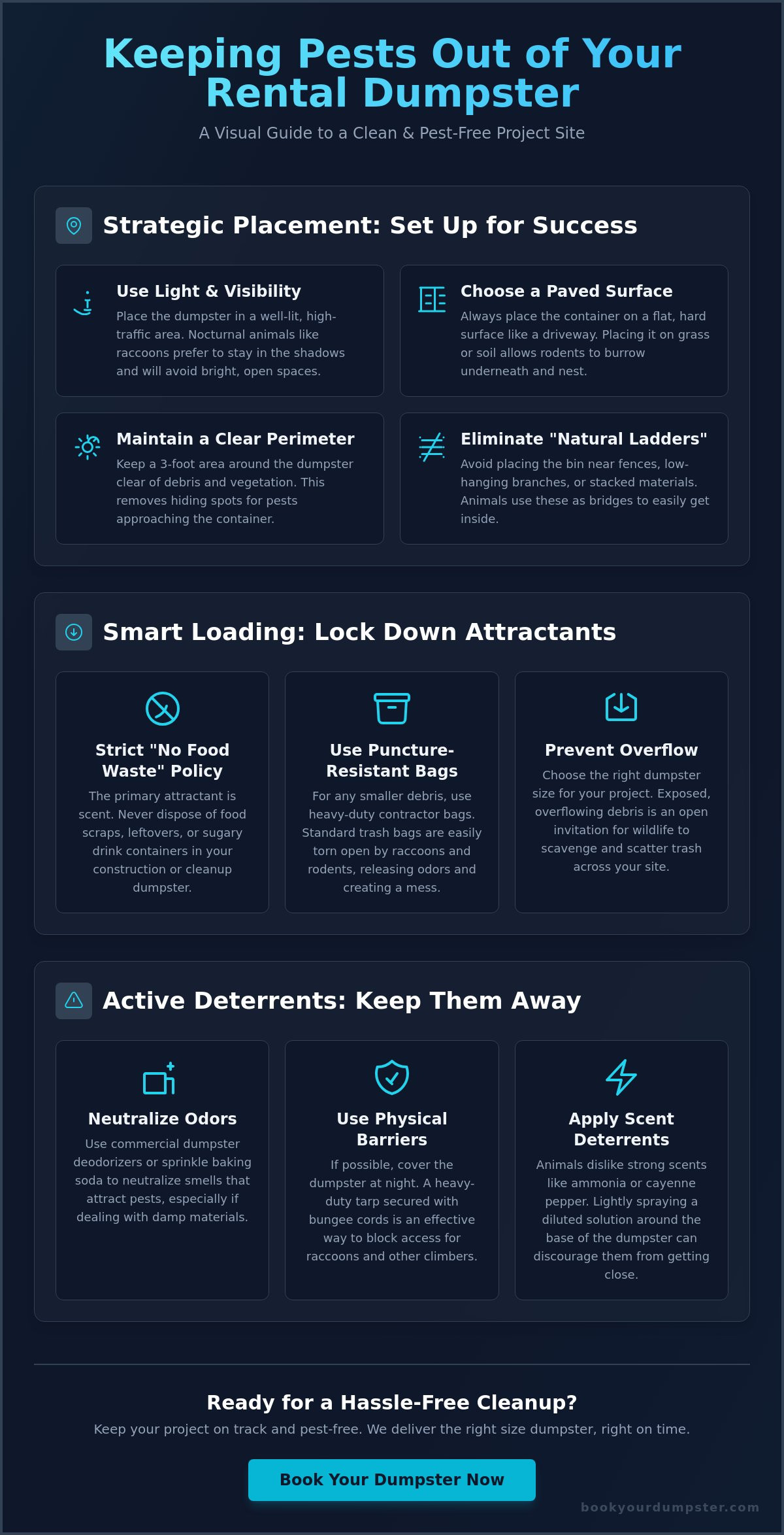
Where you drop your bin determines how much attention it gets from the local wildlife. Preventing pests and animals in a rental dumpster starts with a tactical site assessment before the truck arrives. Select a high-visibility, well-lit area for the drop-off. Nocturnal animals prefer to work in the shadows; exposure to light makes them feel vulnerable and less likely to linger. If your project site allows, maintain a 50-foot rule between the container and any residential entrances. This distance minimizes the chance of odors reaching your living space and discourages pests from wandering toward your front door.
Always utilize a flat, paved surface like a driveway or asphalt pad. Placing a unit on soft soil or grass provides an opportunity for rodents to burrow underneath, creating a protected nest right at the source of the waste. Once the bin is in place, clear a three-foot perimeter of all loose debris every evening. A clean border removes the hiding spots that smaller pests use to approach the bin undetected. If you're managing a project in dense urban areas like Queens or NYC, this clear perimeter is your first line of defense against highly resilient rat populations.
Eliminating Natural "Ladders"
Animals are opportunistic climbers. Squirrels and raccoons frequently use overhanging branches or tall fences as natural bridges to drop directly into your waste. Never place a dumpster flush against a wall; if an animal falls in, they often become trapped, leading to aggressive behavior or a decaying carcass inside your unit. Avoid stacking wood, pallets, or construction materials against the side of the container. These piles act as ramps that bypass the smooth metal walls designed to keep scavengers out. Following these Rodent Prevention Tips is especially critical when space is tight and pest pressure is high.
Lighting and Visibility
Visibility is a powerful deterrent. Install motion-activated LED lights focused on the bin to startle nocturnal scavengers as they approach. Keeping the area around your roll off dumpster rental bright effectively mimics a high-traffic zone that most wildlife will avoid. In suburban areas across Massachusetts and New Jersey, this lighting is often enough to keep larger wildlife at a distance. For commercial sites, ensure the bin isn't tucked away in a dark alleyway where activity goes unnoticed. If you're ready to start your project with a secure setup, schedule your next container with a team that prioritizes logistical efficiency.
Best Practices for Loading Your Dumpster
Effective loading is a critical step in preventing pests and animals in a rental dumpster. If you toss waste into the bin without a plan, you create air pockets and easy access points for scavengers. Establish a strict loading protocol from the first hour of your project. This discipline ensures that your waste stays contained and your job site remains professional and clean. It's much easier to load correctly the first time than to re-sort debris after a raccoon has torn through it.
Start by implementing a strict "no food waste" policy for your construction bin. While a single sandwich wrapper might seem harmless, the residual oils and scents are enough to draw rats and raccoons from a distance. If organic material must go in, use heavy-duty, puncture-resistant contractor bags. Standard kitchen bags tear easily against sharp construction debris, leaking fluids that act as a scent trail. Once bagged, place these items at the bottom and load heavy materials like lumber or drywall on top. This compression seals the bags and makes it physically impossible for animals to reach the organic waste.
Managing Construction Site Waste
On high-volume job sites, lunch scraps from crews are the primary cause of sudden infestations. Wrappers, half-eaten meals, and soda cans create a high-scent environment that negates other deterrents. Set up a separate, smaller lidded bin specifically for food-related trash and empty it into a curbside pickup container daily. Reviewing established construction debris removal guidelines helps your team distinguish between inert building materials and problematic organic waste. This separation aligns with EPA guidelines on waste management, which emphasize that keeping food away from large dumpsters is the best way to break the pest cycle.
Securing the Top of the Container
Don't leave your dumpster open overnight. Use a heavy-duty tarp secured with high-tension bungee cords to create a physical barrier. Ensure the tarp overlaps the edges of the bin by several inches to prevent small rodents from squeezing through gaps. If your project involves high-odor materials, consider renting a unit with integrated plastic or metal lids. These lids provide a superior seal compared to fabric covers. Check your covers daily for tears or loose fasteners. Even a small opening is an invitation for a determined raccoon to exploit. Consistently preventing pests and animals in a rental dumpster requires this level of daily vigilance to ensure your waste removal process stays on schedule.
Effective Deterrents and Odor Control
Scent management is the core of any active deterrent strategy. If an animal cannot smell the waste, they have no reason to investigate your bin. Neutralize odors immediately with commercial-grade deodorizers rather than simply masking them with floral sprays. Professional-grade products use enzymes to break down the organic compounds that cause foul smells. Do not waste your budget on "scare" tactics like plastic owls or rubber snakes. Animals in high-traffic urban areas like Queens or suburban neighborhoods in New Jersey are highly adaptable; they quickly realize these objects pose no real threat. Focus on chemical and scent-based barriers for preventing pests and animals in a rental dumpster.
Establish a chemical perimeter to protect your site overnight. Raccoons and rodents have incredibly sensitive respiratory systems, and certain pungent scents act as an invisible wall. Use ammonia-soaked rags as a chemical barrier for stubborn mammals. Place these rags in open containers near the base of the unit or directly on top of the bagged waste. For a less harsh alternative, apply a concentrated spray of peppermint oil or white vinegar to the exterior of the container. These natural solutions mask the smell of debris and irritate the animal's sense of smell, making your dumpster an unattractive target.
Chemical and Natural Repellents
The "Ammonia Method" is one of the most reliable ways to deter mammals, though it has little effect on insects. The sharp scent mimics the smell of predator urine, signaling a high-risk zone to scavengers. Apply these repellents right before dusk, as this is when nocturnal animals begin their foraging cycles. In residential areas, you can also use citrus peels or coffee grounds around the base of the bin to provide an additional layer of scent masking. These methods are most effective when refreshed every 48 hours or after a rainstorm.
Preventing Insect Infestations
Insects require a different tactical approach than mammals. Standing water inside the container is a primary breeding ground for mosquitoes, especially during humid months in Massachusetts. Ensure the bin is covered during rain, or use a pump to remove any accumulation immediately. To prevent fly infestations and the development of maggots, spray a diluted bleach solution along the rim and exterior walls once a week. This kills larvae on contact and removes the sticky residue that attracts swarms. Maintaining this level of cleanliness is vital for preventing pests and animals in a rental dumpster throughout the duration of your project.
Stop the cycle of site infestations by choosing a reliable partner for your waste management. Select your dumpster size and schedule delivery today to keep your project moving without the stress of local wildlife.
Maintenance and Scheduling with Book Your Dumpster USA
Maintaining a clean job site requires more than just deterrents; it requires logistical discipline. If your project involves organic materials or high-odor waste, schedule frequent pickups to ensure the bin never becomes a permanent fixture for local wildlife. Stagnant waste is the primary driver of long-term infestations. Communicate any specific pest concerns with your rental provider during the initial booking process. They can offer advice on placement or suggest specific container types with tighter seals to assist in preventing pests and animals in a rental dumpster. A proactive schedule keeps the site moving and the animals away.
Perform a final daily sweep of the area before leaving the site every evening. Scavengers are attracted to the "trail" of debris leading to the bin just as much as the bin itself. By removing small scraps from the driveway or job site perimeter, you eliminate the breadcrumbs that guide pests to the main container. This simple five-minute task significantly reduces the likelihood of a midnight visit from raccoons or rodents.
Avoiding the "Overflow" Trap
An overfilled dumpster is impossible to secure properly. When debris rises above the rim, tarps cannot provide a flush seal and integrated lids will not close. This leaves an obvious gap that even large scavengers like raccoons can exploit with ease. Selecting the correct container size for your specific volume is the most effective way to prevent this failure. For residential cleanouts or small bathroom remodels, a 10 yard dumpster rental often provides the right capacity without taking up excessive space. Always distribute weight evenly as you load. Place flat materials like plywood or drywall on top to ensure the lid sits flush against the metal frame every night.
Streamlining Your Waste Logistics
Efficiency is your best defense against persistent pest issues. Utilize the digital management tools at Book Your Dumpster USA to monitor your project timeline and request rapid swaps. Prompt removal ensures that organic materials don't sit long enough to attract breeding insect populations or aggressive mammals. Before ending your work day, verify that your setup is secure. Follow the final site checklist: Secure the lid or tarp, Clean the three-foot perimeter, and Schedule your next swap before the bin reaches 80% capacity. This high-velocity approach turns waste management into a controlled, stress-free workflow that leaves no room for pests. Preventing pests and animals in a rental dumpster is ultimately a matter of maintaining a fast-moving, clean, and well-sized operation.
Take Control of Your Waste Management Strategy
Maintaining a clean job site is a matter of logistical discipline rather than luck. It's about combining strategic placement with strict loading protocols to eliminate the factors that attract local wildlife. Ensure your waste doesn't become a neighborhood attraction. Remember that preventing pests and animals in a rental dumpster requires a multi-layered approach. Keep food waste out of the container, utilize scent-based deterrents, and never allow debris to overflow the rim. These proactive steps protect your property and keep your project moving toward completion without unnecessary delays.
Efficiency is the primary tool for any cleanup or construction project. We provide the reliable equipment and punctual service you need to maintain a secure environment. From streamlined online booking to a full range of reliable 10-40 yard sizes, our process is designed to remove logistical friction and stress. Secure your next pest-free rental at Book Your Dumpster USA and experience the reliability of a professional waste partner. Start your project today with a team that values your time and your site's integrity.
Frequently Asked Questions
Do rental dumpsters come with lids to keep animals out?
Most standard roll-off units are open-topped, but you can request containers with integrated plastic or metal lids for specific projects. If a lid isn't available, use a heavy-duty tarp secured with high-tension bungee cords. This creates a physical barrier that prevents rain accumulation and discourages local wildlife from entering the bin. Always confirm lid availability with your provider during the scheduling process to ensure your site requirements are met.
Can I put food waste in a roll-off dumpster rental?
You should avoid putting loose food waste in a roll-off unit whenever possible. Organic decay is the primary attractant for pests like rats and flies. If you must dispose of organic materials, seal them in puncture-resistant contractor bags first. This is a critical step in preventing pests and animals in a rental dumpster by containing scents that would otherwise act as a beacon for neighborhood scavengers.
What is the best way to get a raccoon out of my dumpster?
Place a long, sturdy piece of lumber or a ladder inside the bin to act as a ramp. Raccoons often get trapped because the smooth metal walls offer no grip for their claws. Once you provide an exit route, leave the area to give the animal space to climb out on its own. Never attempt to handle the animal directly, as cornered wildlife can become aggressive or carry parasites.
Will insurance cover damage caused by animals to the rental unit?
Standard insurance policies typically don't cover damage to rental equipment caused by wildlife. You are generally responsible for the condition of the unit while it stays on your property. This includes damage from animals chewing on seals or bears denting the metal walls. Review your rental agreement for specific liability clauses. Taking proactive steps to secure the bin is the best way to avoid these unnecessary repair costs.
How often should I have my dumpster emptied to prevent pests?
Schedule a pickup or swap at least once a week if your project includes high-odor materials. For standard construction debris, you can wait longer, but never allow the bin to sit at full capacity for extended periods. Prompt removal breaks the foraging cycle of local animals. If you notice increased pest activity, call for a haul-away immediately to reset the cleanliness of your job site before the problem escalates.
Does ammonia actually work to keep rats away from trash?
Ammonia is highly effective at deterring rats and other mammals because the scent mimics predator urine. Soak several rags in ammonia and place them around the base of the bin or on top of the waste bags. The sharp odor irritates their respiratory systems and signals a dangerous area. Refresh these rags every few days or after heavy rain to maintain a consistent chemical barrier against persistent scavengers.
Are there specific dumpster sizes that are more pest-resistant?
Smaller containers like a 10 yard or 20 yard dumpster are often easier to manage and secure. Their lower profiles allow you to tarp them more effectively than larger 40 yard units. While the size itself doesn't stop pests, a smaller bin encourages more frequent swaps. This higher turnover is a major advantage in preventing pests and animals in a rental dumpster because it limits the time waste spends on your site.
What should I do if I find a stray cat or dog in the dumpster?
Contact your local animal control or a non-emergency police line immediately. Do not attempt to pull the animal out yourself, as they may be scared, aggressive, or injured. Similar to the raccoon method, you can provide a temporary ramp if the animal is physically able to climb. Keep your own pets and children away from the area until professional help arrives to handle the situation safely.