
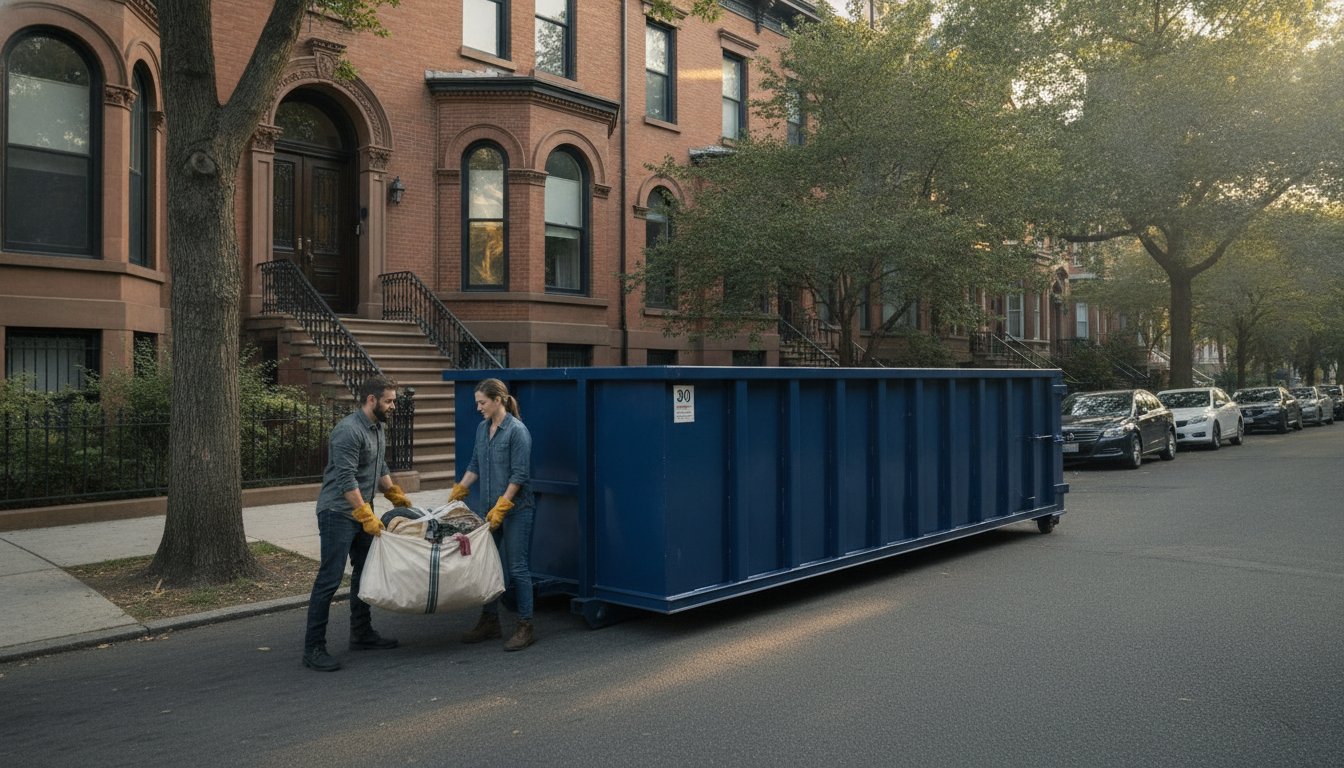
Did you know that hoarding disorder affects an estimated 2% to 6% of the U.S. population? When you are tasked with clearing a property, the sheer scale of the debris often exceeds every initial estimate. Renting a dumpster for a hoarding situation is the most effective way to manage this volume, but success requires more than just picking a size. You need a strategy that accounts for the density of the waste and the speed of the cleanup. Don't let the logistical weight of the project stall your progress before you even begin.
You likely feel overwhelmed by the prospect of hidden costs or complex city permit requirements. It's a valid concern, especially when projects involve long-term placement on public streets in busy areas. This guide provides a clear plan to help you select the right container on your first try and navigate the specific regulations found in NY, NJ, and IL. You will learn how to manage logistical hurdles, avoid expensive overage fees, and identify prohibited materials with professional precision. Follow these steps to transform a chaotic environment into a cleared, safe space.
Key Takeaways
- Translate the Clutter Image Rating (CIR) scale into actual waste volume to ensure you don't underestimate the sheer amount of debris.
- Navigate the complexities of renting a dumpster for a hoarding situation by selecting the optimal 10, 20, 30, or 40-yard container for your project.
- Learn the specific permit regulations for New York, New Jersey, and Illinois to manage street placement without incurring municipal penalties.
- Maximize your container’s capacity using the "Tetris" loading method and a structured staging area workflow to avoid wasted space.
- Protect your driveway from the structural stress of large-scale waste and maintain budget control with transparent, upfront pricing strategies.
Assessing the Scope: Why a Dumpster is Essential for Hoarding Remediation
Clearing a property affected by hoarding is a logistical challenge that standard trash pickup cannot handle. The volume of material often exceeds what a typical homeowner expects. Renting a dumpster for a hoarding situation serves as a psychological anchor for the entire project. It marks a clear commitment to progress. When that steel container arrives, the cleanup moves from a theoretical plan to a physical reality. It provides a centralized, high-capacity disposal point that keeps the site organized and the team focused.
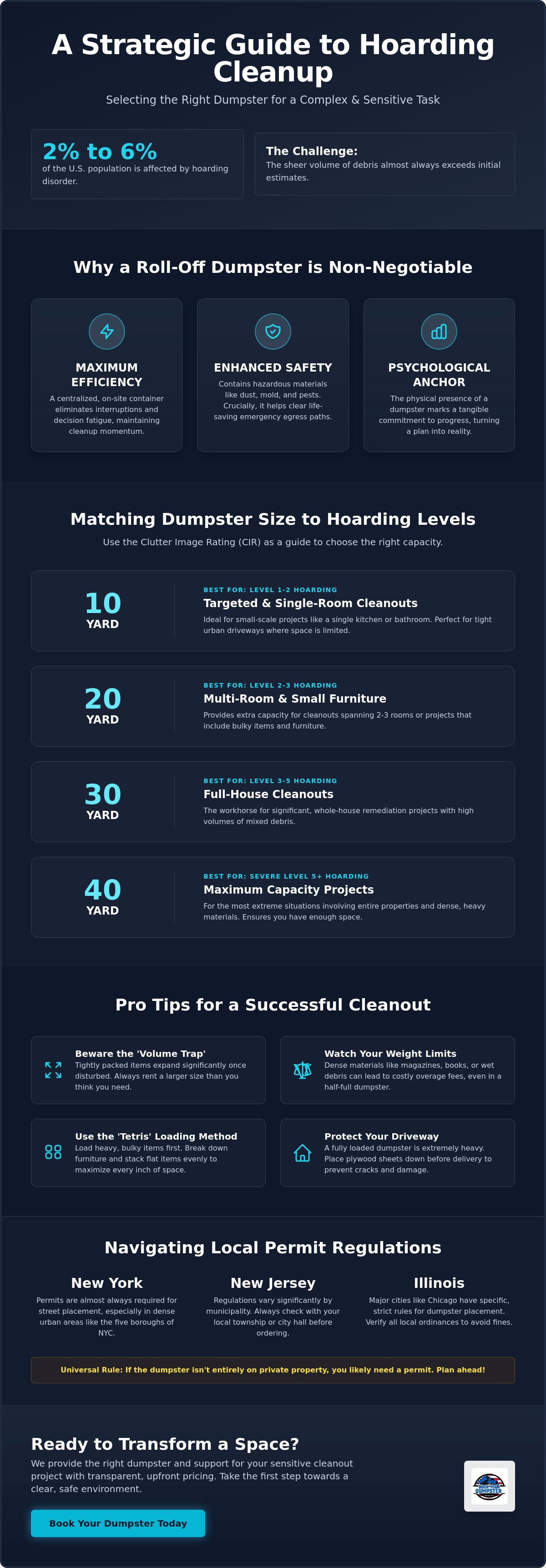
To quantify the task, professionals use the Clutter Image Rating (CIR) scale. This visual tool ranks rooms from Level 1 (minimal clutter) to Level 9 (severe hoarding). Understanding where a property falls on this scale is vital for planning. For example, a Level 5 kitchen often requires significantly more capacity than a Level 2 living room. High CIR scores mean you aren't just moving boxes; you are managing tons of compressed material that expands once it's disturbed. Relying on a roll-off dumpster ensures you have the volume to handle this expansion without stopping the workflow. This is especially important when managing the complexities of hoarding disorder, where the physical mass of items can be overwhelming.
The Logistics of "Massive Volume" Waste Management
Standard municipal trash services are designed for weekly household waste, not the thousands of pounds generated during a remediation. You need a 24/7 disposal point on-site to maintain momentum. Without it, you face decision fatigue. When every item requires a separate trip to a local facility, the project stalls. A large dumpster rental eliminates these interruptions. It allows you to move directly from sorting to disposal, ensuring that once an item is designated as waste, it leaves the house for good. Use our online booking system to secure the capacity you need before the first box is moved.
Safety and Health Considerations During Cleanouts
Safety is the primary driver for immediate debris removal. Hoarded environments often harbor dust, mold, and pests that pose serious health risks. Piling these materials on a curb or in a driveway creates new hazards and attracts vermin. A roll-off container keeps waste contained and off the ground. It also plays a critical role in clearing egress paths. In an emergency, clear hallways and doorways are life-saving. Using a dumpster allows you to prioritize these high-traffic areas first, making the rest of the project safer for everyone involved.
Choosing the Right Dumpster Size for Different Levels of Hoarding
Choosing the wrong container size leads to project delays and extra costs. Renting a dumpster for a hoarding situation requires you to account for the compressed volume trap. Items that have been packed tightly for years will expand significantly once you move them. A stack of newspapers that looks small on a shelf takes up much more space when tossed loosely into a bin. Always estimate for more volume than you think you see. Because hoarding environments create serious health and safety risks, removing debris quickly and completely is non-negotiable.
Weight limits are another critical factor. Heavy materials like old magazines, newspapers, or debris saturated with moisture are exceptionally dense. These materials can quickly push you over weight limits even if the dumpster isn't physically full. Landfills charge by the ton, so exceeding these limits results in overage fees. Use a room-count rule of thumb to guide your selection. A single room of high-density hoarding often requires a 10-yard bin. A full house usually demands a 30 or 40-yard container. View our available dumpster sizes to find the best fit for your specific project.
10 And 20-Yard Dumpsters: For Targeted Room or Level 1-2 Cleanouts
Use these smaller containers for dry hoards or single-room interventions. They are ideal for tight urban driveways in areas like Queens or Boston where space is at a premium. A 10-yard dumpster rental is the perfect starting point for small-scale sorting or clearing out a kitchen or bathroom. If you are managing a Level 2 situation across two or three rooms, step up to the 20-yard option. It provides the extra capacity needed for furniture and larger household items without occupying too much street space.
30 And 40-Yard Dumpsters: Managing Full-House Level 3-5 Situations
These larger bins are the industry standard for whole-home remediation. A 30-yard dumpster handles approximately 4 to 6 rooms of moderate clutter. For Level 4 or 5 situations, where debris reaches the ceiling or blocks entire rooms, the 40-yard bin is the only logical choice. It is often more cost-effective to rent one 40-yard bin than two 20-yard bins. You save on delivery fees and avoid the logistical headache of multiple swaps. Before ordering, verify you have a 22-foot long footprint available on a residential street or a wide driveway to accommodate these massive containers.
Logistical Planning: Permits, Placement, and Local Regulations
Logistical planning prevents expensive municipal fines and project delays. Renting a dumpster for a hoarding situation in a residential neighborhood requires more than just a delivery date. You must coordinate with local authorities, neighbors, and homeowners associations (HOAs). Most hoarding cleanups aren't one-day events. They require a 7-10 day rental window to allow for thorough sorting and safe disposal. This timeframe gives you the necessary buffer to handle the emotional and physical intensity of the work without rushing the process.
Communicate with your neighbors before the container arrives. A 30-yard or 40-yard dumpster is a significant presence on a suburban street or in a shared driveway. Explaining that the project is a temporary, professional remediation helps mitigate complaints. If you're working within an HOA, review their bylaws regarding temporary structures or commercial vehicles. Many associations limit dumpster placement to 72 hours without prior approval. Securing this permission early ensures your workflow remains uninterrupted.
City-Specific Challenges (NY, NJ, IL, MA)
High-density urban areas present unique hurdles for dumpster placement. In Chicago and Boston, you typically need a "Right of Way" permit if the container occupies a public street, sidewalk, or alley. New Jersey municipalities often require specific local permits even for driveway placements if the bin is visible from the road. Renting a dumpster for a hoarding situation in cities with narrow streets makes timing critical. For those managing a dumpster rental in New York, you must ensure the delivery truck has enough clearance to maneuver without blocking emergency access or public transit routes. In cities like San Francisco, verify that your drop-off zone doesn't violate street cleaning schedules to avoid immediate towing.
Site Preparation and Driveway Safety
Protect your property from the structural stress of a heavy container. A fully loaded 40-yard dumpster can weigh several tons, which is enough to crack aged asphalt or thin concrete. Use plywood "sleepers" or 2x4 boards under the dumpster's rollers to distribute the weight evenly. This simple step prevents permanent damage to your driveway. Before delivery, check for 22 feet of vertical clearance. Low-hanging power lines, tree branches, or garage overhangs can prevent the roll-off hoist from operating safely.
Maintain a five-foot "loading zone" around the back door of the dumpster. This clear space allows you to walk items directly into the bin rather than lifting them over the high side walls, reducing the risk of physical strain. Managing these logistics allows you to act as a reliable partner in sensitive cleanouts, focusing on the person and the process rather than the paperwork. Proper planning turns a messy situation into a controlled, professional operation.
The Step-by-Step Cleanup Process: Sorting, Safety, and Loading
Execution is where most hoarding cleanups fail. You need a system. Renting a dumpster for a hoarding situation is only half the battle; how you fill it determines your efficiency. Establish two distinct zones before you move the first item. Your Staging Area is for rapid-fire sorting. Your Disposal Area is the space immediately surrounding the dumpster. This separation prevents you from accidentally tossing valuables or re-contaminating cleared rooms. It also keeps the path to the container clear of obstructions.
Use the "Tetris" method to maximize every cubic yard. Open the rear swing door of the roll-off container instead of throwing items over the side. This allows you to walk heavy furniture, appliances, and dense crates directly to the front of the bin. Pack these large items tightly together to eliminate air pockets. Once the floor is covered, fill the gaps with loose debris and smaller bags. This strategy ensures you use the full 10, 20, 30, or 40-yard capacity you paid for. If you encounter dense materials like stacks of magazines, spread them across the floor of the bin to keep the weight distributed evenly.
Sorting Strategy: Keep, Donate, Trash
Decision fatigue is a major obstacle during remediation. Implement a three-pile system: Keep, Donate, and Trash. If an item doesn't fit a category within five seconds, move it to the trash. Wear essential safety gear at all times. This includes heavy-duty work gloves, N95 masks to protect against dust and mold, and puncture-resistant boots. Be alert for hidden hazards. Old cleaning chemicals, pesticides, and pest-damaged materials require careful handling. Never toss prohibited items like tires, wet paint, or electronics into the dumpster. These materials require separate hazardous waste disposal to avoid landfill fines.
Maximizing Dumpster Space
Break down every cardboard box and disassemble large furniture items before loading. Flat items take up less vertical space. Always level your load as you go. Creating a "mountain" in the middle of the dumpster is an OSHA violation and makes the container unsafe for transport. The debris must be flush with the top of the bin. If you reach the fill line before the house is clear, call for a "switch-out." We'll pick up your full bin and drop a fresh one immediately to keep your team moving. Schedule your next dumpster swap online to maintain your cleanup momentum and keep the project on track.
Why Book Your Dumpster USA is Your Partner in Sensitive Cleanouts
Managing the logistics of a cleanup shouldn't add to the emotional weight of the project. Renting a dumpster for a hoarding situation requires a provider that understands the urgency and sensitivity of the task. We offer a streamlined online booking system designed for immediate logistical relief. You can select your container, schedule a delivery, and manage your account without a single phone call. This digital-first approach respects your time. It allows you to focus on the person and the process rather than the paperwork.
Our team provides professional support to ensure you choose the correct size for complex residential projects. As previously discussed, underestimating volume is the most common mistake in hoarding remediation. We help you avoid that trap. We maintain a fleet of 10, 20, 30, and 40-yard dumpsters ready for deployment across New York, New Jersey, Illinois, and Massachusetts. Whether you are clearing a single room or a multi-story home, we provide the specific tools needed to finish the job. We recognize that every hoarding situation is unique. Our logistical experts are available to clarify weight limits for dense materials like paper or saturated debris, preventing the overage fees that often plague large-scale cleanouts.
The Advantage of Local Expertise
Our deep understanding of regional regulations ensures your project stays compliant. We navigate the narrow streets of New York and the permit requirements of Chicago so you don't have to. You get direct access to dumpster rental prices with no hidden fees or surprise surcharges. Transparency is our verbal handshake. We promise punctuality in even the most high-density urban zones, ensuring your container arrives when you are ready to start work. We act as a dependable partner who understands that in a hoarding cleanup, every hour of progress matters. Our drivers are trained to place containers with precision, respecting property boundaries and neighborhood safety.
Ready to Start? Book Your Solution Today
Take the first step toward a cleared, safe environment. Use our online system to secure a 20 or 30-yard bin for your project. These sizes are the most common choices for renting a dumpster for a hoarding situation because they balance capacity with street-side maneuverability. Once you finish loading, our "no-fuss" pickup process ensures the waste disappears quickly. We handle the transport and disposal according to all local environmental standards. Move from a state of clutter to a state of resolution today. Book Your Dumpster Now and regain control of your space.
Take Control of Your Cleanup Project
Managing the massive volume of a hoarding remediation requires a structured approach and the right equipment. You've learned that success depends on accurate sizing, careful permit planning, and a disciplined sorting strategy. By matching your container size to the Clutter Image Rating and following a professional loading method, you can clear even the most challenging environments safely. Renting a dumpster for a hoarding situation is the most effective way to remove logistical stress and maintain momentum from start to finish.
Book Your Dumpster USA provides the reliable support you need for sensitive residential projects. We offer 10 to 40-yard sizes with transparent, all-in pricing to keep your budget on track. Whether you're working in NY, NJ, IL, MA, or SF, our team handles the complex delivery logistics so you don't have to. You can Rent your cleanup dumpster in minutes through our streamlined online platform. Don't let the scale of the task hold you back. Start your journey toward a clean, safe, and organized home today.
Frequently Asked Questions
What size dumpster is best for a 3-bedroom hoarder house?
A 30-yard or 40-yard dumpster is typically required for a 3-bedroom house with moderate to heavy hoarding. If the clutter reaches the ceiling or blocks multiple rooms, you should plan for at least one 40-yard bin or a switch-out service. Compressed items expand significantly once moved, so always choose a larger size than your initial visual estimate suggests. This ensures you manage the logistics of renting a dumpster for a hoarding situation without unexpected project delays.
Can I put old appliances and electronics in the dumpster during a cleanout?
You cannot place standard household appliances or electronics in a roll-off dumpster without prior approval. Items containing refrigerants, such as refrigerators or AC units, are strictly prohibited due to federal environmental regulations. Electronics require specialized recycling and cannot go to a standard landfill. Check your local municipal guidelines for separate e-waste and appliance pickup services to handle these specific items safely and legally.
How long can I keep the dumpster on my property for a hoarding project?
Most hoarding projects require a 7 to 10-day rental period to allow for thorough sorting and safe loading. Renting a dumpster for a hoarding situation often takes longer than a standard renovation because of the emotional and physical intensity involved. If the cleanup requires more time, you can usually extend your rental for a daily fee. Always confirm the duration of your rental window during the booking process to avoid scheduling conflicts.
Will the dumpster company help me sort through the hoarded items?
No, we do not provide labor for sorting, packing, or carrying items. Our service is strictly limited to the delivery, placement, and pickup of the dumpster container. For assistance with the physical or psychological aspects of sorting, we recommend hiring specialized hoarding cleanup professionals or professional organizers. Our role is to provide the high-capacity disposal tool you need to execute your cleanup plan efficiently.
What happens if the dumpster goes over the weight limit?
Landfills charge by the ton, so exceeding the weight limit of your dumpster results in overage fees. These fees are added to your final bill based on the exact weight recorded at the disposal facility. Avoid loading heavy materials like saturated debris, large stacks of paper, or magazines to stay within your ton allowance. If you anticipate a very heavy load, discuss weight-limit options with us before your delivery arrives.
Do I need a permit to put a dumpster on the street in New Jersey or New York?
Yes, you generally need a "Right of Way" or street permit if the dumpster is placed on public property in New Jersey or New York. Requirements vary by municipality, and permit fees can range from $10 to $100 depending on the location. If you place the container on your private driveway, a permit is typically not required. Always check with your local building department before scheduling delivery to avoid municipal fines.
What items are strictly prohibited in a residential dumpster rental?
Strictly prohibited items include hazardous waste, wet paint, solvents, pesticides, asbestos, batteries, and tires. These materials pose serious environmental risks and are not accepted at standard landfills. Placing these items in your bin will lead to significant fines or the refusal of pickup until the materials are removed. If you find chemicals or hazardous materials in a hoard, contact your local household hazardous waste facility for disposal instructions.
How do I prevent neighbors from throwing their trash in my rental bin?
Cover your dumpster with a heavy-duty tarp and secure it with bungee cords when you aren't actively loading it. This visual barrier discourages neighbors from using your bin for their own household waste. If the project is in a high-traffic urban area, consider renting a dumpster with lockable lids to prevent unauthorized access. This simple step helps you stay under your weight limit and ensures you have space for your own debris.


