

Most homeowners spend more on gas and wasted hours making repeated trips to the local landfill than they would on a single professional container. It's a common mistake that turns a weekend project into a month-long headache. You're likely dealing with a mountain of debris from a renovation or a long-overdue basement clear-out. Securing a residential dumpster rental for bulk waste shouldn't feel like a second job. You want the junk gone, the driveway clear, and a price that doesn't change when the invoice arrives.
This 2026 guide simplifies the logistics so you can focus on the work itself. You'll learn how to select the right container size to avoid overpaying for air or underestimating your load. We'll walk you through the specifics of local permitting and how to protect your property from heavy equipment damage. This overview provides the exact steps needed to secure a flat-rate roll-off that arrives on time and disappears the moment you're finished.
Key Takeaways
- Identify which large household items qualify as bulk waste to determine if a professional roll-off container is necessary for your project.
- Select the 10-yard dumpster for most residential projects to save driveway space while handling significant debris from garage or basement cleanouts.
- Learn why a residential dumpster rental for bulk waste offers better cost-per-cubic-yard value and more flexibility than standard junk removal services.
- Execute a simple property check by measuring your designated drop zone and clearing any overhead obstructions before your scheduled delivery.
- Streamline your project by using an online booking system that offers flat-rate pricing and reliable service across New York, Illinois, and Massachusetts.
What Is Residential Bulk Waste and Why Do You Need a Dumpster?
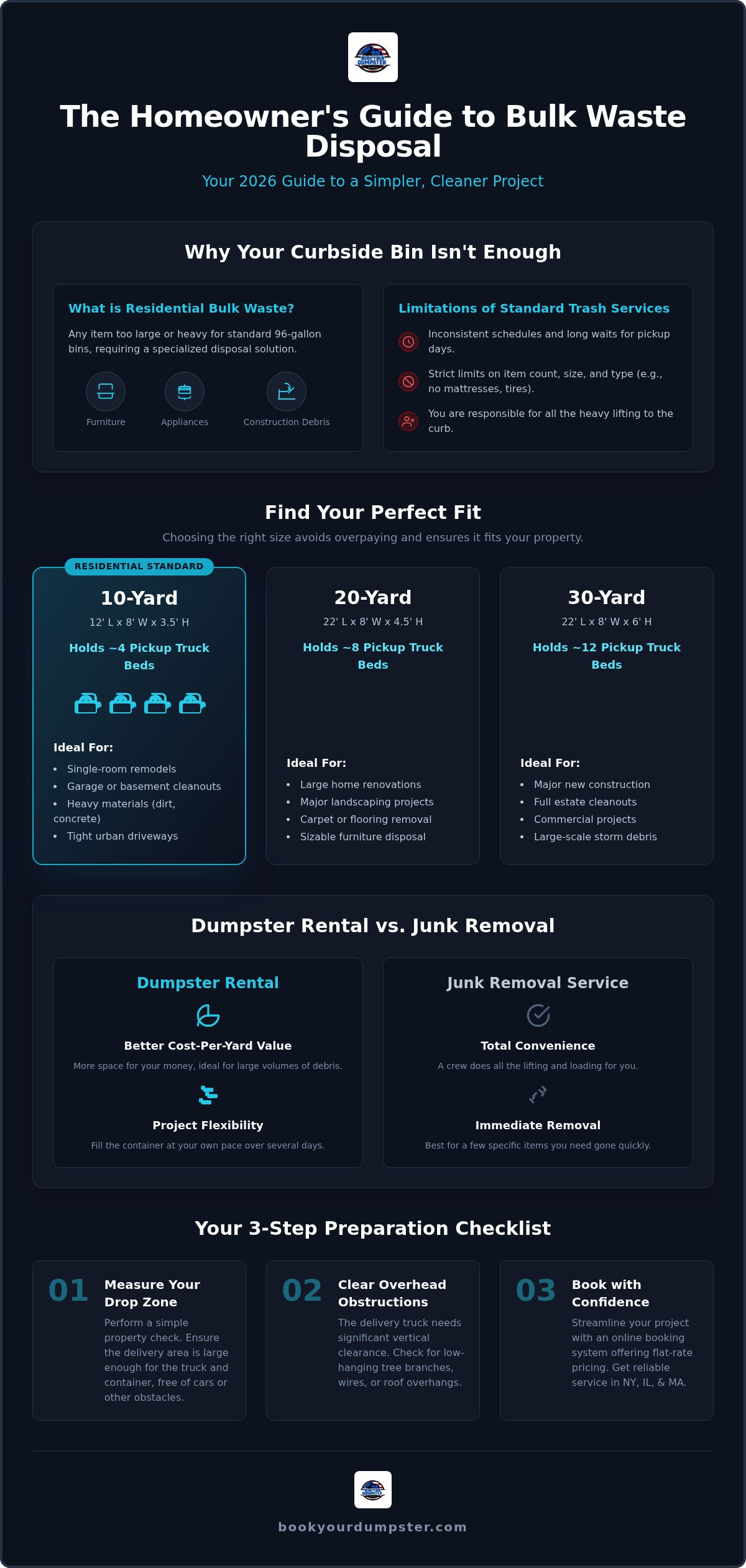
Bulk waste is any household item or debris too large or heavy for your standard 96-gallon curbside bin. This category includes bulky furniture, appliances, flooring materials, and construction debris from DIY renovations. While these items are common during cleanouts, they present a major logistical challenge for standard disposal methods. You can't simply leave a sectional sofa or a pile of old laminate flooring by the curb and expect it to disappear with the morning trash.
A residential dumpster rental for bulk waste provides a high-capacity solution that stays on your property until the job is finished. Using a What is a roll-off dumpster? allows you to consolidate everything into one container. This approach removes the stress of coordinating multiple pickups or making hazardous trips to the local dump in a personal vehicle. It's the most efficient way to maintain a safe and organized workspace during a major project.
Common Scenarios for Bulk Waste Dumpster Rentals
Projects that exceed the capacity of a standard trash can require a more robust strategy. Estate cleanouts often involve sorting through years of furniture and household goods that need to be removed quickly to prepare a home for sale. Home renovations produce heavy, sharp, or awkward materials like drywall, lumber, and cabinetry that can't sit on a curb safely. After severe weather, homeowners often find themselves with piles of storm-damaged yard waste and building materials that demand immediate disposal to restore property safety.
The Limitations of Standard Trash Services
Municipal waste programs are rarely designed for large-scale projects. Most city services restrict bulk pickups to a specific day of the month and limit the number of items you can set out. This often leads to debris sitting on your lawn for weeks, creating an eyesore and potential fine from your HOA. Managing a large-scale cleanout through these services is a logistical nightmare that rarely aligns with your project timeline.
- Strict limits: Most cities only allow one or two large items per week.
- Prohibited materials: Standard services often refuse mattresses, tires, or heavy renovation debris.
- Physical strain: You're responsible for dragging heavy appliances and furniture to the curb.
- Inconsistent schedules: Pickup delays can leave your property cluttered for extended periods.
Avoid the frustration of local service gaps. By securing a dedicated container, you take control of the timeline. You won't have to worry about whether the truck will show up or if your items meet their specific size requirements. It's about efficiency and getting the job done without unnecessary delays.
Choosing the Right Size: Why the 10-Yard Dumpster Is the Residential Standard
Sizing isn't just about volume; it's about the physical space on your property. A cubic yard measures three feet by three feet by three feet. To visualize this, a standard 10-yard dumpster holds roughly the same amount of debris as four full pickup truck beds. This makes it the most efficient residential dumpster rental for bulk waste when you don't want to lose your entire driveway to a massive steel container. It provides enough capacity for significant debris without becoming a permanent fixture in your neighborhood.
While 20 and 30-yard bins provide more room, they require significantly more clearance for the delivery truck to operate safely. A 10-yard container typically measures 12 feet long, which comfortably fits into most residential driveways without blocking sidewalk access. Weight remains the most critical factor for bulk disposal. Dense materials like concrete, brick, or wet soil are incredibly heavy. If you're clearing out a basement floor or a small patio, you must use a smaller bin to stay within legal transport weight limits. Overloading a large bin with heavy materials results in expensive fees and potentially dangerous transit.
- 10-Yard: 12ft L x 8ft W x 3.5ft H. Best for concrete, dirt, and single-room junk.
- 20-Yard: 22ft L x 8ft W x 4.5ft H. Standard for large renovations and carpet removal.
- 30-Yard: 22ft L x 8ft W x 6ft H. Required for major construction or estate cleanouts.
When to Choose a 10-Yard Container
Small-scale projects need precision. This size is the standard for single-room remodels, such as a small kitchen tear-out or a bathroom update. In high-density urban areas like Queens or Boston, space is a luxury. A 10-yard container fits into tight spots where larger trucks simply cannot maneuver. It's the perfect balance for removing a single large appliance and the surrounding clutter without overpaying for unused space. You can review specific Broward County bulk waste guidelines to see how common household items fit into these volume estimates before you book.
Scaling Up: 20 and 30-Yard Options
Some projects outgrow the 10-yard standard quickly. Opt for a 20-yard dumpster if you're replacing carpet in every room or removing a large wooden deck. These containers offer double the capacity but still maintain a relatively slim profile. For major construction additions or clearing out multi-room hoarding situations, a 30-yard option becomes the minimum requirement. These larger units are roughly 22 feet long, so ensure your drop zone is clear of all vehicles and debris. For a deeper dive into residential specs and loading tips, check out our 10 Yard Dumpster Rental Guide. If you're ready to reclaim your space, you can check availability online to find the right fit for your specific project needs.
Dumpster Rental vs. Junk Removal: Which Is Best for Bulk Waste?
When you're facing a massive volume of debris, you have two primary options: hire a crew to haul it away or rent a container to load yourself. For a residential dumpster rental for bulk waste, the decision usually rests on your timeline and budget. Junk removal is a sprint. It's designed for people who want items gone in a two-hour window and are willing to pay a premium for labor. Roll-off rentals are the marathon solution. They provide a staging area on your property, allowing you to work through a project methodically without the pressure of a ticking clock or a crew standing in your driveway.
Privacy is another factor homeowners often overlook. Sorting through years of accumulated belongings or an estate after a family transition is personal work. Hiring a junk removal service means strangers will be handling your items and seeing what you choose to discard. Renting a container keeps the process private. You decide what goes in and when it goes in. This control ensures that nothing sentimental is accidentally tossed in the rush of a scheduled pickup window. If you're physically able to lift the items, the dumpster is the superior tool for maintaining order and privacy during a cleanout.
The Cost Factor: Flat-Rate vs. Per-Item Pricing
Junk removal services typically charge by the fraction of the truck. You might get a quote for a "quarter truck" or "half truck," but these estimates are often subjective and change once the crew sees the actual pile. This leads to pricing uncertainty that can blow a project budget. A roll-off rental operates on a flat-rate model. You pay for the container size you select, which covers delivery, a set rental period, and a specific weight limit. This predictability is vital for homeowners managing a strict renovation budget. For a clear breakdown of what to expect, review our guide on Dumpster Rental Prices to see how these costs compare across different regions.
Control and Efficiency for Homeowners
Efficiency in a home project isn't just about speed; it's about flow. A dumpster rental typically stays on-site for seven days, giving you the flexibility to clean as you go. As you tear out old flooring or clear a garage, the debris goes straight into the bin. This keeps your workspace clear and safe. In contrast, junk removal requires you to pile everything in one spot first, essentially handling the waste twice. There is also a significant psychological benefit to seeing clutter leave the house the moment you decide it's trash. Consult our Debris Removal Resource Guide to learn how to stage your project for maximum efficiency and make the most of your residential dumpster rental for bulk waste.
Junk removal only makes sense if you are physically unable to perform the labor or if you have a single, extremely heavy item like a piano that requires specialized equipment. For everything else, the cost-per-cubic-yard advantage of a dumpster rental is the most pragmatic choice.
How to Prepare Your Property for a Residential Dumpster
Preparation is the most critical part of the rental process. A professional driver needs specific clearance to drop a heavy steel container without damaging your property or city infrastructure. Start by measuring your designated drop zone. A standard container requires a clear path of at least 10 feet in width and 20 to 22 feet in length. Ensure your residential dumpster rental for bulk waste is placed on a flat, stable surface like a concrete driveway or a paved parking pad. Avoid soft soil or grassy areas, as the weight of the truck and the loaded bin will cause the tires to sink and potentially damage your landscape.
Check for overhead obstructions before the truck arrives. Power lines, low-hanging tree branches, and roof eaves can prevent the lift mechanism from operating. You need at least 15 to 20 feet of vertical clearance for the truck to tilt the container into place. Protect your driveway surface by laying down two sheets of 4x8 plywood where the dumpster's wheels will rest. This simple step prevents the heavy steel rollers from scratching or cracking your asphalt under the weight of the bulk debris. Clear all vehicles from the driveway and the street directly across from your house to give the driver enough room to maneuver.
Navigating Local Permits in NY, NJ, and MA
If your driveway is too short or steep, you may need to place the container on the street. Major cities like Chicago and Boston require a Right-of-Way permit for any obstruction on public property. In Queens, placing a dumpster on a sidewalk or public street requires specific DOT permits that must be secured in advance of the delivery date. Always verify your local HOA regulations before the truck arrives. Some neighborhoods restrict dumpster placement to 48 hours or require specific screening. Failure to follow these rules often results in immediate fines or a refused delivery from the hauler.
Safe Loading Techniques for Bulk Items
Maximize your yardage by breaking down large furniture. Remove legs from tables and disassemble bed frames to eliminate dead air in the container. Place your heaviest bulk items, such as appliances or flooring bundles, at the bottom. Distribute the weight evenly from side to side to keep the container stable during transport. Never load items above the top rail. Overfilling is defined as any debris extending past the top edge of the dumpster, which creates a safety hazard for the driver and other motorists. Drivers are legally required to refuse pickup of an overfilled bin until you remove the excess material.
Proper site preparation ensures your project stays on schedule and your property remains intact. If you have questions about specific clearances for your driveway, book your roll-off online and use our digital tools to confirm your site requirements.
Booking Your Bulk Waste Dumpster with Book Your Dumpster USA
Booking a dumpster shouldn't be the hardest part of your renovation. At Book Your Dumpster USA, we've replaced the traditional, opaque rental process with a streamlined digital platform. You don't have to wait for a callback or haggle over regional surcharges. Visit bookyourdumpster.com to see real-time availability and flat-rate pricing for your specific zip code. Our system is built for homeowners who value their time and need a reliable partner to handle the heavy lifting.
Transparency is our standard. The price you see during checkout is the price you pay. It covers the delivery, the rental period, and the disposal up to the specified weight limit. We understand that residential projects operate on tight schedules. Our drivers prioritize punctuality, ensuring your container arrives exactly when you've planned to start your work. We provide a professional delivery experience that respects your property and your neighborhood's rules. Choosing a residential dumpster rental for bulk waste is the final step in reclaiming your home.
Our Residential Service Area
We maintain a deep inventory of containers across the tri-state area and major Illinois hubs. Whether you're managing a high-density project in Queens or a suburban basement clear-out in Chicago, our local expertise ensures we understand your specific municipal requirements. We handle everything from small DIY home cleanouts using our 10-yard bins to large-scale construction projects requiring 40-yard containers. Our fleet is equipped to navigate tight residential streets and deliver the exact tool you need for the job. For a complete breakdown of how these containers function in different environments, read our Roll Off Dumpster Rental Guide.
Ready to Clear the Clutter?
Securing a residential dumpster rental for bulk waste takes less than five minutes through our online portal. The process is simple. Select your container size. Choose your delivery date. Provide your location. There are no hidden surprises or complex contracts. If you're tackling a standard garage or attic project, we recommend starting with our popular 10-yard dumpster. It offers the perfect balance of capacity and footprint for most residential driveways.
Stop letting bulk waste dictate the state of your home. Take control of your space and your schedule today. Visit our booking page, secure your roll-off, and resolve your waste problems permanently. Your clear driveway is just a few clicks away.
Secure Your Driveway and Start Your Project
Managing a major household cleanout doesn't have to be a logistical burden. By choosing a 10-yard container, you maximize your driveway space while handling the volume of four pickup truck beds. Remember to protect your property by laying down plywood and verifying your local permit requirements if you're placing the bin on a public street. These simple preparation steps ensure a seamless experience from delivery to final haul-away.
A residential dumpster rental for bulk waste provides the most cost-effective and flexible way to clear your home at your own pace. We serve New York, New Jersey, Illinois, and Massachusetts with a full inventory of 10 to 40-yard containers. Our direct online booking system removes the guesswork, giving you an immediate flat-rate price and a guaranteed delivery slot. Stop letting clutter stall your progress and take control of your renovation today.
Order Your Residential Dumpster Online Today and experience a faster, more efficient way to clean. You're ready to reclaim your space and we're ready to help you do it.
Frequently Asked Questions
How much does it cost to rent a residential dumpster for bulk waste?
Pricing depends on your specific location, the container size, and the duration of your project. Each rental includes a flat-rate fee that covers delivery, pickup, and a set weight limit. You avoid the hidden surcharges common in the waste industry by using an online booking system that provides immediate quotes. Check your local rates by entering your zip code into our scheduling tool to confirm your exact project costs.
Can I put a mattress or old couch in my rented dumpster?
You can typically load couches and upholstered furniture, but mattresses often require special handling or an additional disposal fee. Many municipalities in New York and Massachusetts have strict recycling mandates that prohibit mattresses from entering landfills. Always verify the specific rules for your city before loading these items. Standard bulk waste like old furniture and general household debris is always acceptable in our roll-off containers.
Do I need a permit for a dumpster in my driveway in New Jersey?
You don't need a permit if the container stays entirely on your private driveway. Permits are only mandatory when the dumpster occupies a public right-of-way, such as a street, sidewalk, or alley. If you must place the unit on the street in New Jersey, contact your local municipal office to secure a temporary permit before the delivery date. This prevents fines and ensures the truck can legally drop the bin.
What is the smallest dumpster size available for residential use?
The 10-yard dumpster is our smallest available option and the industry standard for residential use. It measures approximately 12 feet long and fits comfortably in a single car parking space. This size is ideal for small bathroom remodels, garage clear-outs, or getting rid of heavy debris like dirt and concrete. It provides a compact footprint that minimizes the impact on your property while still holding significant volume.
How long can I keep the dumpster on my property for a cleanout?
Most homeowners keep their container for a standard seven-day rental period. If you finish your project early, you can schedule a pickup through the online portal to clear your driveway immediately. If your cleanout takes longer than expected, you can extend the rental for a daily fee. Always communicate your timeline changes early to ensure our drivers can accommodate your new pickup window without any logistical delays.
What items are prohibited from being placed in a bulk waste dumpster?
Never place hazardous materials, liquids, or flammable items in a residential dumpster rental for bulk waste. This includes wet paint, motor oil, asbestos, propane tanks, and car batteries. These items pose a safety risk to drivers and landfill operators. If prohibited items are found in your load, you'll be responsible for removing them and may face environmental surcharges. Stick to dry household goods and construction debris for safe disposal.
Will the dumpster damage my asphalt or concrete driveway?
Heavy steel containers can scratch or crack asphalt driveways if they are dropped directly on the surface. You can prevent this damage by placing two sheets of 4x8 plywood on the ground where the wheels will rest. This distributes the weight of the bulk waste and protects your driveway from the pressure of the steel rollers. Ensure the delivery area is clear of all rocks and debris to maintain a flat, stable surface.
How do I know if I need a 10-yard or a 20-yard dumpster?
Choose a 10-yard bin for single-room projects or heavy materials like brick and soil. Opt for a 20-yard dumpster if you're clearing out a whole basement or replacing the carpet in multiple rooms. If you're unsure, it's usually more cost-effective to size up. A 20-yard container prevents the need for a second rental if your bulk waste volume exceeds your initial estimate during the project. It's better to have extra space than an overfilled bin.


