Efficiency in roofing waste management isn't about finding the biggest bin; it's a math problem where matching roofing "squares" to weight capacity is the only way to avoid a budget disaster. You already know that a project stalls the moment your shingle disposal dumpster arrives late or your crew runs out of space. Worse yet, many contractors and homeowners get hit with unexpected overweight fees that range from $40 to $200 per extra ton because shingles are deceptively heavy. It's a logistical headache that can be avoided with the right information.
We're here to take the guesswork out of your cleanup. You'll learn how to master the logistics of roofing waste by choosing the right dumpster size and loading it correctly to maximize every cubic yard. This guide covers the specific weight limits for our 10 and 20-yard containers, explains the 2026 pricing landscape where a 10-yard rental typically costs between $225 and $575, and provides a clear path to flat-rate booking. Stop worrying about hidden costs and focus on finishing the roof. Book your dumpster, schedule your delivery, and keep your crew moving with confidence.
Key Takeaways
- Calculate your roofing squares accurately to determine whether a 10-yard or 20-yard dumpster best fits your project volume.
- Understand the critical link between shingle density and landfill weight limits to prevent surprise overage charges on your final bill.
- Learn the specific loading patterns required to keep your shingle disposal dumpster balanced and safe for roll-off transport.
- Streamline your project logistics with an online booking system designed for reliable, flat-rate delivery in both residential and commercial markets.
What is a Shingle Disposal Dumpster?
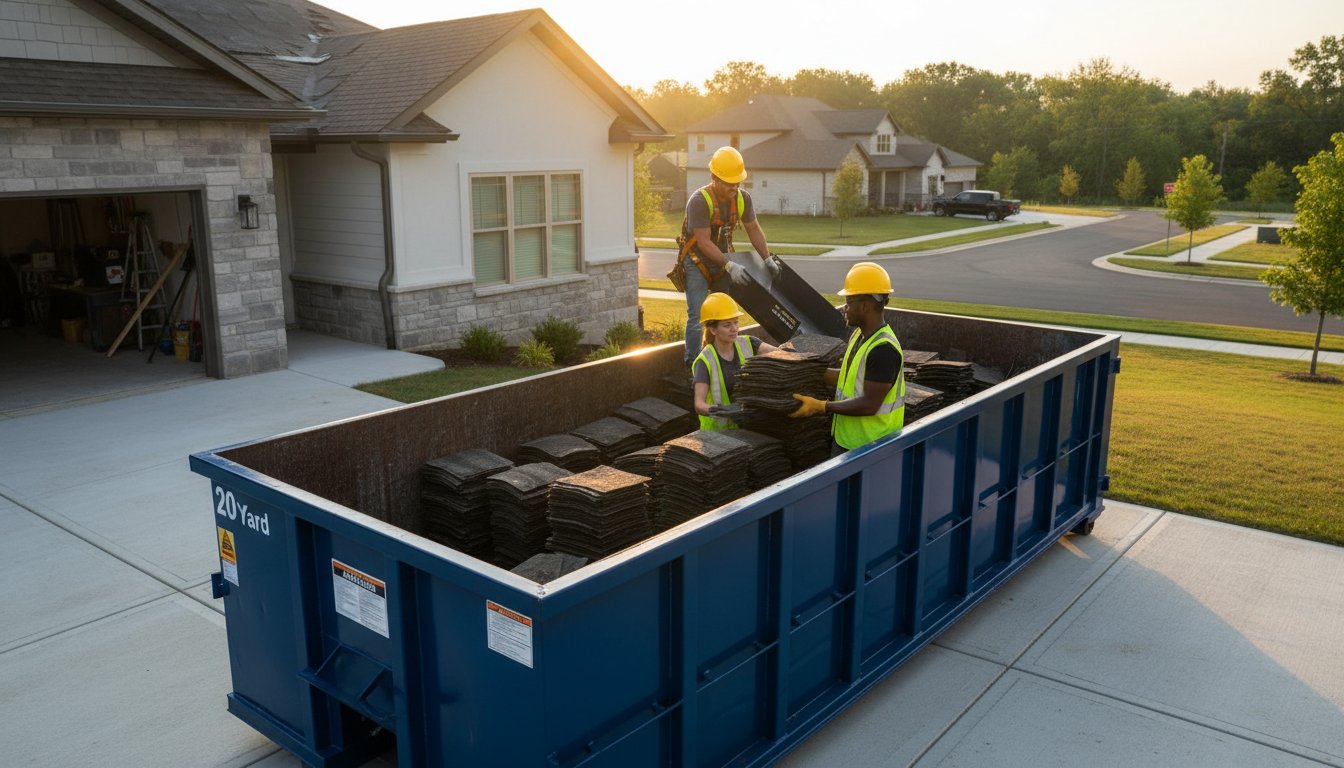
A shingle disposal dumpster is a specialized roll-off container engineered specifically for high-density roofing debris. Don't mistake these for standard household bins. While a typical cleanout involves bulky but light items, a roofing project generates thousands of pounds of material in a very small footprint. This weight requires a container that can withstand the pressure and a truck capable of lifting several tons without strain. Using a dedicated shingle disposal dumpster ensures your project stays compliant with local weight regulations while protecting your property from the stress of an overloaded bin.
The primary material found in these loads is the Asphalt shingle. Along with the shingles, you can dispose of felt paper, underlayment, and the thousands of nails pulled during the tear-off process. Distinguishing between a "clean" shingle load and mixed debris is vital for your budget. Clean loads consist only of shingles and their immediate accessories. This allows for easier recycling into hot-mix asphalt for road paving, a critical process considering the U.S. produces approximately 11 million tons of asphalt shingle waste annually. Mixed loads include other construction waste and often carry different pricing structures at the landfill.
Why Standard Dumpsters Aren’t Always Enough
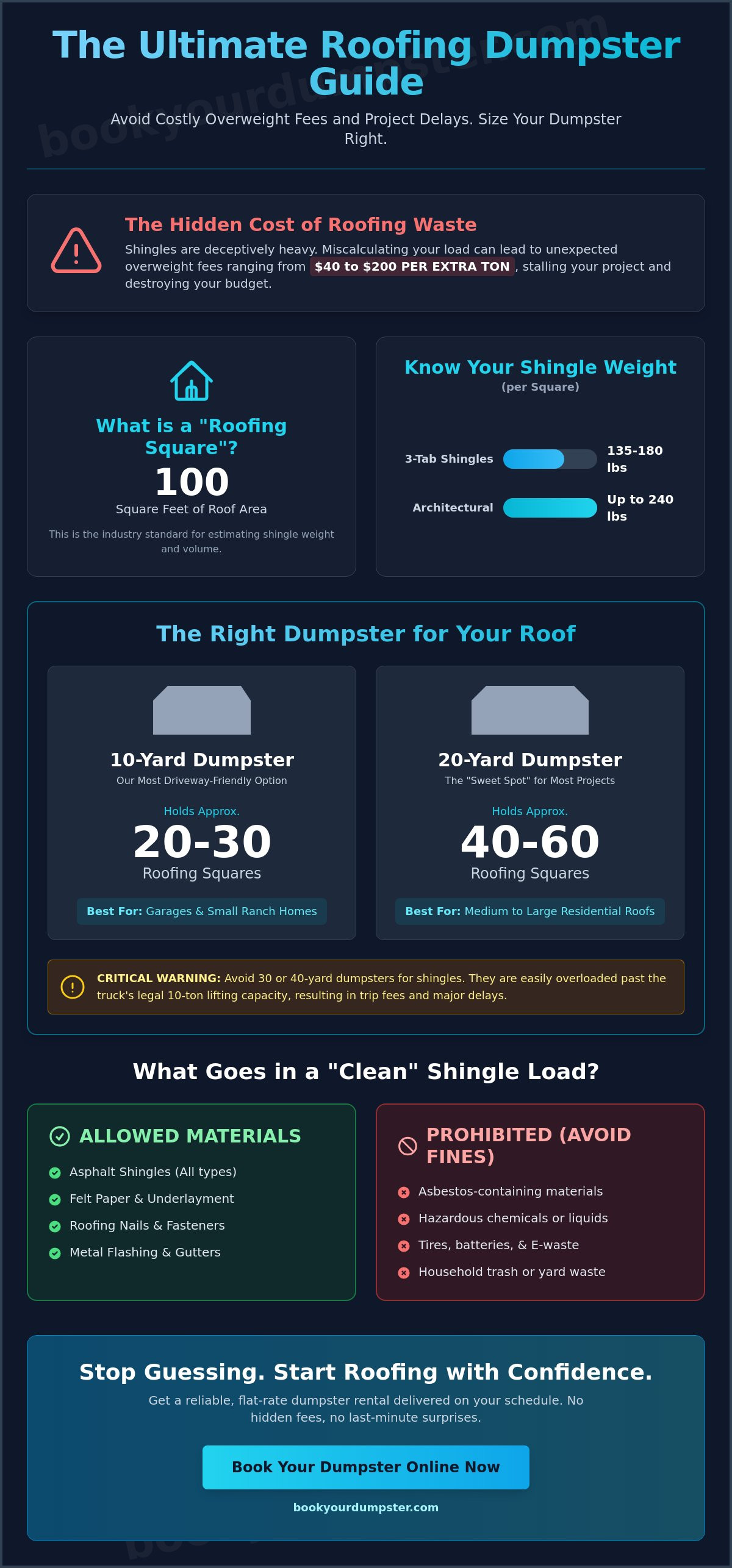
Asphalt shingles are deceptively heavy. A standard square of 3-tab shingles weighs between 135 and 180 pounds, while architectural shingles can reach up to 240 pounds per square. If you attempt to use a massive 40-yard bin for a shingle tear-off, you'll likely exceed the legal weight limit of the hauling truck long before the bin is full. Shingle-specific rentals are often smaller, such as 10 or 20-yard sizes, to keep the weight concentrated and within safe transport limits. This structural focus prevents damage to your driveway and ensures the driver can safely navigate to the disposal site without equipment failure.
Allowed vs. Prohibited Roofing Materials
Efficiency depends on knowing what can go in the bin. You're clear to load shingles, flashing, gutters, and roofing nails. Most underlayment materials are also accepted. However, you must keep prohibited items out to avoid heavy fines. Prohibited items include:
- Asbestos-containing materials, which are common in homes built before the 1980s.
- Hazardous chemicals, adhesives, or flammable liquids.
- Tires, batteries, and electronic waste.
- Large quantities of treated lumber or heavy yard waste.
Mixing shingles with general trash like cardboard or household furniture can disqualify the load from shingle-specific recycling rates. Stick to roofing materials to keep your costs predictable. If you're unsure about a specific material, ask before you toss it. Book your dumpster with a clear understanding of your waste stream to ensure a smooth, on-time pickup.
Sizing Your Dumpster for Roofing Shingles
Roofing measurements are unique. You don't measure by volume; you measure by squares. A "Roofing Square" represents 100 square feet of roof area. This is the industry standard for estimating how much Construction and Demolition Debris your project will generate. Understanding this metric is the first step to choosing the right shingle disposal dumpster and avoiding logistical delays.
A simple rule of thumb keeps your project on track: 10 squares of standard 3-tab shingles weigh approximately one ton. If you're dealing with thicker architectural shingles, that weight increases to nearly 240 pounds per square. Always account for the number of layers being removed. Tearing off two layers of old shingles doubles your weight immediately. This math is critical because weight, not volume, determines your rental success.
You might think a 30 or 40-yard bin is the safest bet for a large roof. That's a mistake. Most roll-off trucks have a maximum lifting capacity of about 10 tons. If you fill a 40-yard container with heavy asphalt, the truck literally won't be able to lift it. Even if it could, the load would exceed legal road weight limits, leading to heavy fines. Stick to 10 and 20-yard containers. They are the "sweet spot" for maintaining safety and compliance on residential streets.
The 10-Yard Dumpster: Best for Small Roofs
A 10-yard container handles roughly 20 to 30 squares of shingles, depending on the number of layers and the material type. It's the ideal choice for garage roof replacements or small ranch-style homes. Because of its compact footprint, it's our most driveway-friendly option. This size keeps the weight manageable while providing enough space for the tear-off. Review our 10 Yard Dumpster Rental guide to see if this fits your specific project dimensions.
The 20-Yard Dumpster: The Contractor Standard
Most residential roofing projects require a 20-yard bin. It comfortably handles 40 to 50 squares of shingles, making it perfect for standard-sized homes with multiple layers of debris. Contractors prefer this size because it balances high capacity with easy maneuverability. For a detailed breakdown of dimensions and weight limits, consult our 20 Yard Dumpster guide. Before you start your tear-off, check local availability to ensure your container arrives exactly when your crew needs it.
Managing Weight Limits and Disposal Costs
Weight is the single most important factor in your final bill. While you rent a dumpster based on its volume in cubic yards, the landfill charges based on the weight of the debris. Asphalt shingles are exceptionally dense. If you exceed the weight allowance of your shingle disposal dumpster, you'll face overweight fees that typically range from $40 to $200 per extra ton. These costs add up quickly, so understanding the math behind your load is essential for staying on budget.
Many first-time renters ask why they can't simply fill the container to the top rail. The answer is safety and legal compliance. A 20-yard dumpster filled to the brim with shingles can easily weigh over 10 tons. Most roll-off trucks have a maximum lifting capacity, and exceeding this limit makes the container impossible to pick up. Even if the truck can lift it, the total weight may exceed legal road limits, resulting in heavy fines for the driver. Always keep your shingles level and never stack them higher than the side walls.
Weather also plays a silent role in your disposal costs. Asphalt is porous and can absorb significant amounts of water. Saturated shingles weigh much more than dry ones, potentially pushing a borderline load over its weight limit. If rain is in the forecast, take a few minutes to cover the bin with a heavy-duty tarp. This simple step prevents "water weight" from turning into a surprise charge on your final invoice.
Calculating Your Estimated Debris Weight
Use a simple formula to project your load: multiply the number of roofing squares by the weight per square. For standard 3-tab shingles, estimate 200 to 250 pounds per square. If you're removing architectural shingles, use 240 pounds as your baseline. Don't forget to factor in multiple layers. If your roof has two layers of old material, you must double your weight estimate. This calculation ensures you choose a container with a tonnage cap that matches your actual waste volume. Keeping the bin covered during storms is the best way to ensure these calculations remain accurate.
Avoiding Hidden Fees
At Book Your Dumpster USA, we operate with a strict promise of no hidden fees. We provide transparent pricing that clearly outlines your tonnage allowance and the specific cost per ton for any overages. Be aware that local landfill rates vary significantly across the country; for example, disposal fees in New York or San Francisco are often much higher than in rural markets. Some providers offer flat-rate roofing specials that include a set weight limit, while others use a standard tonnage cap. Compare these options carefully. To see the most accurate rates for your area, book your dumpster through our online system to get an instant, all-inclusive quote.
Best Practices for Loading Roofing Debris Safely
Loading your shingle disposal dumpster correctly is a matter of safety and legality. If you toss shingles haphazardly, you create air pockets and uneven weight distribution that can cause the container to shift during transport. Start by placing the heaviest shingles flat on the bottom of the bin. This low center of gravity keeps the roll-off stable on the truck's hoist. Layer lighter materials like felt paper, flashing, or old gutters on top of the shingle base. This layering strategy ensures the most dense material is secured at the lowest point.
Maintain a level load at all times. Never stack debris higher than the side walls of the container. If shingles protrude above the top rail, the driver cannot safely pull the mandatory tarp over the load. This is a legal requirement for transport on public roads. If the load isn't level, the driver may refuse the pickup, causing a delay that stalls your project and potentially leads to a "dry run" fee. Keep the swinging door area clear of debris so the latch can lock securely. A door that won't close is a major safety hazard and a guaranteed way to delay your removal.
Loading Strategy for Efficiency
Work from the front of the dumpster toward the back door. The "front" is the end closest to the truck cab. Filling the front first ensures the weight is concentrated over the truck's axles once the container is loaded. Avoid "mountain-top" loading where debris piles up in the center while the corners remain empty. This uneven distribution is dangerous. Instead, spread the shingles evenly across the entire floor. A flat, level surface allows the driver to secure the load quickly and get your site cleared without complications. Before you start the tear-off, book your dumpster to ensure the right size is ready for your specific loading needs.
Protecting Your Property During the Drop-Off
A fully loaded shingle disposal dumpster exerts immense pressure on your driveway. Place 4x8 plywood boards or heavy planks under the wheels to distribute this weight and prevent cracks in asphalt or concrete. Also, clear the path above the drop-off zone. The roll-off hoist requires significant vertical clearance, so check for low-hanging power lines or tree branches before the truck arrives. For a complete safety checklist, refer to our Construction Debris Removal guide. Following these steps ensures a hassle-free experience for both your crew and our drivers.
Reliable Shingle Disposal with Book Your Dumpster USA
Book Your Dumpster USA simplifies the logistical mess of roofing waste. We specialize in high-density urban and suburban markets where space is tight and schedules are tighter. Whether you're a homeowner or a professional contractor, our on-time promise ensures your crew stays on schedule. A late container means wasted labor costs; we prevent that by prioritizing reliable delivery for every shingle disposal dumpster we deploy. By moving the waste management process into a digital-first model, we remove the friction of traditional phone-tag booking.
Our fleet is equipped to handle the unique demands of 2026 roofing projects. We provide 10, 20, 30, and 40-yard dumpsters to match the scale of any residential or commercial tear-off. Because we focus on transparency, you won't find hidden fees or surprise surcharges on your final invoice. We understand that roofing is a high-pressure trade. You need a partner who has the container under control so you can focus on the installation. Book your dumpster today and experience a service designed for speed and reliability.
Local Expertise in NY, NJ, IL, MA, and SF
Operating in major metropolitan areas requires more than just trucks; it requires local knowledge. In New York, we navigate the tight alleyways of Queens and Brooklyn with precision. In San Francisco, we manage the complexities of hill permits and street blocking requirements so you don't have to. Book Your Dumpster USA understands the specific regulatory landscape of each region we serve. This includes strict compliance with local recycling mandates in Illinois and Massachusetts, where asphalt-based roofing scrap often requires source separation.
Each city has its own set of rules for shingle disposal dumpster placement. Whether you need a permit for a public street in Chicago or specific weight documentation for a New Jersey landfill, our team handles the details. This local grounding, combined with our technologically savvy booking platform, makes us the preferred choice for contractors working across state lines. We ensure your project remains compliant with all municipal waste codes while maintaining the efficiency your client expects.
How to Book Your Roofing Dumpster Today
Getting your waste solution on-site is a straightforward, three-step process. Efficiency starts the moment you visit our portal. Follow these steps to secure your rental:
- Step 1: Choose your size. Use the roofing squares calculation discussed earlier to determine if a 10-yard or 20-yard container fits your debris weight.
- Step 2: Use the online portal for an instant quote. Enter your zip code to see transparent, flat-rate pricing for your specific city.
- Step 3: Schedule your delivery. Select the exact date your tear-off begins to ensure the bin is waiting for the first bundle of old shingles.
Don't let waste management be the bottleneck in your roofing project. Choose your size, schedule your delivery, and let us handle the rest.
Streamline Your Roofing Cleanup Today
Mastering your project's logistics starts with accurate math and a reliable partner. You now know that matching your roofing squares to the right tonnage limit is the only way to avoid the budget-killing overweight fees common in the industry. By choosing specialized 10 or 20-yard containers and following the level-loading rules we've discussed, you protect your property and ensure a safe, legal haul. Our specialized sizes for heavy debris mean you'll never pay for more space than you need or get stuck with a load that's too heavy for a standard truck to lift.
We back every rental with a no hidden fees guarantee and an on-time delivery promise that keeps your crew working. Don't let waste management be the part of the job that slows you down. Book your shingle disposal dumpster online now with Book Your Dumpster USA. Get your site cleared and your project finished without the logistical stress. We have this under control.
Frequently Asked Questions
How many squares of shingles fit in a 10-yard dumpster?
A 10-yard container typically holds between 20 and 30 squares of shingles, depending on the material type and number of layers. For standard 3-tab shingles, you can usually reach the higher end of that range. If you are removing heavy architectural shingles or multiple layers, plan for the lower end to stay within weight limits. Always estimate your load before booking to ensure the truck can safely lift the container.
Can I mix other construction waste with my roofing shingles?
You can mix other construction debris with your shingles, but doing so usually classifies the load as mixed waste rather than a clean shingle load. Clean loads are often eligible for specific recycling rates at specialized facilities. If you add wood, siding, or household junk, the entire container is processed as general debris. This results in higher disposal fees due to the increased complexity of sorting the materials at the landfill.
What happens if my roofing dumpster is over the weight limit?
Exceeding the weight limit results in overweight fees that typically range from $40 to $200 per extra ton. These charges are applied by the landfill and passed on to the customer. If the load is significantly over the truck's lifting capacity, the driver may refuse to pick up the shingle disposal dumpster until you remove enough material. This results in a dry run fee and stalls your project.
Do I need a permit for a shingle dumpster in Queens or San Francisco?
You generally need a permit if the dumpster is placed on a public street or sidewalk in Queens or San Francisco. In San Francisco, these permits often require specific street-blocking documentation and safety markings. If you place the container on private property, such as a driveway, a permit is usually not required. Check our online booking portal for guidance on specific city requirements before your delivery date.
How much do 30 squares of asphalt shingles weigh?
Thirty squares of standard 3-tab shingles weigh approximately 2 to 2.7 tons. If you are dealing with heavier architectural shingles, that same 30-square load can weigh between 2.7 and 3.6 tons. Always factor in the weight of the nails and felt paper, which adds slightly to the total. If your roof has two layers, remember to double these estimates to avoid exceeding your container's tonnage cap and incurring fees.
Can shingles be recycled, and does it cost less?
Asphalt shingles are highly recyclable and are frequently processed into hot-mix asphalt for road paving. Recycling is often more cost-effective than landfill disposal because many facilities offer lower rates for clean shingle loads. To qualify for these rates, you must keep the load free of general trash, wood, and hazardous materials. Using a dedicated shingle disposal dumpster for clean recycling is an environmentally friendly way to manage your roofing waste.
How long can I keep the dumpster on my roofing job site?
Standard rental periods typically range from 7 to 14 days, which is sufficient for most residential roofing projects. If your tear-off takes longer than expected, you can often extend your rental for a daily fee, usually between $5 and $10 per day. We recommend scheduling your delivery for the exact day your project starts to maximize your included rental time. Simply notify us through the portal when you're ready for pickup.
What is the best way to protect my driveway from a heavy shingle dumpster?
Placing 4x8 plywood boards or heavy wooden planks under the dumpster wheels is the best way to protect your driveway. This distributes the immense weight of the shingles across a larger surface area, preventing cracks in asphalt or concrete. Ensure the drop-off area is level and clear of debris before the truck arrives. These simple precautions protect your property from the high-pressure stress of a fully loaded roll-off container.