

The aftermath of a major weather event is often more chaotic than the storm itself. You're left with a dangerous mix of fallen trees, ruined drywall, and shattered glass that needs to be cleared immediately. Renting a storm debris cleanup dumpster is the fastest way to reclaim your property, but doing it without a plan leads to overweight fees and insurance headaches. You need a strategy that prioritizes safety and logistical control.
It’s exhausting to handle a property cleanup while worrying about hidden costs or strict municipal disposal rules. This guide provides the professional blueprint you need to manage the mess. You’ll learn how to select the right roll-off size, from a 10-yard bin for yard waste to a 40-yard container for structural damage. We’ll also cover how to document your disposal for insurance compliance within the standard 180-day reporting window and how to sort materials to avoid contamination penalties. Follow these steps to clear your land quickly and keep your recovery budget on track.
Key Takeaways
- Categorize waste into vegetative, construction, and hazardous streams to ensure legal disposal and avoid costly contamination fees.
- Select the correct storm debris cleanup dumpster size by estimating total volume in pickup truck loads while accounting for the extra air space in loose branches.
- Safeguard your property by staging debris near the drop-off zone and using plywood to protect your driveway from heavy roll-off equipment.
- Secure insurance reimbursement by documenting all storm damage with photos and video before the cleanup begins to meet the 180-day reporting deadline.
- Navigate local 2026 regulations in NY, NJ, IL, and MA to ensure your bin placement complies with specific municipal permit requirements.
Assessing Damage and Sorting Storm Debris Correctly
Before you call for a storm debris cleanup dumpster, you must understand the material you're handling. What is Storm Debris? It is a complex mixture of organic matter and man-made materials that requires systematic sorting. Landfills and transfer stations in 2026 have tightened regulations on contamination. Mixing tree limbs with roofing shingles will result in "mixed load" surcharges that can double your disposal costs. You must be precise to keep your project within budget.
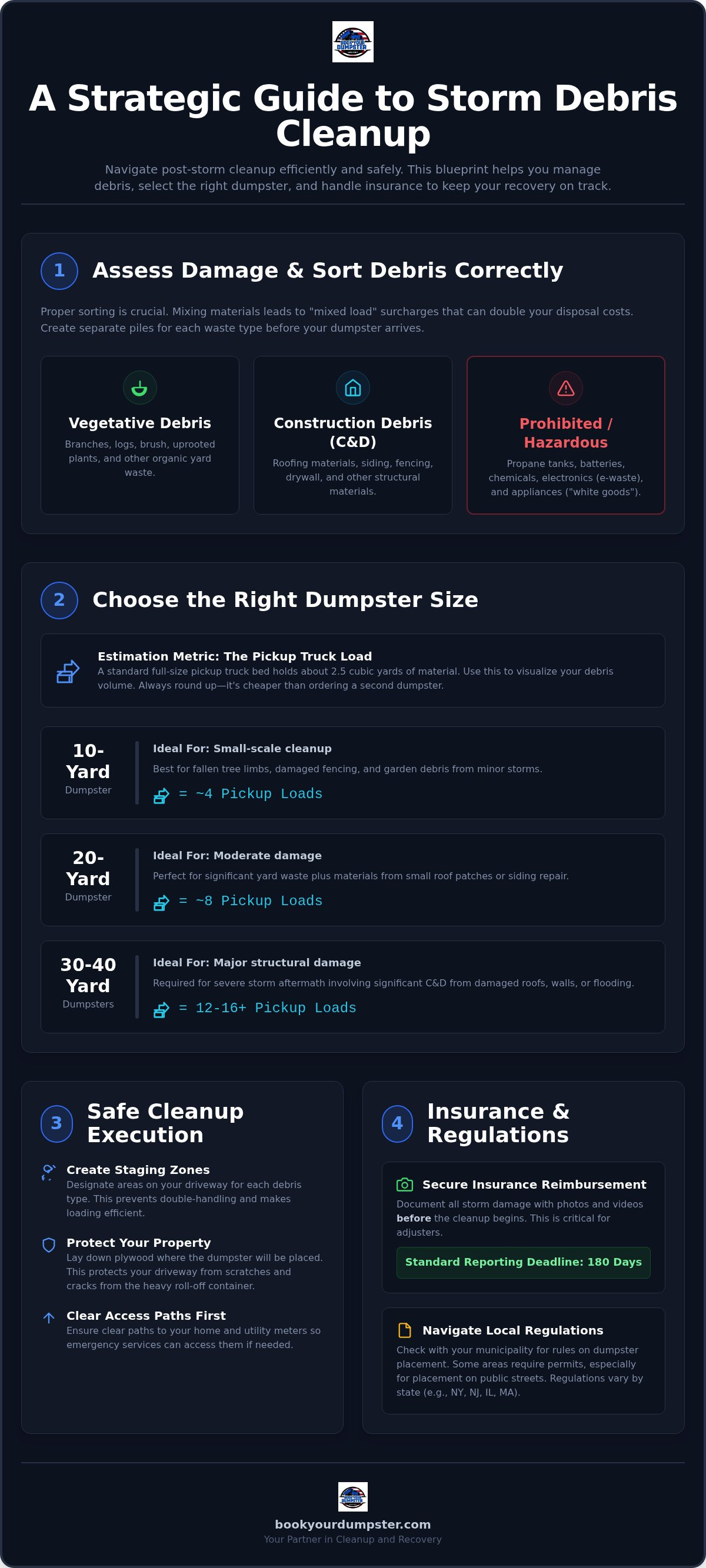
Identify your waste streams immediately. Group them into three primary piles: vegetative debris, construction and demolition (C&D) debris, and hazardous waste. Clear paths to your home and utility meters first. This ensures utility workers can access gas and electric lines safely while you work. Keep "white goods," such as refrigerators, washing machines, and air conditioners, in a separate area. These contain refrigerants or specialized components that require separate handling and cannot go into a standard roll-off container.
Vegetative vs. Structural Debris
Vegetative debris includes branches, logs, brush, and uprooted plants. These are often processed into mulch or compost. Structural debris consists of roofing materials, siding, fencing, and drywall. Landfills charge different tipping fees based on these categories because processing costs vary. If you mix organic yard waste with structural materials, the entire load is often treated as the more expensive C&D category. Use a dedicated 10-yard bin for heavy yard waste to keep your project cost-effective. Visit Book Your Dumpster USA to schedule your delivery once your piles are sorted.
Items Prohibited from Storm Dumpsters
Standard storm debris cleanup dumpster rentals do not accept hazardous materials. Remove propane tanks, wet lead-acid batteries, and household chemicals from your piles. Electronics, or "e-waste," are also prohibited because they contain heavy metals that leach into groundwater. Hazardous waste is any material that is flammable, corrosive, or toxic. Dispose of these items through your local municipal hazardous waste collection site instead of your roll-off container. Placing these in a dumpster will result in immediate rejection or significant environmental fines.
Effective sorting at the source is the only way to maintain a safe job site. Don't wait for the dumpster to arrive to begin categorizing. Create designated "staging zones" on your driveway. This prevents double-handling and ensures that when the truck arrives, you can load the bin with a single material type. This level of organization is essential for documenting your recovery for insurance adjusters, who often require proof of debris type before approving reimbursement for your cleanup costs.
Choosing the Right Storm Debris Cleanup Dumpster Size
Estimating the volume of waste after a severe weather event is a logistical challenge. You can't rely on standard visual cues because storm debris doesn't sit flat. Use the "pickup truck load" as your primary metric for estimation. A standard full-size pickup truck bed holds approximately 2.5 cubic yards of material. If you've staged four truck-sized piles on your lawn, you need at least a 10-yard bin. Always round up your estimate. It's more cost-effective to have extra space in one bin than to pay for a second haul of a smaller unit.
Factor in "air space" and weight variations. Loose branches and brush take up significant volume but offer very little weight. Conversely, water-logged materials like saturated drywall, soaked carpets, or mud-caked flooring are incredibly heavy. Following EPA guidelines on debris helps you understand which materials gain the most weight when wet. Overloading a storm debris cleanup dumpster beyond its weight capacity creates safety risks during transport and results in expensive overage fees. Consider the footprint of the unit as well. In tight urban areas like Queens or San Francisco, a shorter bin might be necessary to avoid blocking sidewalks or violating local street-placement codes.
10 To 20-Yard Dumpsters for Yard Waste
The 10 yard dumpster rental is the professional choice for small-scale residential cleanup. It's ideal for clearing fallen tree limbs, damaged fencing, and garden debris. If your property sustained moderate wind damage or requires small roof patches, choose a 20-yard bin. These smaller units fit into standard driveways without requiring specialized permits in most jurisdictions. Be mindful of weight limits, especially if you're disposing of heavy soil or sod along with your yard waste.
30 To 40-Yard Dumpsters for Major Structural Recovery
For significant property damage, you need high-capacity roll-off containers. Select 30 or 40-yard units for complete roof replacements or gutting flood-damaged interiors. These bins are essential for construction debris removal on large-scale recovery sites. A 40-yard dumpster is typically 22 feet long. Ensure your site has at least 60 feet of straight-line clearance for the delivery truck to drop the bin safely. Don't let your recovery stall because of limited capacity. You can view available dumpster sizes online to find the right fit for your specific damage profile.
Selecting the correct storm debris cleanup dumpster size is the first step toward a controlled recovery. By accounting for material weight and urban space constraints, you ensure a smooth delivery and pickup process. This prevents project delays and keeps your cleanup within the budget approved by your insurance adjuster. Take the time to measure your debris piles before booking to avoid the logistical stress of an undersized container.
How to Execute an Efficient Storm Cleanup Plan
Efficiency in storm recovery depends on a tight logistical timeline. You've already sorted your waste and selected your bin. Now you must prepare the site. Protecting your property is the first priority. A loaded storm debris cleanup dumpster can weigh several tons. This pressure easily cracks asphalt or decorative pavers. Lay down 3/4 inch plywood in the drop-off zone before the truck arrives. This simple step prevents thousands of dollars in driveway repairs.
Stage your debris piles as close to the expected dumpster location as possible. Minimize the distance you carry heavy materials to prevent fatigue and injury. Don't move the same branch twice. When the bin arrives, load it evenly from front to back. An unbalanced load shifts during transport. This creates a safety hazard for the driver and potentially leads to a rejected pickup. Schedule your pickup immediately when the bin is level-full. Leaving an open container on your property for too long invites unauthorized dumping from neighbors. This can push you over your weight limit and result in unexpected fees.
Site Preparation and Safety
Clear the path for the delivery truck. Check for low-hanging branches or power lines that might snag the hoist. You need at least 60 feet of linear space for the truck to maneuver and drop the container safely. Safety is non-negotiable during this phase. Always wear PPE, including puncture-resistant gloves and steel-toed boots. Review the FEMA debris removal tips to ensure you're following federal safety standards for private property cleanup and sorting.
Loading Techniques for Maximum Capacity
Optimize the space inside your storm debris cleanup dumpster by loading flat materials first. Place drywall, plywood, or flattened cardboard at the bottom to create a solid base. Break down large branches or bulky furniture to eliminate gaps. Professional haulers call this "bird-nesting," and it wastes valuable yardage. The swing door on a roll-off dumpster allows for easy walk-in loading of heavy items. This feature is essential for heavy structural debris that is too dangerous to lift over the side walls. Visit Book Your Dumpster USA to schedule your delivery and start your cleanup today.
Execution is about maintaining control over the site. By preparing the ground and loading the bin strategically, you avoid common pitfalls like property damage or wasted container space. These steps ensure that the physical labor of recovery is as streamlined as the booking process. Keep your site organized and your pathways clear to finish the job safely and quickly.
Navigating Regulations and Insurance in 2026
Physical cleanup is only half of the recovery process. You must also satisfy the administrative requirements of your insurance provider and local government. Most standard homeowner's insurance policies cover debris removal if the damage resulted from a covered peril like a windstorm. This coverage typically ranges from 5% to 15% of your total dwelling coverage. However, you must act quickly. Most policies require you to report these expenses within 180 days of the loss. Verifying if your policy covers the cost of a roll off dumpster rental before you book ensures you won't be left with an unexpected bill.
Understand the difference between municipal curbside programs and private rentals. After a major event, cities may offer limited debris pickup. These programs often have strict volume limits and unpredictable schedules. A private storm debris cleanup dumpster provides immediate control over your timeline. It allows you to clear the property on your terms rather than waiting for city crews that may be weeks behind. This speed is essential for preventing secondary damage like mold or structural rot.
Documentation for Insurance Adjusters
Insurance companies require proof of loss before they issue a reimbursement check. Document every piece of debris with photos and video before it enters the container. Take wide shots of the debris piles next to a recognizable landmark, such as your house number or a unique architectural feature. Keep every rental receipt and weight ticket provided by your hauler. Request a detailed invoice from your provider that explicitly states the "storm debris" nature of the waste. This clear paper trail makes it difficult for adjusters to deny your claim based on a lack of evidence.
Local Permits and Street Placement
Permitting requirements vary significantly by region. In dense urban areas like Queens or parts of Massachusetts, you often need a "Right of Way" permit if the dumpster must sit on the street. Placing a bin on public property without this authorization leads to immediate fines and potential removal of the unit. During official emergency declarations, some municipalities may waive specific permitting fees or expedite the approval process. Consult our debris removal resource guide for direct links to regional permit offices and local regulations.
Don't let red tape stall your recovery efforts. Secure your equipment now and document the process as you go. Book your storm recovery dumpster online to get a head start on your property restoration.
Streamlining Your Recovery with Book Your Dumpster USA
Property recovery after a disaster requires a partner who understands the local landscape. You've sorted your waste and calculated your yardage. Now you need a storm debris cleanup dumpster delivered without delay. Book Your Dumpster USA operates with the speed and precision required for emergency recovery. We serve NY, NJ, IL, MA, and SF with a deep understanding of regional disposal laws and municipal permit requirements. Our inventory is fully stocked with 10, 20, 30, and 40-yard roll-offs to handle everything from minor yard clear-outs to total structural demolitions.
Don't let logistical hurdles slow down your restoration. We provide the heavy-duty equipment and transparent communication needed to move from a state of clutter to a state of resolution. Our process is designed to remove stress, allowing you to focus on rebuilding while we handle the disposal logistics.
Why Online Booking Matters During a Crisis
Storms create a massive surge in demand for waste equipment. Phone lines at traditional hauling companies often jam; this leaves you on hold while your property remains in a state of chaos. You can skip the wait and secure your rental in minutes at bookyourdumpster.com. Our platform provides immediate availability checks and instant email confirmation. You'll receive a digital tracking link for your delivery. This allows you to coordinate your labor crew with precision. Through our digital portal, you can manage your rental duration or request a swap-out as your project evolves.
Reliable Support for Homeowners and Contractors
We bridge the gap between residential convenience and industrial-grade reliability. Whether you're a homeowner clearing a single driveway or a contractor managing multiple recovery sites, the level of service remains identical. We prioritize timely placement because we know that a delayed dumpster stops all other work. Our team understands the urgency of storm cleanup. We maintain pricing integrity even during peak demand. This includes providing the transparent weight tickets and honest invoicing that your insurance adjuster requires for reimbursement.
Trust is the most valuable tool in a crisis. We don't just provide equipment; we provide logistical control. Our direct, no-nonsense communication ensures that you are never left guessing about a delivery time or a final fee. By combining local expertise with a modernized digital interface, we remove the friction from the disposal process. Start your cleanup today by selecting your bin size and scheduling your drop-off through our streamlined system. Resolve the mess and reclaim your property with a partner who values your time and safety.
Take Control of Your Storm Recovery
Storm recovery is a logistical operation that requires precision and the right equipment. By categorizing your waste, protecting your driveway, and maintaining a clear paper trail for your insurance adjuster, you eliminate the stress of the unknown. The efficiency of your storm debris cleanup dumpster rental determines how quickly you can return to normal. Don't let the volume of debris dictate your restoration timeline or your budget.
We provide 10, 20, 30, and 40-yard dumpsters to match any damage profile across NY, NJ, IL, MA, and SF. Our streamlined system ensures you get the support you need when every hour counts. Skip the logistical delays and manage your entire rental through our digital portal for immediate results.
Book your storm debris cleanup dumpster online now to secure your delivery and begin the restoration process. Restoration starts with a single, organized step. Take it today and reclaim your property.
Frequently Asked Questions
What is the best size dumpster for storm debris cleanup?
Selection depends on the volume and weight of your waste. Use a 10-yard unit for heavy yard waste or small tree limbs. Choose a 40-yard container for major structural damage like roofing or siding. Most residential storm recovery projects require a 20-yard bin to balance capacity with driveway space and weight limits.
Can I put fallen tree limbs and roofing shingles in the same dumpster?
You can mix these materials, but it results in a mixed load classification. Many landfills charge higher tipping fees for mixed waste compared to clean organic loads. Separate your vegetative debris from structural materials whenever possible to keep your disposal costs low and avoid municipal contamination penalties that increase your total bill.
How quickly can I get a dumpster delivered after a major storm?
Secure your unit through our online booking system for the fastest response during a crisis. Demand for a storm debris cleanup dumpster spikes immediately after a severe weather event. Booking digitally allows you to bypass phone delays and receive instant confirmation of your delivery date in NY, NJ, IL, MA, or SF.
Will my insurance company pay for a storm debris cleanup dumpster?
Most standard homeowners insurance policies cover debris removal if the damage is from a covered peril like a windstorm. This coverage is typically 5% to 15% of your total dwelling limit. You must report these expenses within 180 days of the loss and provide detailed weight tickets and receipts to qualify for reimbursement.
What happens if my dumpster is overweight from wet debris?
Exceeding the weight limit results in overage fees, which typically range from $50 to $100 per ton. Water-logged drywall and saturated carpets weigh significantly more than dry materials. Monitor your load levels and account for the weight of absorbed water to avoid these unexpected costs when the container is weighed at the landfill.
Do I need a permit to put a storm cleanup dumpster on the street?
You generally need a Right of Way permit for street placement in urban centers like Queens or San Francisco. Check your local municipal website for current requirements before the truck arrives. During official emergency declarations, some cities may temporarily waive permit fees to expedite the recovery process and clear public pathways quickly.
What items are strictly prohibited in a storm debris dumpster?
Strictly prohibited items include hazardous waste, liquids, chemicals, batteries, and propane tanks. You also cannot dispose of tires, appliances containing refrigerants, or electronics in a standard roll-off container. Hazardous waste is any material that is flammable, corrosive, or toxic and requires specialized handling at a designated municipal collection facility.


