
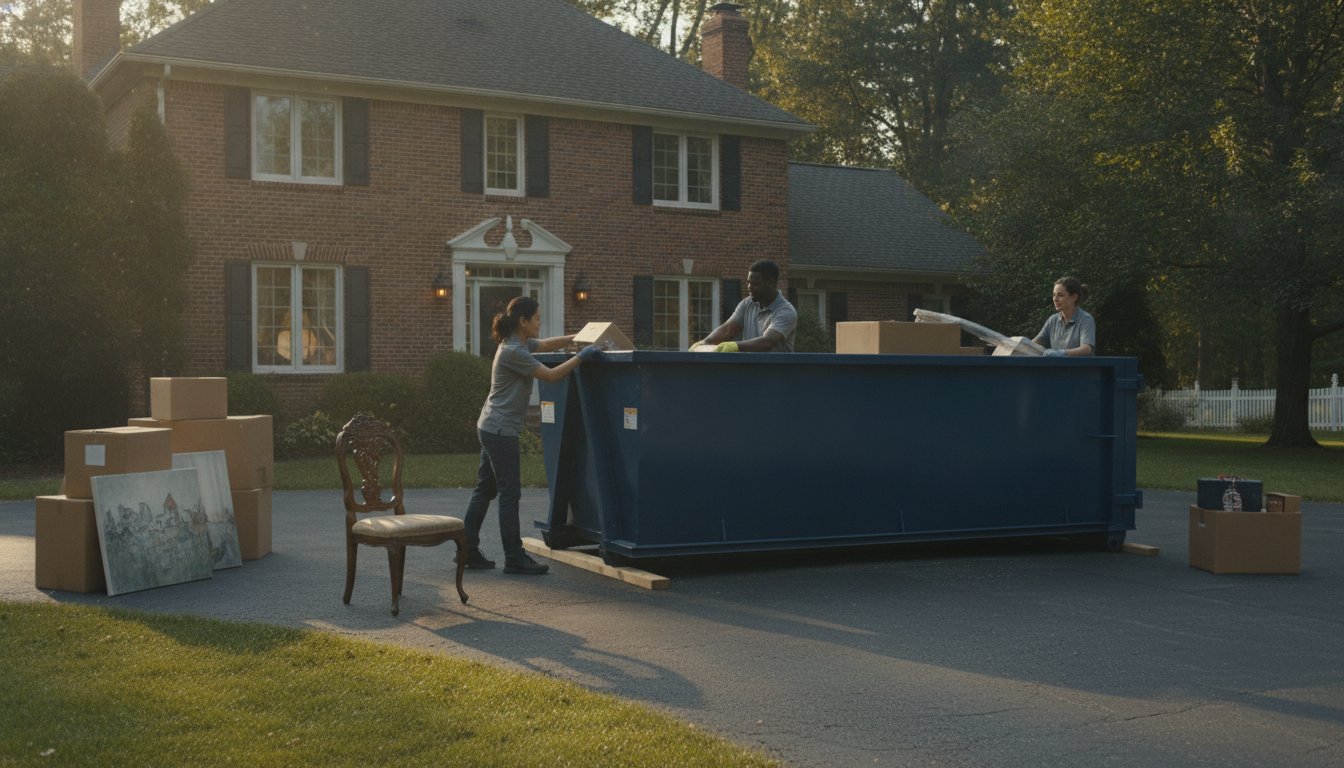
Imagine standing in a packed hallway with only weeks to clear a lifetime of belongings before a strict probate deadline. The logistical weight of a property transition is often more taxing than the emotional one. You need a strategy that moves as fast as the real estate market. Securing a dumpster for estate cleanout tasks is the most effective way to maintain control over the process. It stops the cycle of endless trips to the local landfill and keeps your focus on the items that actually matter.
We understand that efficiency is your top priority during this difficult transition. You want a cleared property ready for sale without the friction of logistical delays or surprise fees. This guide provides professional strategies for sorting household goods, selecting the ideal container size, and navigating 2026 waste regulations. Learn how to master the logistics of debris removal so you can close this chapter with confidence and speed. Follow these steps to transform a cluttered estate into a clean, marketable asset with minimal stress.
Key Takeaways
- Understand why roll-off containers provide more logistical control than bag-based junk removal for large properties.
- Select the optimal dumpster for estate cleanout needs by choosing between 10, 20, 30, and 40-yard sizing options.
- Implement driveway protection strategies and navigate local permit requirements to maintain the estate's curb appeal.
- Maximize your rental period by using a systematic loading approach that places heavy items first and flat materials against walls.
- Coordinate your sorting and donation loop effectively to ensure the property is cleared and ready for sale on schedule.
Navigating the Logistics of an Estate Cleanout
An estate cleanout is the systematic removal of a lifetime of belongings from a property. It is a logistical marathon that requires more than just physical labor; it demands a clear strategy for sorting and disposal. Using a roll-off dumpster for estate cleanout projects is superior to bag-based junk removal because it handles the massive volume of a full household without multiple scheduling delays. Bag-based systems often fail when dealing with the density of furniture, appliances, and general debris found in older homes. A roll-off container provides a centralized hub for your project, allowing you to maintain a steady pace without waiting for third-party pickups.
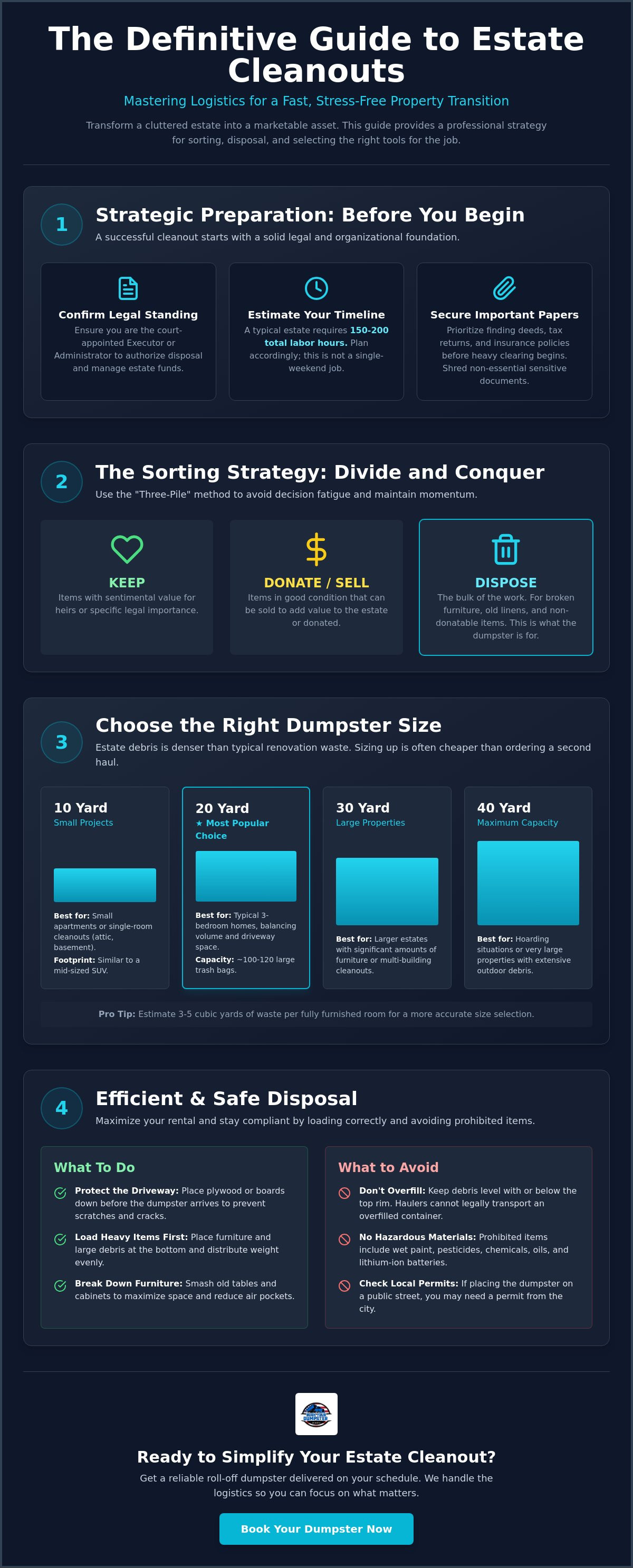
Establish your legal standing before you move a single box. You must be the court-appointed Executor or Administrator to dispose of any assets. This legal clearance ensures that all rental costs and disposal fees are reimbursable by the estate during the final accounting. Once authorized, adopt the "Three-Pile" strategy: Keep, Donate/Sell, and Dispose. This framework prevents decision fatigue and keeps the project moving toward the goal of a cleared property. Use established waste management principles to guide your disposal decisions and ensure you remain compliant with local 2026 environmental regulations.
Legal and Emotional Preparation
Verify your probate status before renting any equipment. This protects your personal finances. Set a realistic timeline for the project. Research indicates a typical estate cleanout requires 150 to 200 total labor hours. Don't expect to finish in a single weekend. Dedicate specific days for document recovery. Look for tax returns, property deeds, and life insurance policies before you start the heavy lifting. Shred any sensitive paperwork that isn't required for probate to prevent identity theft during the transition.
The Sorting Phase: Identifying What Goes in the Bin
Prioritize high-volume, low-value items for the dumpster. This includes broken furniture, old linens, and outdated electronics that aren't suitable for donation. The "Dispose" pile consists of any item that adds no financial value to the estate sale and holds no sentimental value for the heirs. Be careful with the garage and basement. You cannot put hazardous materials like wet paint, pesticides, or lithium-ion batteries into a standard rental. Check your local 2026 guidelines for hazardous waste drop-off locations to handle these items separately. Clearing these obstacles early makes the rest of the debris removal process much faster.
Choosing the Right Dumpster Size for an Estate
Estates present a unique challenge compared to standard home renovations. While a remodel produces light, bulky debris like drywall, an estate cleanout involves dense materials accumulated over decades. You're dealing with solid wood furniture, thousands of books, and layers of clothing. This density means you often need more capacity than you initially estimate. Selecting a dumpster for estate cleanout tasks requires balancing the physical footprint on your driveway with the total volume of the property's contents.
We provide 10, 20, 30, and 40-yard dumpsters to meet different project scales. A 10-yard bin occupies about the same space as a mid-sized SUV, while a 40-yard container is significantly longer and requires a clear, flat surface of at least 22 feet. Avoid the common over-filling trap. If you fill a bin past the rim, haulers cannot legally transport it. Sizing up to a larger container from the start is almost always cheaper than paying for a second haul or a dry run fee because the first bin was too small.
Why 10 and 20-Yard Containers are Estate Favorites
For smaller apartments or focused purges of specific areas like a basement or attic, a 10 yard dumpster rental is the most efficient choice. It fits easily into tight spaces without blocking street access. However, the 20-yard unit is the Goldilocks size for a typical 3-bedroom home. It offers enough volume for furniture while maintaining a manageable weight limit. Remember that mass matters. A 20-yard bin filled with heavy books or old magazines can quickly reach weight capacity before it's physically full. Keep in mind that prohibited and hazardous items such as old cleaning chemicals or oil-based paints must be excluded from these containers regardless of size.
Estimating Volume: From Furniture to Bric-a-Brac
Use the Room Count method for a more accurate estimate. Plan for roughly 3 to 5 cubic yards of waste per fully furnished room. To visualize this, a 20-yard bin typically holds between 100 and 120 large trash bags. Furniture should be broken down to maximize available cubic yardage. Smash old particle-board desks and remove legs from tables to eliminate dead air in the bin. This allows you to fit more items and avoid the cost of an additional rental. If you're unsure which size fits your specific project, view our sizing guide to select the right container for your timeline.
Estate Cleanout Challenges: Permits, Placement, and Prohibited Items
Protecting the property's value is a primary concern for any executor. Many fear that a heavy steel bin will crack the driveway or ruin the curb appeal during a sensitive time. This is preventable. Demand the use of plywood buffering or driveway protection boards from your hauler. This simple step creates a structural barrier between the dumpster's rollers and the asphalt. It distributes the mass of the container and prevents surface scuffs. If the estate lacks a private driveway, you must place the bin on the street. This shift changes your legal requirements and increases your administrative load immediately.
Certain materials commonly found in older estates require specialized handling. In states like New Jersey and Illinois, landfills often impose surcharges for mattresses and tires. These items aren't considered standard municipal waste. Consult the EPA guidelines on hazardous waste to identify materials like old pool chemicals, mercury thermostats, or lead-based paints. These cannot enter a standard bin. Mixing prohibited items into your dumpster for estate cleanout leads to immediate overage fees and potential legal citations from the landfill operator.
Navigating Local Regulations in NY, NJ, and MA
High-density urban areas present the most significant permit hurdles. Securing a dumpster rental in New York, particularly in boroughs like Queens, requires a Department of Transportation permit if the bin occupies any public right-of-way. These permits in 2026 typically cost between $10 and $100 depending on the duration. In San Francisco, residential ordinances often prohibit overnight street placement without specific city authorization. Massachusetts maintains strict "white goods" bans. You cannot dispose of refrigerators or air conditioners without proof that the refrigerant was professionally recovered, a service that typically adds $50 to $150 to your disposal costs.
Property Protection and Neighbors
Manage the social logistics of the cleanout. Inform the neighbors about the temporary presence of the roll-off bin. This prevents complaints to the HOA or local code enforcement. Clear the street of parked cars on delivery day. The truck needs at least 60 feet of straight-line approach room to drop the container safely. Failure to provide this space results in "dry run" fees, which increase the estate's expenses. Ensure the chosen placement surface is level. An uneven slope makes loading heavy furniture difficult and can cause the bin to shift under a full load, creating a safety hazard for those working on the property.
Efficient Disposal: Maximizing Your Rental Period
Strategize your loading process to avoid wasting expensive cubic yardage. Place the heaviest items, such as solid wood furniture or appliances, at the bottom of the bin. Position flat items like table tops or old doors vertically against the side walls. This creates a stable base and keeps the center of the container open for smaller, irregular debris. Using a dumpster for estate cleanout projects is only cost-effective if you maximize the density of every load. Avoid throwing items in haphazardly, as air pockets quickly consume the space you paid for.
Complete your donation loop before the dumpster arrives on-site. Move all items destined for charity or sale off the property or into a designated staging area. This prevents the accidental disposal of valuable assets and ensures the driveway remains clear for the delivery truck. Manage the sentimental stall by setting strict timers for each room. If an item causes a decision delay of more than 60 seconds, move it to a later box and continue loading the bin. Productivity is the only way to meet tight probate deadlines and avoid daily rental extensions.
Secure your container overnight to prevent illegal dumping. Neighbors often see a residential dumpster as an invitation to dispose of their own bulky waste. This unauthorized debris can push your load over the weight limit or introduce prohibited items into the mix. Cover the bin with a heavy-duty tarp and secure it with bungee cords during non-working hours. This simple deterrent protects your project budget from unexpected overage fees caused by others. Professional executors treat the dumpster as a controlled asset, not a public utility.
Loading Techniques for Maximum Capacity
Adopt a Tetris approach to fill the container. Drop smaller bags of trash into the gaps between large furniture pieces to eliminate air pockets and settle the load. Always use the rear swinging door to walk heavy furniture into the bin instead of lifting items over the high side walls. This method is safer and allows for tighter packing. Stop loading once debris reaches the fill line marked on the interior walls. Haulers cannot legally transport containers with items protruding from the top. You will face dry run fees if the load is unsafe for the road.
Managing the Timeline: Delivery and Pickup Logistics
Schedule your roll off dumpster rental to arrive on a Thursday or Friday. This ensures you have the container ready for the peak sorting hours of the weekend. Many executors prefer flexible scheduling that allows them to keep the bin until it is physically full, rather than rushing a complex cleanout. Conduct a final walkthrough of the property before calling for pickup. Check the bin to ensure no hazardous materials were accidentally tossed during the final rush. Once the property is clear, schedule your delivery online to finalize the removal and move toward the property sale.
Simplify Your Project with Book Your Dumpster USA
Managing the physical transition of a property is a demanding responsibility that requires precision and speed. You need a partner that removes logistical friction rather than adding to it. Our approach is built on reliability and direct communication. When you rent a dumpster for estate cleanout projects through us, you eliminate the uncertainty of traditional waste services. We focus on the heavy lifting of logistics so you can focus on the sensitive task of settling the estate. Trust our team to provide the high-functioning tools required to clear any residence quickly and professionally. We act as a dependable expert to help you move from a state of clutter to a state of resolution.
Efficiency is the hallmark of a successful cleanout. Our service is designed to match the urgency of your project. We understand the pressure of tight probate timelines and the need for a cleared property ready for the real estate market. By providing a streamlined process for debris removal, we help you maintain control over the property's condition. Our team understands the inherent messiness of these projects and responds with competence and control. Every step of our service is optimized to respect your time and urgency. Choose a provider that treats your project with the seriousness it deserves.
Transparent Pricing for Estate Budgets
Executors must provide meticulous records to the probate court for every transaction. Every expense requires a clear receipt to ensure reimbursement from the estate's assets. Our flat-rate structure simplifies your accounting process by providing predictable costs upfront. You won't face the opaque fee structures or hidden surcharges common in the traditional waste sector. Our dumpster rental prices include delivery, pickup, and specific weight allowances to prevent budget overruns. Choosing a reputable local provider ensures that your estate funds are managed with integrity. We provide the documentation you need to close the books with total confidence.
Online Booking for Fast Resolution
Time is a critical asset during a property transition. Our digital platform is available 24/7 to fit your busy schedule. You can select your container size, view weight limits, and schedule delivery in minutes without waiting for a callback. We offer direct support for projects in New York, New Jersey, Illinois, Massachusetts, and San Francisco. This localized expertise ensures compliance with regional regulations and efficient debris removal. Reclaim the property and move forward with the sale by choosing a streamlined waste solution. Schedule your estate cleanout dumpster today with Book Your Dumpster USA.
Finalize Your Property Transition
Settling an estate requires a clear strategy and a high-functioning waste solution. You've mastered the logistics of sorting household goods and navigating the specific permit hurdles of major metros. By selecting the right container size and implementing professional loading techniques, you can avoid the physical and financial drain of multiple landfill trips. A reliable dumpster for estate cleanout projects is the most effective way to prepare a property for its next chapter. Success in this process depends on maintaining momentum and using tools that respect your timeline.
We provide 10, 20, 30, and 40-yard units for immediate delivery to support projects of any scale. Our service covers key regions including NY, NJ, IL, MA, and San Francisco with a focus on punctuality and pricing integrity. Use our transparent, flat-rate pricing to keep your estate accounting straightforward for probate court requirements. Don't let debris delay your progress or complicate a difficult time. Rent a Dumpster for Your Estate Cleanout today to streamline your workflow. You're ready to clear the clutter and move forward with confidence.
Frequently Asked Questions
What size dumpster is best for a 3-bedroom estate cleanout?
A 20-yard dumpster is usually the most efficient choice for a standard 3-bedroom home. This size provides enough volume for roughly 100 to 120 large trash bags and fits comfortably in a standard suburban driveway. If the property includes a heavily packed basement, attic, or garage, consider sizing up to a 30-yard unit. This prevents the logistical delay and extra cost of a second haul during a tight probate timeline.
Can I put old furniture and mattresses in the dumpster?
You can dispose of most household furniture, but mattresses often require special handling and additional fees. While wooden tables and chairs are standard debris, states like New Jersey and Illinois frequently impose surcharges for mattress recycling. Break down large furniture items to maximize the available space in your dumpster for estate cleanout. Always verify local 2026 landfill regulations before loading multiple mattresses to avoid unexpected overage charges.
How much does a dumpster for an estate cleanout typically cost?
Rental costs depend on the container size, your geographic location, and the total weight of the debris. National averages in 2026 generally fall between $200 and $800, though high-density areas or heavy loads like books can increase these figures. Factors such as extended rental periods beyond the initial week also influence the final price. Request a flat-rate quote to ensure your estate accounting remains transparent and predictable for court reimbursement.
Do I need a permit to put a dumpster on the street in Queens or San Francisco?
Yes, street placement in high-density metros like Queens or San Francisco requires a specific right-of-way permit. In New York, you must secure a DOT permit, while San Francisco requires city authorization for any container occupying public space. These permits usually cost between $10 and $100 depending on the duration. Placement on a private driveway typically bypasses these requirements, which simplifies the logistics and reduces the overall project cost.
How long can I keep the dumpster at the estate property?
Standard rental periods generally last between 7 and 14 days. If your project requires more time due to the emotional or physical volume of the estate, you can often extend the rental for a daily fee. These extension fees typically range from $5 to $10 per day. Schedule your delivery for a Thursday or Friday to ensure the container is available for your peak sorting hours over the weekend.
What items are strictly prohibited in an estate cleanout dumpster?
Prohibited items include hazardous waste, flammable materials, batteries, and appliances containing refrigerants. You cannot toss wet paint, pesticides, propane tanks, or mercury thermostats into a standard roll-off container. Electronics and tires also require specialized disposal paths in many regions. Mixing these materials into your dumpster for estate cleanout leads to immediate landfill penalties. Consult federal guidelines to identify household hazardous waste before you begin the loading process.
Will the dumpster damage the driveway of the house?
Heavy steel containers can scuff or crack a driveway if they are placed without proper surface protection. Use plywood buffering or specialized protection boards to distribute the weight of the bin's rollers. This structural barrier prevents the metal from making direct contact with the asphalt or concrete. Ensure the chosen delivery area is level and clear of obstructions to provide a safe, stable foundation for the truck and the load.
Can the estate pay for the dumpster rental directly?
The estate can pay for the rental if you are the court-appointed Executor or Administrator with access to estate funds. Many executors choose to pay the fee upfront and seek reimbursement during the final probate accounting. Maintain all digital receipts and invoices as proof of the expenditure. This ensures the cost is documented as a necessary step in preparing the property for sale, making it a valid and reimbursable estate expense.


