

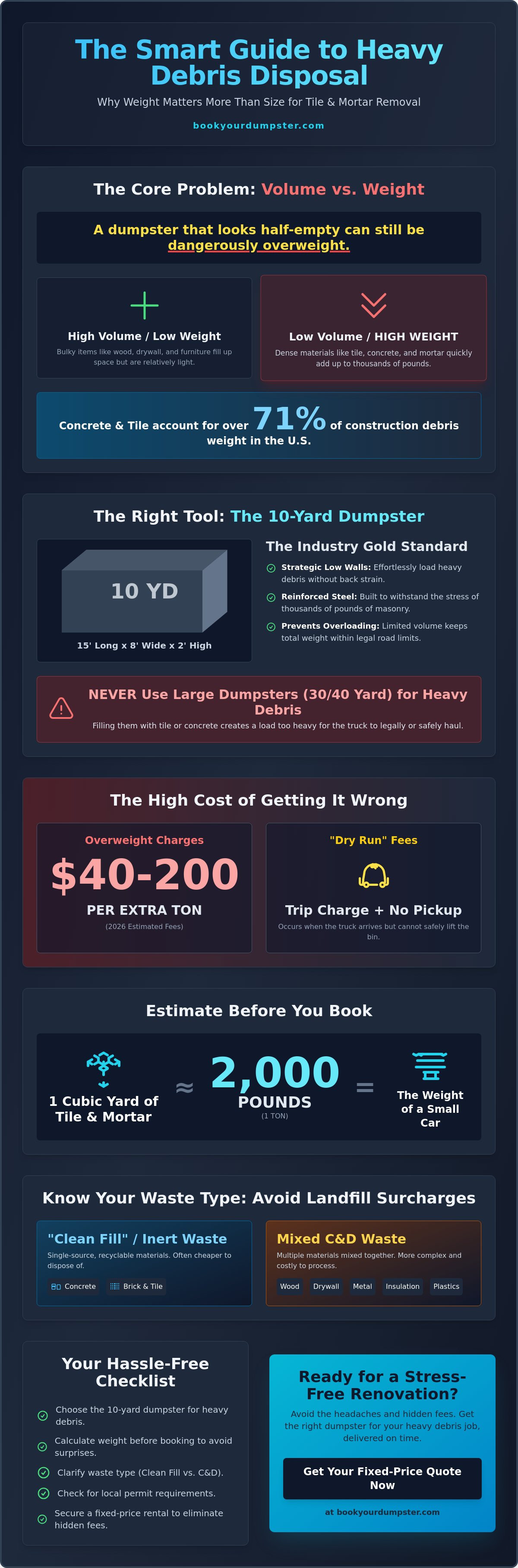
What if the weight of your debris matters more than the size of the container? When you're ripping out a bathroom or kitchen, it's easy to assume any roll-off will work, but a standard tile and mortar disposal dumpster is a specialized tool. Because concrete and tile make up over 71% of construction debris weight in the U.S., a bin that looks half empty can still be dangerously overweight. You don't want to find out your load exceeds limits only when the truck arrives for collection.
You likely believe that renovation logistics should be straightforward, yet hidden fees often ruin a project budget. We understand that mess management is stressful, and we're here to remove that burden. This guide teaches you how to select the right container size to avoid the $40 to $200 per ton overweight charges common in 2026. We'll walk through 10-yard weight limits, local permit costs, and the specific strategies you need for a fixed-price, on-time delivery and pickup experience.
Key Takeaways
- Identify why the 10-yard dumpster is the industry gold standard for heavy debris to prevent overloading.
- Calculate your demolition weight accurately based on material density before you book a tile and mortar disposal dumpster.
- Differentiate between "Clean Fill" and "C&D" waste classifications to avoid unexpected landfill tipping surcharges.
- Review local permit requirements for urban job sites to ensure a hassle-free delivery and pickup.
- Secure a fixed-price rental through a transparent booking process that eliminates hidden overweight fees.
Why Tile and Mortar Disposal Requires a Heavy Debris Strategy
Heavy debris isn't just a label. It's a technical category for high-density materials like tile, mortar, concrete, and brick. These items carry much more mass than standard wood or drywall. For instance, one cubic yard of loose tile often weighs over 2,000 pounds. This density dictates your entire logistics plan. Select a specialized tile and mortar disposal dumpster to ensure your container handles the physical strain without exceeding safety limits. Standard bins for household cleanouts aren't built to withstand the structural stress of heavy masonry waste. You need a container with reinforced steel to prevent the floor from bowing under the weight of thousands of pounds of ceramic and porcelain.
Understanding What is Construction Waste? helps you plan for the sheer weight involved in a bathroom or kitchen gut. In the U.S., concrete constitutes about 67.5% of the total weight of C&D debris, while brick and clay tiles represent another 4%. This means your pile is likely heavier than it looks. When you rip out a floor, the volume of the material is deceptive. A pile that barely reaches the top of a small bin can still push the limits of legal road weight. You must prioritize tonnage over volume to avoid logistical failure.
The Weight Problem: Volume vs. Tonnage
Physics determines your dumpster size. A 30-yard bin filled with tile can weigh more than 30,000 pounds. Standard roll-off hoists aren't built to lift that kind of mass. If the truck's hydraulic system can't generate enough force, the bin stays exactly where it is. Mortar and thinset increase this problem by filling the air gaps between tile shards. This creates a solid block of waste with almost no empty space, putting extreme pressure on the hoist and the street. Using a smaller bin limits the total volume so you stay within legal hauling capacities.
Cost Implications of Incorrect Disposal
Ignoring weight limits leads to immediate financial hits. If your bin is overweight, you'll face extra charges. In 2026, these fees range from $40 to $200 per ton. These costs add up quickly when you're disposing of hundreds of square feet of flooring. You might also face "dry run" charges. This happens when a driver arrives but cannot safely lift your tile and mortar disposal dumpster. They'll charge you for the trip and leave the bin on your property. You'll then have to remove the extra weight by hand before they return. Avoid this labor and expense by booking the right size from the start. Visit Book Your Dumpster USA to see transparent pricing for heavy debris and schedule your delivery today.
Choosing the Right Dumpster Size for Tile and Mortar
Selecting a container for heavy debris requires a shift in how you think about capacity. For standard household waste, you usually choose a bin based on volume. With masonry, the weight limit is the only metric that matters. Most haulers strictly prohibit placing tile or mortar in 30-yard or 40-yard bins. These large containers are designed for bulky, light items like furniture or wood. Filling a 40-yard bin with tile would create a load exceeding 80,000 pounds, which is double the legal hauling limit for most tandem-axle trucks. Stick to smaller, reinforced containers to ensure your project stays compliant and your street stays undamaged.
The 10-Yard Dumpster: The Contractor's Choice
The 10-yard bin is the industry standard for a tile and mortar disposal dumpster. These containers typically measure 15 feet long, 8 feet wide, and only 2 feet high. Low side walls are a strategic design feature. They allow you to lift heavy buckets of debris over the side without straining your back. When you use this size for inert materials, follow the "fill to the rim" rule. Do not heap the material above the top edge. If the debris is higher than the walls, the driver cannot pull the safety tarp over the load, and they'll refuse the pickup. For a deep dive into these specifications, read our 10 yard dumpster rental guide to see how it fits your specific job site.
When to Scale Up: Large Commercial Flooring Projects
Large-scale renovations in high-density areas like Queens or San Francisco often require more than one bin. In these scenarios, you might consider a 20-yard "low-fill" dumpster. These are 20-yard containers that you are only permitted to fill halfway with heavy materials. However, most professional contractors prefer a "swap-out" strategy using multiple 10-yard bins. This keeps the weight manageable and ensures you follow all EPA regulations for C&D landfills regarding material separation. Commercial mortar removal generates significant dust and fine particles, so having a smaller, more accessible bin helps maintain a cleaner, safer work environment.
Don't guess which size will handle your demo. If you're clearing out multiple rooms of natural stone or thick mortar beds, choose your size and book online to secure a flat-rate heavy debris container today.
How to Estimate Your Tile and Mortar Debris Weight
Accurate math is the only way to protect your budget during a demolition. Before you order a tile and mortar disposal dumpster, you must quantify the total mass of your debris. Begin by measuring the square footage of the tiled surfaces, including floors, shower walls, and backsplashes. Once you have the dimensions, identify the specific material type. Density varies significantly between ceramic and natural stone, and these differences dictate how much you can safely load into a single container without triggering overweight penalties.
The Formula for Tile Weight Calculation
To estimate weight, multiply the square footage by the tile thickness and material density constant. Use these standard metrics for your project planning:
- Ceramic tile: 4 to 5 lbs per square foot.
- Porcelain tile: 5 to 6 lbs per square foot.
- Natural stone (Slate/Marble/Granite): 7 to 10 lbs per square foot.
Don't forget the subfloor materials. If you're pulling up cement backer board or wire lath, add another 2 to 3 pounds per square foot to your total. These materials fall under the same regulations for C&D materials as the tile itself. A 100-square-foot bathroom with natural stone and a backer board can easily generate 1,300 pounds of waste before you even consider the mortar bed.
Accounting for Mortar and Thinset
Older homes often feature a "mud set" or thick mortar bed. This layer can be one to two inches thick and frequently weighs more than the tile it supports. A thick mortar bed can add 12 to 15 pounds per square foot to your total weight. If you're dealing with this much mass, you'll reach your weight limit long before you fill the volume of the bin. A good rule of thumb is that one cubic yard of mixed debris weighs approximately 2,000 to 2,500 pounds. This means a 10-yard bin reaches its typical limit when it is only half full.
Manage the dust carefully. Mortar demo creates significant crystalline silica. Wear a respirator during the entire process. While you can load loose debris into the dumpster, bagging the finest dust prevents it from blowing out during transport. Ready to start? Visit Book Your Dumpster USA to find a container that handles these heavy loads without hidden fees.
Local Regulations and Site Preparation
Urban environments present unique challenges for heavy debris management. In high-density areas, you must account for limited space and strict municipal codes before your container arrives. Before you book your tile and mortar disposal dumpster, determine if your material is "Clean Fill" or "C&D" (Construction and Demolition) waste. This classification dictates where your debris goes and how much you pay in tipping fees. As of 2026, many jurisdictions require high diversion rates for inert materials. For example, San Diego County requires recycling 90% of inert materials like tile and concrete, making source separation a financial necessity rather than a choice.
Clean fill consists only of inert materials like concrete, brick, and tile. If you mix in even a small amount of wood, plastic, or drywall, the entire load becomes C&D waste. This reclassification usually increases your costs because C&D landfills have higher operating expenses and different regulations for C&D materials. Keep your tile pile pure to take advantage of lower "clean" rates and stay compliant with local recycling mandates.
Permitting in New York, Chicago, and Massachusetts
In cities like Chicago or the Queens borough of New York, placing a dumpster on a public street requires a formal permit. These municipal permits typically cost between $10 and $150 in 2026. Failing to secure one leads to immediate project delays and expensive fines. If you're working in San Francisco, remember that you must also meet a 65% waste diversion requirement. Always check your local city hall website for the most current permit application process before scheduling your delivery.
Protect your property from the physical weight of masonry. A 10-yard bin filled with mortar can weigh over 10,000 pounds. This intense pressure can easily crack asphalt or concrete driveways. Lay down three-quarter-inch plywood in the drop zone before the truck arrives to distribute the weight and prevent surface damage. For more regional specifics on logistics, consult our debris removal resource guide for Illinois, Massachusetts, and New York.
Asbestos and Hazardous Material Warnings
Older homes in New Jersey and Massachusetts often contain 9x9-inch floor tiles. If your property was built before 1980, these tiles and their black mastic adhesive likely contain asbestos. Never place asbestos-containing materials in a standard tile and mortar disposal dumpster. It is a hazardous material that requires specialized abatement and sealed transport. Mixing it with clean debris can result in the entire load being rejected at the facility, which leaves you with a massive cleanup bill. Test your flooring before demolition begins to ensure your waste stream is safe and legal.
Avoid logistical headaches and keep your project on schedule. Book your dumpster now to ensure your site is prepared and your permits are in order.
Book Your Dumpster for Hassle-Free Tile Removal
Efficiency is the difference between a profitable job and a logistical nightmare. You've calculated your square footage and identified your material density. Now you need a partner who understands that a tile and mortar disposal dumpster is more than just a metal box. At Book Your Dumpster USA, we specialize in the high-stakes world of heavy debris. We provide the equipment and the reliability you need to keep your job site clear and your project moving. Our team handles the logistics so you can focus on the demolition.
The Book Your Dumpster USA Advantage
We don't believe in fluff or complicated contracts. Our service is built on transparency and direct communication. When you work with us, you get a fixed-price quote that includes your weight limit and disposal fees upfront. This eliminates the fear of surcharges common in the waste industry today. Whether you're a homeowner tackling a DIY bathroom gut or a professional contractor managing a commercial floor removal, we treat your schedule with the urgency it deserves. We act as a high-functioning tool for your project success.
While masonry requires smaller containers, we offer a full range of sizes for every stage of your renovation. You might need a larger container for the light framing, cabinetry, and drywall that follows your tile demo. Check our Roll Off Dumpster Rental guide to see how our 20, 30, and 40-yard options support your broader construction needs. We provide the structural support for your cleanup so you can focus on the craftsmanship.
Schedule Your Delivery Today
Our digital platform is designed for speed. You don't have time to wait on hold or play phone tag with dispatchers. Visit bookyourdumpster.com to use our instant online booking tool. Simply enter your project address, select your debris type, and choose your preferred delivery date. Having this information ready ensures a seamless transaction that takes less than two minutes. It's the most straightforward way to secure heavy debris disposal in 2026.
On-time delivery and removal are our core promises. We know that a late dumpster means workers standing around and project timelines slipping. We coordinate our fleet to ensure your tile and mortar disposal dumpster arrives exactly when you need it. Once your project is finished, schedule your container removal online with one click. Book your dumpster now to keep your renovation on track and experience the most reliable waste management service in the industry.
Streamline Your Heavy Debris Disposal Now
Managing a renovation is a heavy lift, but your disposal strategy doesn't have to be. You now understand that a tile and mortar disposal dumpster is a weight-management tool designed to keep your project legal and your budget intact. By choosing specialized 10-yard bins and calculating your material density accurately, you avoid the logistical delays and surprise costs that derail most demolition projects. Don't let debris pile up or risk overweight penalties that could have been avoided with a proper plan.
We bring local expertise to job sites across NY, NJ, IL, and MA, ensuring you meet every regional regulation and permit requirement. Our transparent, flat-rate pricing means you know your costs before the first tile is pulled. Take control of your site cleanup with a partner who understands the specific demands of heavy masonry. We handle the logistics so you can stay focused on the craftsmanship of your new space. It's time to clear the way for your project's next phase with confidence.
Book your heavy debris dumpster online today to secure your delivery and keep your renovation moving forward. We have everything under control and look forward to helping you finish the job.
Frequently Asked Questions
Can I put mortar and thinset in the same dumpster as the tile?
Yes, you can mix mortar, thinset, and tile in the same container. These materials are all classified as inert heavy debris. Because they have similar densities, they are processed together at specialized facilities. Keep the load pure by avoiding wood or plastic waste. This maintains your "clean fill" status and helps you avoid the higher tipping fees associated with mixed construction debris.
How much does a 10-yard dumpster full of tile actually weigh?
A 10-yard bin filled to the top with tile can weigh over 10 tons. However, standard rental agreements usually include a specific weight limit of 2 to 3 tons. Since one cubic yard of tile weighs about 2,000 pounds, a tile and mortar disposal dumpster becomes overweight quickly. Never fill the container more than halfway with masonry if you want to stay within legal road limits.
What happens if my dumpster is over the weight limit?
You will face overweight fees ranging from $40 to $200 per ton if you exceed the limit. If the load is too heavy for the truck to lift safely, the driver will leave the bin on your property. You'll then be charged a "dry run" fee. You must manually remove the extra debris to make the load safe for transport before you can schedule a second pickup attempt.
Do I need a permit for a tile disposal dumpster in New York City?
Yes, a permit is required if the dumpster sits on a public street in any New York City borough. These permits typically cost between $10 and $150 depending on the duration of your project. If you can place the bin on private property or a driveway, you can usually avoid this extra step. Always confirm current local requirements before you book your delivery to avoid municipal fines.
Can I mix regular trash with my tile and mortar debris?
No, don't mix household trash or organic waste with your tile. Doing so changes the classification from "clean fill" to "C&D" or mixed municipal waste. This reclassification often results in much higher disposal costs at the landfill. Keep your masonry separate to take advantage of flat-rate pricing for heavy debris and ensure your project stays within the original budget you planned.
Is there a limit on how high I can fill the dumpster with heavy debris?
Yes, you must never fill the container above the rim. Heavy debris like tile must remain level with the top edge so the driver can secure a safety tarp. If the material is heaped over the sides, the truck cannot legally transport it on public roads. For safety and compliance, keep the load flat and even across the top of your tile and mortar disposal dumpster.
How do I protect my driveway from a heavy tile dumpster?
Use three-quarter-inch plywood boards to protect your driveway from the concentrated weight of the container. Place the boards exactly where the dumpster's rollers and feet will land. This simple step distributes the pressure and prevents the heavy load from cracking asphalt or leaving permanent indentations in your concrete. It is a small investment that prevents expensive property damage during your demolition process.
What is the best dumpster size for a bathroom remodel?
The 10-yard dumpster is the most efficient choice for a standard bathroom remodel. It provides enough volume for the tile, mortar, and backer board while keeping the total weight manageable for the roll-off truck. A larger bin, like a 20-yard, risks becoming too heavy to lift if you fill it with masonry. Stick with the 10-yard size to ensure a hassle-free pickup and avoid unnecessary overweight charges.