

The average American generates 5.7 pounds of waste every single day, but a single home renovation can produce more debris than your local truck will take in a year. Knowing what to do when you have too much trash for the curb is essential to avoid steep municipal penalties and the physical strain of manual hauling. With 2026 regulations like the mandatory NYC Bin setout rules now in full effect for residential buildings, you can't afford to leave unsightly piles attracting pests at the edge of your property.
We recognize that waste logistics are messy and stressful, so we've simplified the process. This guide provides a clear path to a clean property by identifying the most efficient disposal methods for 2026. You'll learn when to use municipal overflow stickers and when a professional 10-yard or 20-yard roll-off dumpster rental is the superior choice for your project. We'll compare the labor of DIY disposal against the speed of a scheduled container so you can reclaim your space without the headache.
Key Takeaways
- Understand why municipalities set strict bin limits to ensure worker safety and prevent hydraulic equipment failure.
- Learn what to do when you have too much trash for the curb by utilizing municipal overflow stickers or scheduling one-time bulk pickups.
- Compare the cost-efficiency of roll-off dumpster rentals against labor-intensive junk removal services for high-volume projects.
- Navigate complex 2026 local permit requirements and disposal mandates in major cities like New York and San Francisco.
- Select the optimal container size, such as a 10-yard or 20-yard dumpster, to handle your specific cleanup needs efficiently.
Why Your Local Curb Has Disposal Limits
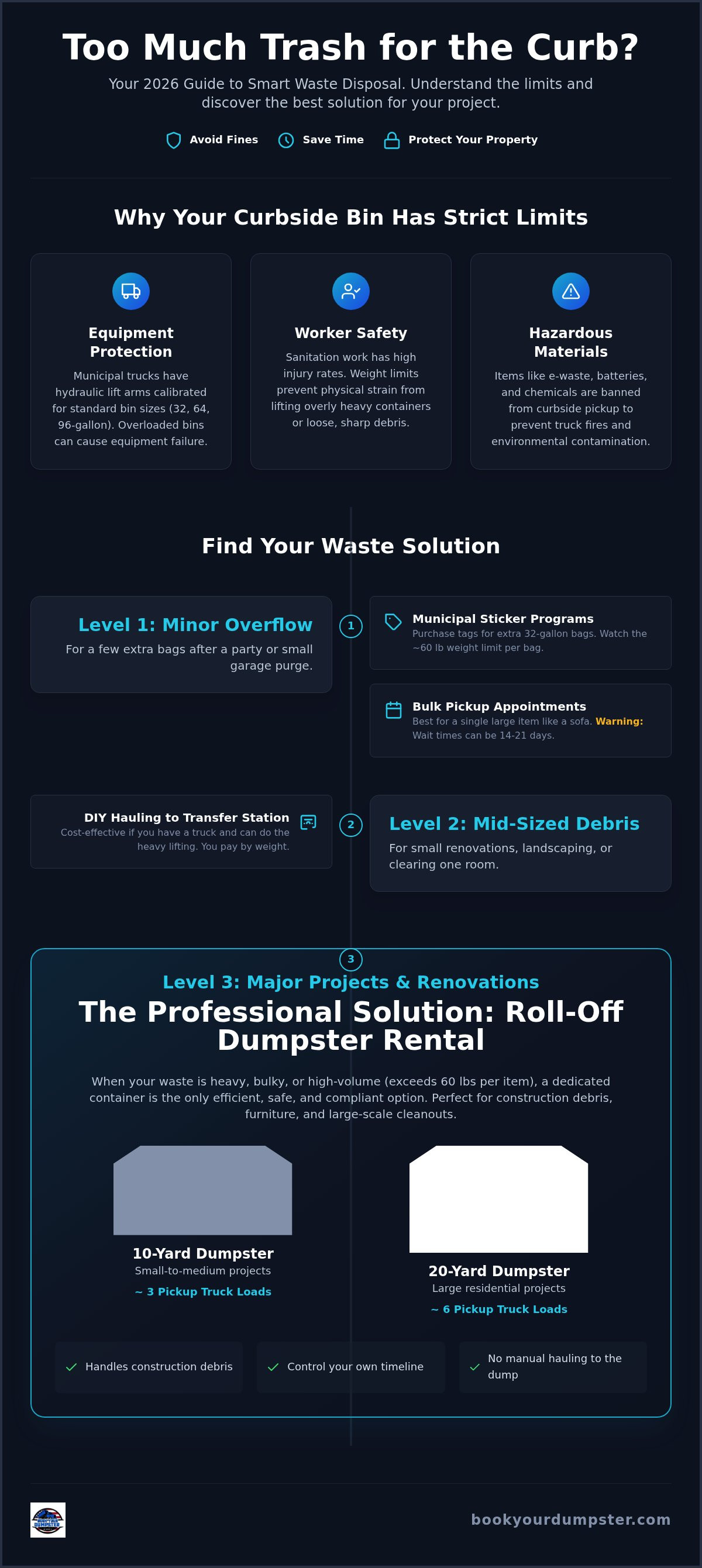
Municipal waste collection is a precision operation, not a catch-all service. Most homeowners encounter strict limits on their weekly pickup because of the physical constraints of local equipment. Standard residential bins typically come in 32, 64, or 96-gallon sizes. These capacities aren't arbitrary; they align with the lift arm limits of automated trucks. The average American generates 5.7 pounds of waste daily, but project debris can quickly overwhelm these standard containers. When you wonder what to do when you have too much trash for the curb, remember that overloading a bin or stacking heavy bags can lead to hydraulic failure in the collection vehicle.
Worker safety is the other primary driver for these regulations. Sanitation staff face high injury rates from lifting overweight containers or handling loose debris. Many cities now require pre-paid "extra garbage" stickers for any bag that doesn't fit inside the designated cart. Additionally, certain materials like e-waste, batteries, and chemicals are strictly prohibited at the curb. These items require specialized handling within the broader field of waste management to prevent environmental contamination and truck fires.
The Hidden Costs of Improper Disposal
Ignoring municipal rules leads to immediate financial penalties. Most cities issue fines for "over-filled" carts where the lid cannot remain securely closed. As of June 1, 2026, New York City requires residential buildings with 1-9 units to use official, city-branded "NYC Bins" for all trash setouts. Failure to comply results in recurring citations. Beyond fines, unsightly piles of debris block sidewalks, mailboxes, and fire hydrants. This creates accessibility issues and attracts pests like rats and roaches. Keep your property compliant and clean to avoid these avoidable expenses.
When the Curb Is No Longer an Option
Distinguish between "extra household" waste and "project-scale" waste. A few extra bags from a spring cleaning might only require a few municipal stickers. However, if you're clearing out a basement or stripping a kitchen, the curb is no longer a viable solution. Standard trucks cannot handle the weight of construction debris or massive furniture piles. If your waste exceeds 60 pounds per item or occupies more than a few square feet of sidewalk space, transition to private logistics. Move beyond the limitations of municipal pickup and secure a dedicated container at Book Your Dumpster to maintain control over your site and schedule.
Immediate Solutions for Minor Trash Overflows
Minor overflows often occur after holiday gatherings or small garage purges. Don't risk a municipal citation by simply piling extra bags next to your bin. Most cities provide specific channels for these smaller volumes before you need to scale up to a full roll-off container. Taking the right steps now prevents pests from tearing into uncollected bags and keeps your property compliant with local sanitation codes.
Using Municipal Sticker Programs
Many residents aren't sure what to do when you have too much trash for the curb for the first time. The simplest fix is often a municipal sticker program. Purchase these tags at local libraries, city halls, or authorized grocery retailers. Apply one sticker per additional 32-gallon bag and place it clearly visible for the driver. Be precise with weight. If a bag exceeds the standard 60-pound limit, drivers will leave it behind. This creates a messy situation that attracts pests and neighbor complaints.
The Reality of Bulk Pickup Appointments
Scheduling a bulk pickup is a standard solution for appliances or a single sofa. However, these services are rarely immediate. In 2026, wait times in major metros often stretch to 14 or 21 days. City trucks also refuse "loose" debris or construction materials like drywall and flooring. If your project involves renovation waste that needs to move faster, review this debris removal services guide for more efficient alternatives.
For mid-sized debris, some homeowners use collapsible bag solutions. These typically hold about 3 cubic yards of material. They work well for small garden projects but often come with high collection fees and strict placement rules. Be aware that these services will reject your waste if it contains liquids, chemicals, or electronics. Consult the EPA guidelines on Household Hazardous Waste (HHW) to find authorized drop-off points for those specific materials.
Local transfer stations remain an option if you have a vehicle capable of hauling heavy loads and the physical stamina to unload it yourself. You'll pay by weight, which can be cost-effective for a single trip. If hauling bags to a station sounds exhausting or logistically impossible, consider the simplicity of a residential dumpster rental to handle the overflow in one go without leaving your driveway.
Dumpster Rental vs. Junk Removal: Which Is Better?
When your cleanup project grows beyond a few extra bags, you face a strategic choice. You must decide between renting a container or hiring a full-service crew. Determining what to do when you have too much trash for the curb depends on your project timeline and the weight of your debris. If you're managing a kitchen remodel or a multi-day basement purge, a professional rental offers a level of control that a one-time junk removal visit cannot match. You manage the pace, the placement, and the sorting without third-party crews crowding your property.
Data from the Municipal Solid Waste Factsheet highlights that residential construction and demolition debris make up a massive portion of the national waste stream. For these heavy loads, standard junk removal crews often charge a premium due to the intense manual labor involved in loading the truck. Roll-off containers handle heavy materials like shingles, drywall, and flooring more effectively because they are engineered for high-density weight. This makes them the standard choice for contractors and savvy homeowners alike.
Roll-Off Dumpster Rental: The Efficiency Play
Professional roll-off dumpster rentals allow you to manage your own site logistics without external interference. You don't have to wait for a crew to arrive during a narrow window or worry about "on-site" price negotiations. Use the container as a central collection point throughout your project. This "fill at your own pace" model keeps your driveway clear and your workspace organized. With Book Your Dumpster, you get transparent terms and a container delivered exactly where you need it, removing the stress of multiple trips to a transfer station.
Junk Removal: When to Pay for Labor
Junk removal serves a specific purpose for those with physical limitations. If you cannot lift heavy items or prefer a "point and gone" experience, paying for labor is a reasonable trade-off. However, this convenience comes at a significant cost. If you're stuck on what to do when you have too much trash for the curb but have a massive pile of heavy debris, junk removal is typically the most expensive disposal method. You are paying for the driver's time, the fuel, and the physical effort of the loaders. For large volumes of project-scale waste, these labor costs often exceed the flat-rate price of a standard 10-yard or 20-yard dumpster rental.
Navigating Local Regulations in Major Cities
Disposal rules change the moment you cross city lines. In 2026, many regions have tightened restrictions on what can sit at the edge of your property. For instance, Illinois now requires sellers and distributors of portable batteries to manage recycling programs, meaning you cannot toss these into standard overflow bags. Understanding what to do when you have too much trash for the curb requires a localized approach to avoid heavy municipal fines. Regional variations also impact dumpster rental prices, so research your specific area before starting a project.
Street Permits and Urban Placement
Urban environments like Queens, New York, or downtown Chicago present unique logistical hurdles. You cannot simply drop a container on a public street without authorization. In New York, you must obtain a Department of Transportation (DOT) permit if the dumpster will occupy any part of the public right-of-way. For 2026, the permit process for Queens residential streets requires a digital filing at least 72 hours before delivery to ensure local traffic flow remains uninterrupted. San Francisco maintains similar strictness, requiring specific permits for any container placed on a public thoroughfare. Always opt for driveway placement when possible to bypass these fees and administrative delays. If your driveway is too narrow, plan for the permit cost in your initial budget.
Regional Waste Disposal Standards
States like Massachusetts and Illinois are increasingly adopting Extended Producer Responsibility (EPR) laws. These regulations shift the burden of disposal for electronics and specialized materials onto manufacturers. This means your local transfer station might reject items that were acceptable just a few years ago. If you're managing a large cleanout, consult local resource guides to identify which materials require separate handling. High-density areas often have limited landfill access, forcing residential waste through crowded transfer stations. Using a professional service eliminates the need for you to navigate these complex regional standards yourself.
Don't let local red tape stall your cleanup. Secure a reliable disposal solution and book your dumpster online today to ensure your project stays compliant with all 2026 city regulations.
Choosing the Right Dumpster Size with Book Your Dumpster
Identifying what to do when you have too much trash for the curb often comes down to selecting the right container for your specific volume. A 10-yard dumpster is the most efficient solution for curbside overflows that exceed municipal sticker limits. It handles garage cleanouts and minor debris piles without taking up excessive space in your driveway. For larger residential projects, the 20-yard dumpster serves as the industry standard for kitchen remodels and significant basement purges. If you're tackling a whole-home cleanout or a professional construction project, our 30 and 40-yard dumpsters provide the professional-grade capacity required to keep your site organized and safe.
Estimating Your Waste Volume
Visualize your debris in terms of standard pickup truck loads to determine your needs. A single cubic yard is roughly the size of a large washing machine. A 10-yard dumpster holds approximately 3 to 4 pickup truck loads, while a 20-yard container holds about 8 loads. Always choose a size slightly larger than your initial estimate. Debris rarely packs perfectly; air pockets and irregular shapes consume valuable space quickly. Adhere to the safety fill lines marked on the side of the container. Over-filled dumpsters create transport hazards and result in additional fees. Keep the load level with the top of the bin to ensure a safe and prompt pickup by our drivers.
The Streamlined Online Booking Process
Secure your disposal solution in under two minutes through our digital platform. Start by entering your city and selecting your required size from our available inventory. Our system allows you to schedule drop-off and pickup dates that align perfectly with your project timeline. We've modernized waste logistics through a strict commitment to pricing integrity and punctuality. You won't face hidden surcharges or vague delivery windows. We provide a high-functioning tool for your cleanup, ensuring you move from a state of clutter to a state of resolution with minimal cognitive load.
Stop managing unsightly piles and start your project with confidence. When you need to know what to do when you have too much trash for the curb, the answer is simple. Visit Book Your Dumpster now to schedule your delivery and reclaim your property today.
Secure Your Disposal Solution Today
Managing a major cleanout shouldn't involve municipal fines or physical exhaustion. You now understand why local trucks have strict weight limits and how 2026 mandates, like the NYC Bin requirements, change the setout process. When you're deciding what to do when you have too much trash for the curb, remember that a professional roll-off container provides the logistical freedom to work at your own pace. It eliminates the need for multiple trips to a transfer station and avoids the high labor costs of junk removal crews. Choosing between a 10-yard or 20-yard dumpster ensures you have the exact capacity required without paying for unused space.
We serve high-density regions including NY, NJ, IL, MA, and San Francisco with our 2026 Pricing Integrity Guarantee. Our team ensures punctual drop-off and pickup so your project stays on schedule. Don't let waste piles attract pests or block your sidewalk. Ready to clear the clutter? Book your dumpster online now! Reclaim your driveway and enjoy the immediate relief of a clean, compliant property.
Frequently Asked Questions
Can I put extra trash bags next to my bin without a sticker?
No, you cannot typically leave extra bags without an authorized municipal sticker. Most sanitation departments strictly enforce bin-only collection to maintain automated route efficiency. If you place un-stickered bags on the curb, they will likely remain there until you follow local protocol. This often leads to neighbor complaints and potential sanitation department fines. Check your local utility website to purchase authorized tags before your next collection day.
What is the largest size dumpster I can put in my driveway?
A 20-yard dumpster is typically the largest container suitable for a standard residential driveway. While 30 and 40-yard units exist, their length and weight can damage residential asphalt or concrete surfaces. A 20-yard container provides ample space for most kitchen remodels while fitting safely within a 20-foot driveway. Always measure your available space and check for overhead obstructions like low-hanging branches or power lines before delivery.
How much does it cost to rent a 10-yard dumpster for a weekend?
Rental costs fluctuate based on your specific location, the weight of your debris, and the duration of the rental. We don't provide a single national price because disposal fees at local transfer stations vary significantly by county. To get an accurate, transparent quote for your project, use our online booking system. It calculates the total cost based on your zip code and container size to ensure pricing integrity for every customer.
Do I need a permit if the dumpster is on my private property?
You generally don't need a permit if the container sits entirely on your private property. Permits are almost exclusively required for placements on public streets, sidewalks, or the right-of-way. If any part of the dumpster overhangs a public walkway, you must contact your local building department or DOT. For driveway placements, ensure the surface is level and clear of vehicles to allow for a punctual drop-off.
What happens if the trash truck ignores my extra bags?
If a truck ignores your bags, you are responsible for removing them from the public right-of-way immediately. Leaving uncollected waste out is a violation of local health and hygiene codes. This situation is the most frequent reason homeowners search for what to do when you have too much trash for the curb. You must either secure the proper stickers for the next cycle or arrange for a private container to clear the debris.
Can I dispose of old furniture at the curb in New York or Illinois?
You can dispose of furniture at the curb only if you schedule a bulk pickup appointment in advance. In New York, furniture must be placed out according to strict timing rules to avoid blocking pedestrian paths. Illinois residents should check with their specific county as rules vary between suburban and urban areas. Never leave upholstered items out in the rain, as water weight can make them too heavy for standard hydraulic lifts.
Is it cheaper to haul trash to the dump myself or rent a dumpster?
Hauling waste yourself is only cheaper for very small volumes that fit in a single pickup truck load. Once you factor in the cost of fuel, gate fees at the transfer station, and the hours spent loading and unloading, a dumpster rental often becomes the more economical choice. For project-scale waste, a single roll-off container replaces multiple exhausting trips to the dump. This allows you to focus on your project instead of logistics.
What items are strictly prohibited from both the curb and dumpsters?
Prohibited items include household hazardous waste, wet paint, tires, and large appliances containing Freon. You cannot place flammable liquids, medical waste, or lead-acid batteries in either a municipal bin or a rental dumpster. These materials require specialized handling at authorized recycling centers to prevent environmental damage. Consult your local county's hazardous waste guide for a list of seasonal drop-off events to safely clear these dangerous materials from your property.


