
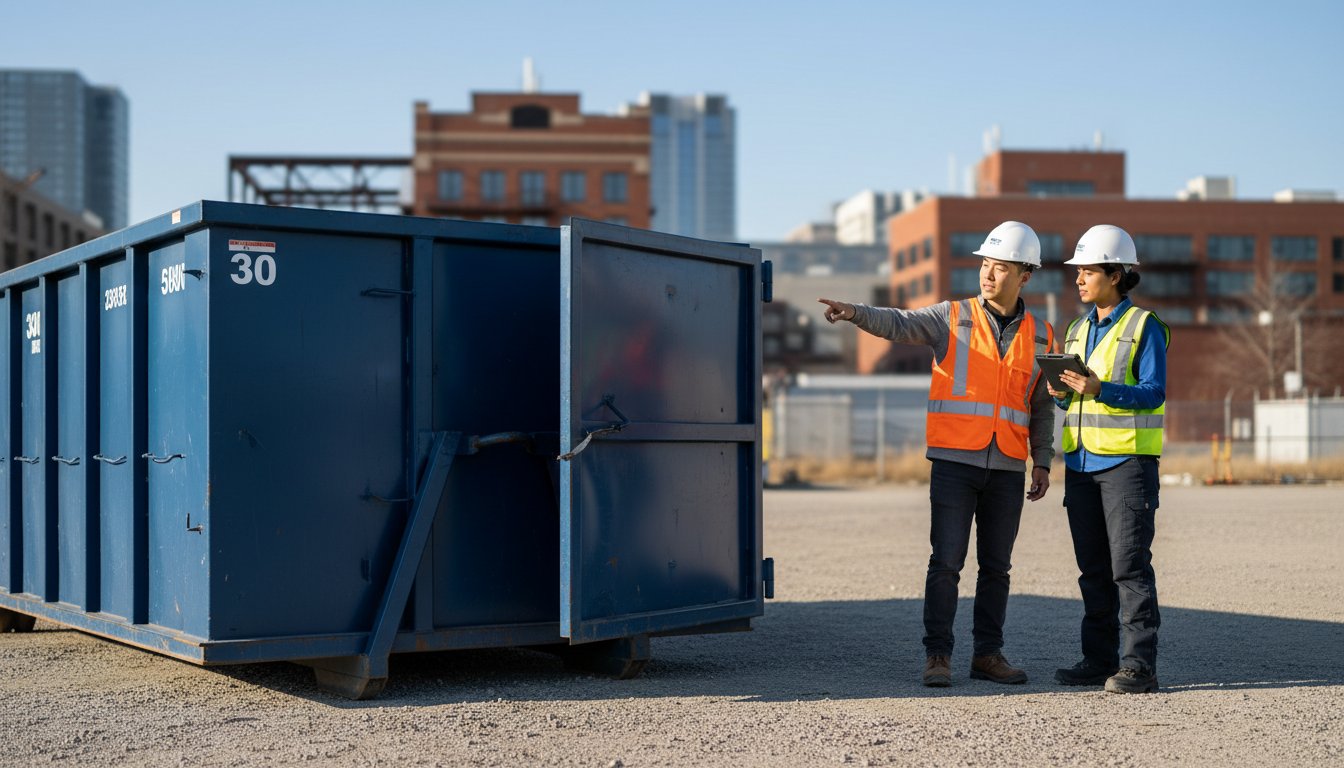
Brute force won't fix a jammed latch, but it might land you in the emergency room or leave you with a $500 repair bill. When you're troubleshooting a stuck dumpster door on a busy job site, muscle is rarely the answer. You're likely staring at a 20 yard or 30 yard dumpster full of debris, and the door simply refuses to budge. It's a common frustration that stalls your project and risks your physical safety. We understand that a stuck door is a logistical headache you didn't schedule.
Success is about mechanical alignment rather than raw strength. Most issues stem from frame torque or hidden debris interference in the hinges. You'll learn the exact steps to safely unstick any container without damaging the equipment or risking injury. We'll cover how to clear the track, level the load, and apply the right lubricants to get your project moving again. We also explain when a door is beyond a DIY fix and requires a professional replacement to avoid 2026 OSHA penalties that can reach $16,550 for serious safety violations. Follow these steps to resolve the jam and get back to work without the stress of extra fees.
Key Takeaways
- Identify whether your door is stuck due to frame torque or a mechanical latch failure by checking for uneven gaps at the top corners of the container.
- Follow the 8-foot swing radius protocol when troubleshooting a stuck dumpster door to maintain site safety and prevent impact injuries.
- Apply specific maintenance fixes for rust expansion and frozen latches to keep your project moving in high-humidity or winter climates.
- Distinguish between minor debris jams and dangerous structural issues like sheared hinges or high-tension spring failures that require professional repair.
- Prevent future alignment problems by ensuring your 10 to 40 yard roll-off container is placed on level ground from the moment of delivery.
Understanding Why Dumpster Doors Stick: Mechanical vs. External Factors
Before you grab a pry bar, identify the specific equipment on your site. Most Roll-off dumpsters used for residential cleanups or construction projects feature a heavy swing door at the rear. This allows you to walk debris directly into the unit. In contrast, commercial front-load containers typically use sliding side doors or plastic lids. Troubleshooting a stuck dumpster door requires an understanding of the physics involved. The door on a 40 yard dumpster behaves much differently than one on a 10 yard unit. Larger doors have a higher surface area and greater weight, which puts immense pressure on the hinges if the container sits on a slope. If the frame isn't perfectly square, the latch won't align, and the door will remain seized.
Gravity and weight distribution are your primary obstacles. When you load heavy materials like concrete or roofing shingles toward the back of the container, that mass presses directly against the door's interior. This internal pressure creates friction on the locking pin. Additionally, if the container is placed on soft or uneven ground, the steel walls can flex. Even a minor shift in the frame, known as torquing, can move the latch assembly out of its strike zone. You can find more information on choosing the right size for your project at Book Your Dumpster USA to ensure you don't overload your container and cause these structural issues.
The Anatomy of a Roll-Off Dumpster Door
Standard roll-off doors rely on three main components to function. First, the vertical hinges and the hinge pin carry the entire weight of the steel panel. Second, the primary latch handle and secondary safety chains provide the locking force. Finally, most doors include a "shoe" or a small support wheel at the bottom outer corner. This shoe is designed to carry the door's weight as it swings open, preventing the hinges from sagging under the load. If any of these parts are bent or obstructed, the door will fail to move freely.
Common Causes of Door Resistance
Debris is the most common reason for a jammed door. Small rocks, wood splinters, or hardened mud often pack into the floor track or the gap between the door and the frame. This prevents the door from closing flush, which in turn prevents the latch from releasing. Overloading also causes significant problems. When you pack a 20 yard or 30 yard dumpster beyond its capacity, the side walls may bulge outward, pulling the hinge and latch side away from each other. Mechanical wear is the final factor. Rust can seize the locking pins in high-humidity environments, while a lack of grease on the hinges increases friction until the metal binds.
Step-by-Step Troubleshooting for Roll-Off Dumpster Swing Doors
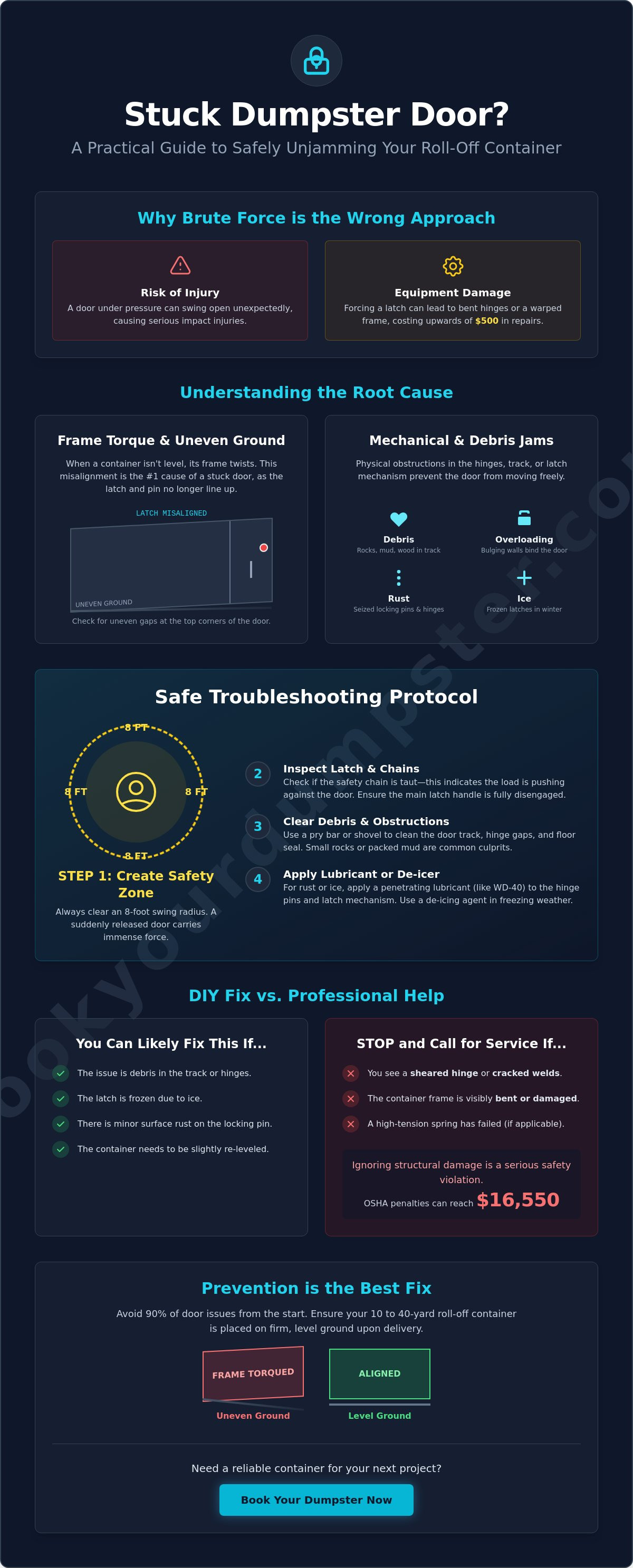
Safety is your first priority. Before you touch the latch, clear an 8-foot perimeter behind the unit. A stuck door can suddenly swing open with thousands of pounds of pressure, especially if the load has shifted during the project. Adhering to OSHA safety regulations ensures you avoid site injuries and costly penalties. Once the area is clear, inspect the safety chain and primary locking pin. If the chain is taut, the load is likely leaning against the door. Don't remove the pin until you've relieved this tension by shifting the debris away from the rear wall.
Verify that the latch handle is fully disengaged. Sometimes the handle feels loose, but the internal cam hasn't cleared the catch. Give the handle a firm, steady push to the "open" position. If it resists, don't use a sledgehammer. Instead, look for mechanical interference. Using a pry bar or a flat-head shovel to clear heavy debris from the bottom track often solves the problem instantly. If you find yourself struggling with a container that's consistently difficult to operate, it might be time to schedule a more reliable delivery for your next project phase.
Clearing Obstructions and Debris
Small rocks and construction waste love to wedge themselves into the tight gaps of a hinge or seal. Inspect the vertical gap on the hinge side first. Even a single pebble can act as a fulcrum, preventing the door from pivoting. Clean the floor area inside the dumpster near the door seal to ensure no material is pinched. Use a stiff brush or a long screwdriver to scrape out the door track and remove packed dirt or gravel. This simple step in troubleshooting a stuck dumpster door often provides the clearance needed for the door to seat properly in its frame.
Managing Hinge Sag and Pin Alignment
Heavy use causes hinges on 30 yard and 40 yard dumpsters to sag over time. When the door drops even half an inch, the locking pin no longer aligns with the hole in the frame. To fix this, use a car jack or a sturdy timber as a lever under the outer shoe of the door. Gently lift the door until the pin aligns with the latch assembly. This "Lift and Swing" technique bypasses the friction caused by metal-on-metal sag. Apply a generous amount of WD-40 or silicone spray to the hinge pins once the door is open. This prevents future seizing and ensures the door remains manageable for the duration of your rental.
Solving Frame Torque and Ground Leveling Issues
Frame torque is the most common technical reason for a seized container, yet it's often the most overlooked. This occurs when the heavy steel frame of the container twists because the four corners aren't resting on the same horizontal plane. Even a high-quality 20 yard or 30 yard dumpster will flex under the weight of several tons of debris. When the frame twists, the rectangular door opening becomes a parallelogram. This misalignment pinches the door at the corners, making it impossible to operate the latch. If you are troubleshooting a stuck dumpster door and the hinges appear fine, your problem is likely the ground beneath the unit.
Visual signs of a torqued frame are easy to spot if you know where to look. Stand back and examine the gaps between the door and the frame. If the top-right corner is wedged tightly against the header while the bottom-left corner shows a wide gap, the container is out of square. This happens frequently when a unit is placed on soft soil or half-on/half-off a concrete curb. Asphalt provides better stability than dirt, but even a hot summer day can cause the heavy rollers of a 40 yard dumpster to sink into soft pavement, triggering a frame twist. Rectifying this requires restoring the container to a level state before attempting to force the door.
Identifying an Uneven Load-Bearing Surface
Walk around the perimeter and check if any single corner is sinking into the grass or mud. A sinking corner is a clear indicator that the weight distribution is uneven. Use a spirit level on the top rail of the container to verify that it's sitting flat. If the bubble isn't centered, the door won't align. Review the specific roll off dumpster rental requirements for placement to ensure your site meets the necessary stability standards for heavy equipment.
Techniques for Realigning a Twisted Frame
Correcting a twisted frame involves lifting the low corner to square the opening. If the delivery truck is still on-site, ask the driver to perform a "Three-Inch Lift." By slightly winching the container back onto the rails, the frame often snaps back into its original shape. For containers already in use, you can use dunnage. Slide 4x4 timber blocks under the sinking corner to provide a solid foundation. Following industry safety standards during this process is vital. Never place your limbs under the container while it's being leveled. You can also shift internal debris toward the high side of the dumpster to help balance the weight. Once the frame is square, the door should swing freely without the need for excessive force. Troubleshooting a stuck dumpster door is often as simple as fixing the foundation it sits on.
Environmental and Maintenance Fixes: Rust, Ice, and Debris Jams
Weather conditions dictate how steel containers behave on your job site. In high-humidity regions like Queens or coastal San Francisco, salt air accelerates oxidation. This rust expansion physically increases the diameter of hinge pins and latch bars, causing them to seize within their sleeves. When you're troubleshooting a stuck dumpster door in these environments, simple pulling won't work. You must address the chemical bond formed by the rust before the mechanical components will move. Metal-on-metal friction increases significantly when rust is present, often requiring more than just manual strength to overcome.
Maintaining a clear latch assembly is your best defense against the elements. Salt and grit from coastal winds or winter road treatments can migrate into the hinge housing. This creates a grinding paste that eventually locks the door in place. Regular inspection and cleaning of these pivot points prevent the logistical stress of a jammed unit during a critical cleanup phase. Keep the area around the latch handle free of packed mud and salt to ensure the mechanism can travel its full distance without interference.
Dealing with Seized Metal and Rust
Coastal service areas present a unique challenge for heavy equipment. Salt air causes rapid corrosion that can fuse a locking pin to its bracket in just a few weeks. If the pin is seized, use the "Heat and Tap" method. Apply localized heat to the outer bracket to expand the metal, then use a hammer and punch to drive the pin out safely. Once freed, apply a heavy-duty, long-term lithium grease to the assembly. This creates a moisture barrier that prevents future seizing. If your current container is too rusted to operate safely, book your next roll-off dumpster from a provider that maintains a modern, well-serviced fleet.
Winter Troubleshooting: Ice and Snow Jams
Chicago and Massachusetts winters introduce ice as a primary mechanical obstacle. Snow melts during the day and refreezes in the latch assembly overnight, creating a solid block of ice. Never use boiling water to clear a frozen dumpster lock. The extreme temperature shift can cause the metal to become brittle or crack the paint, leading to accelerated rust later. Instead, use a propane torch or a commercial de-icer spray to melt the ice gently. Pay close attention to the "Ice Shelf" that forms along the bottom seal. This layer of frozen slush prevents the door from dropping low enough to clear the top latch. Use a flat-head shovel to chip away any ice buildup under the door before attempting to swing it open. This ensures the door has the vertical clearance necessary to disengage from the frame without damaging the hinges.
When to Call the Pros: Safety Boundaries and Rental Support
Troubleshooting a stuck dumpster door should never compromise your safety. If you've addressed frame torque and cleared debris but the door still won't budge, the issue is likely structural. Professional repair costs in 2026 reflect the complexity of these fixes. Rehanging a broken door typically costs around $750, while a professional realignment averages $500. Attempting to force a structurally compromised unit can lead to catastrophic failure. Stop immediately if you see sheared metal or warped steel. Your project timeline is important, but your physical safety is the priority.
High-tension components require professional tools and training. On commercial front-load units, be extremely cautious of the springs on the lids. These springs store immense energy and can cause severe injury if they snap during an amateur repair attempt. We maintain our fleet to the highest standards, but heavy use on construction sites can lead to unexpected wear. When DIY methods fail, it's a sign that the container needs expert attention. We're here to handle the mechanical heavy lifting so you can focus on your cleanup.
Structural Red Flags You Should Not Ignore
Inspect the hinge assembly for cracked welds. A cracked weld means the structural integrity of the 30 yard or 40 yard dumpster is gone. If the door has completely jumped its track or is hanging by a single hinge, do not attempt to lift it back into place. This is a high-risk situation that requires specialized equipment to resolve. Contact Book Your Dumpster USA customer support for emergency door fixes. We'll assess the damage and determine if an onsite repair or a total container swap is necessary to keep your site compliant with safety regulations.
Reporting the Issue to Your Rental Provider
Document the problem thoroughly to ensure a fast, hassle-free resolution. Take clear photos of the latch, the hinges, and the ground surface where the container sits. This evidence helps our team diagnose the problem before we arrive. Reference your dumpster rental agreement to understand the maintenance clauses and liability protections available to you. If the door poses a safety risk to your crew, request an immediate site visit. Our policy focuses on rapid response to minimize your downtime. Don't let a mechanical failure stall your progress. Report the issue, secure the area, and let our experts restore your site's efficiency.
Master Your Site Logistics
Successful troubleshooting a stuck dumpster door relies on mechanical alignment and debris management rather than raw physical force. Always verify your ground level and clear the floor track of gravel or construction waste before you attempt to swing the door. If you encounter structural red flags like bent frames or sheared hinges, stop immediately and call for professional support. Prioritizing safety over speed prevents injuries and avoids the high cost of equipment damage fees. Understanding these mechanical limits keeps your job site moving efficiently.
Don't let faulty equipment stall your renovation or construction project. Choose a partner that delivers reliability and logistical ease. Rent a Reliable Roll-Off Dumpster Today to experience the difference of a high-functioning tool. We provide expertly maintained 10 to 40-yard containers with transparent pricing and no hidden fees. Our on-time delivery service across NY, NJ, IL, and MA ensures your site stays clear and your timeline remains intact. Secure your container now and get back to work with total confidence in your equipment.
Frequently Asked Questions
How do I open a roll-off dumpster door for the first time?
First, unhook the secondary safety chain. Pull the locking handle upward or outward depending on the specific model of your container. Always stand to the side of the unit to stay clear of the swing path. Many first-time users make the mistake of standing directly behind the door, which is dangerous if the debris shifts and forces the door open suddenly.
Why is my dumpster door hard to close even when empty?
Debris in the bottom track or frame torque is likely the cause. Small rocks or wood scraps often wedge into the seal area and prevent a flush close. Even if the container is empty, placing a 30 yard dumpster on uneven dirt can twist the steel frame. This misalignment prevents the latch from seating properly, making the door feel like it's jammed.
Can I use a sledgehammer to unstick a dumpster latch?
Avoid using a sledgehammer because heavy impact can bend the locking pins or warp the latch housing permanently. This type of damage often results in repair fees between $206 and $249. Use a pry bar for controlled leverage instead. If the latch is seized, apply a penetrating lubricant and wait for it to work before attempting to move the handle again.
What should I do if the dumpster door hinges are rusted shut?
Spray the hinges with a penetrating oil and allow it to soak for at least 20 minutes. Troubleshooting a stuck dumpster door that has rusted requires breaking the chemical bond of the oxidation. If the oil doesn't work, use a hammer and a punch to gently tap the hinge pin. Never force the hinge with a vehicle or heavy machinery, as this will shear the metal.
Is it safe to leave a dumpster door open while loading debris?
You can leave the door open, but you must use the safety hook to pin it against the side of the container. An unsecured door is a liability, especially in high winds. OSHA standards emphasize maintaining a clear and controlled work area at all times. Always close and latch the door before the delivery truck arrives for pickup to ensure a safe transport.
How much clearance do I need to fully swing open a 20-yard dumpster door?
Plan for at least 8 to 10 feet of rear clearance. Since most roll-off containers are 8 feet wide, the door requires that full distance to swing 180 degrees. If you're working in a tight driveway or a narrow alley, verify this space before the dumpster is dropped. Lack of clearance is a primary reason users struggle with door operation during their project.
What happens if I accidentally damage the dumpster door during troubleshooting?
You will likely be responsible for the repair costs according to your rental agreement. In 2026, professional door realignment costs approximately $500. It's always better to stop and call for a site visit if the door feels structurally compromised. Most reputable providers prefer to send a technician rather than deal with a permanently damaged 40 yard container and the associated safety risks.
Why does my dumpster door look crooked compared to the frame?
A crooked door is a classic symptom of frame torque. When the container sits on soft grass or uneven pavement, the weight of the steel causes the frame to twist. This makes the rectangular opening lean to one side. Troubleshooting a stuck dumpster door in this scenario involves using 4x4 timber blocks to level the sinking corner and restore the frame's square shape.