

Imagine clearing your entire morning for a renovation, only to watch the haul truck drive away without dropping off your container because a parked car blocked the path. You didn't get your bin, but you're still stuck with a bill for the driver's time. You're likely asking, what are dumpster trip fees and why are they hitting your project budget? These charges are essentially "dry run" fees. They occur when a driver attempts a delivery or pickup but can't complete the task due to site obstacles, overfilled bins, or prohibited materials.
Hidden costs and service delays cause unnecessary stress for homeowners and contractors alike. We know you want a straightforward rental process without the logistical headaches. This article explains exactly why these fees happen and how to avoid them in 2026. We'll walk you through essential site preparation and the common delivery mistakes that lead to extra charges. Follow these clear instructions to ensure a successful first attempt and keep your waste management costs predictable and transparent.
Key Takeaways
- Define exactly what are dumpster trip fees and recognize how "dry run" charges impact your project budget.
- Clear all physical obstacles like parked cars and low-hanging wires to ensure the roll-off truck has enough room for delivery.
- Provide precise placement instructions through our online booking system to eliminate confusion when the driver arrives.
- Prepare your site 24 hours before the scheduled service to ensure a successful first attempt and avoid contractor downtime.
- Monitor your load levels and debris types to prevent aborted pickups caused by overfilled containers or prohibited materials.
Understanding Dumpster Trip Fees: Why They Appear on Your Bill
Unexpected charges can quickly derail a project budget. Understanding what are dumpster trip fees is the first step toward maintaining financial control over your cleanup. A trip fee is a standard industry charge applied when a hauling company attempts to deliver or pick up a container but cannot complete the task due to obstacles at your site. Think of it as a service call fee. You're paying for the driver's time and the operational costs of the truck, even if the dumpster stays on the trailer.
These fees differ significantly from other dumpster pricing components like overage or extension fees. An overage fee applies when you exceed the weight limit of your bin. An extension fee covers extra rental days. In contrast, a trip fee covers the immediate logistical loss of a failed dispatch. Hauling companies operate on tight margins and strict schedules. When a truck arrives at your property and cannot perform the service, the company loses money on labor, fuel, and the opportunity to serve another customer.
Professional services like Book Your Dumpster USA prioritize transparency to help you avoid these costs. We provide clear instructions during the booking process because we want your delivery to succeed on the first attempt. When you understand the mechanics of the "dry run," you can take the necessary steps to keep the path clear and the project moving.
The Logistics of a 'Dry Run'
A dry run is a dispatched service that cannot be completed due to site-side issues. These heavy roll-off trucks are not standard pickups; they require significant clearance and specialized handling. Every time a driver starts the engine, the company incurs high fuel and maintenance costs. If a stop is blocked, the driver's entire daily schedule shifts. This creates a ripple effect, causing delays for every subsequent customer on that route. The trip fee compensates for this disruption and the sunk cost of the failed transit.
When Trip Fees Are Applied
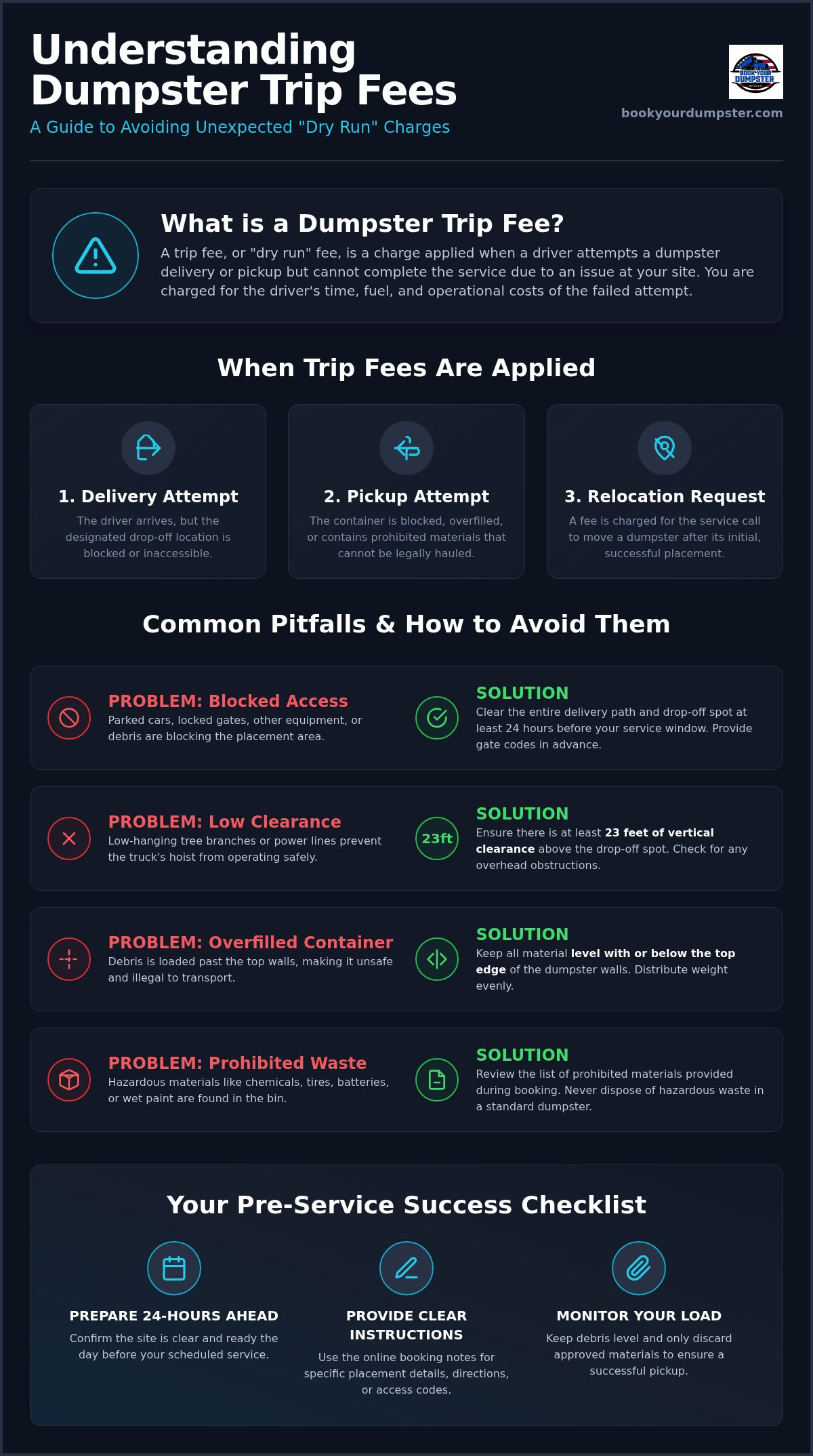
Fees are not arbitrary penalties. They trigger during specific points in the rental cycle when the site is unprepared for the truck. Common scenarios include:
- Delivery Stage: The designated drop-off spot is blocked by parked cars, locked gates, or low-hanging debris.
- Pickup Stage: The container is inaccessible, overfilled past the side walls, or contains prohibited materials that the driver cannot legally transport.
- Relocation Requests: If you decide the dumpster needs to move after the initial placement, the return trip to reposition the bin will trigger a fee.
Verify your site is ready at least 24 hours before your scheduled window. Check for overhead wires and ensure there's enough room for the truck to maneuver. Taking ten minutes to prep your driveway can save you the cost of a failed delivery attempt.
Common Scenarios: Why a Driver Might Abort Your Service
Failed deliveries are frustrating for everyone. Understanding what are dumpster trip fees requires looking at the site from a driver's perspective. Blocked access is the primary reason drivers abort a service. If a driver cannot safely reach the drop-off or pickup point, they must move to the next customer. This protects the equipment and your property; however, it results in a bill for the wasted transit. Drivers don't want to leave without completing the job, but they cannot wait on-site while you move cars or clear debris.
Physical Obstructions and Site Access
Roll-off trucks require substantial room to operate. You need at least 23 feet of vertical clearance for the hoist to lift and tilt the bin. Low-hanging tree branches or power lines are immediate deal-breakers. When a driver sees a potential hazard overhead, they will not risk the equipment or local infrastructure. Similarly, ensure the path is clear of parked cars, delivery vans, and equipment trailers.
Ground conditions also matter. Heavy trucks can sink in soft mud or slide on steep, icy inclines. In urban hubs like Queens or Chicago, missing street permits can stop a delivery before it starts. Local regulations often require a visible permit if the bin sits on public property. If the paperwork is missing, the driver cannot legally drop the container. You can use our online booking system to provide specific placement notes and gate codes to help our team navigate these challenges.
Overfilled Containers and Loading Issues
Pickup attempts often fail because the container is unsafe to haul. Debris must be level with the top of the bin. If "top-off" junk sticks out, the truck's automated tarping system cannot secure the load. This creates a massive safety risk for other drivers on the highway. Drivers are legally responsible for their loads and will refuse any bin that risks spilling material during transit.
Weight is another critical factor. If you fill a 40-yard dumpster with heavy materials like concrete or dirt, it might exceed the truck's lifting capacity. Proper Sustainable Management of Construction and Demolition Materials requires sorting your waste correctly. Putting heavy masonry in a bin meant for household junk can lead to a failed pickup. If the truck's hydraulic system cannot lift the weight, the driver will leave the bin and charge a trip fee. Always check the load limits for your specific container size to avoid these logistical bottlenecks.
The Industry Reality: What Influences Fee Costs
Trip fees aren't arbitrary penalties designed to inflate your bill. They represent the actual overhead required to put a heavy-duty vehicle on the road. When you ask what are dumpster trip fees, you're looking at a reflection of labor, logistics, and regional economic factors. These charges are industry-standard. Every hauling company, from local providers to national chains, uses them to recover costs when a service window is wasted. In 2026, local fuel price volatility has made these fees more critical than ever for maintaining service reliability.
Distance from the dispatch yard is the primary driver of cost. Haulers calculate fees based on the mileage and time required to reach your site. If a truck travels 40 miles for a "dry run," the company loses significant resources that cannot be recovered. You're paying for the driver's professional time and the specialized equipment's wear and tear. High-functioning tools like roll-off trucks require constant maintenance, and every unnecessary mile adds to that burden.
Regional Factors in Trip Charges
Where you live changes the math. In dense urban markets like New York, San Francisco, or Chicago, traffic complexity is a major factor. A driver might spend two hours navigating through gridlock to reach a job site in Queens. If that delivery fails, the company has lost a massive chunk of that driver's legal on-duty hours. Urban fees are often higher because the "cost of time" is significantly greater than in rural areas where traffic is negligible.
Regional regulations also play a role. Different states have varying labor laws and disposal requirements that influence operational costs. To get a better sense of how these expenses vary by location, review our guide on Dumpster Rental Prices in New York, Illinois, and Massachusetts. Understanding these local nuances helps you build a more accurate project budget from the start.
The Hidden Cost of Project Delays
Don't focus solely on the fee on your invoice. For contractors and homeowners, the real damage is the project's stall. A failed dumpster delivery can stop a demolition crew in its tracks. If you have five workers standing around with no place to put debris, you're losing hundreds of dollars in labor costs every hour. This creates a domino effect that can push back your entire renovation schedule.
Rescheduling isn't always instant. Most haulers have fully booked routes days in advance. If your delivery fails on a Tuesday, you might not get back on the schedule until Thursday or Friday. The trip fee is usually the smallest part of the financial hit when compared to the cost of contractor downtime and missed deadlines. Plan your site preparation carefully to keep your crew working and your timeline intact.
Proactive Steps to Prevent Trip Fees on Your Job Site
Avoiding logistical surcharges requires a proactive approach. You now know what are dumpster trip fees and why haulers must charge them to maintain route efficiency. Prevention starts 24 hours before the truck arrives. Clear communication with your provider ensures the driver has everything they need to complete the job on the first attempt. Follow these steps to keep your project on schedule and your budget intact.
Permit management is a critical part of site readiness. If your bin is placed on a public street in cities like Chicago or Queens, the driver must see a valid permit before dropping the container. Ensure your paperwork is printed and visible, or confirm that your provider has filed the necessary local documentation. If a driver arrives and finds a permit violation, they will abort the delivery to avoid heavy municipal fines, resulting in an immediate trip charge on your bill.
The 24-Hour Pre-Delivery Checklist
Preparation is the most effective way to eliminate "dry run" charges. Walk your site the day before delivery to identify potential bottlenecks. Use this checklist to secure your drop zone and ensure a seamless experience:
- Clear the path: Move all vehicles, equipment, and portable basketball hoops away from the designated area.
- Update access info: Provide gate codes, lock combinations, or specific entry instructions through our online booking system at the time of your order.
- Scan for height: Verify that new construction scaffolding or temporary utility wires haven't been installed since you placed your order.
- Confirm the surface: Ensure the drop-off spot is level and firm enough to support the weight of a loaded truck.
Loading Your Dumpster for a Safe Pickup
Loading mistakes are the primary cause of failed pickups for all sizes, from our compact 10-yard bins to our massive 40-yard containers. You must follow the "level load" rule. This means all debris must stay below the rim of the dumpster. If items protrude from the pockets or hang over the sides, the driver cannot legally transport the load. This is a non-negotiable safety standard for highway travel. Distribute heavy materials like shingles or wood evenly along the floor of the bin to prevent the truck from tipping during the lift.
Proper loading ensures your project adheres to the standards outlined in Roll Off Dumpster Rental: The Complete Guide. When you load your bin correctly, you protect your property and ensure a seamless pickup experience. If you're unsure about the weight limits for specific materials, consult your rental agreement before you start loading. Take ten minutes to double-check your site today to ensure a successful service window tomorrow.
Reliable Service with Book Your Dumpster USA
Book Your Dumpster USA operates on a foundation of clarity and professional reliability. We provide 10, 20, 30, and 40-yard roll-off dumpsters across major metro hubs, including New York, Illinois, Massachusetts, and San Francisco. Our goal is to remove the logistical friction that often plagues waste management. By helping you understand what are dumpster trip fees, we empower you to prepare your site for a seamless experience. We don't want to charge for failed attempts. We want to deliver your equipment on time so your project stays on track.
Our business model prioritizes transparency over hidden surcharges. We maintain a high-functioning fleet and a team of professional drivers who respect your timeline. Whether you are managing a residential basement cleanout or a large-scale commercial demolition, we provide the tools and information necessary for success. Use our digital platform to manage your scheduling and ensure your site is ready for the heavy lifting. We focus on the "verbal handshake" of pricing integrity, ensuring you know exactly what to expect before the truck ever leaves our yard.
Why Transparent Logistics Matter
Residential and commercial clients both need punctuality to keep their crews moving. We work closely with every customer to ensure site readiness before dispatching a driver. Our streamlined online booking system is more than just a checkout tool. It allows you to provide detailed placement notes, gate codes, and specific drop-off instructions. This precision eliminates the guesswork that often leads to a "dry run" and subsequent fees. If you're starting a smaller home renovation, secure your 10 Yard Dumpster Rental today and use our placement tools to mark your spot.
Expert Support for Your Waste Management Needs
Navigating city-specific regulations in Queens, Chicago, or San Francisco is a challenge for any project manager. We bring local expertise to every order. We understand the permit requirements and street access limitations unique to these urban environments. Don't leave your delivery to chance. If you have concerns about overhead obstructions or tight alleyways, call our team with your site-specific questions well before your delivery date. We provide direct, professional communication to resolve potential issues before they become expensive mistakes. Take control of your project's waste management today. Book your dumpster online now and experience a flat-rate service built on honesty and efficiency.
Master Your Project Logistics
Managing a cleanup project requires precision and foresight. You now understand that what are dumpster trip fees is a question of logistical efficiency; these charges cover the real costs of labor and fuel when a delivery or pickup is blocked. By clearing your driveway, checking for overhead wires, and securing local permits in hubs like Chicago or Queens, you keep your project moving without unnecessary surcharges. Site readiness is the most effective tool you have to maintain your budget and prevent contractor downtime.
Our team provides professional roll-off service across NY, NJ, IL, MA, and SF. We offer 10, 20, 30, and 40-yard containers to fit any project scale, from small residential cleanouts to major commercial demolitions. We use direct communication and a streamlined booking system to ensure your site is ready before the truck arrives. This proactive approach eliminates service friction and keeps your timeline intact. Don't let logistical bottlenecks stall your crew or blow your budget. Take the first step toward a cleaner, more organized job site today.
Ready for a hassle-free rental? Book your dumpster online today!
Frequently Asked Questions
What exactly is a dumpster trip fee?
A dumpster trip fee is a standard industry charge applied when a hauling company attempts a service that cannot be completed due to site obstacles. This fee covers the cost of the driver's time, fuel, and the logistical impact on the daily route. When you ask what are dumpster trip fees, think of them as "dry run" costs. They ensure the company recovers expenses even when a bin cannot be safely placed or removed.
How much space does a roll-off truck need for delivery?
Roll-off trucks require approximately 60 feet of linear space to drop a container safely. You also need a minimum of 23 feet of vertical clearance to allow the hoist to lift and tilt the bin without hitting power lines or tree branches. Ensure the path is at least 10 feet wide. If these space requirements are not met, the driver will abort the delivery and apply a trip charge to your account.
Can I get a trip fee if I'm not home during the delivery?
You can certainly receive a trip fee even if you are not present during the delivery window. Your physical presence is not required; however, the drop-off zone must be completely accessible and free of obstructions like parked cars or locked gates. Submit gate codes or specific placement notes through our online booking system in advance. If the driver arrives and finds the path blocked, the service attempt fails.
Why was I charged a trip fee for an overfilled dumpster?
Drivers are legally prohibited from transporting containers loaded above the side walls or rim. Overfilled dumpsters pose a significant safety risk on highways because debris can fly out and strike other vehicles. If a driver arrives for a pickup and sees materials protruding from the top, they must leave the bin behind. This results in a trip fee to cover the failed dispatch and the need to reschedule the haul.
Do I need a permit to avoid a trip fee on a city street?
Most major metro areas like Chicago and Queens require a valid street permit for dumpsters placed on public property. If a driver attempts a delivery and the permit is missing or expired, they cannot legally drop the bin. This leads to an aborted service call. Verify your local municipal requirements and ensure the permit is visible to the driver to prevent unnecessary charges on your final bill.
How can I avoid a trip fee if my driveway is steep or narrow?
Clear communication is the best way to handle challenging terrain. If your driveway is exceptionally narrow or has a steep incline, send detailed notes or photos to the dispatcher before your delivery date. Drivers must assess whether the truck can safely maneuver without tipping or damaging the pavement. In some cases, placing the bin at the curb or a more level area is the only way to avoid a failed attempt.


