
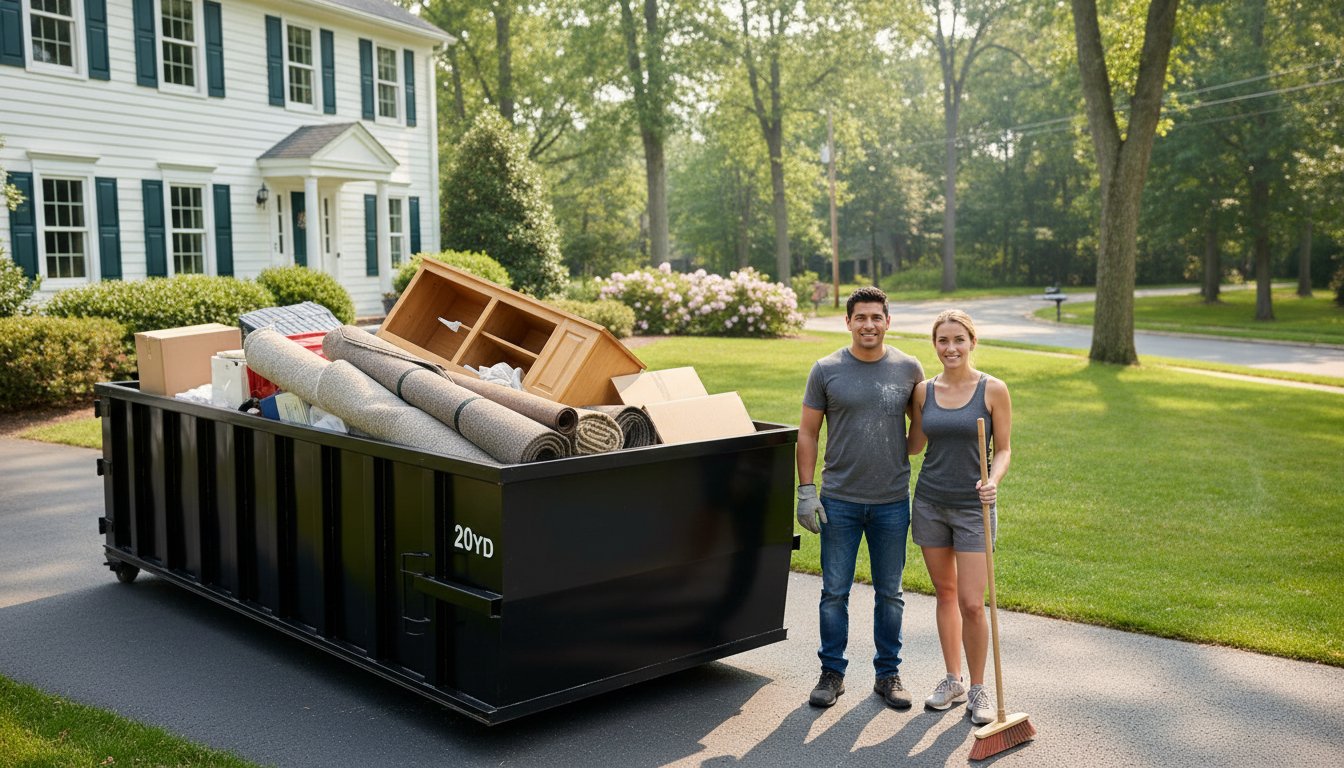
Last Tuesday, a homeowner realized their basement cleanout actually required hauling away 120 contractor-grade trash bags. This common stress point affects residential and commercial projects across New York, Illinois, Massachusetts, and even in cities like Paterson, NJ, or Ann Arbor, MI. You want to clear the debris in one go without paying for a massive container that sits half-empty on your driveway. Understanding exactly what fits in a 20 yard dumpster is the difference between a seamless Saturday project and a multi-week logistical nightmare involving unexpected second-trip fees.
We agree that overpaying for unused space or facing a surprise rental bill is frustrating. This 2026 guide from Book Your Dumpster USA eliminates the guesswork by providing concrete visual comparisons and project-specific limits. You'll learn how to maximize the 20 cubic yards of space, which typically holds the equivalent of 6 standard pickup truck beds. We also cover specific placement rules for tight urban streets in bustling areas, from Chicago to Paterson, NJ, to ensure your delivery is hassle-free. Book your dumpster with confidence once you see how these dimensions handle your specific renovation or cleanout needs.
Key Takeaways
- Visualize your debris volume by comparing 20 cubic yards to approximately 130 large trash bags or six standard pickup truck loads.
- Identify exactly what fits in a 20 yard dumpster for residential projects, from 3-4 bedroom cleanouts to 3,000 square feet of flooring.
- Assess the capacity for commercial renovations, including the ability to hold office furniture and retail fixtures for small to mid-sized spaces.
- Review critical local regulations for NYC sidewalk permits and Chicago alleyway deliveries to ensure a compliant and hassle-free drop-off.
- Simplify your logistics with an online booking system designed for transparency and on-time delivery across New York, Illinois, and Massachusetts.
Visualizing the 20 Yard Dumpster: Capacity and Dimensions
A 20-yard dumpster serves as the industry standard for mid-sized residential and commercial debris removal. It strikes a balance between high capacity and a manageable footprint. For most homeowners and contractors, understanding what fits in a 20 yard dumpster starts with the raw numbers. These containers typically measure 22 feet long, 8 feet wide, and 4.5 feet high. In terms of volume, 20 cubic yards is roughly equivalent to 110 to 130 large 33-gallon trash bags. If you prefer to visualize it using vehicle loads, this single container holds as much as 6 to 8 standard pickup truck beds. Choosing this size prevents the logistical headache of multiple trips to a local landfill.
How Big is 20 Cubic Yards in Real Life?
Think of the total volume as roughly equal to a standard one-car garage or a large master bedroom filled with debris. The 4.5-foot wall height is a critical design feature. It sits roughly chest-high for an average adult, which makes loading heavy items over the side much easier than with taller industrial bins. Most of these units are Roll-off dumpsters, meaning they feature a large rear door. You can walk heavy furniture, appliances, or stacks of shingles directly into the unit rather than lifting them over the top. This design reduces physical strain and allows you to pack the space more efficiently by stacking items tightly from back to front.
Driveway and Street Footprint
Before you book your dumpster, measure your planned drop-off site. The 22-foot length fits comfortably in most standard driveways in Illinois and Massachusetts, but you must account for the delivery truck. A roll-off truck needs approximately 60 feet of straight-line clearance to safely drop and retrieve the container. Ensure the surface is flat and stable; asphalt, concrete, or compacted gravel are ideal. Avoid soft soil or steep inclines, as these can cause the dumpster to shift or damage your property. If you're working in a tight urban area like Chicago or Boston, verify that your street or driveway provides enough overhead clearance from low-hanging branches or power lines. Taking these measurements now ensures a seamless delivery on your scheduled project date.
Residential Projects: What Fits in a 20 Yard Dumpster?
When planning a major home project, knowing what fits in a 20 yard dumpster helps you avoid overpaying for a larger unit or needing a second trip. For large-scale residential tasks, this container size is the most versatile option. It manages the volume produced by a 3-4 bedroom house cleanout or a significant exterior renovation. If you're tackling a roofing project, it comfortably holds 2,500 to 3,000 square feet of single-layer asphalt shingles. Flooring projects also fit well; you can dispose of approximately 2,500 to 3,000 square feet of old carpeting and padding. Similarly, it accommodates debris from a 300 to 400 square foot wooden deck, including the railings and joists. These projects generate substantial Construction and Demolition materials, and having the right capacity prevents work stoppages.
Kitchen and Bathroom Renovations
Kitchen and bathroom tear-outs produce bulky, irregular waste that requires careful packing. A 20-yard unit fits an entire master bathroom suite, including the vanity, toilet, and cast iron or fiberglass tub. For kitchen remodels, you can load standard island units along with a full set of upper and lower cabinets. Because the walls are only 4.5 feet high, you can easily lift heavy items over the side or walk them in through the rear door. Common renovation items that fit include:
- Full sets of kitchen cabinets and pantry units
- Laminate, stone, or wood countertops
- Standard appliances like dishwashers, ovens, and microwaves
- Sinks, faucets, and plumbing fixtures
Garage and Attic De-cluttering
Clearing out years of storage requires a container that handles volume over weight. When assessing what fits in a 20 yard dumpster, expect it to hold between 10 and 15 large furniture pieces, such as sofas, dining tables, and dressers. It's the right choice for purging old bicycles, stacks of boxes, and heavy lawn equipment like mowers or snowblowers. If you're only cleaning out a small single room or a walk-in closet, a 10 yard dumpster rental might be more efficient. However, for a full property refresh or an estate cleanout, the 20-yard size provides the necessary breathing room. Select your rental size today to start your cleanup on schedule and avoid the stress of a second delivery.
Commercial and Construction: 20 Yard Capacity for Professionals
General contractors across New York and Illinois consistently choose the 20-yard container as their primary workhorse. It provides sufficient volume for office cleanouts, easily accommodating desks, ergonomic chairs, and modular partition walls for spaces up to 2,500 square feet. Retail managers find it ideal for store refreshes involving heavy shelving units, vinyl flooring, and bulky display fixtures. On construction sites, it serves as the central hub for wood framing, drywall scraps, and siding projects. While residential users focus on volume, professionals must understand what fits in a 20 yard dumpster from a weight perspective to avoid site delays and hauling issues.
The Weight vs. Volume Trap
Commercial projects often involve high-density materials that behave differently than household junk. If your project involves New York masonry or Illinois soil, you can't fill the container to the brim. Heavy debris such as concrete, brick, or asphalt typically requires a clean-fill designation and often limits the load to a specific fill line, usually 12 to 18 inches from the bottom of the container. Loading 20 cubic yards of solid concrete would exceed the legal hauling limit of most roll-off trucks, which generally max out at 10 tons of cargo. For complex job sites, reviewing a construction debris removal strategy is essential. Distinguishing between mixed debris and clean-fill ensures you don't face rejected loads or heavy-weight surcharges at the transfer station.
Managing Commercial Debris
Efficiency on a commercial site depends on how you pack the bin. Steel studs and large wooden pallets take up excessive space if tossed in haphazardly. Break down furniture and stack flat materials like drywall or plywood at the bottom to create a stable base. This strategy ensures what fits in a 20 yard dumpster is maximized for your specific project needs without creating air pockets that waste valuable space. Always respect the top-off line. Safety regulations in NYC and Chicago prohibit hauling containers where debris protrudes above the metal rim. If your load is too high, the driver won't pick it up, leading to dry-run fees and project setbacks. Keep your site clean and your timeline intact by loading heavy items first and leveling the load as you go.

Local Logistics: Rules for New York, Illinois, and Massachusetts
Placement regulations are just as critical as knowing what fits in a 20 yard dumpster. In New York City, you cannot simply drop a container on the curb. The Department of Transportation (DOT) requires a permit for any bin placed on a public street or sidewalk. You must also provide safety equipment, such as reflective tape and orange cones, to remain compliant with city code. If you're working in a high-traffic area like Manhattan or Brooklyn, plan for a 24-hour turnaround on permit approvals to avoid project delays.
Chicago presents a different set of logistical hurdles, especially regarding alleyway deliveries. Most residential alleys in the city require at least 10 feet of lateral clearance for a roll-off truck to maneuver safely. If your property lacks a private driveway, you must secure a public right-of-way permit from the Chicago Department of Transportation (CDOT). These permits are generally issued for 30-day increments. Failure to display a valid permit can result in daily fines from city inspectors.
Historic districts in Massachusetts, such as those in Boston or Salem, often have strict aesthetic and placement guidelines. You might need a permit from a local historic commission in addition to standard municipal street-use permits. Regardless of your location, strict state laws prohibit certain items from entering the waste stream. Do not load tires, lead-acid batteries, electronics, or hazardous liquids like wet paint and motor oil. These materials require specialized handling at designated recycling centers. Book your dumpster today to ensure your site meets all local compliance standards.
Permit Requirements and Street Placement
You need a permit whenever a container blocks a public right-of-way, including streets, sidewalks, or shared alleys. Book Your Dumpster USA helps you navigate these local regulations in NY, IL, and MA to ensure your delivery is legal and hassle-free. Reviewing dumpster rental prices will help you factor in these local permit fees, which vary by municipality. Always ensure the drop-off zone is clear of parked cars and low-hanging wires before the truck arrives.
Seasonal Considerations
Weather impacts your cleanup efficiency in the Northeast and Midwest. During winter in Chicago or Boston, you must clear a path at least 12 feet wide of snow and ice for the delivery truck. In the rainy seasons of New York and Massachusetts, moisture management is vital. A 20-yard load of drywall can double in weight if left uncovered during a heavy downpour, potentially exceeding your weight limit. Plan your rental during the peak renovation months of April through October, but schedule at least 14 days in advance to guarantee availability in our high-demand service areas.
Renting Your 20 Yard Dumpster with Book Your Dumpster USA
Stop questioning what fits in a 20 yard dumpster and start moving your project forward with a partner who understands the demands of the tri-state area and the Midwest. Book Your Dumpster USA removes the logistical stress of waste management by offering a direct, digital-first approach to container rentals. We provide transparent, flat-rate pricing that includes delivery and pickup, ensuring you never face hidden fees or surprise fuel surcharges after your project is complete. Whether you're managing a fast-paced commercial site in Chicago or a complex residential renovation in a historic Boston neighborhood, our on-time delivery promise keeps your timeline intact. Our team acts as a pragmatic expert, helping you confirm that 20 cubic yards is the exact volume required for your specific debris. Book your dumpster online in minutes and experience a service designed specifically for speed and professional reliability.
The 3-Step Booking Process
We've modernized the rental experience to respect your time and project urgency. Our online system is designed to move you from a state of clutter to a state of resolution with minimal cognitive load. Follow these three steps to secure your container:
- Step 1: Select the 20-yard size through our online portal to view real-time availability in New York, Illinois, or Massachusetts.
- Step 2: Choose your delivery date and specify the exact drop-off location on your property, ensuring the site meets the 60-foot clearance requirement discussed earlier.
- Step 3: Schedule your pickup once the job is done, or utilize our flexible scheduling if your project finishes ahead of time.
Why Choose Roll-Off for Your Project?
The technical design of a roll off dumpster rental offers significant advantages over traditional front-load bins or bag-based systems. The primary benefit is the heavy-duty rear door. This feature allows you to walk heavy furniture, stacks of drywall, or bags of masonry directly into the unit rather than lifting them over the 4.5-foot walls. This reduces the risk of site injuries and allows for tighter packing to maximize every cubic yard of space. Book Your Dumpster USA also utilizes "driveway-safe" delivery methods. Our experienced drivers use protective measures to ensure the heavy steel container doesn't damage your asphalt or concrete surfaces during the drop-off and pickup process. This attention to detail is why contractors and homeowners trust us to handle the messiest parts of their projects. Choose your size and schedule your delivery now to clear your space with total confidence.
Clear Your Property with Total Confidence
You now have the blueprint for managing your waste efficiently. From identifying the exact capacity for shingles and flooring to navigating the street permit rules of the Boston DOT or Chicago's alleyway constraints, you're ready to start. Understanding what fits in a 20 yard dumpster allows you to plan your labor and budget with precision. Since 2018, we've helped customers across New York, Illinois, and Massachusetts complete their projects without the stress of hidden fees or late containers. We provide transparent, flat-rate pricing and a guarantee of on-time delivery and pickup. This reliability turns a messy renovation into a manageable series of steps. Don't let debris stall your progress. Book your 20 yard dumpster now at BookYourDumpster.com and experience a professional, hassle-free cleanup. Your cleared space is just a few clicks away.
Frequently Asked Questions
How many trash bags fit in a 20 yard dumpster?
A 20-yard container holds approximately 110 to 130 large 33-gallon trash bags. This volume equals roughly 540 cubic feet of space, which is enough to handle the waste from a significant property cleanout. To maximize this capacity, stack your bags tightly in rows rather than tossing them in haphazardly. This method prevents air pockets and ensures you utilize every inch of the 22-foot long bin.
Can a 20 yard dumpster fit in a standard driveway?
Most residential driveways in Illinois and Massachusetts easily accommodate the 22-foot length of this container. You'll need at least 60 feet of straight-line clearance for the delivery truck to drop the bin safely. Ensure your designated spot is at least 8 feet wide and clear of low-hanging tree limbs or power lines. Using wooden boards under the rollers helps protect your driveway surface from the heavy steel weight.
Is a 20 yard dumpster big enough for a whole house cleanout?
This size is the most popular choice for a 3-4 bedroom house cleanout or a large estate purge. It provides the necessary volume for multiple furniture pieces, boxes, and general household clutter. When considering what fits in a 20 yard dumpster, remember it handles roughly 15 large furniture items like sofas and dressers. If you're clearing a smaller 1-2 bedroom apartment, a 10-yard bin might be more efficient.
What is the weight limit for a 20 yard dumpster rental?
Residential weight limits typically range from 2 to 3 tons, which equals 4,000 to 6,000 pounds. Commercial units handling high-density debris like concrete or dirt often have higher limits but require specific clean-fill agreements. Exceeding these limits results in overweight fees at the local transfer station. Monitor your heavy material volume closely to ensure your load stays within the legal hauling capacity of the roll-off truck.
Can I put a refrigerator or AC unit in a 20 yard dumpster?
You cannot put refrigerators or air conditioning units in a standard dumpster because they contain freon and other regulated refrigerants. These items require specialized disposal at a certified recycling facility to comply with federal environmental laws. Check with your local municipality in NYC or Chicago for specific appliance pickup days. Improper disposal of these units can lead to significant environmental fines for the property owner.
Do I need a permit for a 20 yard dumpster in Chicago or NYC?
You need a permit if the dumpster sits on a public street, sidewalk, or alleyway in Chicago or NYC. Private driveway placements generally don't require municipal permits. Understanding what fits in a 20 yard dumpster includes knowing where it can legally sit. We help navigate the specific DOT requirements for New York and the CDOT regulations for Illinois to ensure your project stays compliant with city codes.
How much roofing shingles fit in a 20 yard dumpster?
A 20-yard container holds approximately 25 to 30 squares of asphalt shingles. In the roofing industry, one "square" covers 100 square feet of roof area. This estimate applies to a single layer of shingles. If you're removing two layers, the capacity drops to roughly 12 to 15 squares. Shingles are extremely heavy, so avoid adding other debris like heavy wood or masonry to stay under the weight limit.
What happens if I overfill my 20 yard dumpster?
Overfilling your dumpster past the metal rim creates a safety hazard for transport. If debris protrudes above the top off line, the driver will not pick up the container. You'll face a dry-run fee and must remove the excess waste yourself to level the load. Always keep the debris level with the top of the bin to ensure a successful and on-time pickup from your job site.


