

The average person generates 216 pounds of organic debris annually; for a major property cleanup, that weight multiplies quickly. Handling a seasonal overhaul requires more than just a few paper bags and a weekend of labor. If you're planning a significant project, securing a yard waste dumpster rental is the most efficient way to clear your land and stay compliant with local disposal laws. You need a solution that handles heavy organic matter without the stress of hidden fees or complex logistics.
It's frustrating to deal with shifting regulations, like the 2026 landfill bans in Massachusetts or mandatory composting mandates in cities like New York and San Francisco. You want your yard cleared quickly and your waste handled correctly. This guide provides a clear roadmap for your cleanup project. We'll show you how to choose the perfect dumpster size, navigate weight limits for dirt and sod, and understand exactly what can go in the bin. Follow these steps to transform your cluttered exterior into a clean, manageable space ready for the next season.
Key Takeaways
- Identify why standard municipal bins fail during seasonal cleanups and how a dedicated container enables a total property clear-out in a single session.
- Select the most efficient yard waste dumpster rental size for your specific project, from 10-yard bins for gardens to 20-yard units for woody debris.
- Categorize permitted organic materials and learn proper bundling techniques to comply with 2026 regulations and avoid contamination fees.
- Navigate regional permit requirements and street placement rules for major metros including New York, San Francisco, and Chicago.
- Utilize a streamlined online booking system to secure flat-rate pricing and reliable delivery without logistical delays.
Why Rent a Dumpster for Yard Waste Removal?
Standard municipal bins aren't designed for major property overhauls. Most local waste services restrict you to a single cart or a few paper bags per week. If you're clearing a brush line, removing a dead tree, or digging out old flower beds, you'll hit those limits in minutes. A yard waste dumpster rental solves this by providing a high-capacity, centralized container for all your organic debris. It allows for a one-time, comprehensive clearing of your land. You don't have to deal with the eyesore of brush piles sitting on your curb for a month. Load everything into the bin and have it hauled away in one go.
Managing Green waste effectively is essential for property health. Leaving large piles of organic matter on your lawn can smother the grass and attract unwanted pests. Professional landscapers use roll-off dumpsters to maintain clean job sites and ensure high-velocity project completion. Whether you're a homeowner tackling a DIY project or a contractor managing a client's estate, having a dedicated bin on-site keeps the workspace organized and safe. It's the most pragmatic way to handle the volume of debris generated by storm damage or aggressive pruning.
Dumpster Rentals vs. Professional Junk Removal
Rent a container instead of hiring a junk removal crew to save on labor costs and gain flexibility. Junk removal services charge for the crew's time, which inflates your bill. With a dumpster, you pay for the volume. You work at your own pace without rushing to meet a crew's schedule. Visit Book Your Dumpster USA to secure a bin and maintain total control over your project's timeline. This approach ensures you only pay for the equipment you need, not the extra hands.
Seasonal Cleanup: Spring and Fall Demand
Spring and fall are peak seasons for property maintenance. In the spring, you're clearing storm limbs and old mulch; in the fall, you're managing heavy leaf drops. Availability in NJ and MA tightens during these months. Secure your yard waste dumpster rental at least a week ahead to avoid delays. Planning ahead ensures you have the right container on-site the moment the weather allows you to start working. Don't let your cleanup stall because you waited too long to book your equipment.
Choosing the Right Yard Waste Dumpster Size
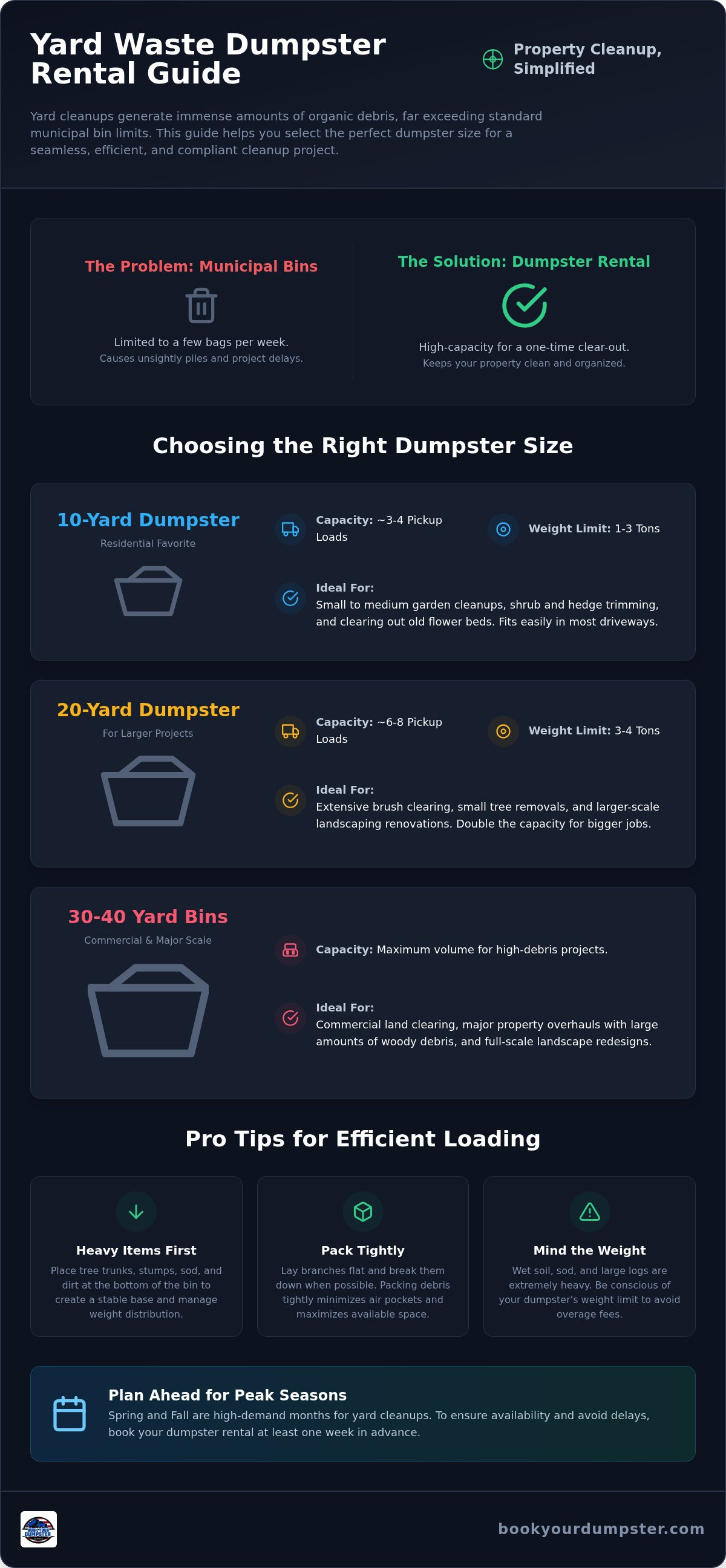
Selecting the wrong container leads to logistical delays or weight overages. While dry brush is light, compostable organic materials like sod, wet leaves, and large logs add significant weight. A standard 10-yard bin is the most common choice for residential projects, but larger sites require the volume of a 20 or 30-yard unit. Estimate your debris volume accurately before booking to ensure your yard waste dumpster rental remains cost-effective.
The 10-Yard Dumpster: A Residential Favorite
This size is the pragmatic choice for suburban properties. It holds approximately 3 to 4 pickup truck loads and typically carries a weight limit of 1 to 3 tons. This makes it ideal for garden bed clearing or small hedge trimming. Its compact footprint fits easily into driveways in Illinois and Massachusetts without blocking access to your garage. For a detailed breakdown of specifications, read our 10 Yard Dumpster Rental: The Complete Buying Guide for 2026. It offers the right balance of capacity and convenience for most weekend projects.
Step up to a 20-yard dumpster for medium-sized projects involving small tree removals or extensive brush clearing. This size provides double the capacity of the 10-yard unit and usually supports a 3 to 4 ton weight limit. It allows you to toss longer branches without constant cutting. It’s a reliable tool for homeowners managing larger lots or light landscaping renovations.
Large Scale Containers for Major Landscaping
Commercial clearing and massive property overhauls demand 30 or 40-yard bins. These containers handle high volumes of woody debris efficiently. When managing a commercial site, a yard waste dumpster rental in the 30-yard range is the industry standard for efficiency. Place heavier items like tree trunks and stumps at the bottom. Pack branches tightly to minimize air pockets and maximize the available space. Be mindful of weight limits. These bins are large, but local regulations in areas like Queens or San Francisco often impose strict caps on organic weight to protect transport equipment.
Avoid the stress of multiple trips to a drop-off site. Choosing a single, appropriately sized container streamlines your entire workflow. If you're unsure which volume fits your debris, check our sizing guide to find the right match for your property.
What Can You Put in a Yard Waste Dumpster?
Distinguishing between "clean" and "mixed" loads is the most effective way to control your project costs. A "clean" load consists strictly of organic matter that a facility can process into mulch or compost. If you contaminate this stream with non-organic items, your yard waste dumpster rental may be reclassified as a more expensive municipal waste load. Stick to these categories to ensure a smooth disposal process:
- Clean Green Waste: This includes grass clippings, leaves, weeds, and small hedge trimmings.
- Woody Debris: Branches, brush, and small logs are acceptable. In some regions like New York, branches must be under 6 feet long to be processed.
- Natural Wood: Untreated wood and bark mulch are typically fine.
Never toss pressure-treated wood, plastic bags, or fencing into an organic container. These materials contain chemicals or synthetic fibers that ruin composting batches. If your project involves tearing down a deck or old fence alongside your garden clearing, you should consult The Ultimate Guide to Construction Debris Removal in 2026 to handle those specific materials correctly. Keeping these waste streams separate is the pragmatic choice for your budget.
Handling Heavy Debris: Dirt, Sod, and Rocks
Dirt and sod are technically organic, but their density makes them a logistical challenge. Most standard yard waste dumpster rental agreements exclude large volumes of soil because of weight limits. In San Francisco and Queens, specific ordinances often require separate containers for "clean fill" or dirt. If your bin is approved for soil, never fill it past the "water line," which is usually the halfway mark on the side of the container. Overfilling creates a safety hazard for the haulers and leads to immediate overage fees at the scale.
Prohibited Materials in Organic Containers
Keep household trash, chemicals, and electronics out of your yard waste bin. Root balls are another common point of confusion. While they are part of a tree, large root balls often retain hundreds of pounds of soil and rocks. Many processing facilities reject them because they damage grinding equipment. Shake off as much dirt as possible before loading any stumps or roots. Maintaining a "clean" stream ensures your waste is recycled effectively and your bill remains predictable. Avoid the temptation to hide trash at the bottom of the bin; inspections at the dump site are thorough and will result in significant penalties.
Local Logistics: Renting in NY, NJ, IL, MA, and SF
Urban and suburban landscape projects face a tightening regulatory environment in 2026. States like Massachusetts have officially banned yard waste from landfills and incinerators as of this year. In Illinois, it remains illegal to dispose of organic debris with regular household garbage. Managing a yard waste dumpster rental requires strict adherence to these local mandates to avoid significant fines. While some residents consider seasonal burning, many municipalities in NJ and MA have restricted this practice due to air quality standards. A roll-off container provides the only compliant, high-volume disposal method for these regions.
Protect your property during delivery. Yard waste bins become exceptionally heavy when loaded with wet soil or large limbs. Place plywood boards on your driveway to distribute the weight and prevent asphalt cracking. Most major metros offer next-day availability, but you should schedule your delivery at least 48 hours in advance during the peak spring and fall seasons to ensure your preferred size is in stock.
Navigating Urban Deliveries in Queens and SF
Urban rental logistics demand precision. If you plan to place your container on a public street in Queens or San Francisco, you must secure a permit from the city waste department before the truck arrives. San Francisco's Mandatory Recycling and Composting Ordinance requires total separation of all organics. In New York City, new 2026 ordinances require specific fees for yard waste amounts exceeding 2 cubic yards. Ensure you have at least 14 feet of overhead clearance. Low-hanging power lines or thick tree branches will prevent the roll-off hoist from operating safely. Contact your local Department of Transportation for specific street occupancy permit links before booking.
Suburban Rental Tips for NJ, IL, and MA
Suburban projects often involve Homeowners Association (HOA) oversight. Check your bylaws regarding the duration a dumpster can remain on your driveway. Many associations in New Jersey and Illinois limit placement to 72 hours. Coordinate your yard waste dumpster rental with your landscaping crew's schedule to ensure the bin is filled and removed quickly. For a broader look at regional logistics, consult our guide on Dumpster Rental in New York, Illinois, and Massachusetts: The 2026 Complete Guide. This resource details specific county-level weight limits that vary between the East Coast and the Midwest.
Don't let logistical confusion stall your property cleanup. Book your dumpster online now to lock in your delivery date and secure flat-rate pricing for your next seasonal project.
Book Your Yard Waste Dumpster with Confidence
Completing a massive property overhaul shouldn't be stalled by logistical guesswork or opaque pricing. Securing a yard waste dumpster rental is the final step in transitioning from a cluttered landscape to a clean, season-ready exterior. Our system prioritizes your time and project velocity. Select your preferred container size, choose a delivery date, and finalize your booking in under five minutes. This efficiency ensures your cleanup stays on schedule without unnecessary back-and-forth communication.
Price integrity is the foundation of our service. You'll receive a flat-rate quote that includes delivery, pickup, and specific weight allowances for your organic debris. We eliminate the stress of hidden fees that often plague traditional waste hauling. Whether you're a homeowner in New Jersey or a contractor in San Francisco, you deserve a transparent financial handshake before the bin ever hits your driveway. Our punctual drivers respect your timeline, providing reliable drop-offs and pickups that keep your job site moving.
The Book Your Dumpster USA Advantage
We've modernized a traditional industrial sector through a digital-first approach that respects the customer's urgency. Our team understands the specific challenges of residential landscapes and commercial sites alike. We employ professional drivers who are trained to navigate tight urban streets and suburban driveways with precision. They use protective measures to ensure your property remains undamaged during the roll-off process. Take control of your project logistics and Book your dumpster online today to experience a streamlined disposal solution.
Final Checklist Before Your Dumpster Arrives
Preparation is key to a successful delivery. Clear the delivery path of any vehicles, low-hanging wires, or equipment before the truck arrives. Mark the exact drop-off spot with cones or plywood to guide the driver. This ensures the bin is placed exactly where you need it for efficient loading. If you're still deciding between a 10-yard or 20-yard unit for your specific debris, our expert support team is available to provide a professional recommendation based on your project scope. For more advanced tips on managing your project, review our Roll Off Dumpster Rental: The Complete Guide to Efficient Waste Management.
Verify your material list one last time before the driver departs. Ensure no prohibited items, like chemicals or household trash, are mixed with your organic waste. This diligence protects your budget from contamination penalties and ensures your yard waste dumpster rental is processed correctly at the composting facility. Follow these steps to resolve your waste challenges with absolute confidence.
Take Control of Your Property Cleanup
You've identified the right container size and mastered the local disposal rules for your region. Whether you're navigating the strict 2026 landfill bans in Massachusetts or managing a large-scale project in San Francisco, efficiency is the priority. A professional yard waste dumpster rental removes the logistical bottlenecks of multiple trips to a disposal site. It ensures your organic debris is handled correctly and your property is ready for the next season.
Book Your Dumpster USA has provided streamlined waste solutions since 2018. We offer 10, 20, 30, and 40-yard roll-off containers across NY, NJ, IL, MA, and SF. Our digital-first approach eliminates hidden fees and scheduling delays. You don't have to struggle with overflowing municipal bins or complex permit requirements alone. Use our system to simplify your workflow and keep your project on track. We handle the heavy lifting so you can focus on the job at hand.
Rent your yard waste dumpster now to secure flat-rate pricing and punctual delivery. Our team is ready to help you finalize your property cleanup with confidence. Get started today and clear your land for what's next.
Frequently Asked Questions
Can I put dirt and sod in a yard waste dumpster?
You generally cannot put large amounts of dirt and sod in a standard organic bin. These materials are exceptionally heavy and can quickly exceed the weight limit of a typical container. Most providers require specialized heavy dumpsters for clean fill or soil. In cities like San Francisco or Queens, specific 2026 ordinances often mandate separate containers for soil to ensure safe transport and processing without damaging hauling equipment.
How much yard waste can I fit in a 10-yard dumpster?
A 10-yard dumpster holds approximately 3 to 4 pickup truck loads of debris. It's the perfect size for small garden cleanups, hedge trimmings, or clearing out old mulch. The compact footprint makes it a favorite for residential driveways in Illinois and Massachusetts. If you have large tree limbs or massive leaf piles, consider stepping up to a 20-yard unit to avoid overfilling the container and facing safety issues during transport.
Do I need a permit for a dumpster on my driveway in New York?
You don't need a permit for a dumpster placed entirely on private property, such as your driveway, in New York. However, if any part of the container sits on a public street or sidewalk, a permit from the local Department of Transportation is mandatory. In Queens, these permits must be secured before delivery. Always clear the path for the truck to ensure the driver can place the bin safely on your property.
What happens if the yard waste dumpster is over the weight limit?
Exceeding the weight limit results in overage fees, which typically range from $50 to $100 per ton. If the load is significantly over the safety limit, the driver may be unable to legally or safely lift the container. You'd then need to remove excess material before a second pickup attempt. Monitor the water line on the side of the bin to keep your load within the specified tonnage for your project.
Can I mix tree branches with old patio furniture in the same bin?
Do not mix patio furniture or household trash with organic debris. A yard waste dumpster rental is intended strictly for clean green waste like branches, grass, and leaves. Mixing in treated wood, plastic, or metal furniture reclassifies the entire load as municipal solid waste. This change often leads to higher disposal rates and prevents the organic material from being recycled into compost or mulch at the processing facility.
How long can I keep the dumpster for my yard project?
Standard rental periods usually last between 7 and 10 days. This duration provides ample time for most seasonal cleanups or landscaping projects. If you finish early, you can schedule a pickup through the online booking system. Be aware of HOA rules in suburban New Jersey or Illinois, as some local associations restrict dumpster placement on driveways to 72 hours or less. Always check your local bylaws before scheduling your delivery.
What is considered "clean" yard waste?
"Clean" yard waste includes grass clippings, leaves, weeds, shrub trimmings, and small branches. These materials are compostable and free from contaminants like plastic, chemicals, or treated lumber. As of 2026, many states require this waste stream to be separated from landfill trash. Keeping your load clean ensures it can be processed into renewable mulch. Avoid including root balls with excessive soil, as they can damage grinding equipment at the facility.
Is yard waste dumpster rental cheaper than standard trash rental?
Yes, a dedicated yard waste dumpster rental is often more cost-effective than a standard trash rental. Disposal facilities typically charge lower tipping fees for clean green waste compared to mixed household garbage. By separating your organic debris, you take advantage of these lower rates. This pragmatic approach reduces your overall project costs while ensuring your waste is diverted from landfills in accordance with 2026 environmental mandates in major metros.


