
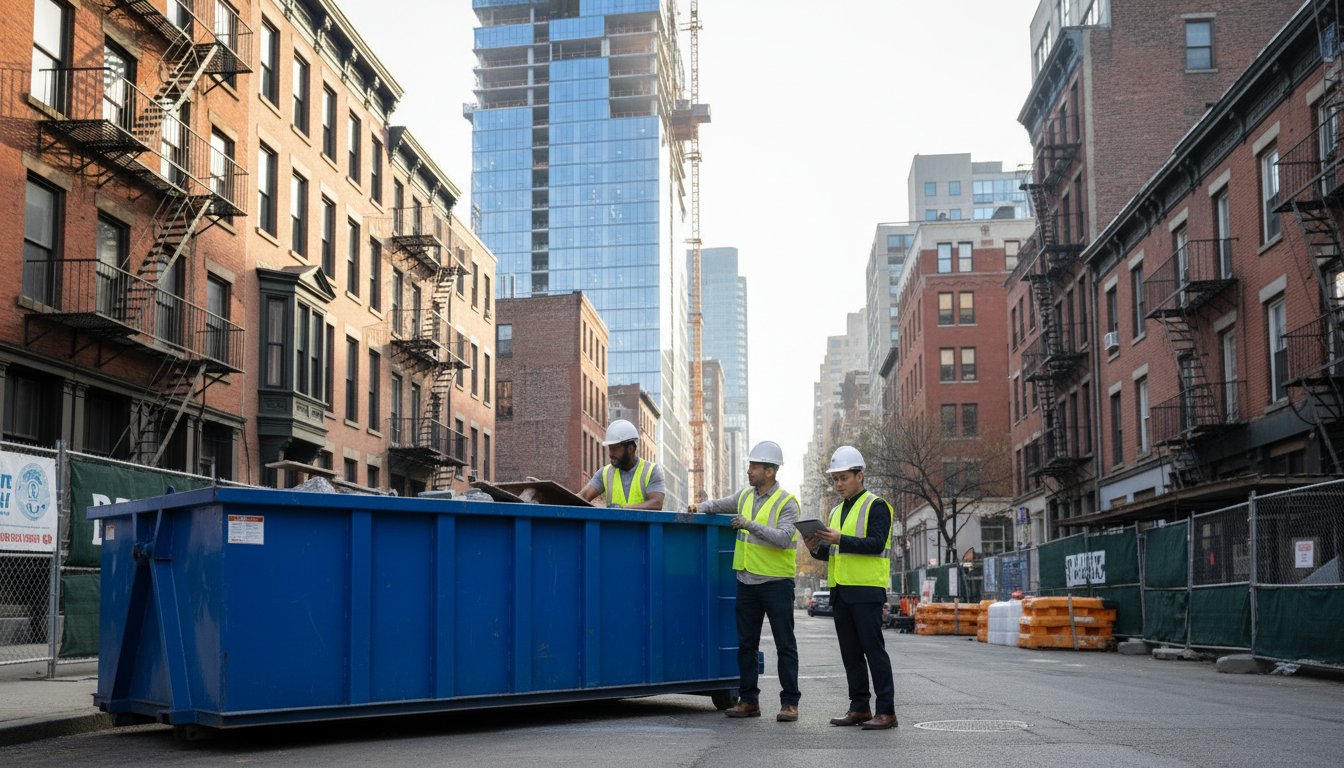
In 2026, a single compliance error in New York or Massachusetts can halt your construction project for 14 days or more. You already know that building debris removal is the least glamorous part of any job, but it's often the most stressful. Between shifting state regulations and the rising physical toll of manual loading, it feels like you're paying more for the mess than the actual build. It's frustrating to deal with hidden fees that appear long after the work's finished. You need a solution that works as hard as your crew does.
This guide compares the most efficient disposal methods to ensure you get a clear site without the surprise surcharges common in traditional waste contracts. You'll see why a roll-off dumpster remains the most pragmatic tool for staying on schedule and maintaining total compliance. We break down the specific 2026 requirements for Illinois, New York, and Massachusetts. Use this comparison to streamline your workflow and book your next container with absolute confidence. Focus on your project and let us handle the logistics of the waste.
Key Takeaways
- Understand why municipal services reject construction waste and how to identify materials that require specialized disposal.
- Compare the logistics of full-service junk removal against roll-off dumpsters to find the most efficient workflow for your project.
- Learn how to save up to 70% on building debris removal by choosing the pragmatic dumpster rental model over premium labor services.
- Navigate state-specific waste bans and recycling mandates in New York, Illinois, and Massachusetts to avoid project delays and fines.
- Discover why the 10-yard dumpster is the strategic favorite for residential renovations and how to book your delivery instantly online.
What Is Building Debris Removal and Why Is It Complex?
Building debris removal involves the systematic collection and disposal of Construction and Demolition (C&D) waste. This category includes everything from scrap lumber and drywall to heavy masonry. Most homeowners in New York, Illinois, and Massachusetts realize too late that standard municipal trash services won't take these materials. Local sanitation departments in cities like Chicago or Boston strictly prohibit mixing construction waste with everyday household garbage because it requires different processing streams. When you book your dumpster through a professional service, you ensure your project stays compliant with these local regulations.
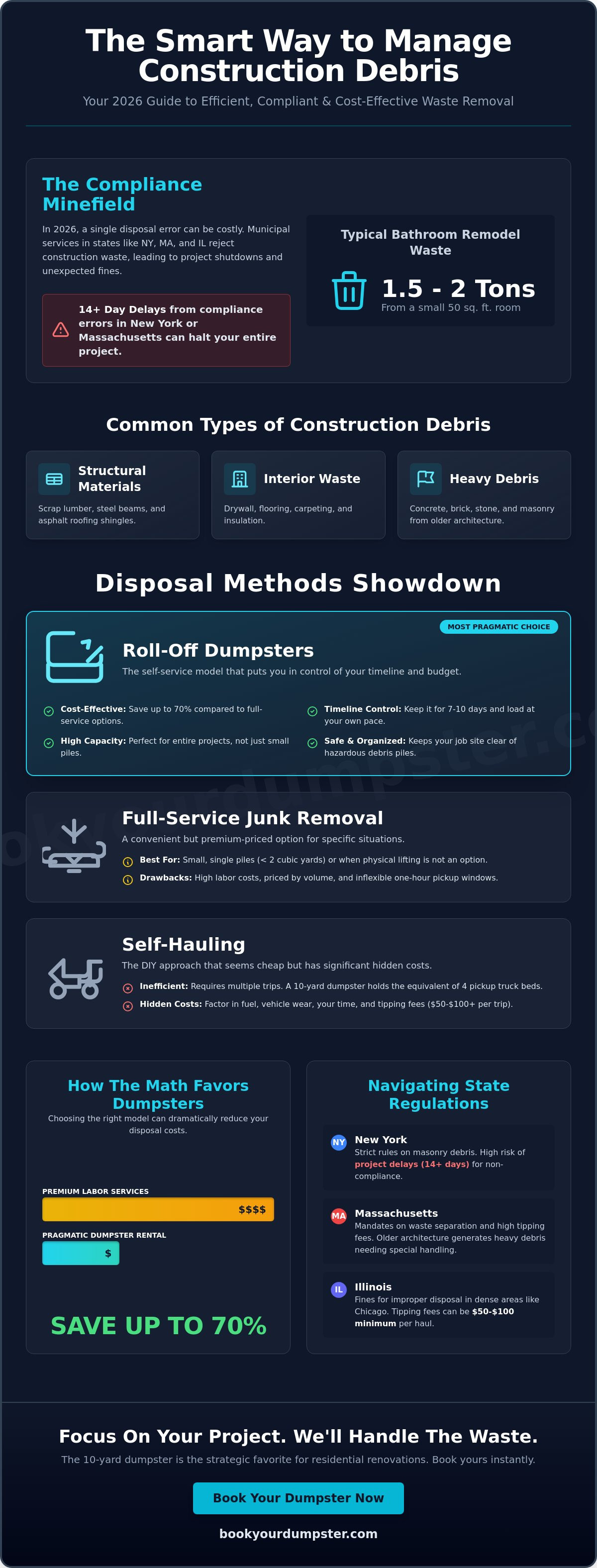
The volume of waste often catches people off guard. A standard 50 square foot bathroom remodel frequently generates 1.5 to 2 tons of debris once you tear out the tile, subfloor, and fixtures. Understanding What is Construction Waste helps you choose the right container size and avoid overage fees. Leaving this pile in your driveway or backyard creates immediate safety hazards and halts project progress. You need a clear plan before the first sledgehammer swings. Most projects rely on three primary methods for building debris removal: renting a roll-off dumpster, hiring a full-service junk removal crew, or attempting to self-haul to a local transfer station.
Common Types of Construction Debris
Different materials require different handling. Separating your waste can often save money on disposal fees at the scale house.
- Structural materials: This includes dimensional lumber, steel beams, and asphalt roofing shingles.
- Interior waste: Common items are drywall, laminate flooring, carpeting, and fiberglass insulation.
- Heavy debris: This covers concrete, brick, and stone. These materials are especially common in the older masonry-heavy architecture found throughout Massachusetts and New York, where homes often date back to the early 1900s.
The Logistics of Debris Management
Effective building debris removal keeps your job site functional and safe. Piles of waste lead to tripping hazards and attract pests, which can result in fines in densely populated areas of Illinois or New York. Implement "point-of-generation" disposal by placing your dumpster as close to the work area as possible. This reduces labor time and prevents the double-handling of heavy materials. Construction and demolition (C&D) waste is a specific category of debris requiring specialized disposal facilities. Schedule your delivery at least 24 hours before your crew arrives to ensure the workflow remains uninterrupted from day one.
Comparing the Methods: Dumpsters vs. Junk Removal vs. Self-Hauling
Managing building debris removal requires choosing between speed, labor, and control. Junk removal services offer a full-service experience where a crew handles the heavy lifting. You pay a premium for this labor, often priced by the fraction of the truck filled. While convenient, it forces you to have all your waste ready at once. If you find more debris after the truck leaves, you must schedule and pay for a second visit.
Roll-off dumpsters provide a self-service alternative that prioritizes your timeline. We drop the container at your site, and you load it at your own pace. This model eliminates the stress of a tight one-hour pickup window. Most projects benefit from having a container on-site for 7 to 10 days, allowing for a cleaner workspace. Construction waste accounts for a massive portion of the national waste stream. Following EPA guidelines on C&D materials ensures your project meets federal standards for recovery and recycling while you manage the site.
Self-hauling to local transfer stations often appears cheaper but carries hidden costs. A standard pickup truck bed holds roughly 2.5 cubic yards. To move the contents of a 10-yard dumpster, you would need to make four separate trips. When you factor in fuel, vehicle wear, and the $50 to $100 minimum tipping fees common in Illinois or Massachusetts, the logistics become inefficient. Your time is better spent on the actual renovation.
When to Choose Junk Removal
- Choose this for small, one-time piles of debris measuring less than 2 cubic yards.
- It's the right choice if you have physical limitations that prevent heavy lifting.
- Use this in tight NYC alleys or urban areas where there is zero room for a long-term container.
When a Roll-Off Dumpster Is the Pragmatic Choice
For ongoing projects where debris is generated daily over several weeks, a dumpster is the only logical solution. It handles large-scale demolition involving heavy materials like plaster, tile, or concrete that junk removal crews might charge extra to move. This method offers budget predictability because you know the costs before the project starts. Book your dumpster today to secure a reliable container for your job site and keep your project moving forward without delays.
The Cost-Efficiency Breakdown: How the Math Favors Dumpsters
Managing building debris removal on a high-stakes job site requires a sharp eye on the bottom line. For projects exceeding 10 cubic yards of waste, dumpster rentals typically cost 50% to 70% less per cubic yard than bag-based services or manual hauling. Junk removal companies charge for labor and volume, which causes costs to skyrocket as the pile grows. A single 30-yard roll-off container holds the equivalent of 12 to 15 pickup truck loads. Think about the fuel, toll costs in New York, and hours wasted sitting in traffic for 15 separate trips. One dumpster solves that logistical nightmare instantly.
Flat-rate pricing is the most effective way to protect your budget. Variable pricing models often hide fees for delivery, fuel surcharges, or environmental taxes. These surprises can add 20% to your final invoice. Book Your Dumpster uses transparent pricing to eliminate this guesswork. You get a clear, upfront rate that covers the rental and disposal up to a set limit. This clarity allows contractors and homeowners to track project costs with precision. Following EPA guidelines on C&D materials also ensures you stay compliant with federal standards for waste handling while keeping your site organized and safe.
Understanding Dumpster Rental Prices
Several factors influence your final cost, including container size, weight limits, and your rental duration. Local disposal fees in New York and Massachusetts are higher than the national average due to strict state regulations and limited landfill space. Choose a provider that understands these regional nuances. For a deeper dive into regional cost drivers, see our guide on Understanding Dumpster Rental Prices.
Avoiding Surcharges and Overages
Choosing the right size is the easiest way to save money. Renting a container that's too small leads to "double-hauling" costs, where you pay for two deliveries and two pickups. Load your container evenly and keep the debris level with the top of the bin. Overfilled containers are safety hazards and often result in immediate dry-run fees if the driver cannot safely transport the load. Weight limits are set by state DOT regulations for road safety. Stay within these limits to avoid hefty fines and ensure a smooth building debris removal process.
- Select a 20-yard bin for small renovations or heavy materials like concrete.
- Select a 30-yard or 40-yard bin for major construction or whole-home cleanouts.
- Schedule your delivery 24 to 48 hours in advance to ensure your preferred size is available.
State-Specific Rules: Navigating Regulations in NY, IL, and MA
Compliance is the most critical part of building debris removal. Local laws dictate where your waste goes and how it gets there. In Massachusetts, the MassDEP enforces strict waste bans on materials like asphalt, brick, and concrete. You can't simply toss these into a general landfill. These materials must be diverted to recycling facilities to meet the state's 2030 Solid Waste Master Plan goals. Our team ensures your load meets these criteria before it leaves the site.
Illinois contractors face different hurdles. The Illinois EPA requires specific documentation for non-hazardous special waste. If you're handling Clean Construction or Demolition Debris (CCDD), you must use a facility registered under 35 Ill. Adm. Code 1100. Failure to provide the correct LPC-662 or LPC-663 forms can result in rejected loads and heavy fines. We manage the logistics so your project stays on schedule and avoids these costly errors.
New York City is the most regulated environment in the country. The DSNY and the Business Integrity Commission (BIC) oversee all private carter operations. You must use a licensed hauler for building debris removal, and containers must display the carter's name and permit number clearly. Professional rental partners like Book Your Dumpster handle these legal complexities so you can focus on the build without worrying about city inspectors.
Permit Requirements for Public Property
If your dumpster sits on a public street or sidewalk, you need a permit. In Boston, you'll coordinate with the Public Works Department for a "Street Occupancy Permit." Chicago requires a "Public Right-of-Way" permit from CDOT, which often requires 48 hours' notice for approval. NYC mandates a DOT permit for any container placed on the roadway. Check our Construction Dumpster Rental Guide for New York, Illinois, and Massachusetts (2026) for a step-by-step permit checklist for your specific city.
Restricted and Prohibited Materials
Certain items never belong in a standard roll-off. This includes batteries, asbestos, liquid paints, and hazardous chemicals. In Illinois and New York, "clean fill" like dirt or concrete must be separated from general trash to avoid "mixed load" surcharges that can double your costs. If you encounter hazardous materials, you need a specialized disposal path. We help you identify these items early to prevent project delays. Book your dumpster today to ensure your disposal is handled legally and efficiently.
Streamline Your Site with Book Your Dumpster USA
Effective building debris removal depends on choosing the right tools for the job. The 10 Yard Dumpster is the 2026 favorite for residential renovations because it balances capacity with a compact footprint. It holds roughly 10 cubic yards of material, which is ideal for kitchen tear-outs or small deck removals. Our online booking system removes the logistical stress by providing instant availability. You don't have to wait for a callback or haggle over terms. We serve New York, Illinois, and Massachusetts with a focus on punctuality. Our drivers know these regions and the specific traffic patterns that can impact delivery times. We arrive on schedule so your crew isn't standing around waiting for a place to put trash.
Our digital-first platform streamlines the entire process. You can manage your rental from a smartphone while standing on the job site. This efficiency is vital when managing multiple projects across state lines in NY, IL, or MA. We treat every delivery as a verbal handshake. Our reputation is built on the fact that we don't play games with your timeline. If you schedule a pickup for Friday, we'll be there on Friday. This reliability prevents debris from piling up and becoming a safety hazard or a source of neighbor complaints.
The Book Your Dumpster Advantage
Contractors in 2026 demand reliability and honesty. We offer transparent pricing with no hidden surprises. You'll know exactly what you're paying for before the truck arrives. We handle the hauling so you can focus on the build. Our logistics team monitors every route to ensure we meet our delivery windows. This no-nonsense approach has made us a trusted partner for thousands of local projects. Our goal is to be a high-functioning tool in your professional kit. We understand that a clean site is a safe site. Book your dumpster now to clear your site today.
Preparation for Delivery
Site preparation is the final step before your container arrives. You need to ensure the drop-off zone is accessible for a large roll-off truck. Clear at least 60 feet of linear space to allow the truck to back in and tilt the container. Check the overhead area for low-hanging wires or tree branches. Most trucks require at least 23 feet of vertical clearance to operate the hoist safely. If you're working in tight urban areas like Chicago or Boston, these measurements are critical. Use this checklist to avoid delivery delays:
- Ensure the drop-off zone is at least 10 feet wide.
- Remove any parked cars or equipment from the path.
- Verify the surface is level and firm enough to support a heavy steel container.
- Check for local permit requirements if the dumpster must sit on a public street.
Proper site prep prevents property damage and delivery failures. For more detailed state-specific guidelines, read our guide on How to Handle Construction Waste Disposal. Taking these steps ensures your building debris removal project starts without a hitch.
Take Control of Your 2026 Project Logistics
Managing a construction site across New York, Illinois, or Massachusetts requires strict adherence to evolving disposal mandates. By 2026, waste diversion requirements in states like Massachusetts have become more rigorous, making efficient building debris removal a necessity for every project manager. Choosing a roll-off dumpster over junk removal services or self-hauling saves significant labor hours and eliminates the risk of state-level non-compliance penalties. You need a solution that matches the speed of your build while keeping costs predictable and your site clear of hazards.
Book Your Dumpster USA provides the reliable tools you need to stay on schedule. We serve New York, Illinois, and Massachusetts with a digital-first platform designed for modern contractors and homeowners. Our system features transparent, no-hidden-fee pricing and an online booking process you can complete in under 2 minutes. Don't let waste management slow down your progress or inflate your budget with unexpected hauling costs. Book your dumpster today at BookYourDumpster.com and experience a streamlined approach to site cleanup. It's time to clear the way for your next big milestone.
Frequently Asked Questions
Is building debris removal the same as junk removal?
No, these services handle different waste streams and logistical needs. Junk removal involves hauling away loose household items like furniture and appliances. Building debris removal focuses on heavy materials like drywall, timber, and masonry from active construction sites. While junk removal services often charge by the space used in a truck, building debris requires a dedicated roll-off dumpster to manage the extreme weight and volume of structural waste safely.
Do I need a permit for a construction dumpster in New York or Chicago?
Yes, you generally need a permit if the container sits on public property. In New York City, the Department of Transportation requires a permit for any container placed on the street. Chicago requires a Public Way Use permit through the Department of Business Affairs and Consumer Protection. If you place the container on your private driveway, you usually avoid these city permit requirements. Always check local 2026 zoning laws before scheduling your delivery.
What is the most cost-effective way to remove renovation debris?
Renting a roll-off dumpster is the most efficient method for large-scale projects. You pay a single flat rate for the container and haul-away service, which prevents multiple expensive trips to a transfer station. Consolidating your waste into one 20-yard or 30-yard bin reduces labor hours and keeps your site clean. This streamlined approach ensures your building debris removal stays within your project timeline and budget without hidden fees.
Can I put concrete and brick in a regular roll-off dumpster?
No, you must use a dedicated heavy debris or clean fill dumpster for masonry. Standard dumpsters have specific weight limits that concrete and brick quickly exceed. A 10-yard bin filled with concrete weighs approximately 10 tons, which exceeds the lifting capacity of standard hydraulic trucks. Always specify if you're loading inert materials to ensure we send the correct equipment. Overloaded bins result in safety delays and additional dry-run fees.
How long can I keep a rental dumpster on my property in Massachusetts?
Rental periods in Massachusetts typically last 7 to 14 days depending on your specific service agreement. Local bylaws vary, but most residential zones allow containers for the duration of an active building permit. If your project extends beyond the initial term, you can usually extend your rental for a daily fee. Book Your Dumpster provides flexible scheduling to match your specific renovation timeline. Call at least 24 hours before your period ends to request an extension.
What happens to my construction waste after it is picked up?
Your waste goes to a licensed Material Recovery Facility for sorting and processing. According to the 2024 EPA Advancing Sustainable Materials Management report, roughly 76% of construction and demolition debris is recovered for reuse. Metals are melted down, wood is chipped for mulch, and clean fill like concrete is crushed for road base. This process keeps heavy materials out of local landfills and supports regional recycling goals in the Northeast.
How do I estimate how much building debris I have?
Calculate the volume by multiplying length by width by height in feet, then divide by 27 to get cubic yards. For example, a 10-foot by 10-foot room with 8-foot ceilings contains roughly 30 cubic yards of total space. Building debris removal for a standard kitchen gut typically requires a 20-yard dumpster once the materials are broken down. Always round up your estimate by 20% to avoid overfilling the container and incurring extra charges.
Can I share a dumpster with a neighbor to save on removal costs?
Yes, sharing a dumpster is a practical way to split the rental fee with a neighbor. Ensure both parties understand the weight limits and the prohibited items list to avoid overage charges or hazardous waste fines. One person must remain the primary account holder responsible for the placement and final payment. This collaborative approach works well for neighboring townhomes or shared driveways during simultaneous 2026 renovation projects or landscaping cleanups.


