
A missed trash pickup isn't just an eyesore; it's a direct threat to your operational flow and professional reputation. You already know that managing business waste removal shouldn't be the most frustrating part of your workday. It's exhausting to deal with unreliable schedules, hidden surcharges, and the constant fear of a city inspector handing you a permit violation. You need a system that works as hard as you do, without the logistical noise.
This 2026 guide provides the expert insights required to master your commercial waste strategy. We'll show you how to eliminate pricing transparency issues and streamline your disposal process using modern digital tools. Whether you're navigating the new Commercial Waste Zoning requirements in Queens and Brooklyn or managing a retail cleanout in San Francisco, you'll learn how to stay compliant and efficient. No more guessing; just reliable results.
We'll cover everything from selecting the right container size to securing permits in high-density hubs. Expect a clear breakdown of front-load pickup options and roll-off rentals, including 10, 20, 30, and 40-yard containers that keep your site clear and your costs predictable. Let's get your logistics back under control and move your business forward.
Key Takeaways
- Treat waste management as a managed utility to reduce long-term operational costs and eliminate site clutter.
- Streamline your business waste removal by selecting the right service tier, from daily front-load pickups to high-capacity roll-off containers.
- Identify the ideal container size for your project, such as a 10-yard dumpster for small shop cleanouts or a 20-yard unit for mid-sized renovations.
- Ensure compliance with complex local regulations in cities like New York and San Francisco to avoid costly permit violations and fines.
- Utilize digital booking platforms to secure transparent, upfront pricing and reliable pickup schedules that respect your time.
Streamlining Your Business Waste Removal Strategy
Think of your waste management as a core utility, not an afterthought. Efficient Streamlining Your Business Waste Removal Strategy requires treating disposal with the same precision as your payroll or inventory management. When you view business waste removal as a managed logistics service, you move away from reactive "junk removal" and toward a system that protects your bottom line. A professional strategy reduces long-term operational costs by preventing overflow fines and minimizing onsite safety hazards.
Municipal services often fall short for commercial needs. They typically operate on rigid schedules and lack the container variety required for high-volume operations. Private partnerships offer the flexibility you need. They provide specialized equipment, such as front-load bins for daily retail waste or large roll-off dumpsters for major renovations. Your strategy must account for three primary waste streams: municipal solid waste (MSW) from daily operations, recyclables that meet local mandates, and heavy construction debris that requires high-capacity handling.
The Role of Professional Logistics in Waste Management
Punctuality is the foundation of site safety. Trash piles at a storefront or job site destroy curb appeal and invite pests; they also create tripping hazards for employees and customers. Transitioning from "on-call" pickups to a scheduled system ensures your site stays clear without constant oversight. Reliable logistics also provide data-driven tracking. This information is essential for modern sustainability reporting, allowing you to document your diversion rates and environmental impact with confidence. It's about maintaining control over your physical environment through predictable, professional service.
Identifying Your Business Waste Profile
Assess your volume before you book any service. Calculate your weekly or project-based yardage to avoid paying for empty space or facing overage fees. Small retail cleanouts often start with a 10-yard unit, while large-scale construction requires 30 or 40-yard dumpsters. Distinguish between your waste types clearly. Heavy materials like concrete or roofing shingles shouldn't be mixed with light commercial trash. A waste stream audit is a formal assessment of your disposal habits used to identify recycling opportunities and reduce total volume costs. Once you understand your profile, you can use the Book Your Dumpster USA online system to match your specific needs with the right container size.
Choosing Between Roll-Off and Front-Load Commercial Services
Choosing the right equipment is the first step in optimizing your business waste removal plan. You must distinguish between permanent waste management and project-based disposal to avoid unnecessary overhead. The EPA offers a framework for Navigating Local Regulations and Compliance; these rules often dictate which container types are permitted in specific commercial zones. Selecting the wrong service model leads to overflow fees or obstructed access.
When to Use Front-Load Commercial Pickup
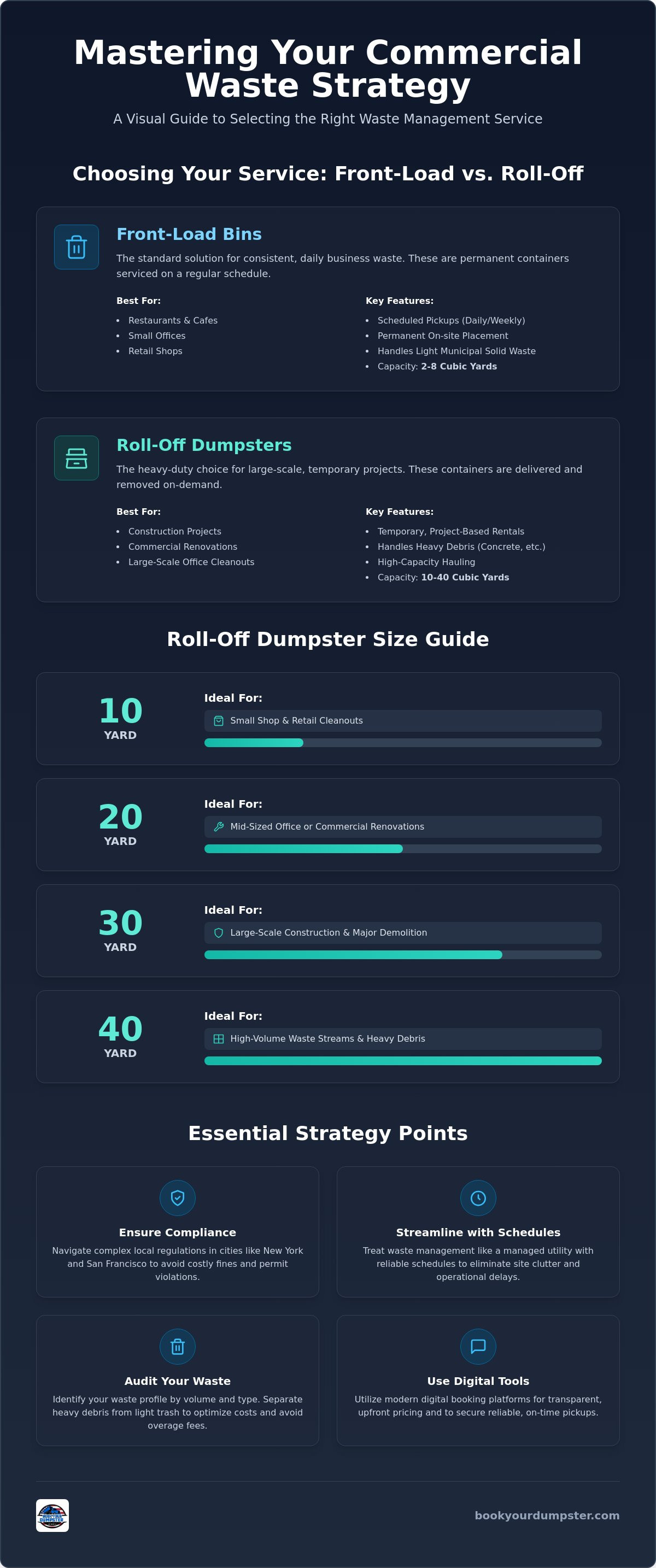
Front-load bins are the standard for daily operations. These permanent containers range from 2 to 8 cubic yards and sit in designated areas like alleys or parking lots. They're best for restaurants, small offices, and retail shops generating consistent, light municipal solid waste. You can schedule pickups daily, weekly, or bi-weekly depending on your volume. Just ensure your location has enough overhead clearance. Urban alleys often have low-hanging wires or narrow passages that can obstruct the truck's hydraulic arms. If your space is tight, measure your clearance before signing a service agreement.
The Power of Roll-Off Dumpster Rentals
Roll-off units are the heavy hitters of waste logistics. Unlike front-load bins, these are temporary rentals delivered via a specialized truck and rolled off the back onto your site. They're ideal for construction projects, large-scale office cleanouts, and commercial renovations where volume exceeds standard bin capacity. With sizes reaching up to 40 yards, these containers reduce the number of hauls needed, saving you time and money. For a deeper dive into logistics, check out this Guide to Efficient Waste Management.
Roll-offs feature an open top and a large rear swing door. This design allows you to walk heavy debris directly into the container instead of lifting it over the side. It's a superior choice for bulky furniture, demolition waste, or heavy materials like concrete. Front-load bins are strictly for tossing smaller bags or light materials through the top or side doors. If you're unsure which model fits your current project, you can view container dimensions online to make an informed decision.
Determining the Ideal Dumpster Size for Your Commercial Project
Selecting the wrong container size is the fastest way to blow your budget. If the bin is too small, you'll pay for multiple hauls; if it's too large, you're paying to transport empty space. Effective business waste removal requires a precise match between your project's volume and the container's capacity. Use the following breakdown to determine which unit fits your specific operational needs.
- 10-Yard Dumpster: Best for small retail cleanouts or dense materials like concrete and dirt.
- 20-Yard Dumpster: The industry standard for mid-sized office renovations and roofing projects.
- 30-Yard Dumpster: Designed for major construction sites and warehouse cleanouts.
- 40-Yard Dumpster: The industrial choice for commercial demolition and massive debris volumes.
Small Scale: 10 and 20 Yard Options
The 10-yard dumpster is the most compact choice for urban environments. It features a small footprint that fits easily on narrow city streets in Queens or tight commercial alleys where space is at a premium. This size is perfect for small shop cleanouts or disposing of heavy materials that would exceed the weight limit of larger bins. For a detailed breakdown of dimensions and best uses, review our 10 Yard Dumpster Buying Guide.
The 20-yard dumpster is the "workhorse" of the industry. It's the standard for mid-sized office renovations and commercial roof replacements. While it offers double the volume of the 10-yarder, you must monitor your weight capacity carefully. Exceeding the ton limit for heavy debris can lead to unexpected overage fees. Always estimate the density of your materials before booking to ensure your logistics remain cost-effective and predictable.
Large Scale: 30 and 40 Yard Industrial Containers
When managing massive volumes, industrial-grade containers are necessary. The 30-yard dumpster is designed for major construction sites and large warehouse cleanouts. It handles bulky items like long timber, office furniture, and industrial scrap with ease. Adhering to the standards established for the industry, such as those discussed by the Partnering with Book Your Dumpster USA for Reliable Waste Logistics, ensures your project stays compliant with national safety and environmental benchmarks.
For commercial demolition and massive debris volumes, choose the 40-yard dumpster. These units are typically 22 feet long and require significant space for delivery and placement. Prepare your site by ensuring the ground is level and clear of overhead obstructions like power lines or tree branches. Verify that the delivery truck has at least 60 feet of straight-line access to drop and retrieve the container. Proper site preparation prevents delays and keeps your business waste removal schedule on track.
Navigating Local Regulations and Compliance in Major US Cities
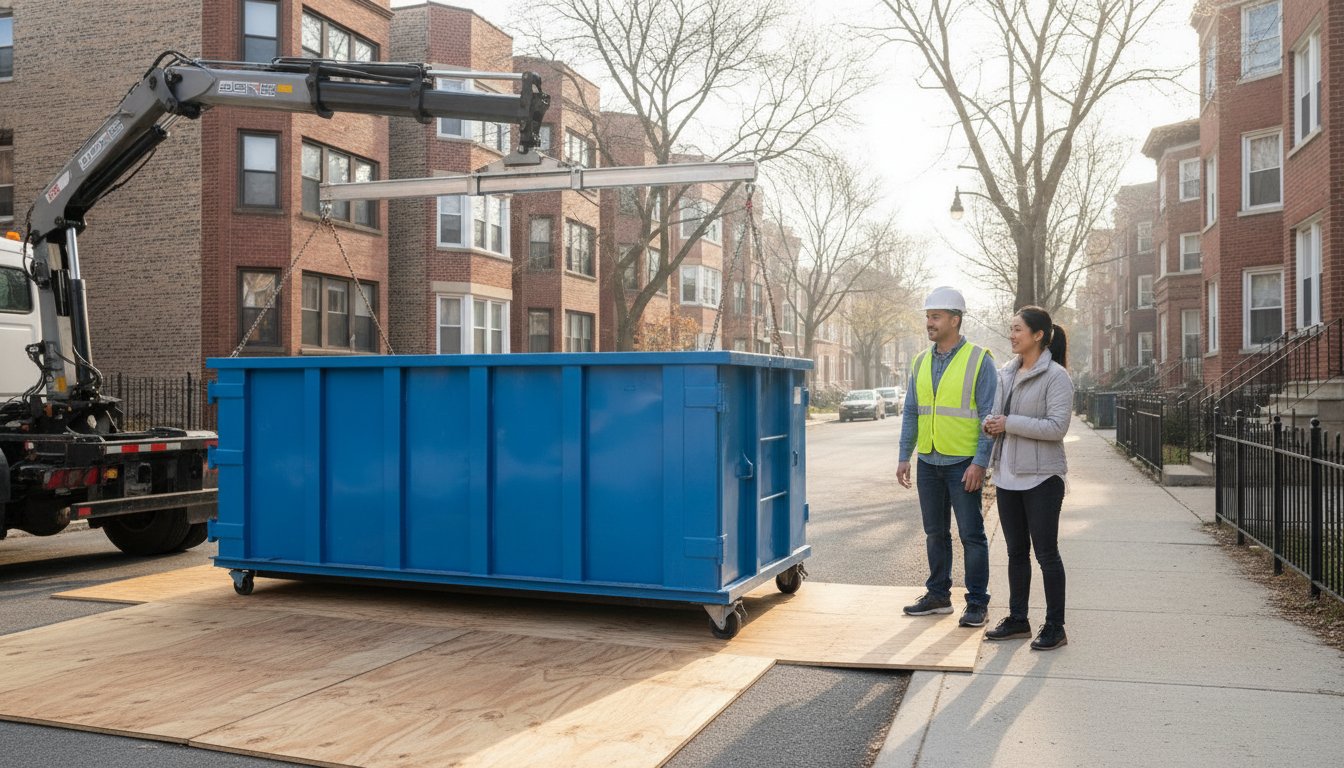
Compliance is the silent engine of successful business waste removal. If you ignore local ordinances, you're inviting stop-work orders and heavy fines. In New York City and Queens, the Department of Transportation requires specific permits for any container placed on a public street. You must also implement "sidewalk protection," which usually involves placing heavy plywood under the dumpster to prevent the weight from cracking the pavement. Property managers should always verify that their provider carries a current Certificate of Insurance (COI) to protect against site damage during delivery.
San Francisco operates under strict Commercial Solid Waste mandates. You can't just dump everything in one bin. The city requires businesses to meet specific recycling quotas and separate organic waste. In Illinois, 2026 regulations have established an extended producer responsibility program for batteries. This means your disposal plan must now account for portable power sources separately. Massachusetts has similar strictures regarding electronic waste. Ignoring these regional nuances leads to logistical bottlenecks and legal liabilities that can derail your operations.
Permit Requirements for Public Space Placement
You don't need a permit if the dumpster sits entirely on private property, such as a parking lot or a dedicated loading dock. However, placing a unit on a public curb requires a "Right of Way" or "Encroachment" permit. In 2026, lead times for these approvals in major hubs can range from three to ten business days. Plan your project timeline accordingly to avoid having a crew standing around an empty site. For a deeper look at regional specifics, see our guide on Dumpster Rental in New York, Illinois, and Massachusetts.
Commercial Recycling and Diverting Waste
Sorting your waste isn't just about the environment; it's about your budget. Many facilities charge lower tipping fees for clean loads of cardboard, metal, or concrete. Separating these materials at the source can significantly lower your overall business waste removal costs. If you're pursuing LEED certification for a construction project, you'll need a formal waste management plan that documents exactly how much debris was diverted from landfills. Use a partner who provides the tracking data you need for these reports. If you're ready to secure a site-compliant container, you can book your compliant dumpster rental online today and skip the paperwork headache.
Partnering with Book Your Dumpster USA for Reliable Waste Logistics
Managing a commercial site requires high-functioning tools, not more logistical stress. Book Your Dumpster USA modernizes business waste removal by replacing the old, opaque communication models with a digital-first platform. We provide nationwide reach across New York, New Jersey, Illinois, Massachusetts, and San Francisco, ensuring you have a reliable partner in major hubs. Our service scales to your specific needs. We offer customized solutions for everything from residential-style office cleanups to heavy-duty construction debris management.
Pricing integrity is the cornerstone of our professional relationship. We provide transparent, no-nonsense quotes that eliminate the fear of unexpected surcharges. You know exactly what you're paying for before the container arrives. This transparency distinguishes us from the often-convoluted billing structures found elsewhere in the waste industry. We act as a dependable expert that understands the urgency of your project. By combining local expertise with a technologically savvy booking system, we ensure your site remains clear and compliant.
The Booking Process: From Selection to Pickup
Our online system moves you through the decision-making process quickly. Follow these three steps to secure your service:
- Step 1: Size Selection. Use our professional volume guide to choose between 10, 20, 30, and 40-yard dumpsters. Match the container to your waste profile to maximize cost-efficiency.
- Step 2: Real-Time Scheduling. Select a delivery date and time that respects your business hours. Our system integrates directly with our fleet logistics for accurate arrival windows.
- Step 3: Seamless Pickup. Once your project or cleanup is complete, notify us through the portal. We handle the retrieval promptly, leaving your site clear and safe.
Why Reliability is Our Primary Voice
The most common pain point in waste management is the missed pickup. An uncollected dumpster isn't just a nuisance; it's a safety hazard and a disruption to your operational flow. We address this by making punctuality our recurring rhythmic promise. Our professional, pragmatic approach builds long-term commercial trust because we prioritize the removal of logistical friction. We've modernized a traditional industrial sector through digital convenience and straightforward honesty. Stop guessing about your disposal schedule and start working with a partner who respects your time. Book Your Business Dumpster Now.
Take Control of Your Commercial Waste Logistics
Effective business waste removal requires precision and a digital-first approach. You now have the framework to select the right container size, from compact 10-yard units to industrial 40-yarders, ensuring you never pay for unused space. Navigating city-specific permits in New York or San Francisco is no longer a hurdle when you prioritize compliance and site safety. Stop reacting to waste build-up and start managing it as a streamlined utility. It's time to eliminate the logistical noise that slows your operations down.
Reliability is the foundation of a successful commercial partnership. You deserve a system that respects your time with on-schedule pickups and absolute pricing integrity. Our streamlined process allows you to secure a rental and manage logistics without the traditional industry friction. Access expert support for local city permits and enjoy transparent pricing with no hidden surcharges. Complete your online booking in under five minutes and get back to running your business with total site control. Don't let waste management disrupt your professional workflow another day.
Simplify your logistics and Book Your Dumpster USA today. Move your project forward with a partner who values efficiency as much as you do.
Frequently Asked Questions
How much does business waste removal cost for a small retail shop?
Total costs depend on your specific volume, the frequency of your pickups, and local tipping fees. Small retail shops often find that front-load commercial pickup or private curbside services are the most cost-effective options for daily municipal solid waste. Factors such as container size and regional disposal regulations will influence your final quote. Always verify your local market rates to ensure your waste management budget remains predictable.
Do I need a permit to place a 20-yard dumpster on a city street in Queens?
Yes, you must obtain a permit from the New York City Department of Transportation for any street placement. Queens regulations are strict regarding public right-of-way access, often requiring specific sidewalk protection like plywood to prevent pavement damage. If you can place the 20-yard unit entirely on private property, such as a parking lot or loading dock, a municipal permit is typically unnecessary.
What items are prohibited in commercial roll-off dumpsters?
Prohibited items include hazardous materials, flammable liquids, tires, and lead-acid batteries. You cannot dispose of wet paint, asbestos, or medical waste in standard containers due to environmental safety laws. Always review a complete list of restricted materials before loading your bin. Disposing of banned items can lead to significant environmental surcharges or the rejection of your entire load at the disposal site.
Can I schedule a same-day dumpster delivery for my construction site?
Same-day delivery is subject to current fleet availability and your project's specific location. While rapid deployment is a priority for most logistics providers, you should book at least 24 to 48 hours in advance to guarantee a specific arrival window. Use a digital booking platform to check real-time scheduling options in your area. Planning ahead ensures your crew isn't left waiting for a container to arrive.
How do I determine if I need a 10-yard or 30-yard dumpster for an office cleanout?
Calculate your total debris volume by estimating the yardage of your furniture and equipment. A 10-yard dumpster is the ideal starter for small cleanouts or heavy debris like old flooring. If you are clearing out an entire office suite filled with bulky desks, chairs, and filing cabinets, a 30-yard dumpster is the better choice. Choosing the larger unit for high-volume projects prevents the cost of multiple hauls.
What is the difference between private curbside pickup and roll-off rental?
Private curbside pickup is a recurring service for daily or weekly trash disposal using standard bins. Roll-off rentals are temporary, high-capacity containers delivered for specific projects like renovations or site cleanups. Use curbside services for your routine operational waste and roll-off units for one-time projects that generate significant amounts of debris. Both services are essential components of a comprehensive business waste removal strategy.
Are there weight limits for commercial waste containers?
Yes, every container has a maximum weight capacity based on the size of the bin and the hauling truck's limits. Exceeding these ton limits during business waste removal can result in overage fees or unsafe transport conditions. Dense materials like concrete, brick, or roofing shingles reach weight limits much faster than general office trash. Always estimate the density of your waste stream before selecting your container size.
How does Book Your Dumpster USA handle recycling for businesses?
We facilitate the diversion of recyclables by offering containers for specific waste streams such as cardboard, metal, and construction debris. Our logistics network prioritizes transport to authorized facilities that process these materials according to local mandates in hubs like San Francisco. This approach helps your business meet sustainability goals while staying compliant with city-specific recycling quotas. Proper sorting also helps reduce your overall disposal costs over time.