
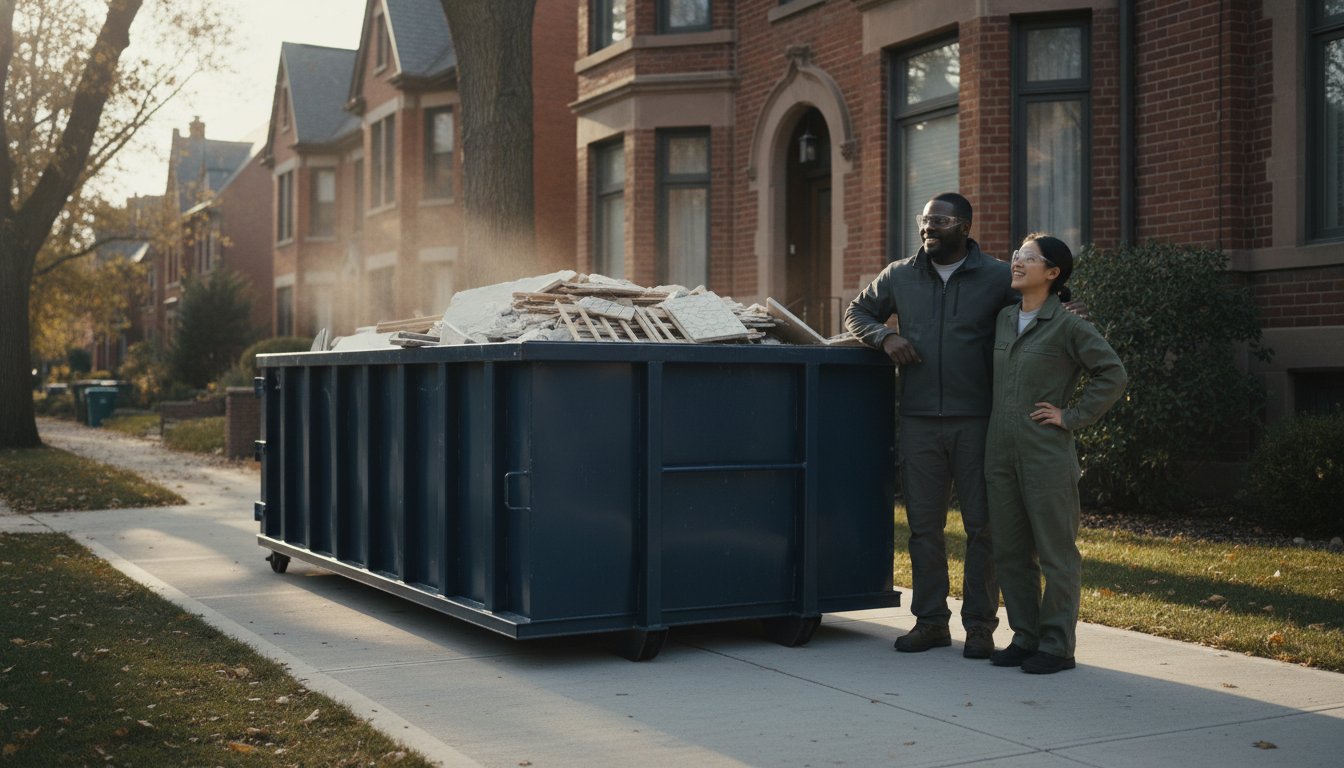
Did you know that a single 10x10 room with plaster and lath walls generates approximately 4,600 pounds of debris? That is over two tons of waste from just one small space. When you're planning a renovation, finding the right dumpster rental for plaster and lath demolition is critical because this material is 2 to 3 times heavier than modern drywall. You don't want to realize your mistake only after the container is already too heavy for the truck to lift.
You already know that demolition is the messiest part of any project. You need a reliable solution that handles the extreme weight without hitting you with hidden costs. We'll show you how to manage these unique volume challenges with a weight-first strategy. This guide explains how to choose the correct container size to avoid the $40 to $200 per ton overage fees that landfills charge in 2026. Learn how to book your dumpster, clear your site efficiently, and keep your neighborhood dust-free while staying well under your weight limit.
Key Takeaways
- Identify the density differences between horsehair plaster and gypsum to prevent unexpected tonnage overages.
- Choose between a 10-yard and 20-yard container to find the "sweet spot" for your specific room count and weight limits.
- Apply the "Sandwich Technique" when loading your dumpster rental for plaster and lath demolition to maximize available space.
- Determine if your project requires a city permit for street placement or driveway use based on 2026 regional regulations.
- Book your roll-off container online to ensure transparent pricing with no hidden fuel or environmental surcharges.
The Unique Challenges of Plaster and Lath Demolition Waste
Demolishing a room in an older home is a different beast compared to modern construction. You aren't just dealing with light sheets of gypsum; you're tackling high-density material that has likely been in place for nearly a century. Historic Lath and plaster consists of layers of wet lime or gypsum plaster applied over wood or metal strips. This composition makes it incredibly heavy. While modern 1/2-inch drywall is relatively light, historic plaster can be up to 1 inch thick and often contains horsehair for reinforcement, which adds to its density. Because of this, a dumpster rental for plaster and lath demolition requires careful planning to avoid exceeding weight limits.
Safety is the first priority during this process. Most homes featuring these materials were built before 1978, meaning there is a high probability of lead-based paint. Additionally, the demolition process releases significant amounts of silica dust. This fine powder is hazardous to your lungs and can quickly coat an entire residential neighborhood if not managed. Use heavy-duty contractor bags to contain the dust before it ever reaches the container. This keeps the job site professional and prevents complaints from neighbors.
Weight vs. Volume: The Demolition Math
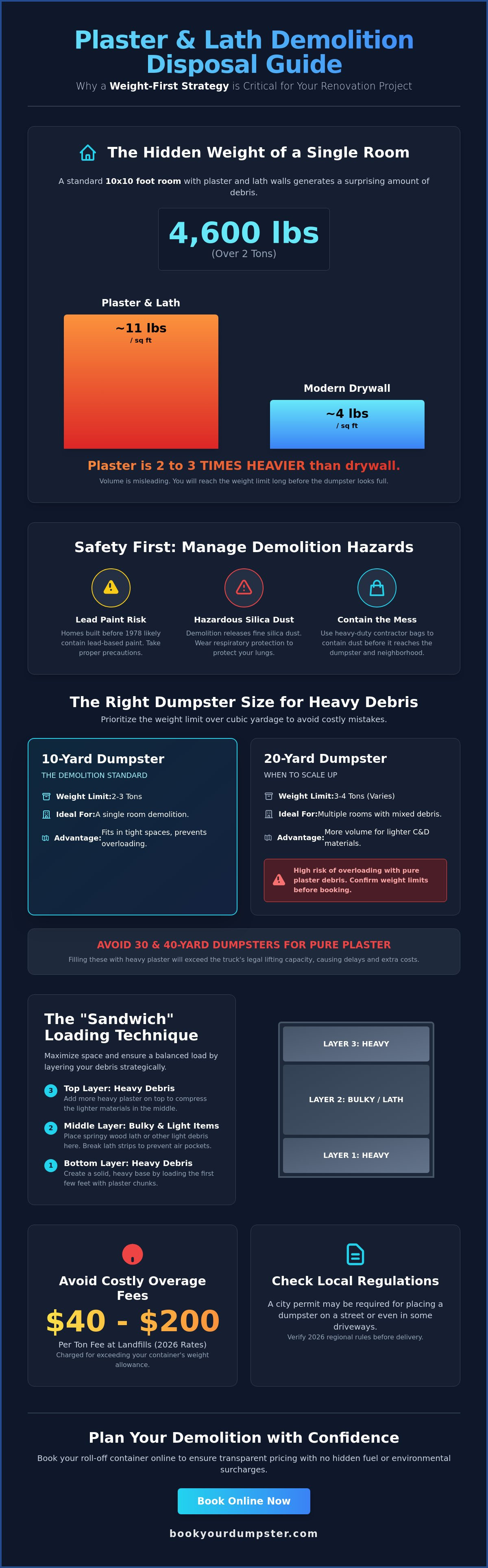
Don't let the size of your room fool you. Statistics from May 2026 show that a standard 10x10 room with plaster and lath walls generates approximately 4,600 pounds of debris. That is over two tons of waste from just 100 square feet of floor space. Plaster is estimated to weigh around 11 pounds per square foot, which is nearly triple the weight of modern drywall. Many people choose a container based on volume alone, but with plaster, you will hit your weight limit long before you fill the cubic yardage. If you exceed your allowance, landfills in 2026 charge overweight fees ranging from $40 to $200 per extra ton. Check your weight limits at Book Your Dumpster USA before you start loading.
Lath Disposal: Wood vs. Metal Mesh
The "lath" part of the equation creates its own logistical headache. Wood lath is thin, dry, and incredibly springy. When you toss it into a container, it tends to create air pockets, eating up valuable cubic yardage without settling. You must break these strips down to ensure they don't "bridge" and leave the bottom of your dumpster half-empty. Metal lath is even more challenging. It is heavy, often rusted, and features razor-sharp edges that can easily slice through standard trash bags or work gloves. Never attempt to burn wood lath or dispose of it as yard waste; the old nails and potential lead paint residue make it strictly construction and demolition debris.
Choosing the Right Dumpster Size for Your Demolition Project
Selecting a container for your project requires a weight-first strategy. Most people make the mistake of treating plaster like standard drywall. This leads to massive overage fees or, worse, a container that is too heavy for a truck to lift. When you book a dumpster rental for plaster and lath demolition, you must prioritize the weight limit over the cubic yardage. While a 30 or 40-yard dumpster seems like a great way to handle a large gut renovation, you should rarely use them for pure plaster disposal. Hauling trucks face strict legal weight limits on residential streets. If you fill a 40-yard unit with dense debris, it will exceed the 5 to 6-ton allowance of the container and the lifting capacity of the hoist system.
Properly managing Construction and Demolition Materials starts with choosing a size that matches the hauling capacity of the equipment. If you fill a larger bin to the brim with heavy plaster, the driver will likely leave it on-site until you remove enough material to make it safe for travel. This creates delays and extra labor costs. At Book Your Dumpster USA, we help you avoid these "dead-weight" stalls by matching the right container to your specific debris profile before the first sledgehammer swings.
Why the 10-Yard Dumpster is the Demolition Standard
Our 10 Yard Dumpster is the primary choice for heavy debris. It typically carries a weight allowance of 2 to 3 tons, making it perfect for a single-room gut or heavy masonry removal. In tight urban environments like Queens or Brooklyn, the small footprint is a major advantage. It fits easily into narrow driveways without blocking sidewalk access. By using a smaller size, you ensure the load remains manageable for the truck's hydraulic system. If you have more than one room to clear, it's often more efficient to swap out a 10-yard unit twice than to risk overloading a larger container.
When to Scale Up to a 20-Yard Container
The 20-yard container is the "sweet spot" for multi-room renovations where you're mixing plaster with lighter materials. If your project includes wooden studs, flooring, or old kitchen cabinets, you need the extra volume. The longer walls of a 20-yard unit also help you manage the awkward length of lath strips and 8-foot wall studs without having to cut every piece down. Check our Roll Off Dumpster Rental guide to compare specific dimensions. Before you start your demolition, Book your dumpster online with Book Your Dumpster USA to lock in your delivery date and ensure you have the right capacity for the job.
Step-by-Step Guide to Loading Plaster and Lath Efficiently
Efficiency starts before the first shovel hits the floor. Put on your N95 respirator, wrap-around goggles, and heavy-duty gloves. Old metal mesh lath has razor-sharp edges that will slice through standard leather, so use puncture-resistant gear. When you arrange a dumpster rental for plaster and lath demolition, you need a physical loading strategy to prevent the container from becoming a chaotic pile of air pockets and hazardous dust. Disorganized loads lead to uneven weight distribution, which can cause the truck to tilt or the hoist to fail during pickup. Keep your heaviest debris centered in the middle of the bin to ensure a safe, balanced haul.
Proper disposal requires following EPA guidelines on C&D landfills to ensure your waste is handled legally. Before you toss a single piece of debris, line the path to your dumpster with heavy-duty tarps. This makes the final sweep significantly faster and prevents fine white dust from embedding in your driveway or lawn. Use 3-mil thick contractor bags for the finest plaster dust. This keeps the material contained and prevents a massive cloud of silica from blowing into the street when the dumpster is eventually moved.
The Sandwich Technique for Maximum Volume
Most people lose 30 percent of their dumpster's capacity to air gaps. Use the sandwich technique to "flat-pack" your waste and stay below the fill line. Follow these three steps:
- Step 1: Lay a 6-inch base layer of loose plaster chunks. This fills the ridges in the floor of the roll-off and creates a flat foundation.
- Step 2: Place wood or metal lath strips completely flat. Do not toss them in bundles. Laying them like flooring prevents "nesting," where the springy wood creates large, empty voids.
- Step 3: Compress the load as you work. Use a sledgehammer to break down any bridging pieces. If you have a second layer of plaster, spread it over the lath to weigh it down and eliminate remaining air pockets.
Dust and Neighborhood Management
Demolition in high-density areas like San Francisco or Boston requires extra care to maintain neighbor relations. Keep a garden hose nearby and use a light mist to wet down the debris as you load it. This simple "wet-down" method stops silica dust from drifting onto the neighbor's porch or parked cars. If you aren't finishing the job in one day, secure a heavy tarp over the top of the container. This prevents wind from whipping through the bin and keeps the load dry; wet plaster is significantly heavier and can push you over your tonnage limit. If you are ready to start your project, Book your dumpster today to secure your delivery slot.
Navigating Local Regulations and Disposal Permits
Demolition projects in older urban centers require more than just a sledgehammer; they require a firm grasp of local ordinances. If you're planning a dumpster rental for plaster and lath demolition, your first decision is where to place the container. Driveway placement is usually the simplest route and rarely requires a permit. However, if your project is in a high-density area like Queens or Boston where driveways are narrow or non-existent, you'll likely need to use the street. This triggers a requirement for a Right-of-Way or Street Placement Permit. In 2026, these permits typically cost between $10 and $100 depending on your municipality's specific regulations. Don't skip this step; unpermitted containers on public property face immediate fines or impoundment.
You must also ensure your debris remains compliant with environmental safety standards. Many homes built during the era of lath and plaster also contain asbestos in pipe insulation, floor tiles, or even the plaster itself. Prohibited items like asbestos-containing materials (ACM) must never enter a standard roll-off bin. If a transfer station detects hazardous waste in your load, they will reject the entire container. This results in massive remediation fees and legal headaches. Book Your Dumpster USA helps you maintain local compliance by providing clear guidance on what can and cannot go into our containers across all our service areas.
Permit Requirements in NY, NJ, and MA
New York City has some of the strictest street placement rules in the country. In Queens, you must secure a permit from the Department of Transportation (DOT) if the container occupies a parking lane or touches a sidewalk. Massachusetts and Illinois have similar right-of-way considerations that vary by township. For a detailed breakdown of these regional requirements, read our guide on Dumpster Rental in New York, Illinois, and Massachusetts. We take the guesswork out of the process by helping you determine exactly when a permit is mandatory for your specific job site.
Weight Limit Enforcement and Overage Fees
Weight limits are strictly enforced by the Department of Transportation to prevent damage to residential roads. Every roll-off truck has a maximum legal hauling capacity, and an overloaded dumpster rental for plaster and lath demolition can lead to a "dry run" fee if the driver cannot safely lift the bin. Transfer stations calculate their "tipping fees" based on exact tonnage. In 2026, landfills charge overweight fees ranging from $40 to $200 per extra ton. Avoid these surprises by choosing a provider that prioritizes transparent, no-nonsense pricing. Our commitment to integrity at Book Your Dumpster USA means you get clear weight allowances upfront with no hidden environmental or fuel surcharges. Book your dumpster online now to secure your delivery date.
Book Your Dumpster for Your Next Demolition Project
Stop planning and start doing. Managing a renovation is stressful enough without worrying about debris piling up on your sidewalk or driveway. Book Your Dumpster USA provides a streamlined, digital-first solution for your dumpster rental for plaster and lath demolition. You can access our online booking engine 24/7 to reserve a 10, 20, 30, or 40-yard roll-off container. Our system is designed for speed. Choose your size, select your delivery date, and provide your location in minutes. We understand that your demolition timeline is tight. We prioritize on-time delivery and pickup to keep your crew moving and your site clear.
We believe in absolute transparency. The waste management industry is often plagued by opaque pricing and surprise surcharges. Book Your Dumpster USA has eliminated that frustration. When you book with us, you won't see hidden fees for fuel or environmental compliance. The price you see is the price you pay. This direct approach has made us a trusted partner for both professional contractors and DIY homeowners across New York and our other service areas. Our expert support team is always available to help you navigate the specific weight challenges of heavy debris, ensuring you have the right capacity for every phase of your project.
The Book Your Dumpster USA Advantage
For heavy demolition jobs, our 10 Yard Dumpster is the undisputed hero. It provides the perfect balance of weight capacity and physical footprint. Our drivers are experts at navigating the tight residential streets of Queens and Brooklyn. We respect your property. We use protective measures to ensure the roll-off placement doesn't damage your driveway or block essential access. Book Your Dumpster USA acts as a high-functioning tool in your renovation kit, not another logistical headache to manage. Book your dumpster now to experience a service that respects your time and your budget.
Ready to Clear the Debris?
Old plaster is heavy and messy, but clearing it shouldn't be a struggle. Choosing a specialist who understands the weight-first requirements of historic materials saves you from the financial pitfalls of overloaded bins. For more information on managing your site efficiently, read The Ultimate Guide to Construction Debris Removal. We have the containers you need and the reliable service you deserve. Don't let the rubble stall your progress. Book your dumpster today and get your project started.
Take Control of Your Demolition Site
You now have the strategy needed to handle the heavy lifting of historic renovations. Remember that weight is more important than volume when planning a dumpster rental for plaster and lath demolition. By using the sandwich technique and selecting a specialized 10 or 20-yard bin, you avoid the $40 to $200 per ton overage fees that surprise unprepared renovators in 2026. Proper site preparation and dust management keep your project professional and your neighbors happy. Don't let the weight of 100-year-old materials stall your progress or your budget.
Our service prioritizes your project timeline with guaranteed on-time delivery and pickup. We offer transparent pricing with no hidden fees for fuel or environmental surcharges. You get a reliable partner who understands the unique density of horsehair plaster and the bulk of lath strips. We provide the right tools to move your project from a state of clutter to a state of resolution with minimal cognitive load. Book your demolition dumpster online now and clear your debris without the logistical stress. Your renovation is ready for the next phase. Let's get to work.
Frequently Asked Questions
Can I put plaster and lath in the same dumpster?
Yes, plaster and lath are both classified as construction and demolition (C&D) debris and can be placed in the same container. This is standard for any dumpster rental for plaster and lath demolition. To maximize your 10-yard or 20-yard unit, place the bulky wood lath flat and layer the heavy plaster on top. This technique prevents air gaps and keeps the load stable during roll-off transport.
How much does a 10-yard dumpster full of plaster weigh?
A 10-yard dumpster completely filled with plaster can weigh over 10 tons, which far exceeds the legal hauling limit for most residential trucks. Most 10-yard roll-offs have a weight allowance of 2 to 3 tons. To avoid heavy overage fees or a failed pickup, you should only fill the container about one-third of the way if you're disposing of pure, high-density plaster.
Do I need a permit to rent a dumpster for demolition in New York?
You only need a permit if you place the dumpster on a public street or sidewalk. If the container stays on your private driveway in Queens, no city permit is required. If you must use the street, you need a New York City Department of Transportation permit. In 2026, these permits typically range from $10 to $100 depending on the duration and specific location.
What happens if my dumpster is too heavy for the truck to pick up?
If the load exceeds the truck’s lifting capacity, the driver will leave the container and you'll be charged a "dry run" fee. You'll then have to manually remove debris until the weight falls within the safety limit. This is why calculating your tonnage upfront is vital. Always distribute the weight evenly to ensure the hoist system can function correctly without a mechanical stall.
Can I put lead-painted plaster in a standard roll-off dumpster?
Yes, residential lead-painted debris is generally accepted as standard C&D waste in most municipalities. However, you must handle it safely to prevent dust exposure. Use 3-mil thick contractor bags to seal the debris before loading. This keeps lead-contaminated silica dust from blowing into the neighborhood. Always verify with local transfer stations if they have specific disposal mandates for historic materials.
Is it better to use contractor bags or loose-fill for plaster demo?
Contractor bags are the superior choice for managing fine plaster dust and silica. While loose-fill loading is faster, it creates significant dust clouds that can lead to neighbor complaints or health hazards. Using 3-mil bags keeps the site clean and makes the final sweep of your dumpster rental for plaster and lath demolition much easier. Bagging also helps you measure your weight more accurately as you load.
How long can I keep the dumpster on my property for a gut-reno?
Most standard rental periods last between 7 and 14 days. If your project takes longer, daily rates for extra time in 2026 typically fall between $40 and $100. We recommend scheduling your delivery only after the demolition is 25 percent complete. This ensures you don't waste your rental period on prep work. Book your pickup as soon as the bin is full to keep your project moving.
What size dumpster do I need for a 1,000-square-foot house gut?
A full gut of a 1,000-square-foot home will likely require multiple 20-yard dumpster swaps. Based on the estimate that 100 square feet of plaster weighs 2.3 tons, a 1,000-square-foot project generates roughly 23 tons of waste. Since a 20-yard dumpster often has a 3-ton limit, you will need approximately eight containers to stay within legal weight allowances. Using multiple smaller units is safer than overloading one large bin.


