

The most expensive mistake in masonry removal isn't a broken tool; it's assuming your debris behaves like household trash. A single cubic yard of stone or saturated soil can weigh over 3,000 pounds, quickly turning a standard cleanup into a financial nightmare. When you're planning a dumpster rental for a retaining wall demolition, you aren't just renting a box. You're managing tons of concentrated weight that can trigger massive overage fees or damage residential streets in tight markets like Queens or San Francisco.
We understand that navigating weight limits and city permits feels like a second job. You want a clear plan that keeps your site safe and your budget intact. This 2026 guide provides the technical breakdown you need to handle heavy masonry effectively. You'll learn how to calculate weight-to-volume ratios, why the specialized 10-yard container is the industry standard for stone, and how to navigate permit requirements for walls over four feet tall. Follow these steps to ensure a professional, stress-free demolition from the first swing to the final haul-away.
Key Takeaways
- Identify your wall materials—whether poured concrete, interlocking blocks, or natural stone—to accurately calculate the massive weight of the resulting debris.
- Select a 10-yard container for heavy masonry to ensure the load remains within truck lifting limits and avoids the structural failures of larger bins.
- Schedule your dumpster rental for a retaining wall demolition at least 24 hours before the project starts to ensure your site is ready for immediate loading.
- Verify local permit requirements in cities like New York or San Francisco to avoid daily fines for placing containers on public streets or sidewalks.
- Master weight-to-volume ratios to maintain pricing integrity and prevent the steep overage fees common with stone and soil removal.
Planning Your Retaining Wall Demolition and Waste Strategy
Retaining walls provide essential structural support, but their demolition is a complex logistics project. You aren't just moving debris; you're moving tons of concentrated weight. Proper planning for a dumpster rental for a retaining wall demolition prevents site bottlenecks and keeps your costs predictable. Start by identifying the core materials of your structure. Poured concrete and natural stone require different handling than interlocking blocks or railroad ties. Each material has a specific density that dictates which container you need.
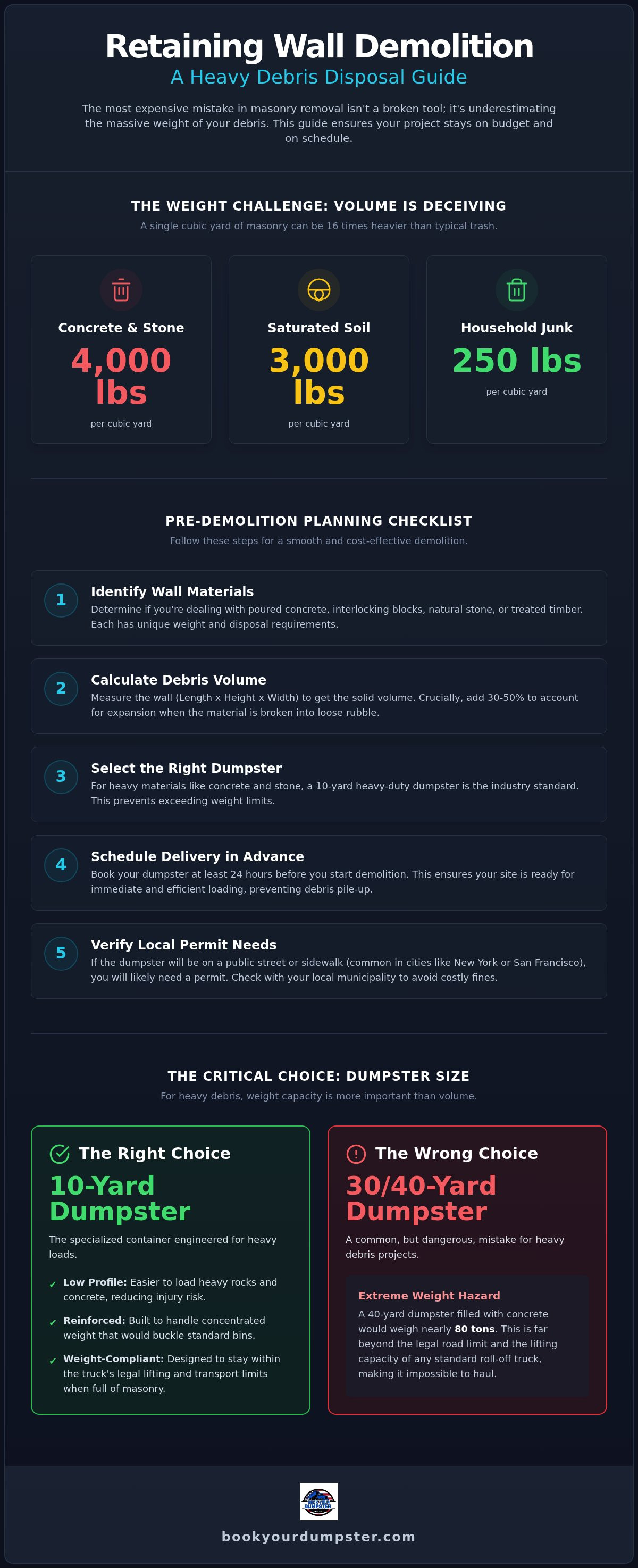
Calculate the estimated volume of the wall by multiplying length, height, and width. This gives you a baseline, but it isn't the final number. You must account for the expansion factor. Demolished debris typically occupies 30% to 50% more volume than a standing, solid wall. If your measurements indicate 10 cubic yards of solid concrete, you'll actually need enough space for roughly 15 cubic yards of loose rubble. Additionally, assess the soil and drainage gravel behind the wall. This backfill often constitutes the bulk of the waste and is frequently underestimated during the initial planning phase.
Masonry vs. Timber: Why Material Choice Changes Everything
Concrete and stone are classified as heavy debris. These materials are non-compactible and exceptionally dense. You must use specialized containers designed for heavy loads to avoid structural failure of the dumpster or the transport truck. If your wall is made of railroad ties, you face different challenges. Many landfills categorize treated timber as restricted waste due to chemical preservatives like creosote. Professional construction debris removal strategies ensure these materials are sorted and disposed of according to local environmental regulations. Mixing timber with masonry can lead to rejected loads at the facility.
The Weight Challenge: Volume is Deceiving
A single cubic yard of concrete weighs approximately 4,000 lbs. Contrast this with standard household junk, which might only weigh 250 lbs per cubic yard. This massive disparity is why your dumpster rental for a retaining wall demolition requires strict adherence to weight limits. Standard containers often have low thresholds designed for furniture or light construction waste. For masonry, you need a heavy-spec container. A tonnage limit is the maximum weight allowed in the container before the rental company applies additional per-ton fees. Exceeding this limit doesn't just cost money; it can make the dumpster too heavy for the truck to safely lift from your property.
Choosing the Right Dumpster Size for Heavy Debris
Selecting the correct container size is the most critical logistical decision you'll make. For heavy masonry, volume isn't your primary concern; weight is. Most homeowners and contractors default to the 10-yard dumpster for concrete, brick, and dirt. It's the industry standard for a reason. These specialized containers are designed to handle the extreme density of stone without exceeding the mechanical limits of the transport truck. If you're unsure about the footprint of this bin, consult our 10 yard dumpster rental guide for specific dimensions and loading tips.
Don't be tempted by the larger 30 or 40-yard dumpsters for masonry projects. While they offer more space, filling them with heavy debris is physically impossible to transport. A 40-yard dumpster filled with concrete would weigh nearly 80 tons, far exceeding the legal road limits and the lifting capacity of a standard roll-off truck. If your project involves a mix of timber walls, soil, and some stone, the 20-yard dumpster is a versatile alternative. It provides extra volume for lighter materials while still accommodating a significant weight load. You can view available inventory online to match a container to your specific site requirements.
Why the 10-Yard Dumpster is King for Retaining Walls
The 10-yard "inert" dumpster features a low-profile design. The shorter side walls make it significantly easier to load heavy rocks and concrete chunks by hand or with a small skid steer. You won't have to lift heavy materials over high steel walls, which reduces the risk of injury and site fatigue. These containers are also reinforced to handle concentrated weight that would buckle a standard household bin. Their compact size is a major advantage in urban environments. They fit easily into narrow driveways or along tight residential streets in cities like Queens or Boston without blocking traffic or requiring extensive street permits.
Clean Fill vs. Mixed Demolition
Understanding the difference between clean fill and mixed waste is vital for managing construction and demolition materials sustainably. Clean fill consists exclusively of concrete, brick, stone, and dirt. Because these materials are easily crushed and recycled, disposal costs are often lower. However, mixing even a small amount of wood, plastic, or trash into a masonry load reclassifies the entire dumpster as mixed waste. This triggers much higher disposal rates. Use this checklist to sort your debris on-site:
- Keep it pure: Only put concrete, brick, and rock in the clean fill bin.
- Remove contaminants: Pull out all landscape fabric, plastic liners, and metal pipes.
- Separate timber: Keep railroad ties or pressure-treated wood in a separate container or pile.
- Limit soil: While some dirt is allowed in clean fill, excessive amounts can sometimes change the classification depending on the local facility.
When you arrange a dumpster rental for a retaining wall demolition, clarify your material type upfront. This transparency ensures you receive the right container type and avoids unexpected price adjustments at the landfill. Proper sorting keeps your project efficient and protects your budget from avoidable mixed-waste surcharges.
Step-by-Step Guide to Efficient Retaining Wall Removal
Efficiency in demolition is a result of sequence and safety. Before the first stone moves, you must secure the site. Call 811 to have underground utilities marked. Striking a gas or water line will immediately halt your project and lead to massive repair costs. Once the site is cleared, finalize your dumpster rental for a retaining wall demolition. Schedule the delivery for the day before you plan to start work. This avoids downtime for your crew or your own labor while waiting for the container to arrive.
When demolition begins, dismantle the wall from the top down. This controlled approach prevents unexpected collapses and keeps the debris manageable. As stones or blocks come free, move them directly into the container. Loading as you go keeps the workspace clear and reduces the risk of trips and falls. Keep heavy items on the bottom and distribute them across the entire floor of the dumpster to ensure the truck remains stable during pickup. When you manage a dumpster rental for a retaining wall demolition, you must plan for how the weight settles to avoid a lopsided load.
Safe Demolition Techniques for DIYers
Professional-grade results require the right equipment. For masonry walls, you'll need heavy sledgehammers, pry bars, and potentially a rented jackhammer for poured concrete. As you remove each layer, manage the backfill soil immediately. This soil exerts significant pressure and can slump into your work area if not properly contained or removed. Adhering to demolition safety regulations is essential even for residential projects. Wear steel-toed boots, eye protection, and heavy-duty work gloves at all times to prevent common site injuries.
Loading Your Dumpster for Optimal Weight Distribution
Proper loading is a legal requirement for road safety. You must keep the debris "level full," meaning nothing should extend above the top rim of the container. Avoid creating "outriggers," which are pieces of debris sticking out the sides. These can strike other vehicles or pedestrians during transport. The truck must be able to pull a tarp over the load to secure it. If the tarp cannot lay flat, the driver will likely refuse the pickup. Distributing the weight evenly prevents the dumpster from tilting or shifting when the hoist pulls it onto the truck bed. If you have questions about specific loading patterns for stone, contact our support team for direct guidance.
Permits and Local Logistics in Major Metros
Demolishing a wall in a high-density metro area adds layers of bureaucracy to your project. In New York City, placing a container on a public street requires a Department of Transportation permit. These typically cost between $75 and $150. If you're in San Francisco or parts of Massachusetts, you'll need an Encroachment or Right of Way permit. These regulations ensure that your dumpster rental for a retaining wall demolition doesn't obstruct emergency vehicles or pedestrian traffic. Failure to secure these documents can result in stop-work orders and daily fines that exceed the cost of the rental itself.
Regional weather also dictates your strategy. If you're planning a dumpster rental in Illinois during the winter, you must account for snow and ice. Frozen masonry debris can stick to the bottom of the bin, potentially leading to weight discrepancies or unloading delays. In historic neighborhoods with narrow alleys, we use specialized delivery trucks to navigate tight turns. Always clear a path for the driver before the scheduled arrival time to avoid dry-run fees. This includes moving cars or overhead low-hanging branches that might snag the hoist.
Obtaining a Street Permit
You generally don't need a permit if the dumpster sits entirely on your private driveway. However, move that bin to the curb, and the city will require documentation. In 2026, most major metros have transitioned to digital permit applications. Expect lead times of three to five business days for approval. Costs vary by location, ranging from $10 to $200 depending on the duration and city tier. We assist with the necessary documentation to ensure your placement is legal and compliant with local codes from the start.
Neighborhood Etiquette and Safety
Heavy masonry loads exert extreme pressure on asphalt and concrete. Use street pads or thick plywood under the dumpster's rollers to prevent driveway cracking. This is especially important for natural stone or poured concrete walls that exceed five tons. Managing dust is another priority. Silt fences or basic tarps help prevent sediment from washing into city sewers, which is a major focus for the EPA in 2026. Dust control also keeps you in the good graces of your neighbors during a messy demolition.
Clear communication prevents most disputes. Inform neighbors of the delivery date and the expected duration of the project. Transparency regarding dumpster rental prices and weight limits ensures you don't get hit with unexpected fees that complicate your project budget. If you're ready to begin, schedule your delivery online today to secure your preferred placement date and avoid logistical delays.
Secure Your Dumpster Rental with Book Your Dumpster USA
Book Your Dumpster USA removes the logistical friction from your job site. We specialize in the 10-yard inventory required for heavy masonry removal. Our team ensures that your dumpster rental for a retaining wall demolition arrives on time and sits exactly where your crew needs it. We eliminate guesswork and hidden fees. You receive transparent pricing that includes your weight allowance and fuel costs upfront. This direct approach builds the trust necessary for high-stakes demolition projects.
Expert support is available if you're struggling to calculate your wall's weight-to-volume ratio. We've seen thousands of projects and can recommend the right container to prevent costly overages. Our goal is a safe, efficient site where waste management is the easiest part of your day. We act as a high-functioning tool in your renovation arsenal, focusing on reliability and utility above all else.
Our Seamless Online Booking Process
Select your container and schedule delivery in under five minutes. Our platform provides real-time availability for 10, 20, 30, and 40-yard dumpsters. You don't have to wait for a callback or navigate a complex phone tree. Contractors benefit from secure digital receipting and immediate confirmation for their records. This speed allows you to focus on the demolition itself rather than the waste logistics. It's a modern, digital-first solution for a traditional industry.
Serving New York to San Francisco with Reliability
We maintain a deep inventory across major US metros, including New York, New Jersey, Illinois, Massachusetts, and San Francisco. Our local expertise means we understand the specific roll off dumpster rental requirements for each city. Whether you're working in a tight San Francisco alley or a suburban Illinois driveway, we have the right equipment for the job. We know the local permit landscapes and the street restrictions that can derail a project.
Manage your masonry waste with a partner who values your time and your budget. Book your dumpster today at BookYourDumpster.com and secure a reliable container for your next project. Move from a state of clutter to a state of resolution with one simple booking.
Streamline Your Masonry Demolition Today
A successful retaining wall removal depends on precise weight management and reliable logistics. You now have the roadmap to calculate your debris volume, select the right specialized 10-yard container, and navigate the permit requirements of major metros. Don't let your project stall because of a weight overage or a missing street permit. Securing a professional dumpster rental for a retaining wall demolition ensures your site remains safe and your schedule stays on track.
Book Your Dumpster USA provides the specialized heavy-load equipment necessary for stone and concrete. With over 5,000 successful deliveries in 2025, we've mastered the complexities of urban and residential waste removal. We offer transparent pricing with no hidden fees, giving you full control over your project's bottom line. Trust our expertise to handle the heavy lifting so you can focus on the next phase of your build.
Rent your 10-yard dumpster for masonry demolition now. We're ready to help you clear the way for your next project with efficiency and professional integrity.
Frequently Asked Questions
How much concrete can I put in a 10-yard dumpster for a retaining wall?
You can fill a 10-yard dumpster approximately halfway with concrete or heavy masonry. Because concrete is extremely dense, filling the container to the top would exceed the legal weight limits and the truck's lifting capacity. Keep the load level and centered. This ensures the driver can safely pull the tarp over the debris for transport to the disposal facility without risking mechanical failure during pickup.
Do I need a permit to put a dumpster on the street for a demolition project?
Yes, you almost always need a permit for street placement in major metros like New York or San Francisco. If the container sits on your private driveway, a city permit is generally not required. Check with your local Department of Public Works at least five business days before your scheduled dumpster rental for a retaining wall demolition. Fines for unpermitted street placement can be several hundred dollars per day.
Can I put dirt and rocks in the same dumpster as the wall debris?
You can mix dirt, rocks, and concrete in a single clean fill dumpster. This is the standard practice for most retaining wall projects. However, you must keep these masonry materials separate from trash, wood, or landscape fabric. Mixing non-masonry items into a clean fill load reclassifies the entire container as mixed waste. This change triggers higher disposal rates and can significantly increase your project's total cost.
What happens if the dumpster is too heavy for the truck to pick up?
The truck will refuse the pickup if the load exceeds its mechanical lifting capacity or legal road weight limits. You'll be responsible for removing enough material to bring the weight down to a safe level. This often requires manual labor or a second dumpster rental for a retaining wall demolition. You'll also likely face a dry run fee for the failed pickup attempt, so monitor your weight limits closely during loading.
Are there items I cannot put in a dumpster during a retaining wall removal?
Prohibited items include hazardous materials like asbestos, lead-based paint, chemicals, and batteries. For retaining walls, specifically avoid putting in large amounts of landscape fabric, plastic liners, or pressure-treated timber railroad ties. These items require different disposal methods and can't be processed at a masonry recycling facility. Check your local regulations regarding treated wood, as some landfills have strict bans on creosote-treated materials.
How long can I keep the dumpster on my property?
Standard rental periods typically range from seven to ten days. You can often extend this period for a daily fee if your demolition project takes longer than expected. Always schedule your pickup at least 24 to 48 hours in advance to ensure the truck can arrive on your preferred date. Promptly notifying us when you're finished prevents unnecessary rental charges and keeps your site clear for the next phase of construction.
How do I calculate the weight of my retaining wall?
Multiply the length, height, and width of the wall in feet to find the total cubic feet, then divide by 27 to get cubic yards. A cubic yard of solid concrete weighs roughly 4,000 lbs, or two tons. Remember that once demolished, the loose debris will take up more space but weigh the same. Use these calculations to determine if you need a specialized heavy-material container to avoid exceeding tonnage limits.
Is a 20-yard dumpster better for a large retaining wall?
A 20-yard dumpster is only better if you're disposing of lighter mixed materials like timber and soil. For solid concrete or stone, a 20-yard bin filled to capacity is often too heavy for a standard truck to lift. Most masonry projects are better served by multiple 10-yard containers. This prevents the mechanical strain on the equipment and ensures you stay within legal road weight requirements for heavy debris transport.


