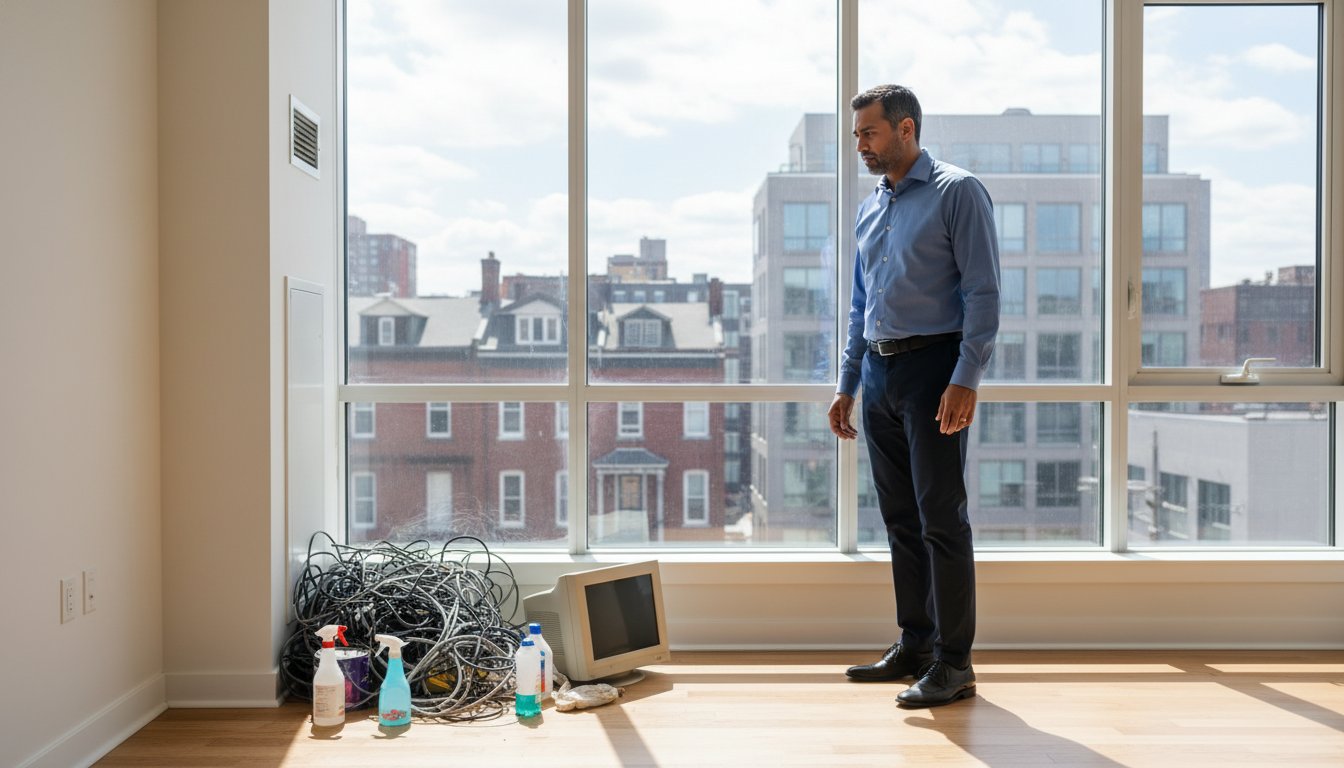
You could face thousands in EPA fines just because a tenant left behind a few half-empty paint cans or old electronics in your rental property. It's a common nightmare for landlords in Chicago, Paterson, New Jersey, and Ann Arbor, Michigan, who discover chemicals or debris after a move-out. Managing these items is a logistical stress you don't need, especially with local and state laws evolving constantly. Following the correct hazardous waste disposal guidelines for rentals is the only way to keep your property compliant and your dumpster rental safe from prohibited materials.
We know that managing waste is a messy, urgent task that requires professional precision. You want to clear the clutter without worrying about municipal penalties or legal liability. This guide from Book Your Dumpster USA provides the clarity you need to stay protected. We'll cover essential guidelines for areas like Chicago (Illinois EPA), Paterson (New Jersey DEP), and Ann Arbor (Michigan EGLE). Use these location-specific checklists to update your lease clauses and handle disposal with confidence.
Key Takeaways
- Identify the "Big Four" hazard categories, including ignitability and toxicity, to spot dangerous materials before they enter your waste stream.
- Master the hazardous waste disposal guidelines for rentals to ensure you never accidentally load prohibited chemicals or electronics into a roll-off container.
- Strengthen your legal protection by integrating a specific Hazardous Waste Clause into your lease agreements and conducting pre-move-out audits.
- Navigate the regulatory differences between New York, Illinois, and Massachusetts to maintain full compliance across all your rental locations.
- Coordinate between municipal collection events and professional dumpster services to handle tenant-generated waste with zero logistical stress.
What Qualifies as Hazardous Waste in Rental Properties?
Landlords often face the cleanup of items that look harmless but carry high risks. In the 2026 rental market, Household Hazardous Waste (HHW) is defined as any leftover residential product that contains corrosive, toxic, ignitable, or reactive ingredients. Understanding What Qualifies as Hazardous Waste is your first line of defense against property damage and legal trouble. You must know these definitions to stay compliant with state laws and local safety codes.
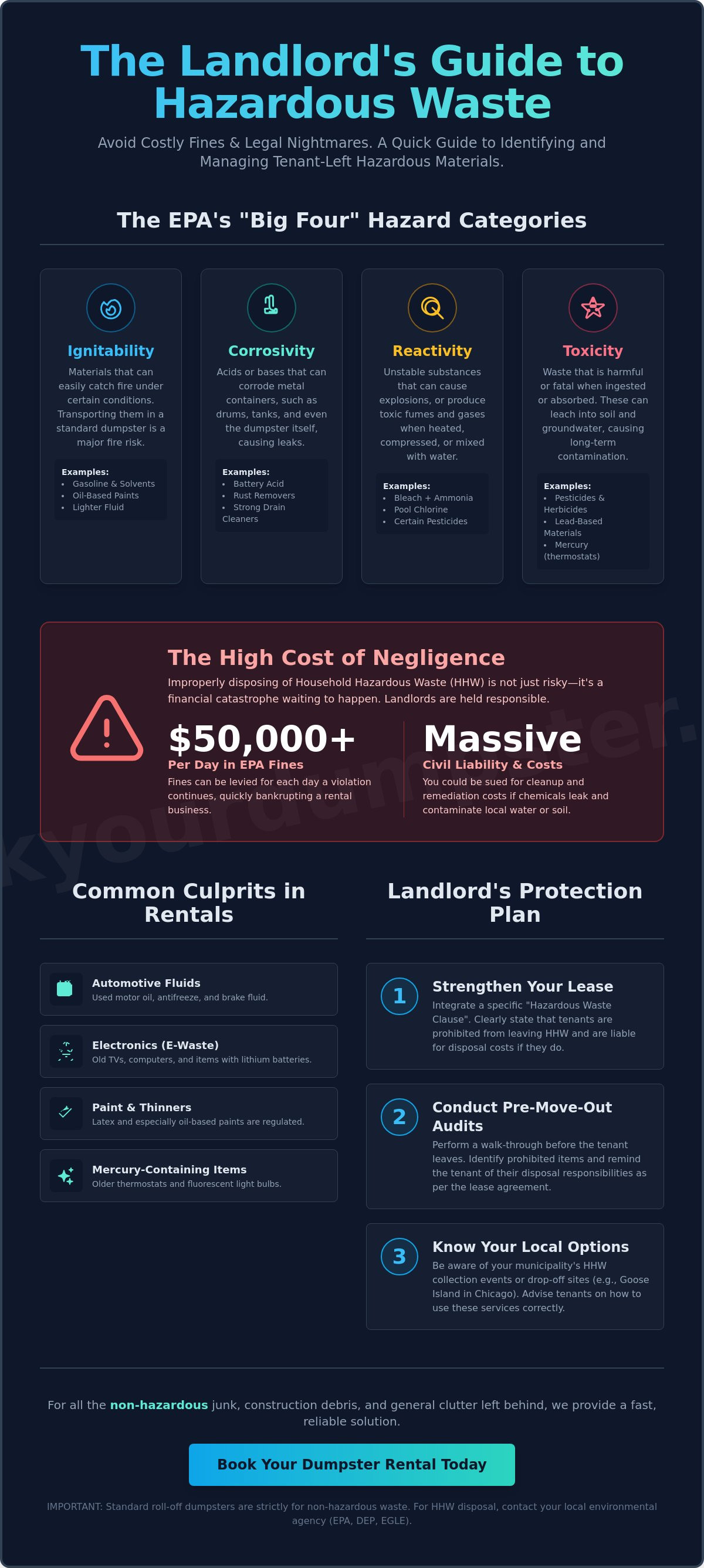
The EPA categorizes these materials into the "Big Four" categories. Ignitability refers to things that easily catch fire, like gasoline, solvents, or oil-based paints. Corrosivity involves strong acids or bases that eat through metal containers, such as industrial-strength drain cleaners or battery acid. Reactivity covers unstable chemicals that can explode or release toxic fumes when mixed with water or air. Finally, toxicity includes substances that are harmful or fatal if swallowed or absorbed. These include pesticides, lead-based materials, and certain electronics. Following the hazardous waste disposal guidelines for rentals ensures these items stay out of standard roll-off containers where they could cause fires or chemical reactions during transport.
Common Household Hazardous Waste (HHW) Examples
Tenants frequently leave behind chemicals in basements, garages, or under kitchen sinks. You'll often find chemical cleaners, pool chlorine, and concentrated fertilizers that require special disposal. Automotive fluids are another major category to watch for. Used motor oil, antifreeze, and brake fluid are strictly prohibited in standard dumpster rentals. Don't forget mercury-containing items. Older thermostats and fluorescent light bulbs require special handling. A single broken bulb can contaminate an entire room with mercury vapor, creating a health hazard for future tenants and a liability for you.
The Legal Risks of Improper Disposal for Landlords
Illegal dumping is a financial catastrophe for property owners. The EPA can levy fines exceeding $50,000 per day for specific hazardous waste violations. If chemicals leak from your property into the local water table, you face massive civil liability and remediation costs that can bankrupt a rental business. Property insurance premiums also spike if an inspection reveals improperly stored hazardous materials. Protect your bottom line by clearing these items correctly. If you're ready to start a safe cleanup, Book Your Dumpster USA for your non-hazardous debris today. It's the fastest way to keep your job site compliant and your property clean. Master the hazardous waste disposal guidelines for rentals now to avoid these costly mistakes later.
State-Specific Regulations: NY, IL, and MA Guidelines
State environmental agencies set the final word on what stays out of your local landfill. While the EPA Household Hazardous Waste Guidelines provide a federal baseline, New York, Illinois, and Massachusetts enforce much stricter localized rules. For 2026, all three states have expanded electronic waste bans to keep lithium batteries and toxic circuitry out of the general waste stream. If you manage properties across state lines, you must know these differences to follow the hazardous waste disposal guidelines for rentals correctly. Failure to do so results in rejected loads at the transfer station and immediate fines for the property owner.
New York State (NYS DEC) Requirements
New York operates under a "Product Stewardship" model. This shifts disposal responsibility to manufacturers for items like paint and carpets. Beginning in June 2026, New York City landlords with 1 to 9 units must use official NYC Bins for standard trash, but hazardous items require SAFE Disposal Events. The DSNY has scheduled these special events for Fall 2026. For rentals in Westchester, Nassau, or Suffolk, you must use county-specific permanent drop-off sites for lead-based paint debris and pesticides. Always verify if your debris meets the NYSDEC "contained-in" determination procedures before mixing it with construction waste.
Illinois (IEPA) Waste Management Rules
The Illinois EPA (IEPA) relies on a high-volume "One-Day Household Hazardous Waste" collection schedule. For Spring 2026, confirmed events include East Peoria on March 21, Griggsville on April 11, and Kankakee on April 18. Chicago landlords have access to the Goose Island Permanent HHW Facility, but there is a catch. IEPA rules specify that waste from businesses, including property managers, is prohibited at residential collection events. You must hire a commercial hazardous waste company for landlord-generated chemicals. For the rest of your non-hazardous cleanout, choose a roll-off size that fits your project needs and schedule your delivery online.
Massachusetts (MassDEP) Disposal Bans
MassDEP enforces aggressive "Waste Bans" that legally prohibit mercury-added products and cathode ray tubes (CRTs) from all landfills. Boston landlords should use the state's "Recyclopedia" tool to find township-specific drop-off points. On May 24, 2024, Massachusetts updated its regulations to include hazardous waste aerosol cans under the universal waste rule. This change simplifies the transport of items like spray paint and cleaners but still requires they be diverted from standard dumpsters. If you're managing a renovation in Middlesex or Suffolk County, ensure your contractors don't toss banned items into the mix. Following the hazardous waste disposal guidelines for rentals keeps your site compliant and your costs predictable.
Prohibited Items for Roll-Off Dumpster Rentals
Loading the wrong material into your container stops your project in its tracks. While our dumpsters handle massive amounts of renovation waste, they aren't a catch-all for every item found in a rental unit. Adhering to the hazardous waste disposal guidelines for rentals isn't just about following the law; it's about protecting our drivers and the environment. Flammable materials like gasoline or solvents pose a severe fire risk. When a truck compacts a load, a single spark can ignite these chemicals, leading to dangerous fires on the road or at the landfill.
If our team discovers prohibited items during pickup or at the transfer station, you'll face a "Contamination Fee" or a "Reload Fee." These charges cover the specialized labor required to sort and safely remove hazardous materials. To avoid these costs, segregate your waste on-site. Keep a separate area for chemicals and electronics, ensuring they never touch the dumpster. For New York residents, the New York State HHW Programs offer clear maps of where to take these specific items safely. Taking five minutes to sort your debris saves you from expensive delays later.
The "Never-In-The-Dumpster" List
Some items are strictly banned because they are unstable or toxic. Wet paint, lacquers, and wood stains are primary offenders. You can often dispose of latex paint if it is completely dried with kitty litter or a hardener, but liquid chemicals are a no-go. Asbestos-containing materials, common in pre-1980s flooring and insulation, require professional abatement and cannot enter a standard roll-off. Finally, never toss sealed tanks or cylinders into the bin. Propane tanks, oxygen cylinders, and fire extinguishers are pressurized. They can explode under the weight of other debris or during the dumping process.
Managing Construction Debris vs. Hazardous Waste
It's vital to distinguish between heavy renovation waste and chemical hazards. Our service for construction debris removal is designed for inert materials like drywall, tile, and flooring. However, treated lumber is often a gray area. Older pressure-treated wood may contain arsenic or chromium, requiring it to be handled differently than standard scrap wood. For smaller apartment cleanouts, check our 10-yard dumpster guide to see how much weight and what types of non-hazardous debris fit best. Following the hazardous waste disposal guidelines for rentals keeps your job site moving and your budget on track. If you're unsure about an item, call us before you toss it.
The Landlord’s Hazardous Waste Management Checklist
Successful move-outs require a proactive disposal strategy. Adhering to hazardous waste disposal guidelines for rentals begins long before the tenant packs their first box. You need a repeatable system to identify risks and assign responsibility. Follow this five-step checklist to protect your property and your profit margins. It's the most effective way to eliminate the logistical stress of abandoned chemicals.
- Step 1: Update your lease agreement. Include a specific Hazardous Waste Clause that defines prohibited items and outlines the financial penalties for improper disposal.
- Step 2: Conduct a "Hazardous Audit." Perform this during the pre-move-out inspection. Look under sinks and in garages for cleaners, oils, or old electronics.
- Step 3: Distribute local HHW maps. Give your tenants the tools to do the right thing. Provide links to the NYC SAFE events for Fall 2026 or the Illinois EPA collection schedule, which includes East Peoria on March 21, 2026.
- Step 4: Document abandoned waste. Take high-resolution photos of any chemicals left behind. This documentation is essential for justifying security deposit deductions for specialized disposal fees.
- Step 5: Schedule your roll-off rental. Once the hazardous materials are cleared, book your dumpster online to handle the bulk of the non-hazardous debris.
Tenant Education and Communication
Prevent disposal errors by sharing a simple "What Goes Where" flyer. Digital portals are perfect for this. Send out reminders about the New York State Carpet Collection Program Law starting in 2026. This law requires producers to collect carpet waste at no cost, saving you and your tenants money. Clear communication ensures that lithium-ion batteries and cleaning solvents don't end up in your standard trash bins.
Post-Tenant Cleanup Protocols
Safety is the priority when handling abandoned items. Always wear proper PPE, including chemical-resistant gloves and masks, when moving unknown substances. Create a temporary safe storage area that is ventilated and away from water sources while you wait for a collection event. You must distinguish between standard "junk" and "hazardous" materials to build an efficient debris removal plan. For example, aerosol cans in Massachusetts are now universal waste as of May 24, 2024. They require different handling than the scrap wood or old furniture you'll put in your roll-off container. Get the hazardous stuff out first, then focus on the big cleanout.
Safe Disposal Solutions and Booking Your Rental
Efficient property management relies on separating your waste streams correctly. Municipal programs handle the toxic items that can't go to a landfill, while our roll-off containers handle the high-volume debris that slows down your turnover. By following the hazardous waste disposal guidelines for rentals, you protect your investment and avoid the heavy fines associated with illegal dumping. Use the local resources discussed in earlier sections to clear out chemicals. Once those hazards are gone, we're ready to haul the rest. Our process is designed to move the logistical stress off your plate so you can focus on getting your unit back on the market.
Don't guess when it comes to compliance. If you find a container with missing labels or a large quantity of unknown liquid, stop and call a professional remediation team. For standard renovation and cleanout materials, we provide a direct, no-nonsense solution. Our system is built on transparency. You get on-time delivery and clear communication with no hidden fees. If you're unsure if an item is prohibited, call us for a quick consultation before you toss it. We'll help you keep your project on schedule and your site safe. Following the hazardous waste disposal guidelines for rentals keeps your costs predictable and your job site moving.
When to Call the Professionals
Large-scale environmental hazards require specialized hazmat teams. However, for the bulk of your property cleanup, a roll off dumpster rental is the most efficient tool you can use. It's the best choice for managing old furniture, flooring, and non-hazardous construction materials. Our regional expertise ensures we understand the specific transfer station rules in your area. Whether you're working in the heart of Boston or a suburb of Chicago, we provide the reliable service you need to maintain a clean job site. We understand the urgency of rental turnovers, which is why we prioritize speed and reliability in every delivery.
Ready to Clean Out? Book Your Size Now
Choosing the right container size shouldn't be complicated. Pick a 10-yard bin for small apartment cleanouts or a 40-yard container for major multi-unit renovations. If you're managing properties across state lines, consult our localized New York, Illinois, and Massachusetts guide for area-specific service details. Remember that NYC properties with 1 to 9 units must comply with the new NYC Bin requirements starting in June 2026. Stay ahead of these changes by planning your waste strategy today. Choose your size, schedule your delivery, and let us handle the heavy lifting. Book Your Dumpster USA for your next rental project today!
Take Control of Your Property Cleanout Today
Managing rental properties in New York, Illinois, or Massachusetts requires a firm grip on environmental compliance. You now have the tools to identify the "Big Four" hazards and understand why segregating chemicals from your construction debris is non-negotiable. Following these hazardous waste disposal guidelines for rentals is the most effective way to protect your business from the heavy fines the EPA can levy for illegal dumping. Keep your site safe by using municipal collection events for toxic materials and professional roll-offs for your bulk non-hazardous waste.
We provide specialized 10 to 40 yard containers designed for any renovation or move-out project. Our service includes transparent pricing with no hidden fees and a promise of on-time delivery across all our regional service areas. Stop letting waste management stress slow down your turnover process and take the final step toward a clean, compliant property. Book your dumpster online in seconds and experience the reliability of a partner who knows the industry. Your next successful project starts with a clear site and a dependable container.
Frequently Asked Questions
Can I put old paint cans in a rental dumpster in New York?
You cannot put liquid paint, lacquers, or stains in a New York rental dumpster. The NYSDEC requires these to be diverted to special collection sites. However, you can dispose of latex paint if you've dried it completely using kitty litter or a commercial hardener. Once the paint is solid and the lid is off, it's considered non-hazardous. For bulk liquid paint, use the NYS PaintCare stewardship program to find a free drop-off location near your rental property.
What happens if I accidentally put hazardous waste in a roll-off container?
You'll face a "Contamination Fee" or a "Reload Fee" if hazardous materials are found in your container. Our drivers cannot legally transport hazardous waste to standard landfills. If we spot it during pickup, we'll leave the dumpster on-site until you remove the prohibited items. If it's discovered at the transfer station, you're responsible for the specialized labor and disposal costs. Following the hazardous waste disposal guidelines for rentals prevents these expensive project delays.
Where can I find hazardous waste drop-off locations in Chicago?
Chicago residents should use the Goose Island Permanent Household Chemicals and Computer Recycling Facility at 1150 North Branch Street. If you're outside the city, the Illinois EPA has scheduled several One-Day collection events for Spring 2026. These include dates in Kankakee on April 18 and Lake in the Hills on June 6. Remember that property managers cannot bring business-generated waste to these residential events; you must hire a commercial hazardous waste hauler instead.
Are electronics like TVs and monitors considered hazardous waste in Massachusetts?
Yes, TVs and monitors are strictly prohibited from all Massachusetts landfills under the MassDEP Waste Bans. These items contain lead, mercury, and other heavy metals that contaminate soil and water. You must take cathode ray tubes (CRTs) and flat-screen monitors to a designated e-waste recycling center. Use the MassDEP "Recyclopedia" tool to find a township-specific drop-off point in the Boston area. We cannot accept any electronics in our roll-off containers due to these state-level environmental regulations.
Can I deduct the cost of hazardous waste disposal from a tenant’s security deposit?
You can typically deduct these costs if your lease agreement includes a specific Hazardous Waste Clause. You must document the abandoned items with high-resolution photos and keep the receipts from the specialized disposal service. In states like New York and Illinois, landlords often use security deposits to cover the labor and fees associated with cleaning up tenant-generated chemicals. Always consult local landlord-tenant laws to ensure your itemized deductions meet the legal requirements for your specific county.
Is treated wood considered hazardous waste for dumpster rentals?
Yes, many transfer stations treat pressure-treated wood as hazardous waste because it contains chemical preservatives like chromated copper arsenate. While we accept standard scrap wood, you must keep treated lumber out of the dumpster. These chemicals can leach into the environment if not handled at a specialized facility. If your renovation involves old decks or fencing, check with us before you book. We'll help you determine if your local landfill in NY, IL, or MA has specific restrictions for treated materials.
How do I dispose of lithium-ion batteries from a rental property cleanout?
You must take lithium-ion batteries to a dedicated battery recycling drop-off point. Never put them in a rental dumpster; they are a leading cause of fires in garbage trucks and recycling centers. Retailers like Best Buy or Home Depot often provide free recycling kiosks for these batteries. In New York, the 2026 regulations emphasize producer responsibility, making it easier to return batteries to the point of purchase. Proper handling ensures you stay compliant with the hazardous waste disposal guidelines for rentals.
Do I need a permit to place a dumpster on the street in NYC or Boston?
Yes, both NYC and Boston require permits for street placement. In New York City, you must obtain a "Street Opening" or "Container" permit from the Department of Transportation (DOT). In Boston, you need a "Street Occupancy" permit from the Public Works Department. These permits usually require a fee and specific insurance coverage. To avoid the hassle, try to place the dumpster on your private property. If street placement is your only option, apply for your permit at least 72 hours in advance.


