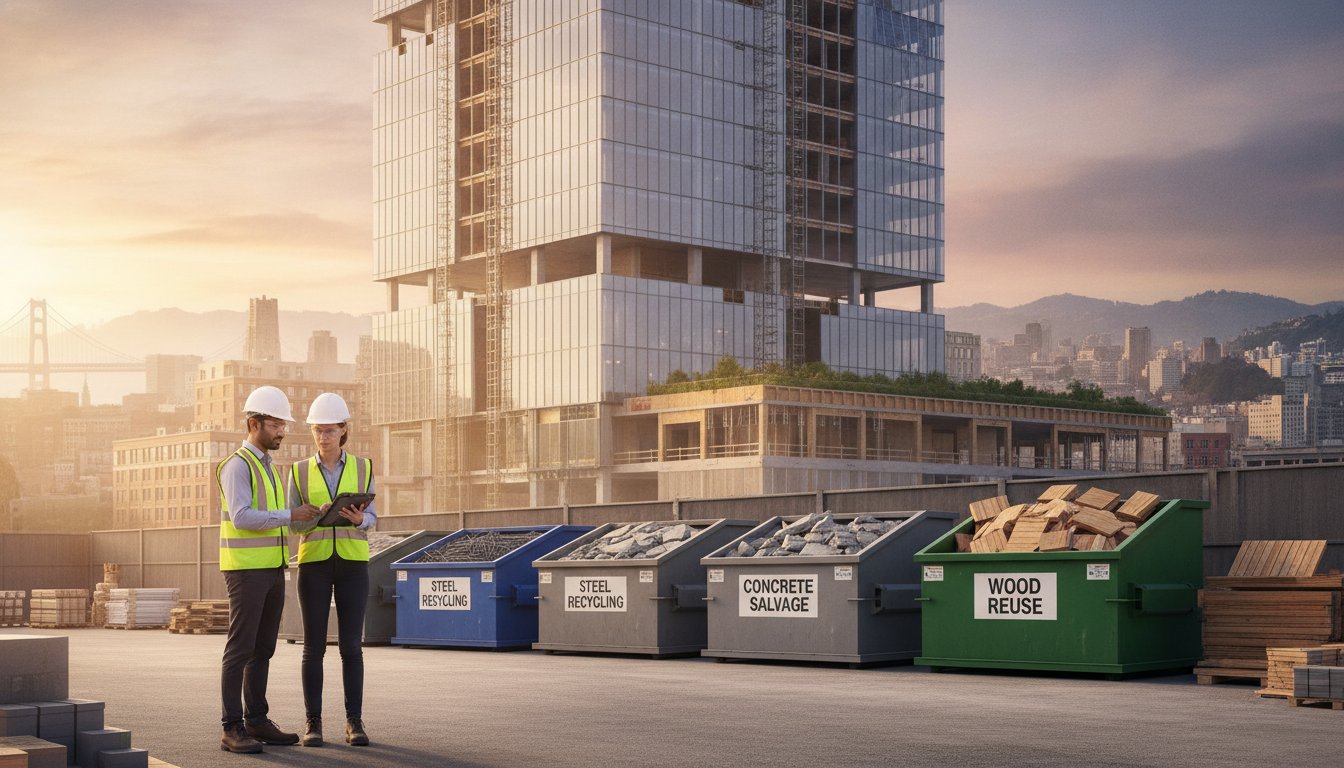
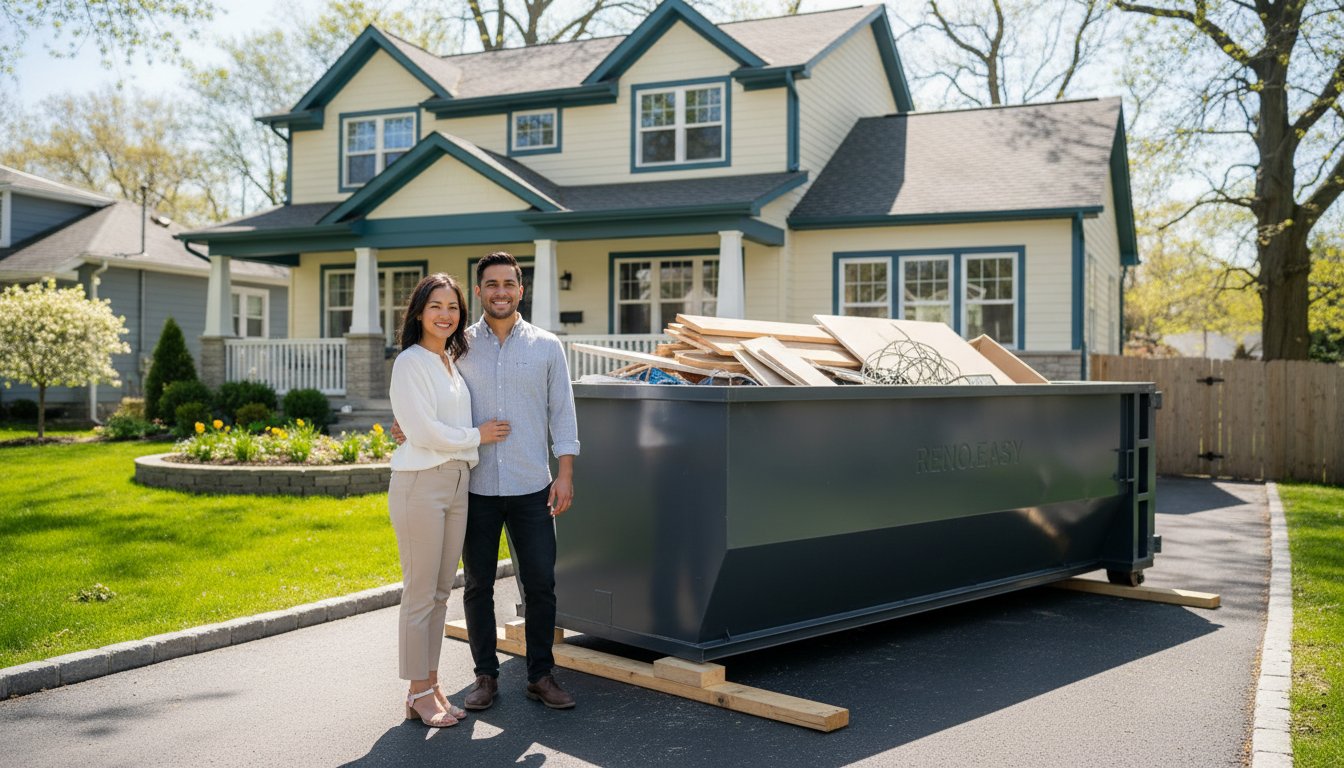
Most homeowners assume renting a dumpster is as simple as making a phone call, but poor planning can turn a weekend cleanup into a logistical nightmare of hidden fees and cracked concrete. You want the clutter gone. You want your property restored without the anxiety of picking the wrong size or violating local city codes. It's frustrating to deal with the uncertainty of weight limits or the fear of being charged for prohibited items like electronics or hazardous liquids. You need a reliable partner to handle the heavy lifting so you can focus on the work at hand.
This guide teaches you exactly how to rent a dumpster for the first time with a professional, no-nonsense approach. Master the selection process between 10, 20, 30, and 40-yard containers while learning to manage permit fees that can range from $10 to $100 depending on your location. We provide a transparent roadmap for 2026 that covers everything from driveway protection to final pickup. Follow these steps to ensure a smooth delivery and a flat-rate experience that leaves your property clean and your project on track.
Key Takeaways
- Learn how to rent a dumpster for the first time by identifying your waste stream and scheduling delivery 48 to 72 hours in advance.
- Select the right container size for your specific project, ranging from 10-yard units for small cleanouts to 20-yard dumpsters for renovations.
- Navigate local city regulations and permit requirements to determine the legal placement of your container on public or private property.
- Master safe loading techniques by distributing weight evenly and adhering to the maximum fill line to avoid transport issues.
- Secure your rental through a streamlined online booking system and verify flat-rate pricing to eliminate hidden fees.
Planning Your Project: When and Where to Place Your Dumpster
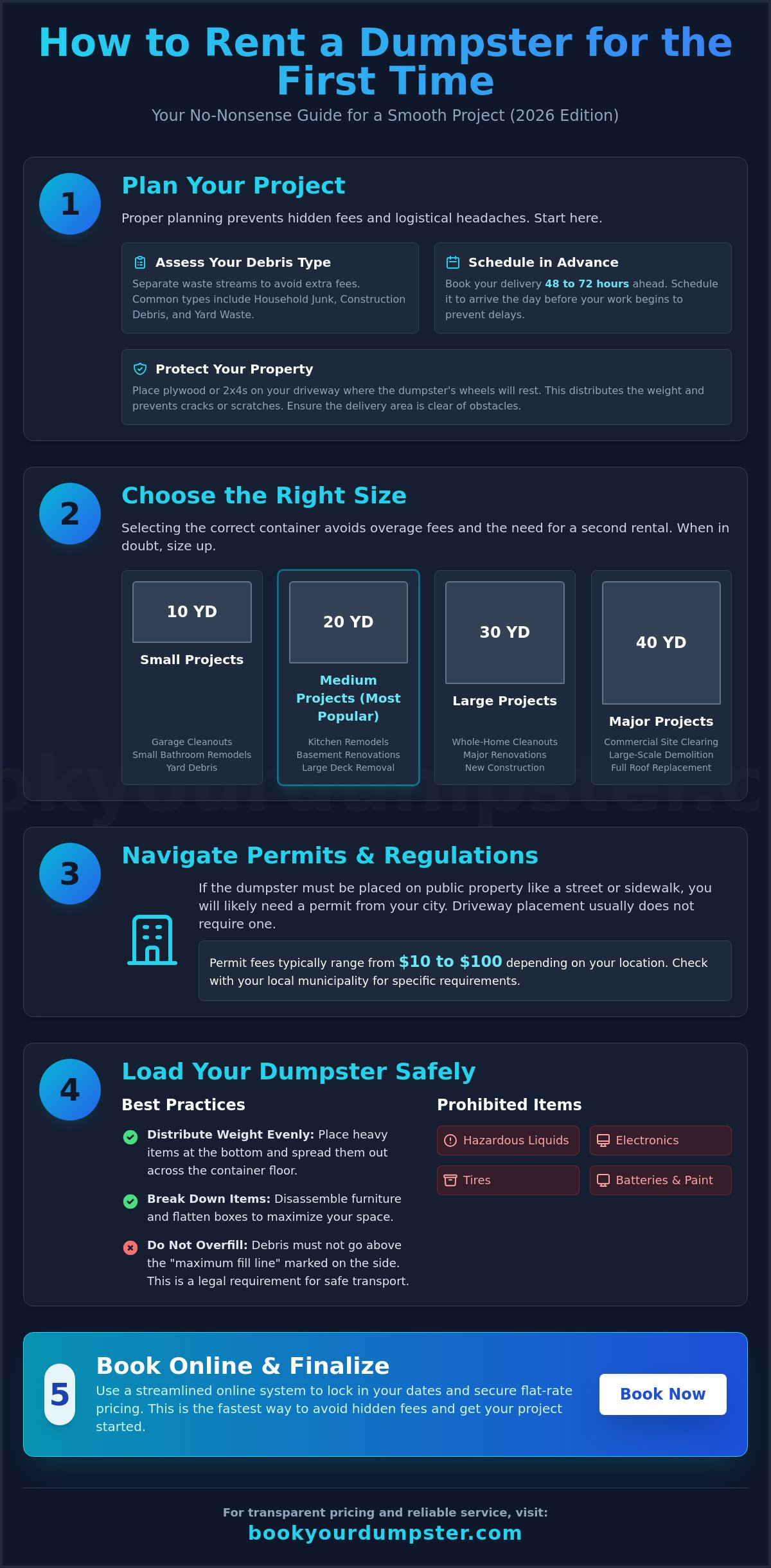
Success starts with a clear assessment of your debris. Before you learn how to rent a dumpster for the first time, categorize your waste stream. Most projects fall into three categories: household junk, construction debris, or yard waste. Mixing these materials can lead to unexpected disposal fees or rejected loads at the landfill. By aligning your project with standard waste management principles, you ensure that your materials are handled efficiently and legally from the moment they leave your property.
Logistics define the speed of your project. Determine your ideal delivery date and plan for a lead time of at least 48 to 72 hours. Walk the delivery path yourself to identify potential obstacles. Check for low hanging wires, narrow alleys, or low tree branches that could obstruct a large roll-off truck. The placement area must be a flat, stable surface to prevent the container from shifting as it's filled. While a driveway is the most common choice, you must prepare the surface to handle several tons of weight.
Site Preparation and Property Protection
Clear all vehicles, toys, and loose debris from the delivery zone before the driver arrives. A standard roll-off truck needs significant room to maneuver and tilt the hoist. To prevent unsightly scratches or structural cracks on your driveway, lay down plywood or 2x4 boards where the dumpster's wheels and rails will rest. This simple step distributes the weight and protects your property investment. If you won't be home for the delivery, mark the exact corners of the placement spot with chalk or traffic cones to ensure the driver places it exactly where you need it.
Scheduling for Maximum Efficiency
Schedule your container to arrive the day before your actual work begins. This prevents labor delays if the truck encounters traffic or route adjustments. Account for "busy seasons" like spring cleaning or the weeks following major storms, as inventory fluctuates rapidly during these times. Standard rental periods typically range from 7 to 14 days. If you're a homeowner or contractor looking for a reliable 10, 20, 30, or 40 yard option, you can book your dumpster online to lock in your dates instantly. Understanding how to rent a dumpster for the first time requires mastering these timing nuances to avoid rushing your cleanup or paying for extra rental days you don't need.
Choosing the Right Container: A Size Guide for First-Time Renters
Selecting the right container size is the most critical decision you'll make in the disposal process. If you're learning how to rent a dumpster for the first time, don't just guess based on a photo. A 10-yard dumpster is the standard for small bathroom remodels or garage cleanouts. It's compact but efficient. For mid-sized projects like basement renovations or removing several rooms of flooring, the 20-yard dumpster is the industry workhorse. For massive undertakings, you should opt for 30 or 40-yard containers for whole-home cleanouts or major construction projects.
One golden rule exists: avoid overfilling at all costs. It's almost always cheaper to pay for the next size up than to deal with overweight fees or the logistical headache of a second rental. Following industry best practices ensures your project stays on budget and compliant with safety standards. Most first-time renters underestimate their waste by about 25 percent. Choosing one size larger than you think you need is the safest way to ensure a smooth pickup without unexpected surcharges.
Mapping Sizes to Real-World Projects
- 10-Yard: Ideal for roughly 1,500 square feet of roof shingles or small household debris. Learn more about 10-yard dumpster capacities to see if it fits your specific driveway footprint.
- 20-Yard: This is the best choice for kitchen remodels or large deck removals. It offers the right balance of volume and footprint for most residential driveways.
- 30-40 Yard: These are required for new home construction or commercial site clearing. They handle the bulky items and massive volumes that smaller bins simply can't accommodate.
Weight Limits and Tonnage Allowances
Volume isn't the only factor. You must understand the difference between container volume and weight capacity. A dumpster might have plenty of physical room left, but if you're loading "heavy debris" like concrete, brick, or dirt, you'll hit the weight limit quickly. These materials are dense. They often require specialized bins or specific weight allowances to avoid landfill surcharges. Before you commit, view our available dumpster sizes to compare dimensions and weight limits directly. This transparency helps you avoid the "hidden" costs associated with exceeding tonnage limits. Knowing how to rent a dumpster for the first time means looking past the physical size and focusing on the actual weight of what you're tossing.
Understanding Local Permits and Regulations in Your City
Decide exactly where your container will rest before you finalize your order. This is a critical step in learning how to rent a dumpster for the first time. If the unit sits entirely on your private driveway, you typically don't need a permit. However, placing a dumpster on a public street, sidewalk, or "right of way" requires official city authorization. These permits generally cost between $10 and $100 depending on your municipality. Ignoring this requirement can result in daily fines or the immediate removal of the container at your expense.
Major cities like Chicago and New York maintain strict oversight on street placements. You must factor in the cost of a "Street Use" or "Right of Way" permit if your property lacks a suitable driveway. Before you schedule a residential delivery, verify your Homeowners Association (HOA) bylaws. Some HOAs restrict dumpster duration or require specific placement spots to maintain neighborhood aesthetics. Mastering how to rent a dumpster for the first time involves checking these local rules to prevent project delays.
Navigating the Permit Process
Apply for your permit through your city's municipal web portal at least one week before your project begins. In major metro areas, the approval timeline usually spans three to five business days. Ensure you have your delivery address and the exact dimensions of your 10, 20, 30, or 40 yard dumpster ready for the application. For more localized details on regional requirements, consult this Comprehensive guide to dumpster rental in NY, IL, and MA. Check if your rental company handles the permit process for you, though many cities require the homeowner to apply directly.
Local Regulation Spotlights
Cities have unique waste management personalities. In New York City, specifically Queens, narrow streets may require smaller trucks or specific "no parking" signage to be posted 48 hours in advance. San Francisco enforces strict debris sorting guidelines to meet mandatory recycling rates. Meanwhile, Illinois and Massachusetts have rigorous hazardous waste disposal laws that prohibit materials like electronics or batteries from entering the general waste stream. Check your local landfill's prohibited items list to avoid overweight fees or environmental surcharges. These fees can range from $40 to $200 per extra ton if you exceed your weight allowance.
Best Practices for Loading and Filling Your Rental Safely
Loading a dumpster efficiently is about more than just clearing space. It's about physics and road safety. Understanding how to rent a dumpster for the first time means knowing that a poorly loaded container can lead to pickup delays or significant safety hazards. Distribute the weight of your debris evenly across the floor of the unit. Concentrating heavy items on one side can cause the container to tip or shift dangerously when the truck attempts to hoist it. This balance is critical for the driver's ability to safely transport your waste to the disposal facility.
Never fill your container past the "Max Fill" line clearly marked on the side of the bin. For a roll-off truck to legally transport a load, the debris must be low enough for the automated tarping system to cover it completely. If items are sticking out or piled too high, the driver will refuse the pickup for safety reasons. You'll then have to level the load yourself and schedule a return trip. Break down large items like furniture, cabinetry, or cardboard boxes before tossing them in. This maximizes your available volume and prevents large air pockets from wasting the space you paid for.
Prohibited Items and Disposal Restrictions
Landfills enforce strict regulations regarding what enters their facility. Never throw prohibited materials into a standard roll-off container. This includes hazardous materials like car batteries, tires, wet paints, and chemicals. Electronic waste, such as TVs, computer monitors, and printers, requires specialized handling. Appliances containing refrigerants, like refrigerators or AC units, are also banned due to environmental laws. If these items are found in your dumpster, you will face environmental surcharges or the entire load may be returned to your property. If you have questions about specific items, view our rental guidelines to ensure your debris is compliant.
Safety Tips for Manual Loading
Use the swing-open door located at the back of the dumpster for heavy or bulky items. Walking heavy debris into the container is much safer than attempting to lift it over the high side walls. Wear proper personal protective equipment (PPE), including heavy duty gloves, sturdy work boots, and eye protection, to prevent injuries from sharp edges or flying dust. Be extremely cautious when loading "heavy" materials like soil, gravel, or concrete. These items reach weight limits much faster than they fill the volume of the bin. Exceeding your tonnage allowance can result in overweight fees ranging from $40 to $200 per extra ton. Stay mindful of your limits to ensure a smooth pickup experience.
Completing Your Rental: Online Booking and Pickup Logistics
The final stage of the disposal process is the most straightforward when you use the right digital tools. When you learn how to rent a dumpster for the first time, you'll discover that traditional phone orders often lead to scheduling errors or miscommunicated addresses. Use an online booking system to secure your container size and delivery date instantly. This approach ensures your project is logged directly into the dispatch queue. Always confirm that your agreement includes flat-rate pricing. This model is the most effective way to avoid "hidden" fuel surcharges or environmental fees that can unexpectedly inflate your total cost. For a clear look at regional market trends, check current dumpster rental prices for 2026.
Schedule your pickup at least 24 hours before you need the bin removed from your property. Don't wait until the last minute to request a haul-away. High demand for 10, 20, 30, and 40 yard dumpsters can fill up driver schedules quickly, especially during peak renovation months. By setting your pickup date in advance, you ensure the container is gone as soon as your work is complete. This keeps your driveway clear and prevents any potential complaints from neighbors or homeowners associations. Proactive scheduling is a hallmark of a well-managed project.
The Book Your Dumpster USA Advantage
Our platform offers a streamlined digital booking experience built for residential and commercial users alike. We prioritize reliability and punctuality, even in high-traffic metro areas like San Francisco where logistical precision is mandatory. You receive transparent pricing with no surprise fees at the end of the rental. We've modernized the waste industry to respect your time and your budget. Whether you're a homeowner or a contractor, our system provides the competence and control you need to manage your waste stream without the typical industry stress.
Final Checklist Before Pickup
Complete a final inspection of the container before the driver arrives. Ensure the rear door is securely latched and that no debris is hanging over the sides or protruding above the max-fill line. If you used any personal locks or covers during the rental, remove them now. Clear the path for the roll-off truck by moving vehicles or equipment away from the driveway. Once you've mastered how to rent a dumpster for the first time, you'll realize how simple the process can be with a professional partner. Book your next dumpster rental today to experience a seamless transition from a cluttered site to a clean property.
Take Control of Your Project Today
Mastering the logistics of waste removal transforms a stressful renovation into a manageable task. You now have the tools to select the right 10, 20, 30, or 40 yard dumpster and navigate city permits without the usual confusion. Remember to protect your driveway with plywood and distribute weight evenly to ensure a safe pickup. Understanding how to rent a dumpster for the first time eliminates the fear of hidden fees and project delays. You're ready to move from a state of clutter to a state of resolution with minimal effort.
Stop letting debris stall your progress. Experience a transparent, professional process when you rent your first dumpster with Book Your Dumpster USA. We provide flat-rate pricing with no hidden fees and offer reliable delivery in NY, NJ, IL, MA, and SF. Our easy online booking system allows you to secure your container in under 5 minutes. Take the final step toward a clean property and a successful project today. You've done the research; now execute your plan with confidence.
Frequently Asked Questions
Do I need to be home when the dumpster is delivered?
No, your presence isn't required for delivery as long as the drop-off zone is accessible and clear. Clear all vehicles and obstacles from your driveway before the truck arrives. Mark the desired placement spot with chalk or cones to guide the driver. Providing clear instructions during the digital booking process ensures the container is placed exactly where you need it without requiring a face-to-face meeting.
Can I put a dumpster on the street in Queens or San Francisco?
You can place a container on the street in Queens or San Francisco, but you must secure a municipal permit first. Public street placement is regulated by the local Department of Transportation or Public Works. In Queens, you'll need a specific DOT permit; San Francisco requires a street occupancy permit. Display your permit clearly to avoid heavy daily fines or the immediate removal of the bin by city inspectors.
How much weight can a 10-yard dumpster actually hold?
A standard 10-yard dumpster generally accommodates 2 to 3 tons of waste. This volume is roughly equal to 50 to 60 large trash bags or three pickup truck loads. It's the ideal choice for small basement cleanouts or bathroom remodels. Be careful with heavy debris like dirt or gravel, as these materials reach the weight limit much faster than lighter household junk. Always check your specific tonnage allowance to avoid overage fees.
What happens if I overfill my dumpster past the fill line?
Drivers will not haul a container that is filled past the "Max Fill" line. Overfilled loads are a safety hazard on public roads because the automated tarping system cannot secure the debris. You'll be forced to unload the excess items yourself before a second pickup can be scheduled. Most companies also charge a dry run fee if they have to leave without the dumpster due to an unsafe or overfilled load.
Is there a difference between a residential and a construction dumpster?
The physical containers are often identical, but the rental agreements differ based on the waste stream. Residential rentals are designed for household clutter and general junk. Construction rentals are structured to handle heavier materials like shingles, wood, and metal. When you're learning how to rent a dumpster for the first time, specify your project type to ensure you get the appropriate weight allowance for your debris and avoid unexpected surcharges.
How far in advance should I book my first dumpster rental?
Secure your container at least three days before your project start date to ensure availability. Inventory for popular sizes like 10 and 20 yard bins fluctuates, especially during peak spring cleaning months. Booking early is a key step for anyone figuring out how to rent a dumpster for the first time. This lead time gives you the best chance of securing a flat-rate price and a guaranteed delivery window that fits your schedule.
What items are strictly prohibited from a roll-off dumpster?
Hazardous materials, flammable liquids, and certain electronics are strictly prohibited. Do not toss wet paint, chemicals, tires, or car batteries into the bin. Appliances containing refrigerants, like refrigerators or air conditioners, are also banned due to environmental regulations. If a landfill identifies these prohibited items in your load, they'll charge environmental fees or return the entire container to your property at your expense. Always review the prohibited items list before loading.
Will the dumpster damage my driveway or lawn?
A dumpster can damage your property if you don't take basic precautions. The weight of a full 20 or 30 yard bin can crack aged asphalt or leave ruts in soft soil. Place sheets of plywood or sturdy wooden boards on your driveway to act as a buffer. This simple step protects your surface from the heavy steel wheels and rails of the roll-off container during delivery and pickup, ensuring your property remains in good condition.