
Your back-of-house waste operation is likely leaking more profit than your front-of-house sales can cover. Efficient retail waste management shouldn't feel like a second full-time job. You're likely dealing with cramped loading docks, rising tipping fees, and the constant threat of regulatory fines. In high-density areas across New York, Illinois, and Massachusetts, these logistical hurdles can stall your growth. We understand that every square foot of your store must generate revenue, not hold trash. It's time to take control of your overhead.
Master your logistics to lower monthly waste bills and handle store renovations with ease. This guide provides a clear roadmap for staying compliant with the 2026 NYC Commercial Waste Zone rollouts and the updated Massachusetts organic waste disposal bans. We will show you how to select the right front load commercial waste pickup schedule and roll-off dumpster sizes to keep your store running at peak efficiency. Stop overpaying for air in half-empty bins and start optimizing your waste stream today.
Key Takeaways
- Stay ahead of 2026 regulatory shifts by understanding new NYC Commercial Waste Zones and Massachusetts organic disposal bans.
- Optimize your daily stream with front load commercial waste pickup to eliminate clutter and lower your monthly bills.
- Implement a strategic approach to retail waste management that balances daily operational needs with high-capacity solutions for seasonal peaks.
- Simplify store renovations and fit-outs by booking 10 to 40-yard roll-off dumpsters through a streamlined online platform.
What is Retail Waste Management and Why It Matters in 2026
Retail waste management is the systematic control of all debris generated within a store environment. It tracks the movement of materials from the moment a shipment arrives at the loading dock until the final disposal of customer-generated trash. In 2026, the industry has moved beyond simple trash collection. Retailers now face aggressive "zero-waste" mandates that require detailed reporting and high diversion rates. If you don't manage these streams effectively, your store's profitability will suffer. Poor waste flow creates bottlenecks in your stockroom and leads to unnecessary haulage fees.
Success requires a clear distinction between front-of-house and back-of-house waste. Front-of-house waste includes the bins your customers use, which are often contaminated with food or mixed recyclables. Back-of-house waste is the logistical engine of your store. This stream contains the bulk of your volume, such as shipping pallets and packaging. Controlling both ensures your store remains clean, safe, and profitable.
The Economic Impact of Efficient Disposal
Every square foot of your retail space should generate revenue. When trash takes up valuable floor space, it costs you money. Reducing your pickup frequency through better sorting and compaction is the fastest way to lower your overhead. If you optimize your waste management, you can ensure your front load commercial waste pickup only occurs when containers are at maximum capacity. This prevents you from paying for the collection of half-empty bins.
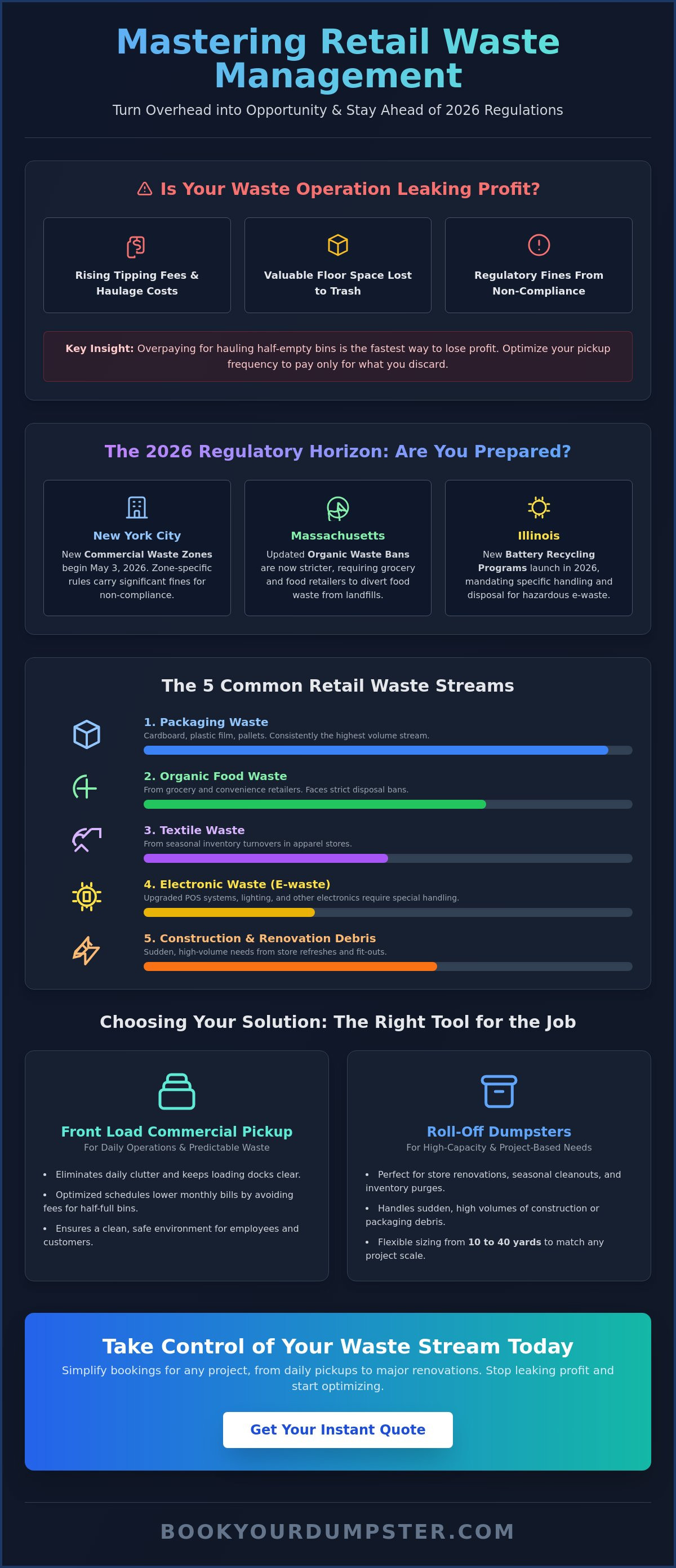
The cost of non-compliance is rising. In New York City, the 8th and 9th Commercial Waste Zones begin implementation on May 3, 2026. Failing to follow these new zone-specific rules can result in significant fines that wipe out your weekly margins. Waste diversion is defined as the act of redirecting materials from landfills through recycling or composting, and it is the primary requirement for accessing 2026 tax incentives. Staying compliant is no longer optional; it's a financial necessity.
Common Retail Waste Categories
Identifying your waste streams allows you to choose the right equipment and schedules. Most retail environments deal with three primary categories:
- Cardboard and Packaging: This is consistently the highest volume stream. Corrugated boxes and plastic film must be processed quickly to keep loading docks clear.
- Unsold and Damaged Goods: Damaged inventory or expired products require secure disposal. Leaving these in open bins can lead to security risks or brand damage.
- Hazardous Retail Waste: Items like batteries and electronics require specific handling. Illinois is launching new battery recycling programs in 2026 that mandate specific handling for these items.
Managing these categories effectively keeps you compliant and helps you determine if you need a permanent front-load solution or a temporary 20 yard dumpster for a seasonal cleanup. When you categorize correctly, you stop guessing and start managing your overhead with precision.
The 5 Most Common Types of Retail Waste Streams
Effective retail waste management requires you to identify exactly what is filling your bins. Most stores generate five distinct streams. First, packaging waste like cardboard and plastic film dominates daily volume. Second, grocery and convenience retailers must manage organic food waste, which now faces stricter disposal bans in states like Massachusetts. Third, apparel stores handle textile waste from seasonal inventory turnovers. Fourth, electronic waste (e-waste) from upgraded POS systems and store lighting requires specialized handling. Finally, construction debris from store refreshes or fit-outs creates sudden, high-volume disposal needs.
Managing High-Volume Cardboard and Plastic
Cardboard is the backbone of retail debris. If you have the space, baling cardboard can reduce your pickup frequency and potentially generate a small rebate. However, most urban retailers in New York or Chicago lack the room for industrial balers. In these cases, loose collection in a dedicated front load container is the standard. Keeping your loading docks clear is a safety requirement, not just a preference. Blocked docks delay deliveries and create trip hazards for your team. For major back-room purges or seasonal inventory resets, a temporary roll off dumpster rental ensures you don't overwhelm your daily trash service.
Don't let shipping pallets pile up against the building. They are a fire hazard and attract pests. If your pallet volume exceeds what your standard service can handle, you might need a dedicated 10 yard dumpster specifically for wood recycling. You can schedule a dumpster delivery online to keep your exterior footprint clean and organized.
Handling Hazardous and Electronic Goods
Proper retail waste management also extends to items that don't fit in a standard bin. Retailers often overlook the regulatory weight of small hazardous items. Fluorescent bulbs, lithium batteries, and old tablets cannot go into your standard trash. The EPA's Retail Sector Strategy outlines strict rules for these materials to prevent environmental contamination. In Illinois, new battery recycling programs starting in 2026 will place even more responsibility on store managers to separate these items at the source.
Data security is another critical factor. Old POS terminals and tablets contain sensitive customer information. These devices must be destroyed or recycled through certified channels to prevent data breaches. Never place electronics or hazardous chemicals into your standard retail dumpsters. Doing so risks heavy fines and can lead to haulers refusing to tip your bins. Keep a separate, labeled container for these items and arrange for specialized pickup to stay compliant.
Comparing Commercial Pickup vs. Roll-Off Dumpsters for Retail
Your retail waste management strategy needs two gears: steady maintenance and high-velocity project removal. Most store managers struggle when they try to use daily bins for one-off projects. This leads to overflow, missed pickups, and expensive fines. Front load Commercial Waste Pickup is your baseline service. It handles the consistent stream of customer trash and daily packaging. However, when you launch a store refresh or a seasonal purge, you need a roll-off dumpster. These containers handle bulk volume that would otherwise choke your loading dock or stockroom.
Placement is often the biggest hurdle in urban retail environments. In tight Chicago alleys or crowded Boston parking lots, space is at a premium. You must ensure the delivery truck has a clear path. The container cannot block fire exits, customer access points, or handicap stalls. If you are operating in a high-traffic area, schedule your delivery during off-peak hours. Drivers need room to maneuver the hoist system safely. Always check for low-hanging wires or tree branches that could obstruct the drop. While we focus on the Northeast and Midwest, looking at California Retail Waste Compliance shows how strictly hazardous materials are regulated in major retail hubs nationwide.
When to Choose a 10 Yard Dumpster
Small boutique cleanouts or minor shelving updates don't require a massive footprint. A 10 yard dumpster rental is the retail industry favorite for these tight spaces. It holds the equivalent of about 4 pickup truck loads of material. It's small enough to fit into a single parking stall but tough enough to handle old fixtures, mannequins, and heavy floor tiles. Effective retail waste management relies on choosing the right tool for the specific job, and the 10-yard model is the precision tool for small-scale projects.
Large Scale Retail Renovations
For full store gutting or complete flooring replacements, you must move to 30 or 40-yard containers. These are designed for high-volume construction debris removal where standard bins would fail instantly. Don't let debris pile up on the floor while waiting for a pickup. Coordinate multiple swaps with your hauler to keep the project moving. When one bin is full, have the next one ready to drop. This keeps your contractors working instead of navigating around piles of waste. If your project is massive, a 40-yard container offers the most cubic footage, reducing the total number of hauls and keeping your site organized.
Local Regulations and Compliance in Major Retail Hubs
Compliance isn't a suggestion; it's a legal requirement that shifts with every city line. In New York City, the Business Integrity Commission (BIC) sets the maximum rates and rules for all private hauling. The implementation of the 8th and 9th Commercial Waste Zones on May 3, 2026, marks a major shift in how retail waste management is handled. You must now operate within specific zones to ensure your hauler is authorized to service your address. If you're managing a storefront in Queens and need a container on the street, secure your DOT permit before the truck arrives. Failing to do so results in immediate fines and project delays.
Massachusetts retailers face some of the strictest organic waste rules in the country. The state has lowered the threshold for the commercial organic waste disposal ban to any business generating more than one-half ton of food waste weekly. If you run a grocery store or a convenience shop with a deli, you must separate food scraps from your general trash. This reduces the weight of your primary bins, which is crucial since Northeast landfill tipping fees have reached an average of $84.44 per ton in 2026. Diversion is your best defense against these rising costs.
New York and New Jersey Retail Standards
NYC retailers must have a visible decal from their private carter and a written contract that meets BIC standards. In New Jersey, the NJDEP enforces strict mandatory recycling for all commercial entities. Your dumpster rental must be used correctly; mixing recyclables with trash can lead to rejected loads at the transfer station. Check your local city ordinances for specific enclosure requirements to keep your bins out of public view and prevent illegal dumping from passersby.
Chicago and Massachusetts Waste Mandates
Chicago retailers must adhere to the High-Density Residential and Commercial Recycling Ordinance. This requires you to provide adequate recycling bins and post clear signage for employees. In Illinois, the EPA also maintains strict standards for construction and demolition (C&D) debris, which is vital during store renovations. Effective retail waste management in Illinois now includes new regulations for paint-related waste that took effect in 2025 and battery recycling programs launching throughout 2026. Managing seasonal waste peaks in Boston requires a proactive approach to prevent bin overflow during the holiday rush. Order your commercial dumpster now to stay ahead of these local mandates and avoid costly regulatory penalties.
Scaling Your Solution with Book Your Dumpster USA
Managing retail waste management across multiple storefronts requires a centralized, digital-first tool. You don't have time to wait on hold with dispatchers or navigate opaque billing cycles. Book Your Dumpster USA removes the logistical friction by offering a streamlined online booking platform designed for retail managers on the move. Whether you're handling a single boutique cleanout or overseeing a regional rollout of store refreshes, our system allows you to schedule containers in minutes. We focus on removing the mess so you can focus on your customers.
Versatility is key to store efficiency. We offer 10, 20, 30, and 40 yard dumpsters to match the specific scale of your project. Small 10-yard units fit neatly into loading bays for minor updates. Larger 40-yard containers provide the heavy-duty capacity needed for full-scale renovations. We prioritize punctuality. A late delivery blocks your contractors; a late pickup hurts your store's curb appeal and attracts illegal dumping. We ensure your containers arrive and depart as scheduled, keeping your site clear and your stockroom functional.
Reliable Logistics for Multi-Location Retail
Consistency across regions is vital for facility managers. We support retail operations in New York, New Jersey, Illinois, Massachusetts, and San Francisco. This multi-hub presence allows you to standardize your disposal protocols regardless of where your stores are located. Budget planning becomes simpler when you have access to transparent dumpster rental prices. We eliminate hidden fees and surprise surcharges. This pricing integrity allows you to forecast project costs accurately. We also provide dedicated support for retail contractors, ensuring the waste side of the renovation never slows down the construction timeline.
Book Your Next Container Today
Ready to clear the clutter? Follow these steps to secure your equipment. First, visit our platform and enter your store's zip code. Second, select the dumpster size that matches your waste volume. Use our 10-yard model for minor purges or the 30 and 40-yard models for heavy construction debris. Third, choose your delivery date and placement location. Provide clear instructions for our drivers to avoid blocking customer parking or fire lanes. Our system handles the rest, allowing you to get back to managing your sales floor. Don't let debris pile up and create safety hazards. Rent your retail dumpster now at Book Your Dumpster USA and experience a modernized approach to commercial disposal.
Optimize Your Store Logistics Today
Efficient retail waste management is the difference between a cluttered loading dock and a high-functioning storefront. You now have the roadmap to categorize your streams and navigate the specific 2026 mandates in New York, Illinois, and Massachusetts. By distinguishing between daily maintenance and project-based roll-offs, you protect your store's profitability and avoid the heavy fines associated with non-compliance. Every square foot of your stockroom matters. Don't let debris dictate your operational flow or slow down your construction timelines.
We provide the specialized tools you need to manage these logistics without the unnecessary stress. Serving NY, NJ, IL, MA, and SF, our platform offers transparent flat-rate pricing on all 10 to 40 yard sizes. Our online system is built for the speed of modern retail, ensuring your equipment arrives on time and stays out of the way of your customers. Take control of your back-of-house operations and keep your focus on driving sales. Book Your Retail Dumpster Today and resolve your disposal challenges with one simple click. Your team and your bottom line will thank you.
Frequently Asked Questions
What is the most cost-effective dumpster size for a retail store renovation?
Choose a 30-yard or 40-yard dumpster for full store gutting or flooring replacements to minimize haulage fees. These larger sizes accommodate bulky fixtures and construction debris more efficiently than smaller units. For minor updates or boutique refreshes, a 10-yard dumpster is often sufficient. Selecting the right size upfront prevents the high cost of multiple swaps and keeps your renovation timeline on track.
How often should a retail business schedule trash pickups?
Schedule pickups based on your specific weekly volume to avoid paying for half-empty bins. Most high-traffic retailers require front load commercial waste pickup between three to five times per week. During peak seasons, you may need to increase this frequency to prevent overflow. Monitoring your bin levels for two weeks will help you establish a data-driven schedule that minimizes costs and maintains store cleanliness.
Are there specific items retailers are prohibited from putting in dumpsters?
Yes, you must exclude hazardous materials, electronics, and certain organic wastes. Massachusetts prohibits disposal of organic waste for any business producing more than one-half ton of food waste per week. Illinois has strict regulations for paint-related waste as of 2025 and is launching new battery recycling programs in 2026. Always separate these items from your general stream to avoid rejected loads and heavy regulatory fines.
Do I need a permit to place a dumpster in front of my store in New York?
You need a DOT permit if the container sits on a public street or sidewalk in New York City. If the dumpster stays on your private property or a dedicated loading dock, a permit is typically not required. Always verify local borough requirements before scheduling your delivery. Our team can help you understand these permit logistics to ensure your container placement is fully compliant with city ordinances.
Can I use a roll-off dumpster for seasonal inventory disposal?
Roll-off dumpsters are perfect for handling sudden surges of damaged goods or bulk packaging during seasonal resets. A 10-yard or 20-yard container provides ample space for cardboard, pallets, and unsalvageable inventory. This keeps your back-of-house area clear and safe for employees. Using a temporary roll-off prevents your daily front-load bins from becoming overwhelmed during high-volume inventory purges or holiday transitions.
How does retail waste management impact my business sustainability rating?
Effective retail waste management directly improves your ESG reporting and sustainability metrics. By diverting cardboard, plastics, and organic materials from landfills, you demonstrate environmental responsibility to your customers. High diversion rates are increasingly tied to 2026 tax incentives and local compliance rewards. Tracking your waste volume and recycling percentages provides the concrete data needed for modern corporate social responsibility audits and brand reputation management.
What happens if my retail waste contains hazardous materials like electronics?
Mixing electronics or hazardous chemicals into standard bins leads to immediate fines and potential service suspensions. Haulers will often refuse to tip containers that show visible e-waste or prohibited liquids. Illinois retailers must be especially careful with paint and batteries due to updated 2025 and 2026 regulations. You must arrange for specialized pickup for these items to protect your store from liability and environmental contamination.
How can I lower my retail waste management costs in 2026?
Lower your costs by auditing your diversion rates and staying within regional price caps. In New York City, the BIC set maximum rates at $26.87 per cubic yard of loose refuse as of late 2024. Ensure your contracts reflect these legal maximums. Implementing better sorting practices reduces the weight of your primary trash, which is vital as Northeast landfill tipping fees hit an average of $84.44 per ton in 2026.


