
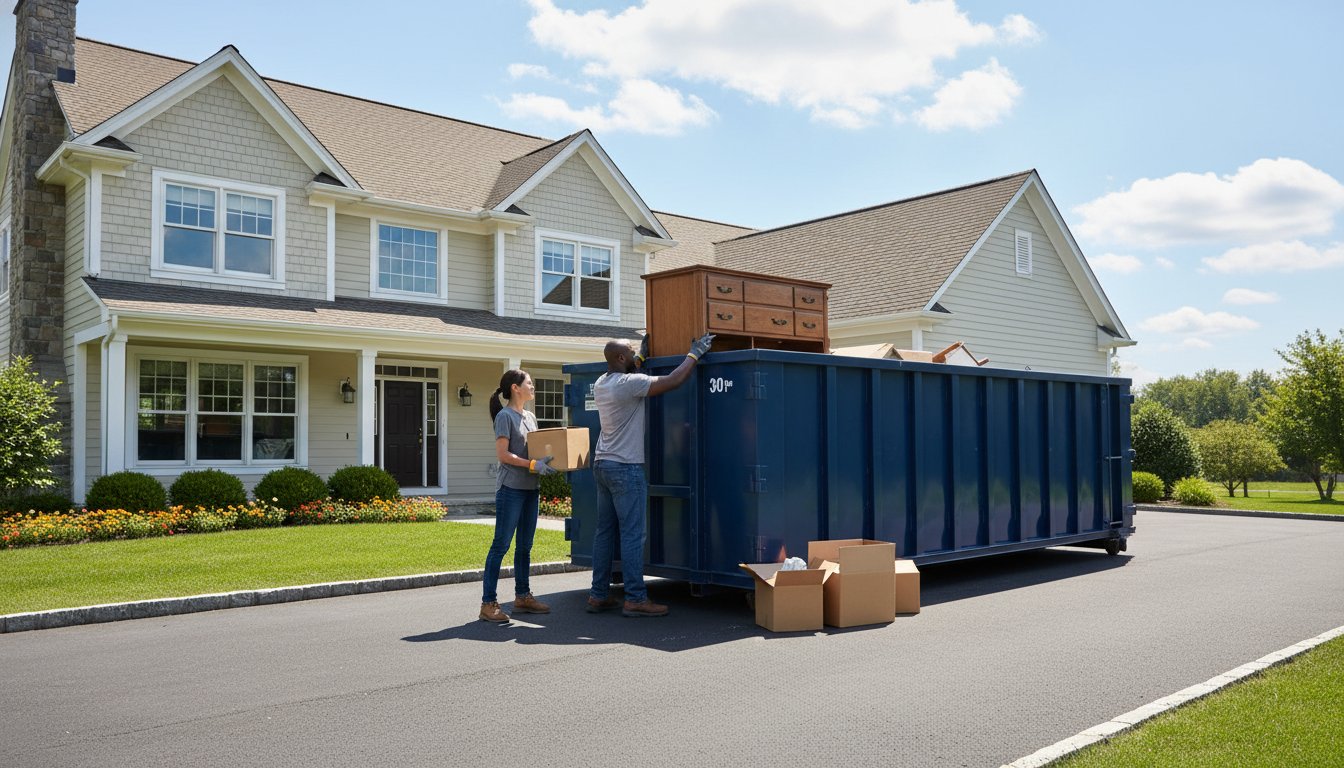
Choosing the most common rental size for your project might actually be your most expensive mistake. When you are determining what size dumpster for a 2500 sq ft house cleanout, the 20-yard container seems like the logical choice. However, it often leads to overage fees of up to $200 per ton if you are clearing out heavy furniture. You want a junk-free property without the anxiety of hidden costs or blocked driveways in tight New York or Massachusetts neighborhoods. We understand that a 2500 square foot home is the tipping point where one wrong choice doubles your bill.
This guide provides a definitive size recommendation based on your specific debris to ensure a single-trip cleanout. Learn how to navigate the April 2026 Massachusetts mattress bans and the $150 street permits required in NYC. We break down the transparent pricing for NY, IL, and MA so you can choose your size and finish your project on schedule. Book your dumpster with the confidence that you have the right tool for the job and avoid the logistical stress of a double-haul.
Key Takeaways
- Apply the "Room-to-Yard" rule to estimate 2-3 cubic yards per furnished room and accurately determine what size dumpster for a 2500 sq ft house cleanout.
- Evaluate the 30-yard dumpster as a safety net against "double-haul" fees when you're clearing out bulky furniture or heavy construction debris.
- Identify specific street permit and insurance requirements for high-density neighborhoods in Chicago, New York, and Boston.
- Maximize your rental space by flat-packing the bottom layer and using the swinging door for heavy items instead of throwing them over the side.
- Schedule your delivery through the Book Your Dumpster USA system to lock in transparent pricing without the risk of hidden surcharges.
Estimating Waste Volume for a 2500 Sq Ft House Cleanout
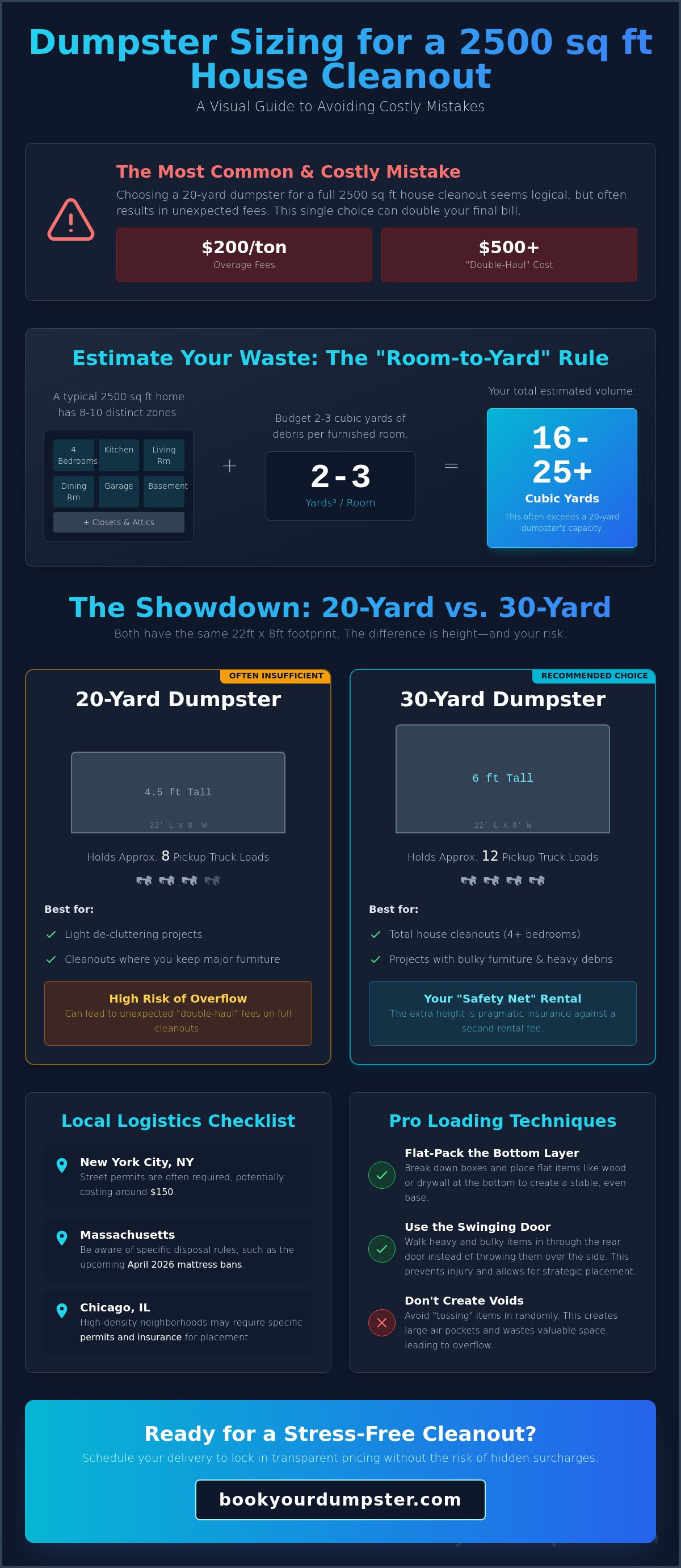
Treat a 2500 sq ft house cleanout as a major residential event. In 2026, total square footage remains the most reliable primary predictor of dumpster needs because it defines the maximum storage capacity for household accumulation. When you are calculating what size dumpster for a 2500 sq ft house cleanout, expect to generate between 15 and 25 cubic yards of waste. This range accounts for standard furniture, personal belongings, and general basement clutter.
Use the "Room-to-Yard" rule for a more precise estimate. Budget for 2 to 3 cubic yards of debris per furnished room. A typical 2500 sq ft property usually includes 4 bedrooms, a kitchen, a living room, a dining area, and a garage. This creates roughly 8 to 10 distinct zones. If you apply the rule, you quickly realize that a 4-bedroom home often exceeds the capacity of a 20-yard dumpster. One extra room or a packed attic can push your total volume past the 20-yard mark, making a 30-yard container the safer choice to avoid overflow.
The Math Behind the Cleanout
Visualize your waste in terms of pickup truck loads. A 20-yard dumpster holds approximately 8 full truck beds. A 2500 sq ft home that hasn't been purged in a decade often produces 10 to 12 loads. Junk density shifts your requirements significantly. A minimalist living room might only contribute 1.5 yards, while a cluttered attic can easily hit 5 yards. Reviewing a guide on roll off dumpster rental helps you understand how these volumes translate into container sizes. Don't guess. Calculate your total room count and add a 20% buffer for closets and hallways.
Common Debris Types in Large Home Cleanouts
Differentiate between bulky waste and heavy waste before you book. Bulky items like sectional sofas and king-sized mattresses consume volume quickly but rarely exceed weight limits. Heavy waste is more deceptive. For example, removing 2500 sq ft of old carpeting and padding can fill a 10-yard bin alone because rolled carpet is difficult to compress. Following standard waste management principles prevents you from mixing heavy construction debris with light household junk, which can lead to uneven weight distribution. Plan for at least one large piece of furniture per room to ensure your size choice stays accurate.
20 Yard vs. 30 Yard Dumpster: Which Fits Your 2500 Sq Ft Project?
Choosing what size dumpster for a 2500 sq ft house cleanout often comes down to vertical capacity. Both the 20-yard and 30-yard roll-off containers typically share a 22-foot length. This means they occupy the same footprint on your driveway. The primary difference is the wall height. A 20-yard dumpster stands roughly 4.5 feet tall, while a 30-yard dumpster reaches 6 feet. If you have the clearance, the taller walls provide a vital safety net. Choosing the larger size prevents the "double-haul" fee, which occurs when you fill a smaller bin and need a second delivery to finish the job. Paying slightly more for the 30-yarder upfront is a pragmatic insurance policy against a $500 second rental.
Driveway space is a major concern in high-density New York and Massachusetts suburbs. Since the ground footprint is identical for both sizes, you don't need to worry about the 30-yarder blocking more of your property than the 20-yarder. However, you must ensure your overhead space is clear of low-hanging branches or power lines. Before you start loading, review Massachusetts hazardous waste management guidelines. These regulations prohibit specific items like tires or chemicals, which helps you maximize your available cubic yardage for acceptable household debris. Following these rules ensures your project stays on schedule without unexpected fines.
When the 20 Yard Dumpster is Enough
The 20-yard bin works best for "de-cluttering" projects where you are keeping your major furniture. If you are only removing old clothing, toys, and small kitchen appliances from an Illinois home, this size fits well. It's also the preferred choice for older neighborhoods with shorter driveways where a 22-foot container is the absolute maximum limit. While you might consider a 10 yard dumpster rental, that size is only sufficient for single-room renovations or small bathroom guts. For a full 2500 sq ft property, anything smaller than 20 yards will result in immediate overflow.
Why the 30 Yard Dumpster is the Standard for 2500 Sq Ft
A 30-yard dumpster is the industry standard for total cleanouts of 4-bedroom homes. It provides the "headroom" required for long, bulky items like sectional sofas, dining tables, and large mattresses. If your project includes clearing out a 2-car garage along with the main house, the 30-yarder is the only way to guarantee a single-trip completion. You can check local availability to see which size fits your specific timeline. This extra volume ensures that large items don't stick out over the top, which is a safety violation that prevents haulers from picking up the load.
Local Logistics: Dumpster Placement in NY, IL, and MA
Placement logistics are as critical as the container capacity itself. When you determine what size dumpster for a 2500 sq ft house cleanout, you are committing to a 22-foot steel box that requires significant clearance for delivery and pickup. In the humid summers of New York and Illinois, asphalt driveways become susceptible to scarring or sinking under the weight of a 30-yarder filled with 5 tons of debris. Use this preparation checklist to ensure a seamless drop-off: clear 60 feet of linear space for the truck to maneuver, ensure a minimum width of 10 feet for the container footprint, and verify 14 feet of vertical clearance to avoid power lines. For more detailed regional regulations, consult our guide on dumpster rental in New York, Illinois, and Massachusetts.
Permit requirements vary significantly across these three states. In New York City, a Street Placement Permit from the DOT is mandatory for any container placed on public property. These permits cost between $50 and $150 as of April 2026 and require an application 3 to 5 business days in advance. Chicago residents must obtain a permit from the Chicago Department of Transportation and provide proof of insurance totaling at least $1,000,000. Massachusetts handles these requirements at the municipal level, usually through the local Board of Health, with costs ranging from $10 to $100. Always confirm these details before your scheduled delivery date to avoid fines or project delays.
Navigating City Permits and HOA Rules
Apply for a "Right of Way" permit if your driveway cannot accommodate a 22-foot roll-off. This is common in high-density areas like Boston or Chicago's North Side. When dealing with Homeowners Associations (HOAs) in Illinois or Massachusetts suburbs, submit your project timeline at least 14 days before delivery. Most HOAs have strict rules regarding how long a dumpster can remain visible on a property. Clear communication prevents neighbor complaints and ensures your cleanout remains professional and stress-free.
Protecting Your Driveway and Property
Request "plywood pads" or place 2x4 boards under the dumpster's contact points to distribute weight evenly. This is essential for protecting residential driveways from the high-pressure impact of the roll-off wheels. In New York neighborhoods with mature landscaping, manage overhead obstructions carefully. Low-hanging tree branches can snag on the hoist during the loading process. Prune back any limbs that sit lower than 14 feet to prevent property damage and ensure the driver has a safe line of sight.
Maximizing Your Dumpster Space: Loading Tips for Homeowners
Loading your container efficiently is the only way to ensure your chosen volume actually holds your entire inventory. When you decide what size dumpster for a 2500 sq ft house cleanout, your success depends on how you utilize the cubic yardage. Follow these four steps to pack like a professional and avoid the need for a second haul.
Step 1: Open the swinging door. Every roll-off container features a heavy-duty door on one end. Walk your heaviest items directly into the bin for the first 50% of the load. This prevents injury and allows you to place items precisely rather than letting them land randomly. Step 2: Flat-pack the bottom. Lay large furniture pieces, disassembled bed frames, and flattened cardboard boxes on the floor of the dumpster. This creates a solid foundation and eliminates large air pockets. Step 3: Fill the gaps. Use "soft junk" such as bagged clothing, pillows, or small loose debris to fill the spaces between furniture legs and boxes. Step 4: Monitor the fill line. Never allow debris to protrude above the top rim of the dumpster. In New York, DOT regulations are strict; drivers cannot legally transport an overfilled container. Overfilling can lead to immediate safety violations and delay your project completion.
The "Tetris Method" for Bulky Furniture
Break down every item possible to save up to 20% of your total bin space. Remove legs from dining tables and disassemble wooden bed frames into flat slats. A common mistake is stacking mattresses vertically against the side walls. Mattresses often flop over during loading, creating massive, unusable gaps at the bottom. Lay them flat on top of your base layer instead. This method ensures you get the full value out of your rental. If you're ready to start your project, schedule your delivery today to lock in your preferred size.
Prohibited Items: What Stays in the House
Keep hazardous materials out of your roll-off to avoid expensive contamination fees. In Illinois, you cannot dispose of liquid paint, motor oil, or propane tanks in a standard bin. Massachusetts residents must follow even stricter guidelines. As of November 2022, textiles and mattresses are officially banned from landfills in Massachusetts. You must arrange separate recycling for these items. Additionally, observe the "No-Mix" rule for heavy debris. Don't toss concrete, bricks, or large amounts of soil into a standard cleanout dumpster. These materials are heavy enough to exceed weight limits quickly, leading to overage fees that range from $40 to $200 per extra ton based on 2026 industry averages.
Book Your Dumpster: Seamless Cleanouts for 2500 Sq Ft Homes
Reclaim your property today by using the Book Your Dumpster USA online system for instant local scheduling. Knowing exactly what size dumpster for a 2500 sq ft house cleanout is the first step, but securing a reliable partner is what finishes the job. We specialize in the logistical challenges unique to New York, Illinois, and Massachusetts. Whether you're navigating the tight streets of Boston or the specific permit requirements of Chicago, our team ensures your container arrives on time and in the right location. Stop guessing about availability and start your project with a company that understands the urgency of a major home cleanout.
Our "No Hidden Fees" promise is a cornerstone of our service. In 2026, waste management budgets are often stretched thin by unexpected surcharges for fuel or weight overages. We provide transparent, upfront pricing so you don't have to worry about the final bill. This direct approach builds trust and removes the logistical stress that often accompanies large-scale residential projects. Choose your size, schedule your delivery, and experience a service that prioritizes your timeline and your budget. We handle the heavy lifting of waste coordination so you can focus on the physical work of clearing your space.
Transparent Pricing for Large Projects
Large residential projects require financial clarity from the start. Get an accurate quote for a 30-yard bin in seconds by entering your project details into our digital platform. This tool allows you to compare costs across different regions instantly. For a deeper look at how location impacts your bottom line, review our guide on dumpster rental prices. Understanding these local cost factors helps you plan your 2500 sq ft cleanout without any financial surprises.
On-Time Delivery and Pickup
Reliability is non-negotiable when you have a massive pile of junk staged on your lawn. A 2500 sq ft house generates significant debris, and a delayed dumpster can stall your entire project. We pride ourselves on a high-velocity service model that moves you from clutter to resolution quickly. Our drivers know the local routes in NY, IL, and MA, ensuring your roll-off is placed exactly where you need it. When you are ready to finish your project, book your dumpster through our secure portal. We'll handle the pickup with the same efficiency, leaving you with a clean, junk-free property.
Start Your Cleanout with Confidence
A 2500 square foot home is too large for guesswork. You now know that while a 20-yard bin works for light decluttering, the 30-yard container is the industry standard for a total property purge. Efficient loading techniques like flat-packing the floor ensure you utilize every cubic yard of space. Remember to secure your local DOT permits at least 5 business days in advance to avoid project delays in high-density areas. Finalizing what size dumpster for a 2500 sq ft house cleanout is the most important step in your planning phase.
Book Your Dumpster has served homeowners across New York, Illinois, and Massachusetts since 2018. We remove logistical stress with our instant online booking system and a strict no hidden fees guarantee. You don't have to worry about surprise surcharges or late deliveries. Take control of your renovation or estate project and reclaim your space. Choose your dumpster size and book online today. Your junk-free property is just a few clicks away.
Frequently Asked Questions
Is a 20-yard dumpster enough for a 4-bedroom house cleanout?
A 20-yard dumpster is usually insufficient for a full 4-bedroom home purge. While it's a popular choice, homeowners determining what size dumpster for a 2500 sq ft house cleanout often find that four bedrooms plus a garage exceed 20 cubic yards. Expect to need a 30-yard container to accommodate large furniture like king mattresses and sectional sofas. Choosing the larger size prevents the logistical stress of a second rental.
How much weight can a 30-yard dumpster hold in Illinois?
A 30-yard dumpster typically holds between 3 and 5 tons of debris. In Illinois, exceeding this weight limit results in overage fees ranging from $40 to $200 per extra ton based on 2026 industry standards. Load heavy items like old appliances or flooring at the bottom to keep the weight balanced. Always verify your specific weight allowance on your rental agreement to avoid surprise charges at the landfill.
Do I need a permit to put a dumpster on the street in New York City?
You must obtain a Street Placement Permit from the NYC Department of Transportation for any dumpster placed on public property. This permit costs between $50 and $150 as of April 2026. Submit your application at least 3 to 5 business days before your delivery date. Containers placed entirely on private driveways don't require this city permit. Plan ahead to ensure your delivery happens on schedule.
What happens if I overfill my dumpster during a house cleanout?
Drivers will refuse to pick up a dumpster filled above the top rim. Overfilling creates a major safety hazard during transport and leads to DOT fines in New York. You'll have to remove the excess debris yourself and schedule a second pickup, which adds cost and delay. Keep your load level with the "fill line" to ensure a hassle-free removal. This protects both your budget and the driver.
Can I put a mattress in a rental dumpster in Massachusetts?
Mattresses are strictly prohibited in standard rental dumpsters across Massachusetts. As of November 2022, the state officially banned mattresses and textiles from landfill disposal to encourage recycling. You must contact a specialized recycler or use a separate municipal collection service for these specific items. Mixing them with general waste leads to heavy fines and rejected loads at the transfer station. Check local rules before you toss.
How long can I keep the dumpster for a 2500 sq ft project?
Most standard rental periods last between 7 and 10 days. For a 2500 sq ft project, this window is usually sufficient if you have a dedicated crew. If you need more time, daily extension rates typically range from $40 to $100. Finalize what size dumpster for a 2500 sq ft house cleanout early so you don't waste rental days waiting for a container swap. Efficiency is key to staying on budget.
Will a 30-yard dumpster fit in a standard residential driveway?
A 30-yard dumpster fits in most standard residential driveways because it shares the same 22-foot length as smaller roll-offs. You only need to account for the extra height. Ensure you have 60 feet of linear space for the truck to maneuver and 14 feet of vertical clearance. Avoid placing the container under low power lines or mature tree branches to prevent property damage during the delivery and pickup process.
How do I estimate the weight of my household junk?
Estimate your weight by assuming 1,000 pounds for every 2 cubic yards of standard household junk. A full 2500 sq ft house cleanout typically weighs between 2 and 3 tons. If you're disposing of heavy materials like drywall, flooring, or roofing, the weight will increase significantly. Check your local landfill fees, which average $20 to $50 per ton, to understand how weight impacts your total project cost.


