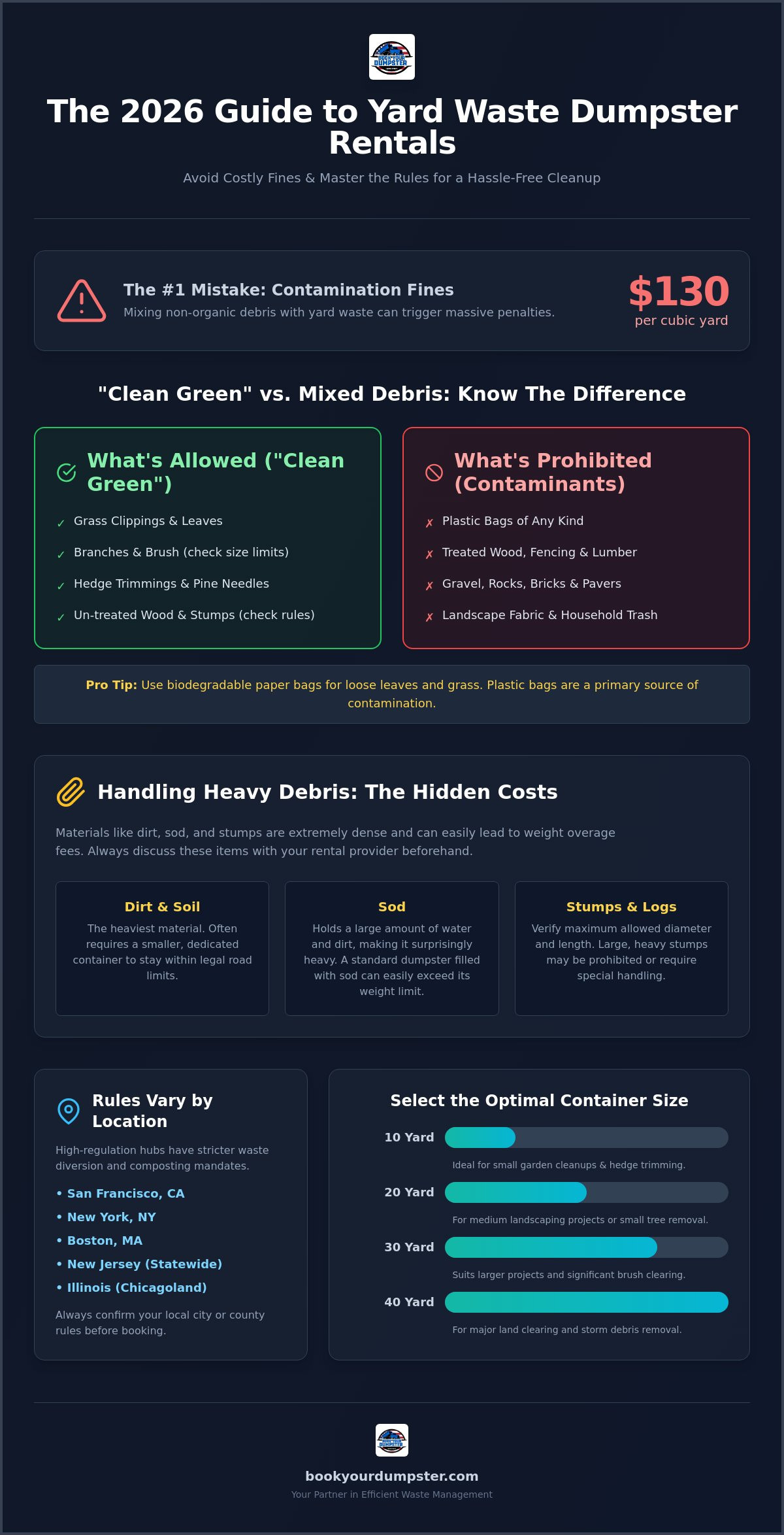
Thinking that anything grown in your yard belongs in a "green" dumpster is the fastest way to trigger a $130 per cubic yard contamination fine. Most homeowners assume organic matter is all the same, but local yard waste dumpster rental rules in 2026 are stricter than ever. In cities like New York and San Francisco, mandatory composting laws mean that mixing branches with the wrong debris is no longer just a mistake; it's a regulatory violation. You shouldn't have to guess if a tree stump or a layer of sod will double your final bill.
We know you want a clear yard without the logistical stress or surprise charges. This article provides the clarity you need to avoid "mixed waste" penalties. You will learn the difference between "clean green" and mixed debris, how to handle heavy organic weight limits, and how to secure the right permits for your specific city. Follow this 2026 checklist to move from a cluttered property to a finished project with zero friction. We've simplified the complex regulations so you can focus on the work, not the paperwork.
Key Takeaways
- Identify the critical differences between "Clean Green" and mixed debris to avoid industrial-scale contamination fees.
- Navigate 2026 waste diversion mandates in high-regulation hubs like San Francisco, New York, and Boston with confidence.
- Prepare your property for a seamless delivery by following specific logistical rules for vertical clearance and debris measurements.
- Master the specific yard waste dumpster rental rules that dictate weight limits and acceptable organic materials for your project.
- Select the optimal container size, from 10 to 40 yards, to match your landscaping scope while maintaining pricing integrity.
Defining Yard Waste: What Counts and Why Rules Exist
Yard waste is not a catch-all term for everything found outside your home. It specifically refers to organic debris like grass clippings, leaves, branches, and brush. Understanding the composition of Green waste is essential because these materials are processed differently than standard household trash. Most municipal facilities use this matter for industrial composting. This process requires a pure stream of organic material to create high-quality soil amendments. Yard waste is defined as any plant-based material resulting from landscaping or land clearing.
You must distinguish between "soft" and "hard" yard waste to avoid loading errors. Soft waste includes light materials like hedge trimmings, pine needles, and grass. Hard waste covers tree stumps, thick logs, and heavy root balls. Many local yard waste dumpster rental rules prohibit stumps over a certain diameter or weight. These heavy items can damage processing equipment or exceed the legal hauling weight of the truck. Always verify the maximum branch length and stump diameter allowed before you begin your cleanup.
The Legal and Environmental Logic Behind the Rules
The EPA provides strict guidelines regarding organic waste in landfills. When yard waste is buried with traditional trash, it decomposes anaerobically and produces methane gas. Segregation prevents this environmental hazard. Contamination occurs the moment you toss a plastic bag, a piece of treated lumber, or a handful of gravel into the container. Even a small amount of non-organic material can cause an entire load to be rejected at the composting site. This rejection forces the facility to redirect the load to a landfill, which increases costs and environmental impact.
Consequences of Breaking Rental Rules
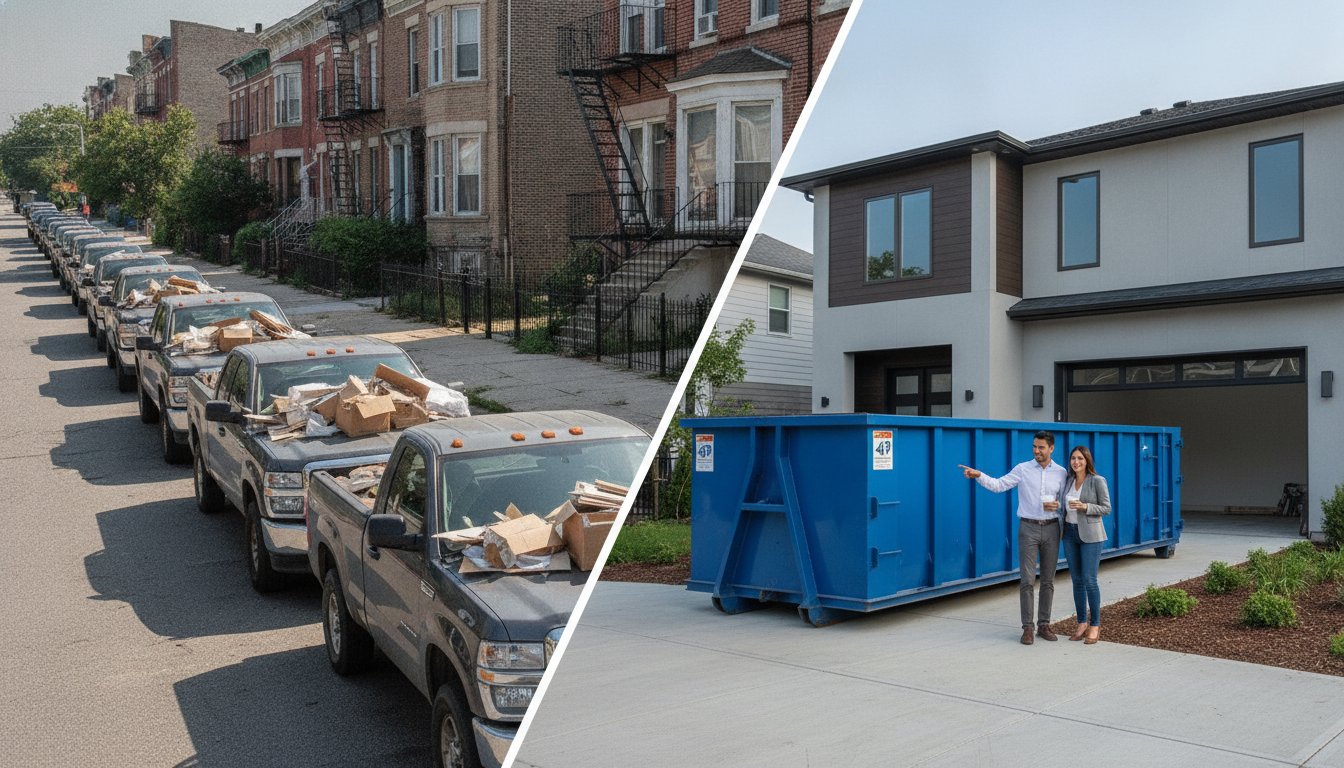
Violating yard waste dumpster rental rules carries immediate financial penalties. If a driver arrives and sees prohibited items like fence posts or bricks mixed with your leaves, they will refuse the pickup. This results in a "dry run" fee. You pay for the truck's time without moving any debris. If the contamination is discovered later at the processing facility, you face "dig-out" fees. This covers the labor required to manually separate trash from the organic pile. To avoid these unnecessary costs, follow established roll off dumpster rental protocols. Keep your waste streams separate. Use a dedicated container for organic matter and a separate one for construction debris or household junk. This direct approach ensures your project remains efficient and within budget.
Clean Green vs. Mixed Yard Debris: Know the Difference
Categorizing your debris correctly is the only way to control your project costs. "Clean Green" debris consists of 100% organic, recyclable plant matter. This includes grass clippings, leaves, and small hedge trimmings. In contrast, "Mixed Yard Waste" occurs when you combine organic material with man-made items like fencing, pavers, or landscape fabric. Processing centers charge significantly less for pure organic loads because they can be converted directly into compost. Mixed loads require manual sorting or landfill disposal, which triggers higher tipping fees. If you aren't sure which category your project falls into, review the New York City disposal rules for a clear breakdown of mandatory separation requirements. Failing to distinguish between these two categories is the primary cause of unexpected "contamination" surcharges.
The Clean Green Eligibility Criteria
To qualify for the most cost-effective rates, your container must contain only approved organics. Mixed loads are processed as municipal solid waste, which is more expensive. Stick to these lists to stay compliant with yard waste dumpster rental rules:
- Allowed: Grass clippings, leaves, small branches, and hedge trimmings.
- Prohibited: Treated wood fencing, plastic trash bags, landscape fabric, and gravel.
Use biodegradable Kraft paper bags for smaller debris like leaves or grass. These bags break down during the composting process and won't contaminate the load. Never use plastic bags for yard waste. Even if the bag is full of leaves, the plastic itself is a prohibited contaminant that can lead to a rejected load at the facility.
Dealing with Heavy Debris: Dirt, Sod, and Stumps
Dirt and sod are the most common "hidden" costs in landscaping. These materials are extremely dense and heavy. A standard container filled with wet sod will easily exceed the weight capacity of the hauling truck. Most providers exclude dirt and sod from standard organic pricing. If your project involves significant excavation, you must use a 10-yard dumpster. This smaller size prevents the container from becoming too heavy for the truck to lift safely. Overfilling a larger container with dirt will result in a failed pickup and a dry-run fee.
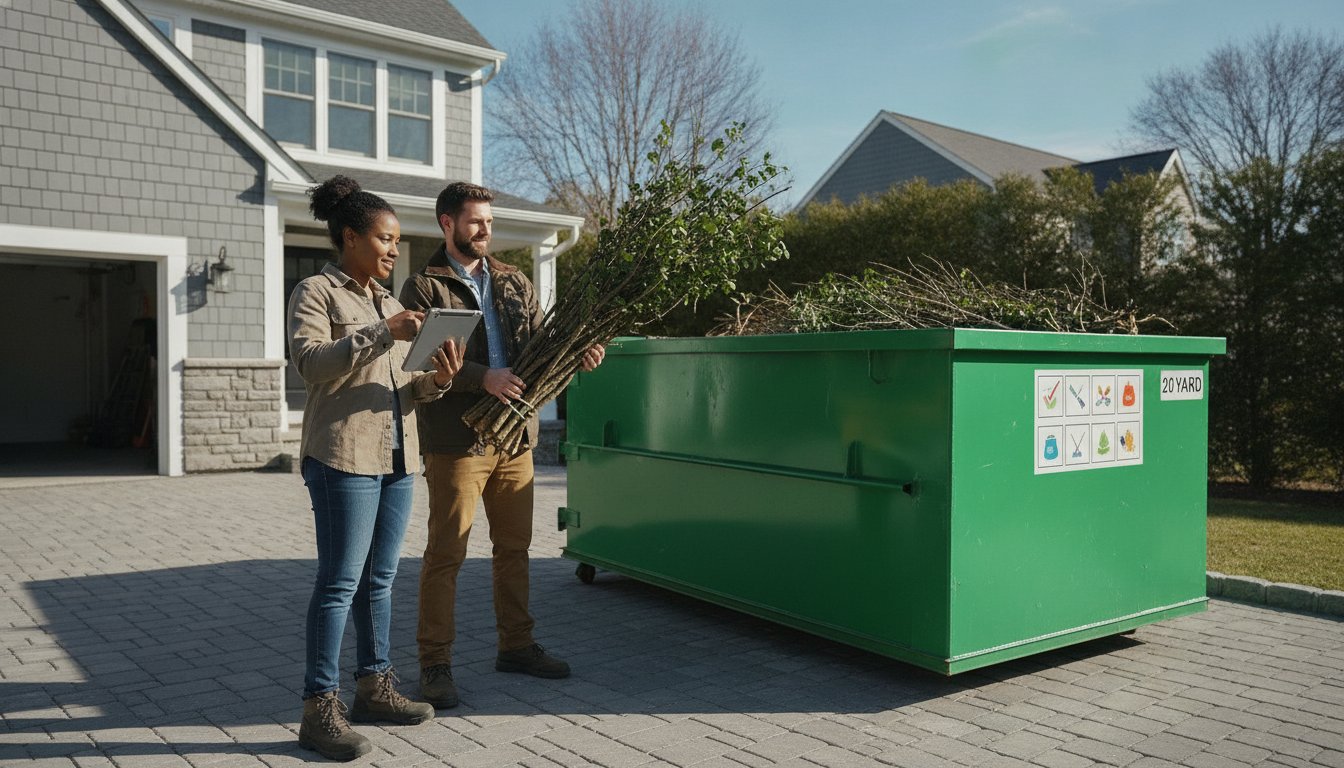
Stumps also fall into a specialized category. Most yard waste dumpster rental rules enforce a "stump rule" that limits diameters to 6 inches. Larger stumps are difficult to grind and require specialized heavy equipment for processing. If you have large root balls or thick trunks, notify your provider before booking. For light brush and branch removal, booking a 20-yard or 30-yard dumpster is usually the most efficient path to a clear property.
Regional Regulations: Local Rules in NY, NJ, IL, MA, and SF
Location dictates your project's logistical requirements. While the basic definition of organic debris remains constant, local enforcement varies significantly across the country. In San Francisco, the SF Environment Code mandates 100% diversion of compostables. This means any yard waste found in a standard trash container results in fines of $130 per cubic yard. Illinois follows a different cadence. State law prohibits disposing of leaves and yard waste in landfills. Collection is strictly seasonal, typically running from April through November. Chicago residents must use biodegradable Kraft paper bags for all organic matter. Check your local calendar before scheduling a rental to ensure the facility is accepting seasonal intake. Local yard waste dumpster rental rules are not suggestions; they are legally enforceable mandates that impact your final invoice.
Navigating New York and New Jersey Waste Bans
Regulations in the Tri-State area are among the most stringent in the country. Follow the specific dumpster rental in New York requirements to avoid immediate rejection at the scale house. As of April 1, 2025, NYC residents must separate all leaf and yard waste from regular trash. In Queens, placing a dumpster on a public street requires a DOT permit. Fees range from $135 to $385 depending on the duration. New Jersey residents must navigate NJDEP rules that classify wood waste and brush as specific recycling streams. A law signed in January 2026 now forces solid waste districts to hit aggressive reduction targets. In areas like Waldwick, brush must be cut to 36 inches or less and tied into bundles. Don't ignore these sizing requirements. Haulers will leave the container on-site if the load is not properly prepared.
San Francisco and Massachusetts: High-Diversion Zones
Massachusetts enforces strict "Waste Bans" that prohibit organics from entering the landfill stream. These rules differ between residential and commercial sites. Commercial landscapers in MA must provide proof of disposal at a permitted composting facility. In Boston, landfill fees for non-compliant loads can run up to $120 per ton. San Francisco's mandatory composting laws mean your rental provider acts as a compliance partner. Pro-tip: Always request a "Clean Green" container if your debris is 100% organic. This ensures you pay the lower diversion rate rather than the standard municipal solid waste price. These high-scrutiny areas require precise loading. Don't mix a single piece of pressure-treated lumber into an organic load in Boston or SF. It will trigger a full-load rejection and a significant overweight fee. Verify your local yard waste dumpster rental rules before the truck arrives to avoid these industrial-scale penalties.
The Pre-Rental Checklist: 7 Rules to Follow Before Tossing
Preparation is the difference between a successful cleanup and an expensive logistical failure. Most homeowners wait until the truck arrives to consider the physical constraints of their property. To maintain compliance with yard waste dumpster rental rules, you must audit your debris and your drop site before the container touches your driveway. This proactive approach eliminates the risk of rejected loads and ensures your project stays on schedule. Follow these specific rules to guarantee a smooth delivery and pickup.
- Rule 1: Measure your largest debris. As established in previous sections, most facilities reject stumps and logs exceeding 6 inches in diameter. Measure your thickest trunks now. If they're too large, you'll need to rent a chainsaw or find a specialized recycler.
- Rule 2: Clear a 30-foot vertical path. Roll-off trucks require significant overhead clearance to tilt the container into place. Check for low-hanging power lines, cable wires, or tree branches. If the driver can't safely lift the hoist, they'll leave, and you'll pay a dry-run fee.
- Rule 3: Establish a "No-Go Zone." Create a physical barrier for items like pressure-treated lumber, painted fence posts, and plastic landscape fabric. These items belong in a standard junk container, not an organic one.
- Rule 4: Understand the weight limit. Organic waste is deceptive. Wet grass or fresh-cut logs are significantly heavier than standard household junk. Exceeding the weight limit triggers prorated charges that can reach $250 per ton in high-regulation markets.
The Loading Strategy for Yard Debris
Efficient loading maximizes your investment and ensures safe transport. Follow the "level-load" rule: never allow debris to protrude above the rim of the container. Haulers must tarp every load for highway safety. If branches stick out, the driver will require you to level the load before they depart. Place your heaviest items, such as stumps or large logs, at the very bottom. This keeps the center of gravity low and prevents the container from shifting during transit. For smaller residential projects, read our 10 yard dumpster guide to learn how to pack organic matter without exceeding weight capacities.
Site Preparation and Safety
Protecting your property is your responsibility. Yard waste containers are heavy, and the trucks that carry them are even heavier. Place 4x8 sheets of plywood on your driveway to distribute the weight and prevent asphalt cracking. This is especially vital during the spring thaw in Illinois or Massachusetts when the ground is soft. Before the truck arrives, verify your local debris removal permit requirements. If you're in Queens or San Francisco and placing the unit on the street, have your permit number ready. For a seamless experience that follows all yard waste dumpster rental rules, book your container online today to lock in your delivery window.
Booking Your Yard Waste Dumpster: The Seamless Path to Resolution
Remove the logistical friction from your landscaping project. Book Your Dumpster USA acts as your regulatory filter. We interpret the complex yard waste dumpster rental rules so you don't have to. Most disposal delays happen because of poor communication or a lack of local expertise. We eliminate these bottlenecks by providing direct, professional guidance from the moment you book. Our experts stay current on municipal mandates in high-regulation hubs to ensure your load is processed correctly and legally. You get a reliable partner who explains the rules upfront. This transparency prevents the "contamination" fees that often plague residential and commercial cleanouts.
Choose the right tool for the job. We offer 10, 20, 30, and 40-yard roll-off containers to match any project scale. A 20-yard unit is perfect for large-scale brush removal. A 40-yard container handles commercial land clearing with ease. For businesses requiring ongoing organic maintenance, we also provide front load commercial waste pickup. Every rental comes with our commitment to pricing integrity. The price we quote is the price you pay. We don't hide behind opaque communication or surprise surcharges. This focus on honesty acts as a verbal handshake, distinguishing us from the inconsistent service found elsewhere in the industry.
Why a 10-Yard Dumpster is the Yard Waste Gold Standard
Heavy organic matter requires a specialized approach. The 10-yard dumpster is the ideal size for dense materials like sod, dirt, and thick root balls. Its compact footprint fits into tight residential driveways without obstructing traffic or violating local street-placement codes. Using a smaller container for heavy debris prevents truck failure and keeps your load within legal weight limits. It's the most efficient choice for focused garden renovations or small-scale land clearing. Review our 10 yard dumpster rental guide to see if this size fits your specific landscaping needs.
Ready to Start? Book Online in Minutes
Efficiency is our standard. Our digital-first booking platform allows you to schedule your delivery in minutes. This modernized approach removes the need for lengthy phone calls or vague estimates. We provide localized support across high-regulation hubs including New York, New Jersey, Illinois, Massachusetts, and San Francisco. Whether you're navigating Queens' permit requirements or San Francisco's diversion mandates, we have the local expertise to guide you. We act as a high-functioning tool for your renovation or clean-up project. Select your size, set your date, and let us handle the logistics. Get your yard waste under control today with a professional partner.
Master Your Property Cleanup Today
Successful yard disposal requires more than just a container. You now have the checklist to distinguish "Clean Green" organics from mixed debris and the local knowledge to navigate strict mandates in New York, New Jersey, Illinois, Massachusetts, and San Francisco. Adhering to specific yard waste dumpster rental rules ensures you avoid the $130 per cubic yard fines found in high-regulation zones. By selecting the right container size and following our pre-delivery checklist, you remove the logistical friction that leads to hidden fees and rejected loads.
We provide specialized 10-yard containers designed to handle the heavy weight of sod, dirt, and root balls safely. Our commitment to transparent, no-fluff pricing means you can focus on the work instead of worrying about the bill. Use our digital platform to schedule your delivery and secure a reliable partner for your residential or commercial project. We manage the compliance details so you can focus on the results.
Book Your Yard Waste Dumpster Now. Take control of your property today and experience a seamless, professional cleanup.
Frequently Asked Questions
Can I put pressure-treated wood in a yard waste dumpster?
No, you cannot put pressure-treated wood in a yard waste container. These materials contain chemical preservatives that contaminate the composting process. Treated wood is classified as construction debris and requires a standard roll-off container. Mixing it with organic matter will result in the entire load being rejected at the processing facility and redirected to a landfill at a higher cost.
How big can tree stumps be for a standard rental?
Standard rentals typically limit stump diameter to 6 inches or less. Larger stumps are too dense for standard grinding equipment and require specialized heavy-duty processing. If your project includes large root balls or thick trunks, notify us before booking. This ensures you have the correct container size and pricing for heavy organic matter without facing failed pickup fees.
What happens if my yard waste dumpster is overweight?
If your container exceeds its assigned weight limit, you will face prorated overweight fees. In high-regulation markets like New York or Boston, these charges can range from $110 to $250 per additional ton. Organic waste is deceptive and becomes significantly heavier when wet. Monitor your loading levels closely and avoid filling the container past the rim to keep your costs predictable.
Do I need a permit to put a yard waste dumpster in my driveway in Queens?
You don't need a NYC DOT permit for a dumpster placed entirely on your private driveway in Queens. Permits are only mandatory when the container occupies public property like a street, sidewalk, or right-of-way. Always check with your local Homeowners Association (HOA) for any private community rules regarding container placement duration and visibility to avoid neighborhood fines.
Can I mix grass clippings with old fencing and pavers?
No, you cannot mix grass clippings with fencing or pavers. This combination is classified as "mixed waste" rather than yard waste. Mixing man-made materials with organic debris prevents the load from being composted and triggers higher tipping fees. Keep your waste streams separate to maintain compliance with yard waste dumpster rental rules and secure the lowest possible disposal rates.
Is dirt considered yard waste or a separate category?
Dirt is considered a separate category from standard yard waste because of its extreme density. While it is organic, its weight requires a 10-yard dumpster to prevent truck hoist failure. Do not mix large amounts of soil or sod into a brush container. This will quickly exceed your weight capacity and lead to a rejected pickup and a dry-run fee.
What is the "clean green" discount, and how do I qualify?
You qualify for the "clean green" rate by ensuring your load is 100% recyclable plant matter. This includes only grass, leaves, small branches, and hedge trimmings. By providing a pure stream of compostable material, you reduce the processing costs at the facility. We pass these savings to you through transparent pricing for segregated organic loads, helping you avoid standard municipal waste fees.
Can I use plastic trash bags for my leaves inside the dumpster?
No, never use plastic trash bags for leaves or clippings inside the dumpster. Plastic is a non-compostable contaminant that processors will not accept. Use biodegradable Kraft landscape paper bags instead. These bags are designed to break down alongside your organic waste, ensuring your load remains compliant with 2026 yard waste dumpster rental rules and the mandatory composting laws in cities like San Francisco.