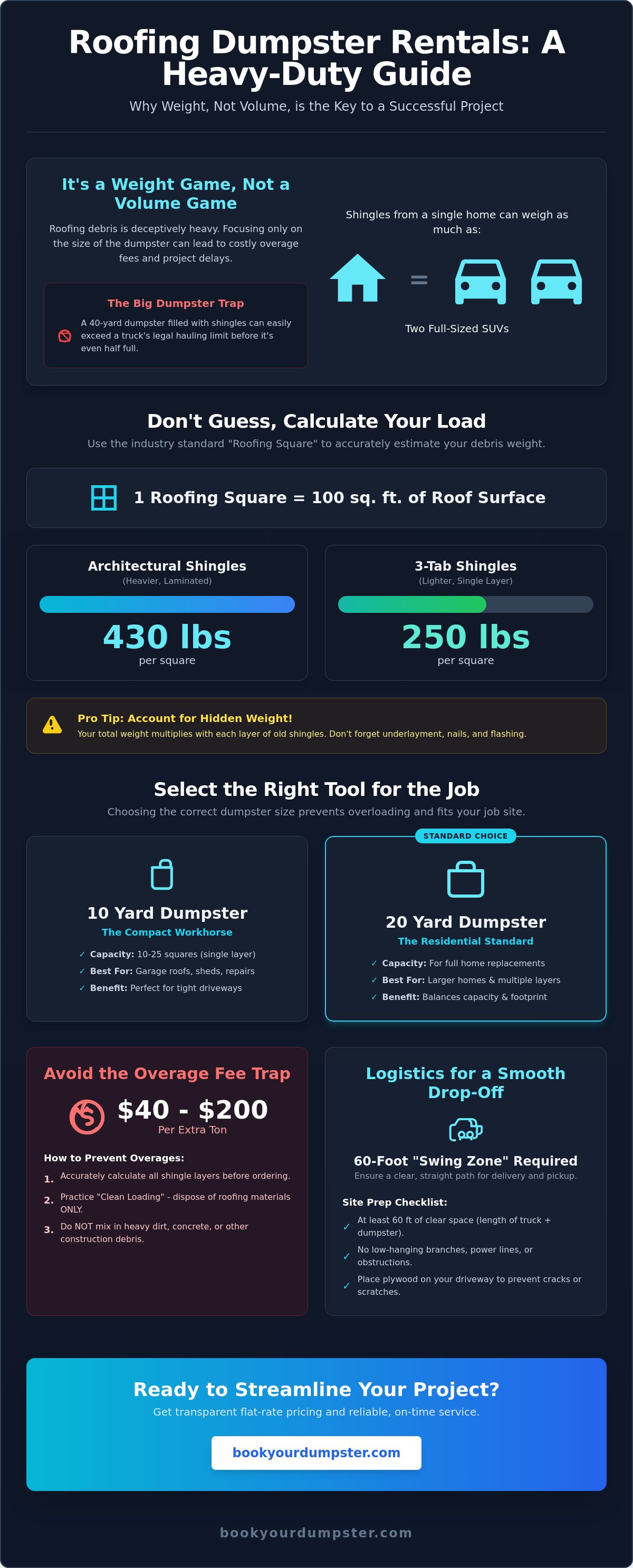
Did you know the shingles from a single residential home can weigh as much as two full-sized SUVs? With architectural shingles weighing up to 430 pounds per square, your roofing dumpster rental is less about volume and more about the math of weight limits. You're likely looking for a way to complete your tear-off without seeing a $200 overage charge on your final bill or finding a new crack in your driveway from heavy equipment. It's a common concern for both homeowners and contractors who need the job done right the first time.
We believe waste management should be the most reliable part of your project. This guide will help you master the logistics of roofing disposal with expert tips on sizing and property protection. You'll learn how to calculate the exact weight of your debris, why a 20 yard dumpster is the standard choice for most replacements, and how to secure transparent flat-rate pricing. We'll also walk you through our process for on-time delivery and pickup, ensuring your project stays on schedule while we handle the mess. Book your dumpster with confidence and keep your job site moving.
Key Takeaways
- Understand why roofing waste requires a weight-focused disposal strategy rather than just looking at cubic yardage.
- Learn the "Roofing Square" formula to accurately estimate your load weight and prevent unexpected overage fees.
- Master the logistics of a roofing dumpster rental by preparing a 60-foot clear "swing zone" for a safe roll-off delivery.
- Identify how specific materials, from asphalt shingles to heavy clay tiles, dictate your specific dumpster size requirements.
- Discover how flat-rate pricing and on-time delivery from Book Your Dumpster USA remove the stress from your project timeline.
Why Roofing Dumpster Rental Requires a Specialized Approach
Standard waste disposal focuses on volume. You fill a bin until it's full. A roofing dumpster rental operates on a completely different logic. It's a weight-focused solution because roofing materials are among the densest types of Construction waste generated during a renovation. While a 40-yard dumpster works for bulky furniture or light wood framing, using one for shingles is a recipe for a logistical nightmare. If you fill a large container with asphalt, the weight will likely exceed the legal hauling limit of the roll-off truck before the bin is even half full. Securing a specialized roofing dumpster rental ensures your equipment is rated for the specific tonnage of asphalt and felt.
Roll-off containers are the industry standard for this work because they allow for easy loading and precise placement. For most residential projects, a 10-yard or 20-yard bin is superior. These sizes balance the physical footprint on your driveway with the heavy-duty weight capacity required for shingles. Choosing the right container ensures you don't pay for space you can't legally use. It also prevents the truck from being unable to lift the load, which causes immediate project delays. Book your dumpster early to ensure the right size is available for your start date.
The Problem with Weight Limits
Asphalt shingles pack tightly, leaving almost no air gaps in the dumpster. This density means a small pile of debris is much heavier than it looks. Architectural shingles can weigh up to 430 pounds per square. If you overload a roll-off truck, you create a major safety risk. The driver might be unable to pull the container onto the bed; worse, the weight could cause mechanical failure during transport. Practice "clean loading" by only disposing of roofing materials in the bin. Mixing in heavy dirt or concrete can push you over the limit instantly, leading to expensive overage fees that range from $40 to $200 per extra ton.
Commercial vs. Residential Roofing Waste
Residential jobs usually involve asphalt shingles and underlayment. Commercial projects are a different beast. Large complexes often use EPDM (rubber) or TPO (thermoplastic) membranes. These materials require different handling and often involve much larger volumes of insulation board. For these massive sites, the construction debris removal process must be staged to handle constant waste generation. Whether you're stripping a suburban ranch or a retail warehouse, the goal remains the same: move the waste out quickly so the new roof can go on. Schedule your delivery early to keep your crew moving.
Calculating the Right Dumpster Size for Your Roofing Project
Roofing math is unique. Most people estimate waste by volume, but shingles require a weight-based approach. The industry uses the "square" as its standard unit; this represents 100 square feet of roof surface. A single layer of 3-tab shingles weighs about 250 pounds per square. If you have architectural shingles, that number jumps to 430 pounds. Don't forget the hidden weight of underlayment, nails, and metal flashing. If your roof has two or three layers of old shingles, your total waste weight doubles or triples instantly. This is the primary reason your roofing dumpster rental must be chosen based on tonnage capacity. Effective Construction Waste Management requires you to account for these heavy layers before the first shingle is pulled. Failing to do so often leads to overage fees that range from $40 to $200 per extra ton at the landfill.
The 10 Yard Dumpster: The Roofing Workhorse
The 10 yard dumpster rental is the ideal choice for small to mid-sized projects. It typically handles 10 to 25 squares of single-layer shingles without exceeding weight limits. Its compact footprint is perfect for tight driveways in dense areas like Queens or suburban New Jersey. Choose this size for garage roofs, shed replacements, or minor residential repairs. It keeps the weight manageable for the haul-off truck while providing enough volume for your debris. If you're tackling a simple ranch-style home with a single layer of 3-tab shingles, this is your most cost-effective option. Book your dumpster today to secure this popular size for your next repair.
Upgrading to 20 or 30 Yards
Full residential replacements for larger homes usually require a 20-yard bin. This size accommodates the higher volume of shingles and the bulky debris from ridge vents and damaged decking. Be cautious when considering 30 or 40-yard containers for a roofing dumpster rental. While they offer more space, filling a large bin with heavy shingles will almost certainly exceed the truck's lifting capacity or legal road limits. You don't want a full dumpster that is too heavy to move. Distribute the weight evenly as you load. Pile shingles flat across the bottom of the bin rather than creating a mountain in the center. This balance ensures the roll-off truck can safely hoist the container for transport without damaging your property or our equipment.
Common Roofing Materials and Disposal Rules
Your roofing dumpster rental isn't a catch-all for every piece of trash on your property. Most roofing projects generate a specific stream of Construction and Demolition (C&D) materials, including asphalt shingles, metal flashing, felt underlayment, and thousands of loose nails. You must distinguish between dedicated roofing loads and mixed loads. Dedicated loads consist solely of one material, like asphalt, which often allows for more predictable flat-rate pricing at the landfill. Mixed loads involve adding general construction debris, wood, or siding. These loads are processed differently and can result in higher costs. Stick to roofing-only debris whenever possible to keep your disposal budget transparent and manageable.
Certain items are strictly forbidden for safety and environmental reasons. Never toss asbestos-containing materials, liquid adhesives, or hazardous solvents into your roll-off. If you're working on a structure built before 1980, confirm your materials are asbestos-free before the tear-off begins. We also don't accept tires, large amounts of treated lumber, or electronics in these bins. Prohibited items lead to immediate project delays and significant fines from the disposal site. Check your local regulations or ask us directly if you're unsure about a specific material before you throw it in.
Asphalt Shingles and Cedar Shakes
Asphalt shingles are highly recyclable and are often ground down to pave roads. This high recyclability is why dedicated asphalt loads are preferred by many waste facilities. Cedar shakes present a different challenge. They are far less dense than asphalt, meaning you'll likely fill the volume of the bin before you reach the weight limit. When loading wood shakes, pack them tightly to maximize the available cubic yardage. Always use a magnetic sweep to collect stray nails from the driveway. Bagging these small metal scraps prevents them from scattering and protects your tires during the cleanup phase.
Tile and Slate: The Heavyweights
Slate, clay, and concrete tiles are the heaviest materials you'll encounter. A single square of slate can weigh over 1,000 pounds, which is roughly four times the weight of standard 3-tab shingles. If you're stripping a tile roof, you'll likely need multiple 10-yard dumpsters to stay within legal weight limits. Filling a single large bin with slate will "bottom out" the equipment, making it impossible for the truck to lift the load. Using a specialized roofing dumpster rental for heavy tile prevents equipment failure and property damage. If your tiles are in good condition, consider contacting an architectural salvage company to see if they can be reclaimed.
Logistics and Safety: Protecting Your Property
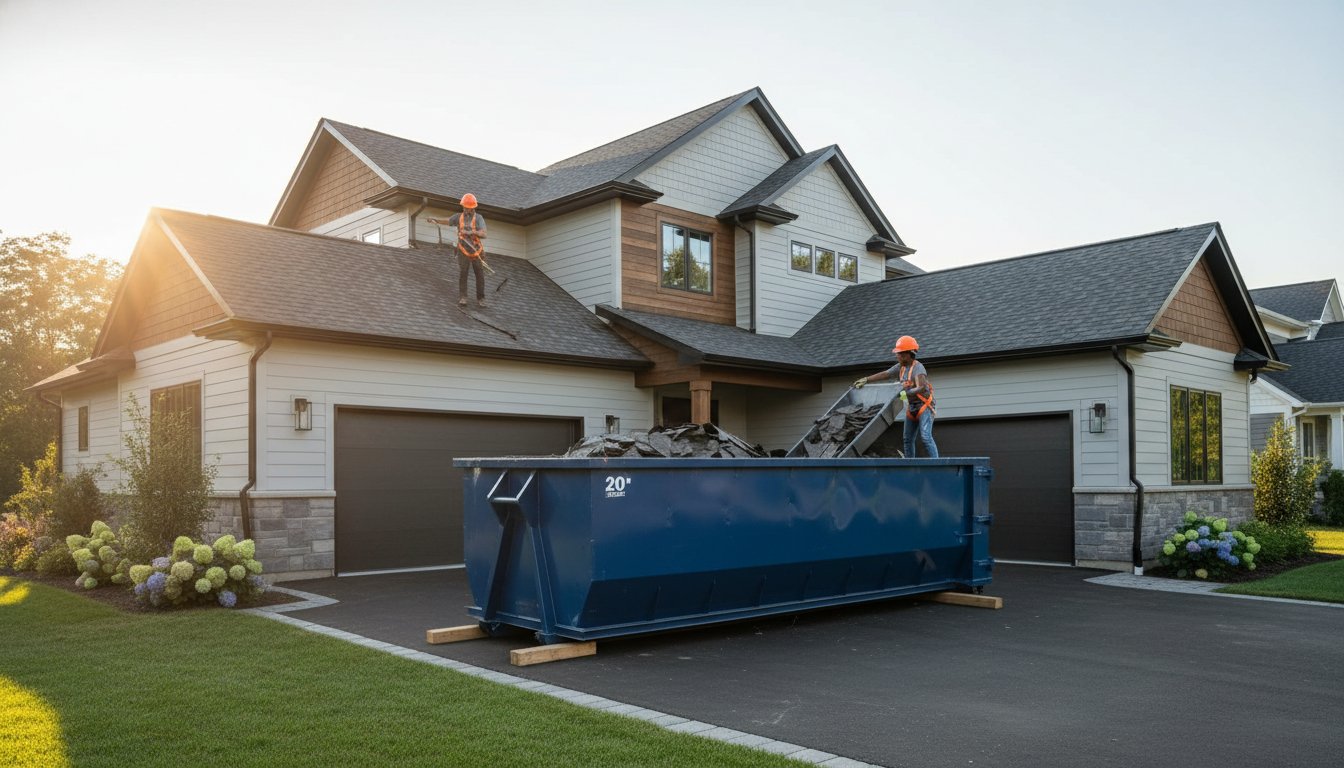
Preparing your site for a roofing dumpster rental is the best way to prevent property damage and project delays. Unlike a standard trash pickup, a roll-off delivery requires significant physical space and a stable foundation. You aren't just making room for a bin; you're making room for a heavy-duty truck to maneuver. Follow these four steps to secure your site before the delivery window opens.
- Select a flat, hard surface. Asphalt or concrete driveways are ideal. Avoid placing the bin on soft soil, over septic lines, or near underground sprinkler systems.
- Clear the swing zone. The delivery truck needs at least 60 feet of straight-line clearance to drop the container safely. Move all vehicles, equipment, and basketball hoops before the driver arrives.
- Look up. Check for low-hanging tree branches or power lines. A roll-off truck must raise its bed high to slide the bin off. Any overhead obstruction can force a failed delivery and a dry run fee.
- Secure your permits. If you live in a dense urban area like San Francisco or New York City, you'll likely need a street permit if the dumpster isn't on private property.
The Wood Plank Method for Driveway Protection
The sheer weight of a loaded roofing dumpster can easily crack standard asphalt or leave ruts in pavers. We recommend placing 2x4 or 4x4 wood planks on the driveway before the bin arrives. This simple step distributes the load across a wider surface area, protecting your investment from the pressure of the steel rollers. This commitment to property safety mirrors our broader roll off dumpster rental philosophy. We don't just drop a bin; we ensure the entire process is professional and respectful of your home. Use high-quality lumber to create a buffer between the steel and your driveway surface.
Navigating Local Permits and Regulations
In cities like Queens or San Francisco, street space is at a premium. If the driveway isn't an option, you must obtain a permit from the local Department of Transportation. This often involves setting up "No Parking" signs 24 to 48 hours in advance to ensure the space is clear for the truck. For more regional specifics, consult our New York dumpster rental guide to understand the local compliance landscape. Taking these steps early prevents your project from being shut down by a city inspector or receiving a heavy fine. Once your permits are in hand, book your dumpster through our online portal to lock in your delivery window and keep your roofing crew on schedule.
Streamline Your Project with Book Your Dumpster USA
Managing a job site is difficult enough without worrying about where the trash goes. We take a pragmatic, no-nonsense approach to waste logistics so you can focus on the installation. Our service is built for speed and reliability. Whether you're a homeowner tackling a DIY tear-off or a professional contractor managing multiple crews, we provide the tools to keep your project moving. Use our online booking system to schedule your roofing dumpster rental in seconds. We serve major markets across NY, NJ, IL, and MA, providing instant confirmation and transparent scheduling that respects your urgency.
We understand that roofing is a high-velocity trade. Delays in container delivery mean crews are standing around, and a full bin that isn't swapped out stops progress entirely. We position ourselves as your dependable partner. We handle the heavy lifting of waste management so you don't have to. Choose your size, set your date, and let us handle the rest. Our digital-first platform is designed to reduce friction and eliminate the back-and-forth phone calls typical of the traditional waste industry. We have this under control.
Transparent Pricing for Heavy Loads
Hidden fees are the biggest headache in waste management, especially with heavy materials like asphalt shingles. We solve this with a "No Hidden Fees" promise. Our flat-rate model for residential roofing includes clear weight allowances from the start. You'll know exactly what you're paying before the bin arrives. This transparency is the foundation of our dumpster rental prices. We provide clear documentation on tonnage limits so you can avoid surprise invoices. If your project involves multiple layers or heavy slate, we help you plan the budget accurately. Trust is built on honesty, and our pricing reflects that commitment.
Reliable Delivery for Busy Contractors
Time is money on a roof. We offer on-time guarantees to ensure your roofing dumpster rental is on-site exactly when you need it. For larger, multi-day jobs, we provide efficient "Empty and Return" services. We swap your full container for a fresh one quickly, preventing debris from piling up on the lawn or blocking access. Our drivers are professionals who understand site safety and property protection. They follow your placement instructions to the letter. Don't let waste logistics slow you down or complicate your workflow. Book your roofing dumpster now and experience a service that works as hard as your crew does.
Secure Your Project Success with Expert Disposal
Mastering the "roofing square" math and protecting your driveway with the wood plank method ensures a smooth tear-off. You now have the knowledge to avoid unexpected overage fees by choosing a weight-rated 10 or 20-yard bin that fits your specific material needs. A successful roofing dumpster rental is the final piece of your renovation puzzle. It keeps your job site clean and your project timeline on track without the stress of logistical delays.
We provide a no hidden fees guarantee and on-time delivery across NY, NJ, IL, MA, and SF. Our easy online booking takes under 5 minutes, giving you instant resolution for your cleanup needs. Don't let heavy shingles sit on your lawn or crack your driveway. Stop worrying about the logistics and focus on the new roof above your head. Rent your roofing dumpster today and get your project moving. We have your waste management under control so you can finish your job with total confidence.
Frequently Asked Questions
How much does a roofing dumpster rental cost in 2026?
A roofing dumpster rental costs an average of $385 per week in 2026. Prices generally range from $294 to $480 depending on your location and the container size. For a standard 20-yard bin, which is the most common choice for roof replacements, you should expect to pay around $447 per week. Always confirm if your quote includes local landfill tipping fees.
What size dumpster do I need for 30 squares of shingles?
You need a 20-yard dumpster for 30 squares of shingles. While the physical volume might fit into a smaller container, the weight of 30 squares of architectural shingles can reach nearly 13,000 pounds. A 20-yard bin provides the necessary weight capacity to handle this load safely. Choosing a smaller bin risks exceeding legal road limits and incurring heavy overage charges.
Can I put old gutters and flashing in the same dumpster as shingles?
Yes, you can include old gutters, flashing, and trim in the same container as your shingles. These items are standard roofing debris and are accepted as part of a roofing load. Place long gutter sections along the sides of the bin to save space. Ensure no metal pieces protrude from the top or sides, as this prevents the driver from safely tarping the load.
Do I need a permit to put a dumpster on the street in Queens?
You must obtain a permit from the NYC Department of Transportation to place a dumpster on any public street in Queens. If you can fit the container entirely on your private driveway, no permit is required. For street placement, apply for the permit at least 72 hours in advance. You must also set up "No Parking" signs to ensure the delivery zone is clear.
What happens if my roofing dumpster is over the weight limit?
Exceeding the weight limit results in additional fees ranging from $40 to $200 per extra ton. If the load is significantly over the limit, the roll-off truck might be physically unable to lift the container. In this situation, you must remove the excess debris yourself before we can attempt a second pickup. This leads to extra labor costs and avoidable project delays.
How many layers of shingles can I fit in a 20-yard dumpster?
A 20-yard dumpster typically accommodates two layers of shingles for an average-sized residential roof of 20 to 30 squares. If your project involves stripping three or more layers, you will likely need an "empty and return" service. Multiple layers increase the total weight exponentially. Monitor the fill line closely and stop loading once you reach the specified tonnage limit to avoid penalties.
Will the dumpster truck damage my lawn or driveway?
Heavy roll-off equipment can crack asphalt or leave ruts in soft soil if the site isn't prepared. Protect your property by placing 2x4 wood planks under the steel rollers to distribute the weight of your roofing dumpster rental. Avoid requesting placement on soft grass or over septic lines. These simple precautions prevent permanent damage to your driveway and landscape during the delivery and pickup process.
Can I mix roofing debris with general household junk?
Don't mix roofing debris with general household junk like furniture or appliances. Landfills often charge different rates for "clean" roofing loads compared to mixed construction waste. Combining shingles with household trash can trigger higher "mixed load" pricing and may violate local recycling mandates. Keep your roofing materials separate to ensure the most transparent and cost-effective disposal process for your project.